
 admin
Introduction
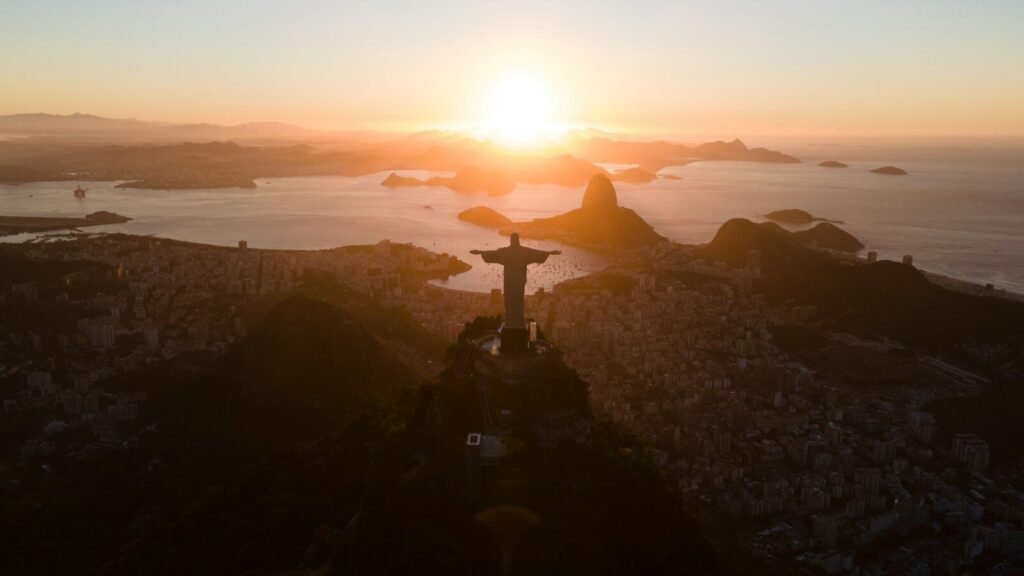
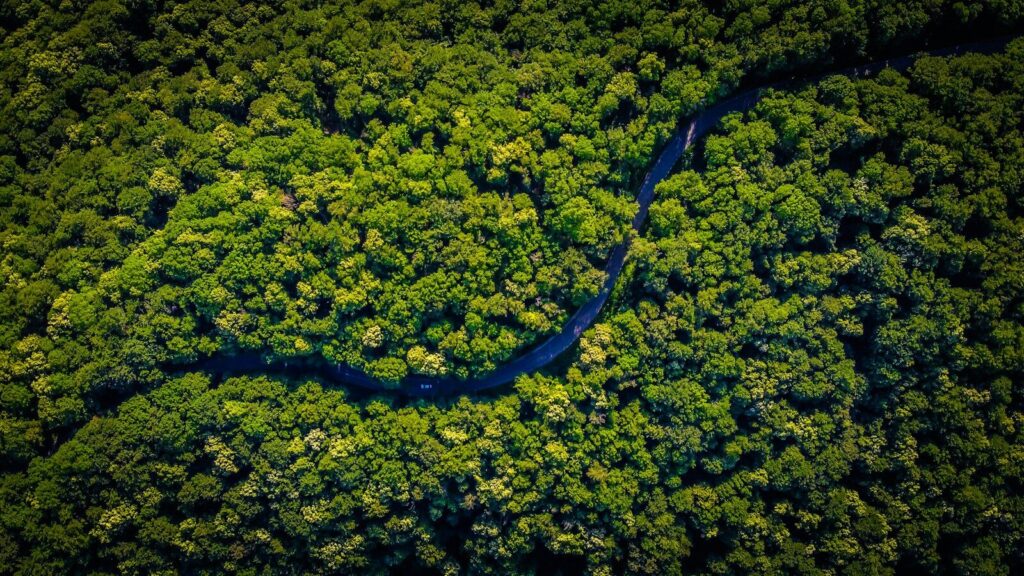
Brazil is the country that makes other countries look small — in size, in sound, and in sheer joy. It covers nearly half of South America, holds 60% of the Amazon rainforest, and throws a party so big it shuts down a city of twelve million people. Rio de Janeiro alone could fill a whole trip: a statue with its arms open over the bay, beaches that double as the city’s living room, and a mountain of granite rising straight out of the sea.
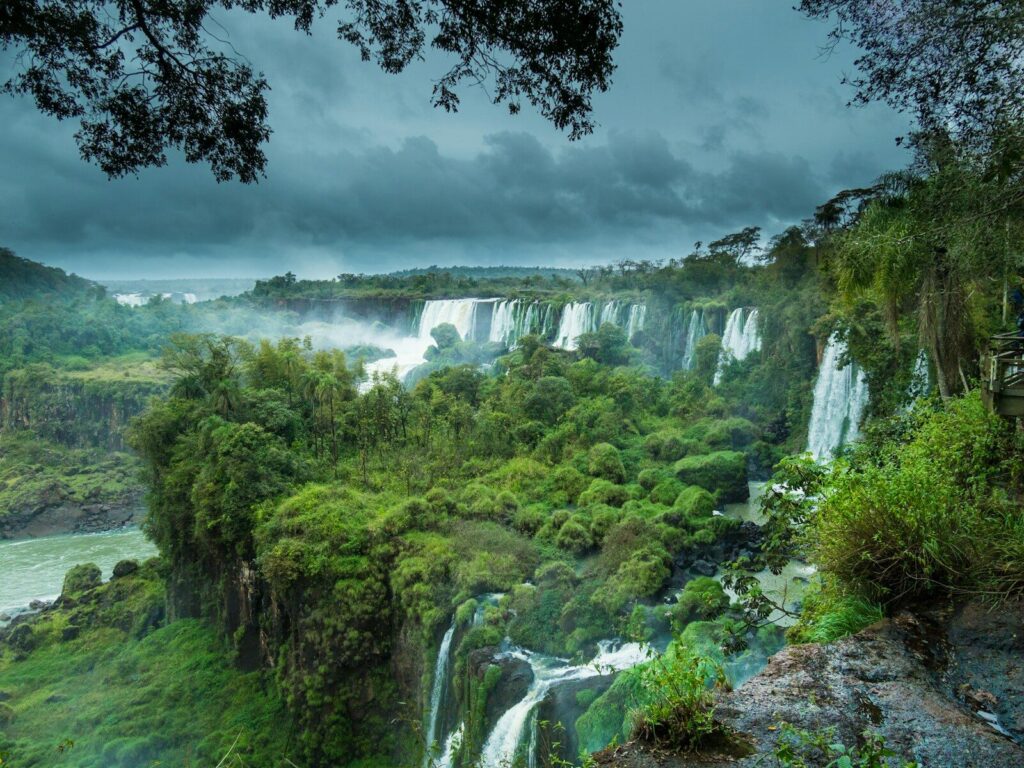
But Brazil rewards travellers who go beyond Rio. Two thousand kilometres inland, Iguaçu Falls thunders across 275 separate cascades — nearly three times wider than Niagara. In Salvador, drumbeats roll through colonial streets painted in every colour of the rainbow. And in the Amazon, pink dolphins surface in black water under a green ceiling that stretches to the horizon.
This guide covers the Brazil that first-timers actually need: Rio in three days, the Iguazu add-on, when to go, what it costs, and the practical rules that keep the trip smooth.
Geography & Climate
Brazil is the fifth-largest country on Earth at 8,515,767 km² — bigger than the contiguous United States — and it spans four time zones. Most visitors stick to the southeast and south, but the country’s geography runs from equatorial rainforest in the north to subtropical highlands in the south, with the vast Pantanal wetlands in the west and 7,400 km of Atlantic coastline.
Rio sits on the southeastern coast, a city of granite peaks, rainforest, and beaches squeezed between mountains and sea. São Paulo, the economic engine, lies about 430 km southwest. Iguazu Falls sits on the far southern border with Argentina, roughly 1,000 km from São Paulo by road. The Amazon basin dominates the north, and the capital, Brasília, sits on the high central plateau — a planned city built from nothing in just 41 months and inaugurated in 1960.
Climate varies enormously by region. Rio is warm year-round: summer (December–March) runs 25–35°C with humidity and afternoon storms, while winter (June–August) is mild and drier at 18–26°C. The Amazon is hot and humid all year, with a wetter season from December to May. The south (including Iguazu) has real seasons — cool winters, warm summers, and the heaviest falls flow from December to February.
Natural hazards are modest for visitors: the main ones are Rio’s summer downpours (which can close the Corcovado train), mosquitoes in the Amazon and Pantanal (dengue exists — use repellent), and strong currents at some beaches. There are no hurricanes and no earthquakes of note.
People & Demographics
Brazil has about 216 million people, making it the fifth most populous country in the world. The population is one of the most mixed on Earth: roughly 43% identify as mixed race (pardo), 43% white, 10% Black, with significant Indigenous and Asian communities — including the largest Japanese population outside Japan, about 1.5 million people, mostly in São Paulo.
Portuguese is the official language and the only language most Brazilians speak — Brazil is the only Portuguese-speaking country in the Americas, and English is limited outside hotels and tours. Learning a few phrases pays off fast: “obrigado” (thank you, said by men) or “obrigada” (said by women), “por favor” (please), “quanto custa?” (how much?), “uma cerveja, por favor” (a beer, please).
Religion is mostly Roman Catholic (about half the population) with a large and growing Evangelical community, plus Afro-Brazilian faiths like Candomblé — strongest in Bahia — and a secular, live-and-let-live attitude in the big cities. Brazilians are famously warm: expect cheek kisses on greeting (one in São Paulo, two in Rio), long conversations with strangers, and genuine curiosity about where you’re from.
Mini phrasebox: Bom dia (good morning) · Boa tarde (good afternoon) · Boa noite (good evening/night) · Tudo bem? (all good? / how are you?) · Tudo bem! (all good!) · Conta, por favor (the bill, please) · Onde fica…? (where is…?) · Não falo português (I don’t speak Portuguese).
Culture, Etiquette & Daily Habits
Brazil runs on warmth, music, and a relaxed sense of time. Lunch is the main meal of the day — a proper sit-down affair, often a kilo buffet (restaurante por quilo) where you pay by weight. Dinner is later and lighter, and the evening belongs to the beach, the bar, or a samba circle. Football is close to a religion: Brazil is the only country to have played in every World Cup, and has won five.
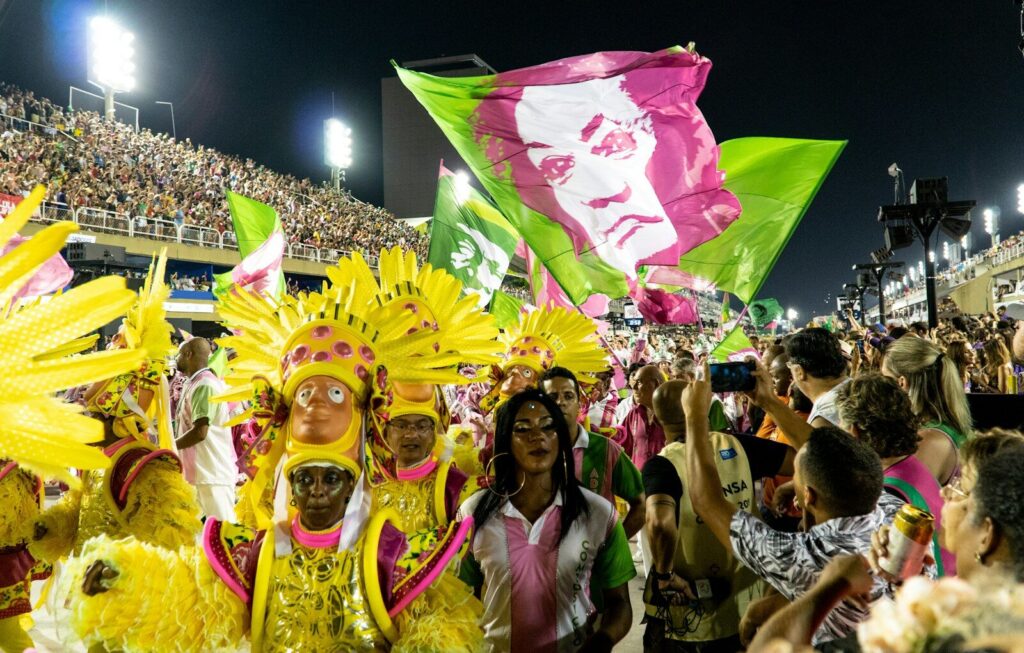
Samba is not just Carnival — it’s everyday Rio. You’ll hear it in bars in Lapa, at Sunday feijoada lunches, and in the hillside favelas where samba schools rehearse year-round. Bossa nova was born in Ipanema; forró rules the northeast; funk carioca shakes the baile parties. Music is how Brazil talks to itself.
Do: greet with a smile and a cheek kiss when introduced; dress casually — even nice restaurants in Rio are beach-casual; accept a caipirinha when offered (refusing is ruder than drinking); tip the 10% service charge already on the bill; learn a little Portuguese — effort is rewarded with enormous goodwill.
Don’t: flash expensive jewellery, cameras, or phones on the street — keep valuables low-key, especially at night and on crowded beaches; wear swimwear away from the beach in cities; assume everyone speaks English; photograph people in favelas without asking; make the “OK” hand gesture — in Brazil it has a rude meaning.
Tipping: a 10% service charge is usually already added to restaurant bills; anything extra is welcome but not expected. Taxi and rideshare drivers don’t expect tips, though rounding up is appreciated.
Lifestyle
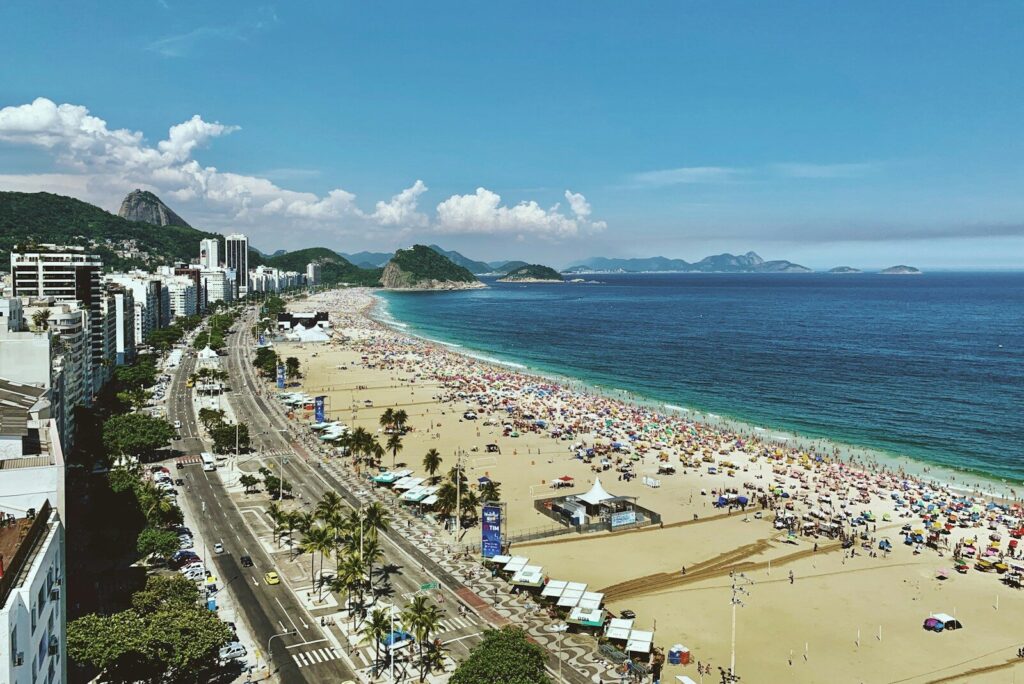
Brazilian daily life is lived outdoors. Cariocas (Rio residents) start the day with a run or a swim at Copacabana, work roughly 9–6, then the beach fills again at sunset — football on the sand, caipirinhas at the kiosks, the whole city in flip-flops. Beach culture is democratic: billionaires and bus drivers share the same sand.
Food is a point of national pride. Feijoada — the black-bean-and-pork stew served on Wednesdays and Saturdays — is the unofficial national dish. Pão de queijo (cheese bread) is addictive and everywhere. Açaí bowls, fresh tropical fruit, and grilled meat (churrasco) round out the menu, and the caipirinha — cachaça, lime, sugar, ice — is the national cocktail. Brazil grows about a third of the world’s coffee, and cafézinho — tiny, sweet, strong — is offered everywhere, all day.
Work culture is relationship-first: meetings start with chat, deadlines flex, and a “yes” can mean “maybe” — patience and personal connection matter more than punctuality. Nightlife is legendary: Lapa’s samba bars, São Paulo’s endless restaurants, and Salvador’s street parties run until dawn. Sport is everywhere — beach volleyball, surfing, capoeira (the Afro-Brazilian martial art disguised as dance), and of course football on every patch of flat ground.
Main Cities
Rio de Janeiro — the postcard. Christ the Redeemer, Sugarloaf, Copacabana and Ipanema, samba in Lapa, and the Tijuca rainforest inside the city limits. Stay in Copacabana or Ipanema for first-timers; Santa Teresa for charm.
São Paulo — the giant. South America’s biggest city (12 million in the city, 22 million in the metro), with Brazil’s best restaurants, museums (MASP, Pinacoteca), and nightlife. No postcard views, but the most cosmopolitan Brazil you’ll find — and the Liberdade neighbourhood is the heart of the Japanese-Brazilian community.
Salvador — the soul. Brazil’s first capital (1549–1763) and the heart of Afro-Brazilian culture: the Pelourinho’s rainbow colonial streets, Candomblé ceremonies, capoeira circles, and the best acarajé (black-eyed pea fritters) on Earth.
Brasília — the experiment. The planned capital’s futuristic curves (Oscar Niemeyer’s cathedral and congress buildings) are a UNESCO site in themselves. Worth a day if you love architecture; otherwise a quick stop.
Foz do Iguaçu — the gateway. A small, pleasant city that exists to serve the falls on the Argentine border — plus the Itaipu Dam, one of the world’s largest hydroelectric plants.
Manaus — the jungle door. A city of 2 million in the middle of the Amazon, built on the rubber boom, with the ornate Teatro Amazonas opera house as its improbable centrepiece. The launch point for Amazon lodges and river cruises.
Florianópolis — the island escape. “Floripa” has 42 beaches, good surf, and a laid-back island rhythm — Brazil’s answer to a beach holiday without Rio’s crowds.
Paraty — the colonial jewel. A car-free, cobbled port town between Rio and São Paulo, with gold-rush churches, boat trips to island beaches, and some of Brazil’s best cachaça distilleries.
Top Places to Visit
- Christ the Redeemer (Cristo Redentor) — the 38-metre Art Deco statue on 700-metre Corcovado, arms open over Rio; take the first morning train for clear skies. Train R$134 return incl. entry; vans R$87–132. Note: the Corcovado visitor area is under renovation Aug 2026–May 2027, capacity limited to ~50% — book early and go at opening.
- Sugarloaf Mountain (Pão de Açúcar) — two-stage cable car to 396 m for the classic Rio panorama; sunset is the golden slot. R$205.
- Iguaçu Falls — 275 cascades across 2.7 km of jungle-clad cliff, taller than Niagara and nearly three times wider; the Brazilian side gives the panorama, the Devil’s Throat walkway gets you soaked. Entry ~$18.
- Copacabana & Ipanema — Rio’s twin beaches: Copacabana for the scene, Ipanema for the sunset at Arpoador and the Girl from Ipanema’s old haunts.
- Selarón Steps (Escadaria Selarón) — 215 steps covered in 2,000+ hand-painted tiles from 60 countries, in Santa Teresa.
- Tijuca National Park — the world’s largest urban rainforest, wrapped around Rio; waterfalls, viewpoints, and monkeys 15 minutes from Copacabana.
- Pelourinho, Salvador — UNESCO-listed colonial quarter of pastel facades, baroque churches, and drum circles every night.
- Lençóis Maranhenses — a desert of white sand dunes filled with rainwater lagoons (best June–September), in the far northeast.
- Pantanal — the world’s largest tropical wetland and the best place on Earth to spot wild jaguars; dry season (June–October) is prime.
- Fernando de Noronha — a remote Atlantic archipelago with Brazil’s clearest water, strict visitor caps, and dolphin-filled bays.
- Ouro Preto — a perfectly preserved gold-rush town of baroque churches in the Minas Gerais hills.
- Amazon River — multi-day lodge stays or river cruises from Manaus; pink river dolphins, caimans, and a canopy that never ends.
🎟️ Book experiences in Brazil
Tours we’d actually book — free cancellation on most. We may earn a commission if you book through these links, at no extra cost to you. Our affiliate disclosure.
- Rio half-day: Christ the Redeemer & city tour — Corcovado, Selarón Steps, the Sambadrome and the cathedral in five hours with a guide.
- Rio full day: Christ the Redeemer, Sugarloaf, Selarón & BBQ lunch — the whole postcard in one day, with an all-you-can-eat steakhouse lunch.
- Browse all Rio de Janeiro tours & activities
🎟️ More ways to book (Viator)
Two more reader-favorite ways to see Brazil. We may earn a commission if you book through these links, at no extra cost to you. Our affiliate disclosure.
- Christ the Redeemer & Sugar Loaf half-day small-group tour — summit both mountains in five hours, early pickup to beat the crowds.
- Rio Express: Christ the Redeemer & Sugarloaf Mountain — five hours, tickets included, hotel pickup in the South Zone.
When to Visit & Getting Around
When to go: Rio’s sweet spot is March–May and September–November — warm, less crowded, cheaper hotels, and clear skies for the Christ the Redeemer views. December–March is hot, festive, and expensive, with Carnival (main parade days February 6–9 in 2027) and New Year’s Eve on Copacabana pushing prices to their peak — book months ahead. June–August is mild, drier, and the cheapest time for sightseeing, though the beach is for locals, not swimming.
For Iguazu, the falls run biggest from December to February; August–October is the lowest flow. The Amazon is best in the dry season (June–November) for wildlife spotting; the wet season (December–May) suits flooded-forest boating. Lençóis Maranhenses lagoons are fullest June–September. The Pantanal’s jaguar season is the dry months, June–October.
Getting there: Brazil’s main international gateways are São Paulo Guarulhos (GRU) and Rio Galeão (GIG). From North America and Europe, direct flights land in both. Domestic flights are essential for a multi-stop trip — Rio to Foz do Iguaçu runs from ~$80, Rio to Salvador ~$60–100, São Paulo to Manaus ~$120+.
Getting around: Brazil is enormous — fly between regions, don’t drive them. Within Rio, the metro is clean, safe, and cheap (~R$7.50 a ride); the BRT from Galeão airport connects to the metro in about 70 minutes (R$4.70 + R$7.50). Buses are everywhere but slow in traffic. Rideshares (Uber/99) are cheap, widely used, and the safest way to move at night. Long-distance buses are comfortable and good value for shorter hops (Rio–Paraty ~4 hours, Rio–São Paulo ~6 hours). Trains are rare outside the Corcovado rack railway — Brazil is a bus-and-plane country.
✈️ Find cheap flights to Brazil — compare fares across airlines and booking sites in one search. We may earn a commission if you book through this link, at no extra cost to you.
🚗 Rent a car in Brazil — worth it for the Rio–Paraty–São Paulo coast road and the Chapada dos Veadeiros; skip it inside Rio and São Paulo, where traffic and parking punish drivers. We may earn a commission if you book through this link, at no extra cost to you.
Budget
Brazil is moderate by international standards — cheaper than Western Europe, pricier than Southeast Asia. Prices below are per person per day, in USD at ~R$5.10 per dollar (Oct 2026).
Budget — $40–60/day: hostel dorm ($12–25), kilo-buffet lunches and street food ($5–8 per meal), metro and buses ($5–8), free beaches and viewpoints, one paid attraction a day. Rio on this budget means hostels in Copacabana, cooking some meals, and walking a lot — very doable.
Mid-range — $100–150/day: private room in a good pousada or 3-star hotel ($40–70), a mix of restaurants and rideshares ($15–20 transport), guided tours and paid entries ($15–30), a caipirinha budget. This is the sweet spot for most travellers: comfortable, no real compromises.
Comfort — $300–600+/day: boutique hotels and beachfront resorts ($150–400+), private drivers and domestic flights ($30–50 transport), private tours, Amazon lodges and Pantanal stays (which can run $200–400 per night all-inclusive). Fernando de Noronha and top-end Amazon lodges push higher.
Money-saving truths: kilo buffets are the best-value lunch on Earth; happy-hour caipirinhas cost half the cocktail-bar price; book Christ the Redeemer and Sugarloaf online to skip the ticket queues (and the touts); domestic flights are cheapest booked 6–8 weeks out; Carnival and New Year prices triple — if you’re not going for the party, avoid those weeks entirely.
Practical Tips
- Visa first. UK and EU citizens enter visa-free for up to 90 days. US, Canadian, and Australian citizens need an e-visa since April 10, 2025 — $80.90, valid 10 years, multiple entries, apply online at brazil.vfsevisa.com before you travel. Passport must be valid six months beyond your return, and you’ll need a return or onward ticket.
- Money: the real (R$) is the currency. Cards (Visa/Mastercard) and contactless work almost everywhere, even at beach kiosks — but carry small cash for markets and street food. A 10% service charge is usually already on the bill. Change money in the city, never at the airport.
- Stay safe, stay smart: Rio is a wonderful city with real street crime. Keep your phone in your pocket on the street, don’t wear flashy jewellery, use rideshares at night, and ask your hotel which blocks to avoid after dark. Beach theft is common — bring only what you can carry into the water.
- Connectivity: buy a local SIM (Claro, Vivo, or TIM) at the airport or a shopping mall — data is cheap and coverage is good in cities. WhatsApp is how Brazil communicates: hotels, guides, and restaurants all use it.
- Power plugs: Brazil uses Type C and Type N plugs at 127V or 220V depending on the region — bring a universal adapter and check your device’s voltage range.
- Health: no vaccines are mandatory for most visitors, but yellow fever vaccination is recommended for the Amazon, Pantanal, and Iguazu regions — check current advice before you go. Mosquito repellent is essential in the jungle and wetlands; tap water is safe in São Paulo but stick to bottled water elsewhere.
- Emergency numbers: police 190, ambulance 192, fire 193, tourist police in Rio (DEAT) for visitor assistance. Keep your hotel’s address in Portuguese on your phone for taxi drivers.
🛍️ Shop this guide: Brazil packing essentials
Gear we’d actually pack for this trip. As an Amazon Associate we earn from qualifying purchases — at no extra cost to you. Our affiliate disclosure.
- Universal travel adapter (Type N) — Brazil uses Type C and N plugs; one adapter covers the whole trip.
- Waterproof phone pouch — the Devil’s Throat walkway at Iguazu soaks everything, and it’s perfect for the beach too.
- Reef-safe sunscreen SPF 50 — the equatorial sun is no joke; reapply after every swim.
- 20,000mAh portable charger — long days, lots of photos, and maps running all day.
- Mosquito repellent — essential for the Amazon, the Pantanal, and Iguazu’s jungle trails.
🧳 Plan your trip: Brazil
Flights, stays, tours, and cruises — booked in one place. We may earn a commission if you book through these links, at no extra cost to you. Our affiliate disclosure.
- ✈️ Find cheap flights to Brazil — compare fares across airlines and booking sites in one search.
- 🏨 Book your stay on our Expedia Travel Shop — hand-picked hotels in Rio, Salvador, and Foz do Iguaçu.
- 🎟️ Browse Rio de Janeiro tours & activities — free cancellation on most.
- 🛳️ South America cruises from Rio — sail the Brazilian coast and on to Buenos Aires or the Amazon.
Closing
Brazil doesn’t do small. It does the biggest rainforest, the widest falls, the loudest party, and the warmest welcome — all in one country, all in one trip if you’re brave. Start with Rio’s three days, add Iguazu if you can, and leave a week unplanned for the place Brazil will convince you to visit next. Because Brazil has a habit of doing that: you arrive for the statue and the beach, and you leave already planning the Amazon.
FAQ
How many days do you need for Brazil?
Three days covers Rio properly. Add two days for Iguazu Falls (one for the Brazilian side, one for the Argentine side). A week gets you Rio + Iguazu; two weeks adds Salvador and the Amazon or Pantanal. Brazil is too big to “do” in one trip — pick a region and do it well.
How much does a trip to Brazil cost?
Budget travellers spend $40–60 a day; mid-range $100–150; comfort $300–600+. A 7-day Rio + Iguazu trip runs roughly $1,000–1,500 mid-range excluding international flights. Christ the Redeemer is R$134 by train, Sugarloaf R$205, Iguazu entry ~$18.
Do I need a visa for Brazil?
It depends on your passport. UK and EU citizens enter visa-free for up to 90 days. US, Canadian, and Australian citizens need an e-visa ($80.90, 10 years, multiple entries) applied for online before travel, in place since April 10, 2025. Always check the official rules for your passport before booking.
When is the best time to visit Brazil?
For Rio, March–May and September–November — warm, clear, and cheaper. Carnival runs February 6–9 in 2027 and is unforgettable but expensive. Iguazu is biggest December–February; the Amazon and Pantanal are best in the dry season, June–October.
Is Brazil safe for tourists?
Yes, with street smarts. Rio and São Paulo have real street crime — keep valuables out of sight, use rideshares at night, and stick to well-travelled areas after dark. Tourist zones, hotels, and guided tours are generally safe, and millions of visitors travel Brazil every year without incident.
What language is spoken in Brazil?
Portuguese — Brazil is the only Portuguese-speaking country in the Americas. English is limited outside hotels and tours, so a few Portuguese phrases go a long way. Spanish helps a little, but Brazilians appreciate visitors who try Portuguese.
Keep exploring
- Peru travel guide: Machu Picchu, the Inca Trail, and the Sacred Valley
- Costa Rica travel guide: two coasts, cloud forests, and pura vida
- Mexico travel guide: Mexico City, tacos, temples, and Frida Kahlo
- Canada travel guide: Banff, lakes, and how to beat the crowds
- Spain travel guide: Barcelona vs Madrid, fiesta, and flamenco


[…] Brazil travel guide: Rio in 3 days, Christ the Redeemer to Iguazu Falls — the other half of Iguazú, plus Rio’s beaches and Carnival — the natural next stop after Argentina. […]
[…] Brazil travel guide: Rio in 3 days, Christ the Redeemer to Iguazu Falls — South America’s other giant, with Rio’s beaches and Carnival — and the far side of the Andes from Chile. […]