 admin
🎬 [Switzerland in 60 Seconds — video link]
Introduction
Switzerland is the country everyone assumes they cannot afford — and the country that rewards careful planning more than almost anywhere else in Europe. Yes, a coffee can cost what a lunch costs elsewhere. But the trains run to the minute, the lakes are free to swim in, the hiking trails are superbly maintained, and the views from a mountain pass cost nothing at all. Switzerland packs forty-eight peaks over 4,000 metres, four national languages, and some of the world’s most spectacular railways into an area roughly the size of the Netherlands — and it does it all with a calm, clockwork competence that makes travelling here feel effortless.
This guide tackles the question head-on: how do you do Switzerland on a budget without missing the Alps? The short answer is that you travel by rail with the right pass, you stay in mountain hostels and small guesthouses, you eat from bakeries and supermarkets, and you spend your money on one or two great mountain days rather than on every cable car in sight. Below you will find the geography, the costs, the cities, the sights, the seasons, and the practical tricks that turn a supposedly impossible destination into a trip you will actually take.
Geography & Climate
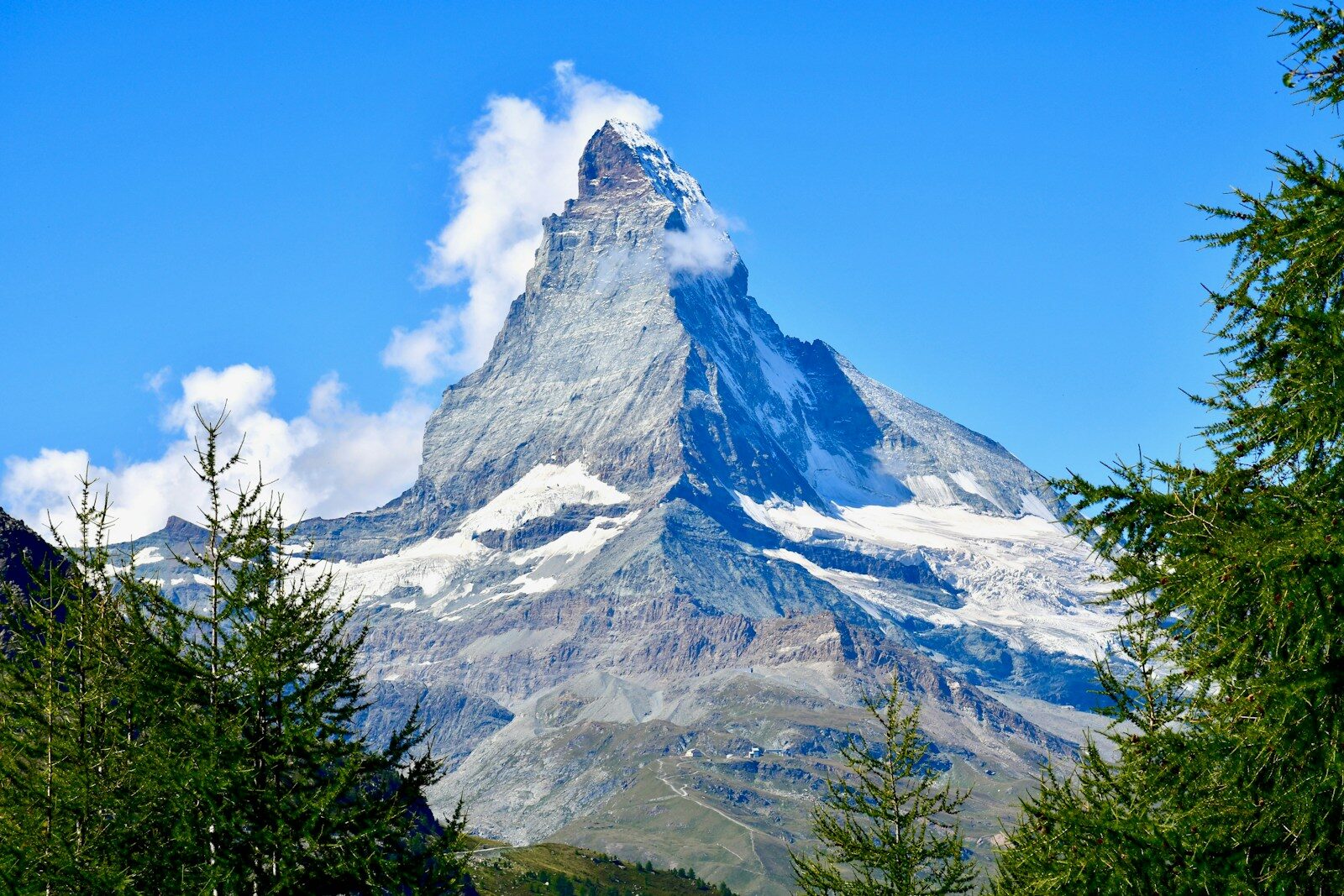
Switzerland sits in the heart of Europe, landlocked and bordered by France, Germany, Italy, Austria, and tiny Liechtenstein. It covers 41,285 square kilometres and divides neatly into three regions: the Jura mountains along the French border in the northwest, the Swiss Plateau (Mittelland) in the middle where most people live, and the Alps in the south, which cover about 60 percent of the country. The highest point is Monte Rosa’s Dufourspitze at 4,634 metres; the most famous is the Matterhorn at 4,478 metres, the pyramid-shaped peak above Zermatt that appears on chocolate bars around the world.
The climate is temperate but sharply divided by altitude. The Plateau sees warm summers (20–28°C) and cold, foggy winters (around 0°C). The Alps are cooler year-round: valley towns like Interlaken and Zermatt are pleasant in summer, while the high passes are snowbound from roughly November to May. The south, Ticino, is Mediterranean in feel — palm trees, Italian spoken, and sunshine when Zurich is under cloud. Switzerland’s weather changes fast in the mountains: a clear morning can turn to afternoon thunderstorms in summer, so always check the forecast before a high hike.
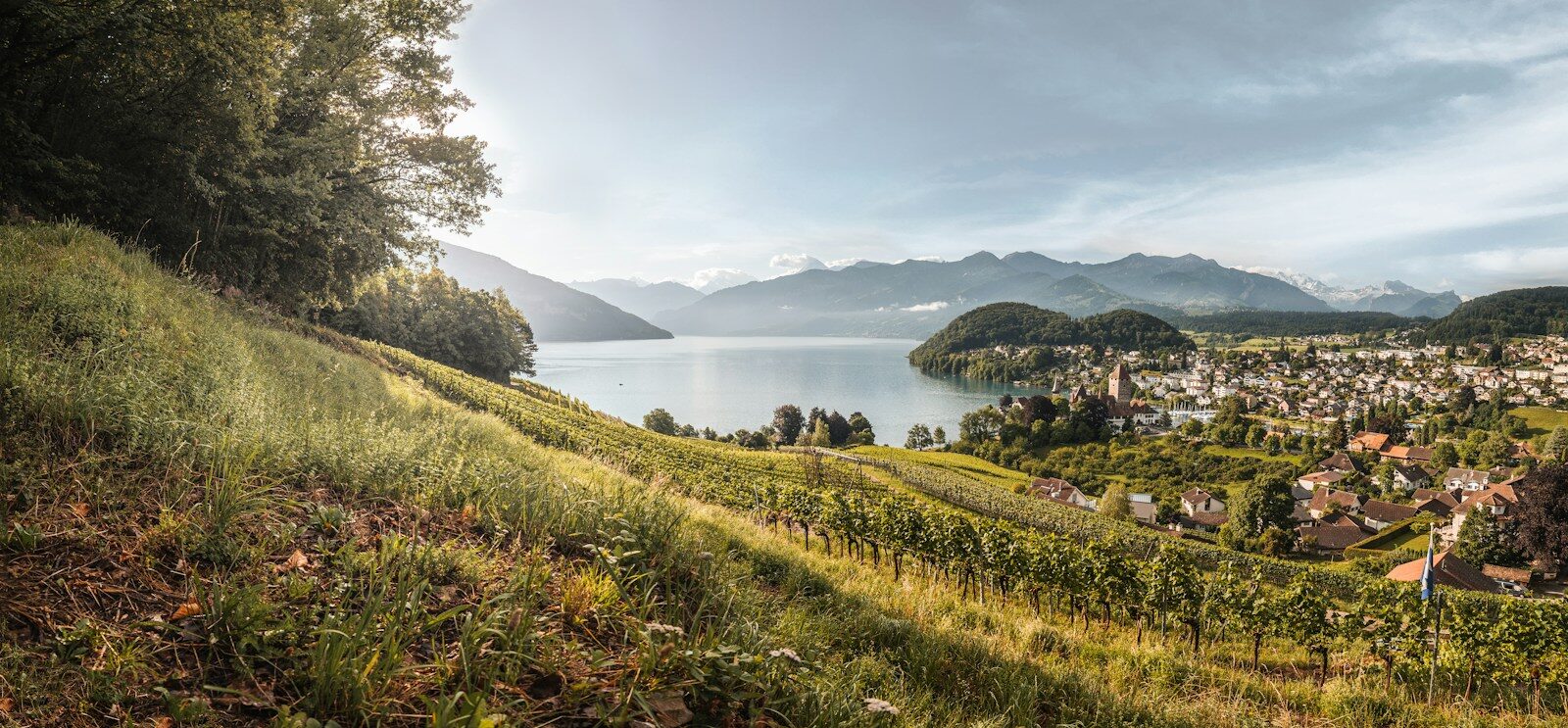
The country’s great natural assets are its water and its height. The Rhine, Rhône, and Inn rivers all rise here, feeding lakes — Geneva, Lucerne, Zurich, Constance — that are clean enough to swim in, and the Aletsch Glacier, the longest in the Alps at around 23 kilometres, flows beneath the Jungfrau massif. The Gotthard Base Tunnel, at 57 kilometres the world’s longest railway tunnel, runs beneath the Alps and is itself a symbol of how seriously Switzerland takes getting through mountains rather than around them.
People & Demographics
Switzerland has about 9.0–9.1 million people, and roughly a quarter are foreign nationals — one of the highest shares in Europe. Most of the population lives on the Plateau, in the arc between Geneva, Bern, Zurich, and St. Gallen; the Alpine valleys are sparsely populated, and some high villages have only a few hundred residents. The country is a federation of 26 cantons, each with its own constitution, parliament, and strong local identity — a Swiss person will often tell you their canton before their country.
Language is the great Swiss puzzle. There are four national languages: German (spoken by about 62 percent, mostly as Swiss German dialect in daily life, with High German for writing and formal speech), French (about 23 percent, in the west), Italian (about 8 percent, in Ticino and southern Graubünden), and Romansh (under 1 percent, in parts of Graubünden). English is widely spoken in tourism, hotels, and larger cities, so you will get by — but learning a few local words earns real warmth, especially in smaller towns.
Religion is split fairly evenly between Roman Catholic and Protestant traditions, with a growing share of people reporting no religion. Switzerland’s defining political feature is direct democracy: citizens vote in referendums several times a year on everything from new tunnels to holiday entitlements. Its other defining feature is armed neutrality: Switzerland has not fought a war since 1815, stayed out of both world wars, and only joined the United Nations in 2002 — yet every Swiss man does military service and the army remains a real institution.
Mini phrasebox: Hello — Grüezi (GREW-tsee, Swiss German) / Bonjour (bohn-ZHOOR, French) / Buongiorno (bwohn-JOR-noh, Italian). Thank you — Merci / Danke / Grazie. Goodbye — Adieu / Tschüss. Cheers — Prost / Santé. One coffee, please — En Kaffee, bitte. The bill, please — Die Rechnung, bitte.
Culture, Etiquette & Daily Habits
Swiss social life is polite, punctual, and private. People greet shopkeepers, wait their turn without fuss, and keep voices down on trains — the famous “quiet coach” is taken seriously. Punctuality is not a stereotype here; it is a social contract. If a train leaves at 10:04, it leaves at 10:04, and your dinner reservation works the same way.
Do: Greet people when entering a shop or restaurant — a simple “Grüezi” or “Bonjour” goes a long way. Be on time, every time. Five minutes late is late in Switzerland. Recycle properly — Swiss recycling is elaborate and taken seriously in every building. Take your shoes off when entering someone’s home, unless told otherwise. Carry cash for small mountain huts and rural buses, even though cards work almost everywhere else. Stand on the right on escalators and let people pass on the left.
Don’t: Make noise on Sunday. Sunday quiet rules are real: no lawnmowers, no loud DIY, and in many apartment buildings, no laundry machines. J-walk in front of police or at red pedestrian lights in cities — fines are common and steep. Assume everyone speaks English in rural valleys — a phrasebook app and a smile cover the gap. Litter, ever. Tip extravagantly — service is included in prices, so rounding up or leaving a few francs is plenty.
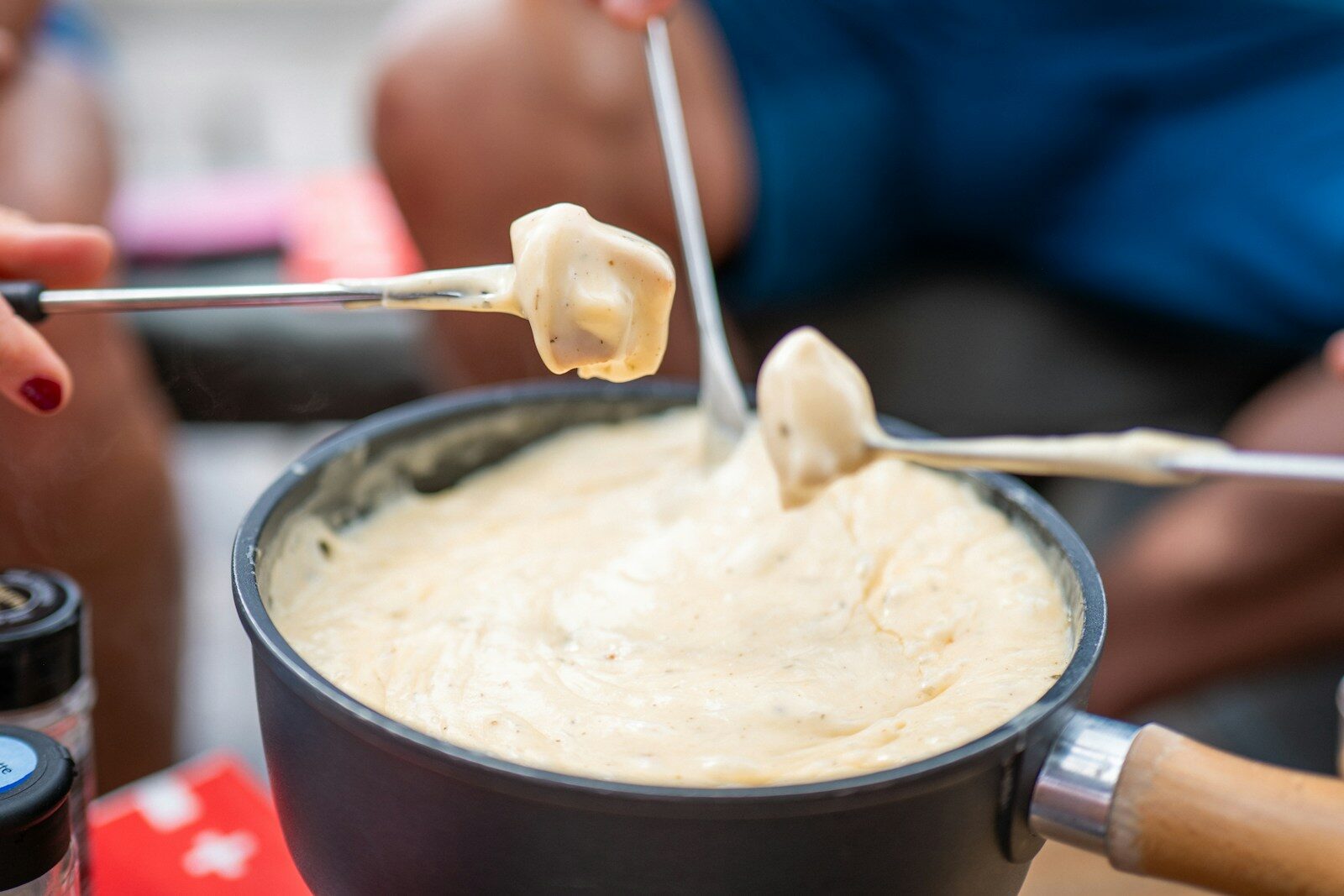
Food culture deserves its own note. The Swiss eat early by southern European standards (lunch around noon, dinner around 6–7pm), and bread is sacred: every village has a bakery, and Sunday-morning bread runs are a ritual. Fondue is a winter, social dish — eaten slowly, with bread, in company — while raclette, melted cheese scraped onto potatoes and pickles, is its Valais cousin. And yes, the chocolate is as good as its reputation: Switzerland consistently ranks among the world’s top chocolate consumers per capita.
Lifestyle
Daily life in Switzerland runs on trains, fresh air, and a work-life balance that most countries envy. The working week is typically 42 hours, but evenings and weekends are fiercely protected — shops close early on Saturdays and stay closed on Sundays (except at stations and airports), which pushes everyone outdoors. Hiking is the national pastime in summer: the country maintains over 65,000 kilometres of marked trails, from lakeside strolls to multi-day Alpine routes, all signposted in yellow with times, not just distances.
Work culture is precise and consensus-driven. Meetings start on time, decisions take a while (everyone is consulted), and then things happen fast. Lunch is a proper break, not a sandwich at a desk, and the after-work drink is usually a single glass rather than a session. Sport is woven into weekends: skiing in winter, cycling and swimming in summer, and football and ice hockey year-round. The Swiss also swim in their rivers — in Basel, Bern, and Zurich, summer means floating down the Rhine or the Aare with your clothes in a waterproof “Wickelfisch” bag.
Tech and tradition sit side by side. Switzerland hosts CERN, the world’s largest particle physics laboratory, and some of the world’s biggest banks and pharmaceutical companies — yet the same country still moves cows to high Alpine pastures in summer processions (Alpabzug) decorated with flowers and bells, and still yodels, unironically, at folk festivals. That combination — cutting-edge science, medieval old towns, and cowbells — is the real Switzerland.
Main Cities
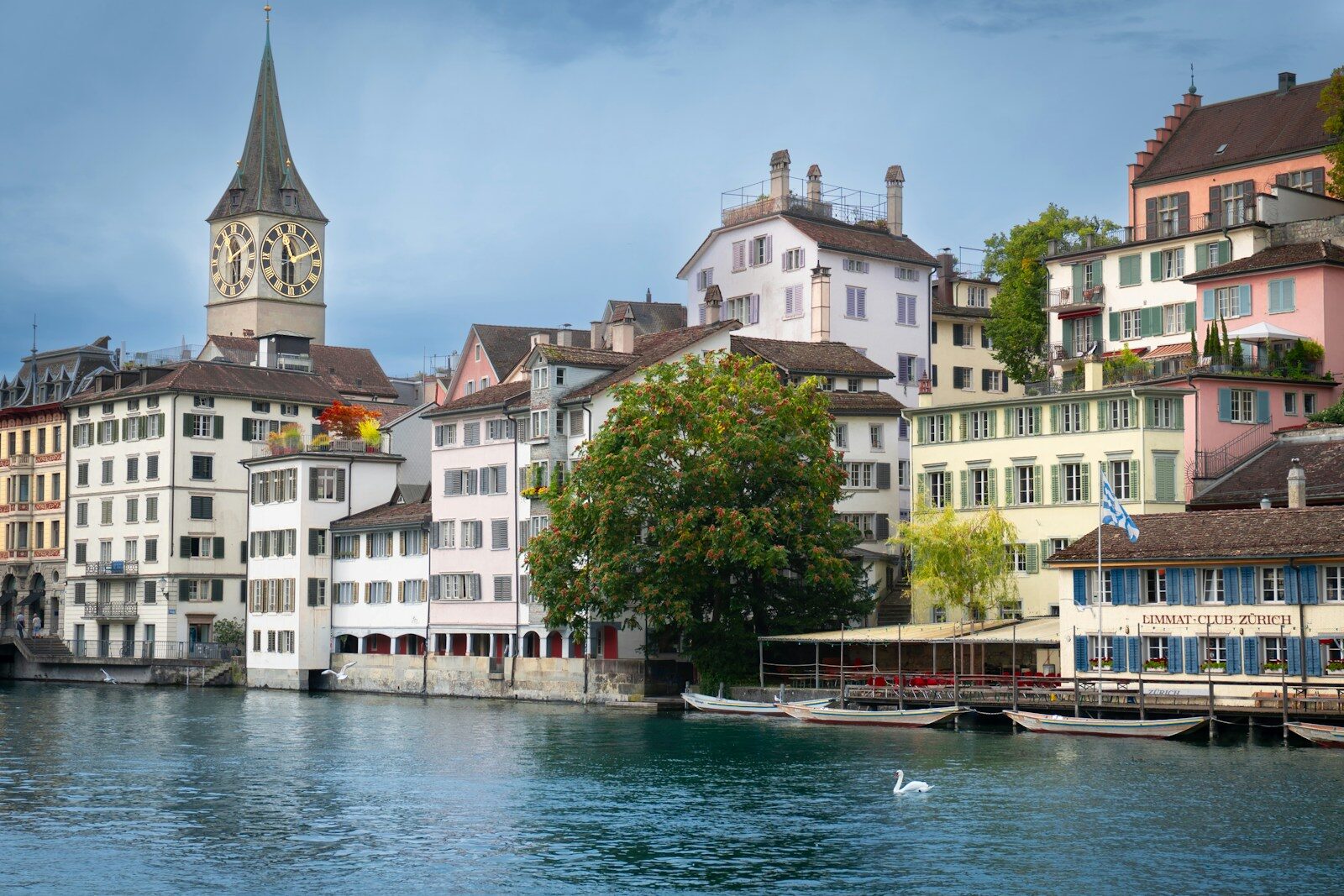
Zurich — Switzerland’s largest city and its economic engine, but far friendlier than its banking reputation suggests. The old town (Altstadt) along the Limmat river is all guild houses, church spires, and cobbled lanes; the Bahnhofstrasse is one of the world’s most expensive shopping streets, but the real Zurich is the lakeside promenade, the Niederdorf’s bars, and a summer swim in the Limmat. Don’t miss the Grossmünster’s twin towers, the Kunsthaus museum, and a sunset over Lake Zurich.
Bern — The de facto capital, a UNESCO-listed old town of sandstone arcades (Lauben) stretching six kilometres, with the Aare river looping around it in a turquoise bend. The Zytglogge clock tower, the Bear Park, and the Einstein House (he developed relativity here in 1905) are the classics; the Rosengarten gives the best panorama over the old town roofs.
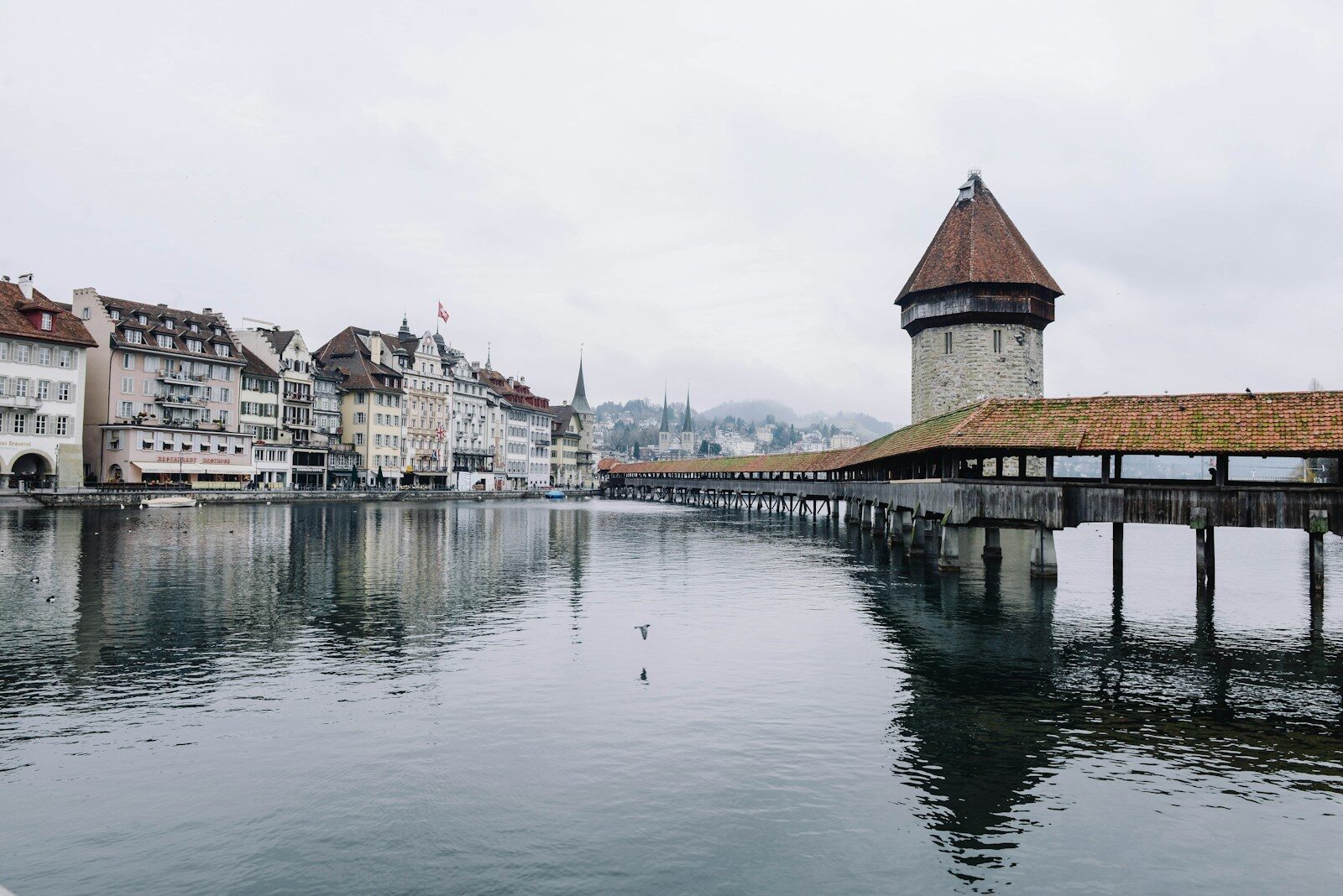
Lucerne — The postcard city: the Chapel Bridge (Kapellbrücke), a 14th-century covered wooden bridge with paintings under its roof, crossing the Reuss where it leaves Lake Lucerne; the Lion Monument, carved into rock for Swiss Guards killed in Paris in 1792; and a car-free old town of painted facades. Lucerne is also the gateway to Mount Pilatus, Mount Rigi, and the lake’s paddle steamers.
Geneva — The French-speaking international city on Lake Geneva, home to the UN’s European headquarters, the Red Cross, and CERN just across the border. The Jet d’Eau fountain shoots 140 metres into the sky, the old town climbs to St. Pierre Cathedral, and the lakefront promenade is made for long walks. Geneva is also the priciest city in an already pricey country — plan accordingly.
Interlaken — Not a city but a resort town between Lake Thun and Lake Brienz, and the base camp for the Jungfrau region. Paragliders land in its central park (Höhematte) all day in summer, and trains depart here for Lauterbrunnen, Grindelwald, and the Jungfraujoch. Come for the mountains, stay for the adventure sports.
Zermatt — Car-free, at the foot of the Matterhorn, and reachable only by train. The village itself is charming but the point is the mountain: the Gornergrat railway climbs to 3,089 metres for the classic Matterhorn panorama, and the glacier paradise (Matterhorn Glacier Paradise, 3,883 metres) is Europe’s highest cable-car station. In winter it is one of the world’s great ski resorts; in summer, a hiker’s base.
Basel — On the Rhine where Switzerland meets France and Germany, Basel is the art city: Art Basel, the Fondation Beyeler, and the Kunstmuseum, plus a lovely old town and summer Rhine swimming. Lausanne and Montreux on Lake Geneva offer the Riviera feel — vineyards at Lavaux (UNESCO-listed), the Montreux Jazz Festival in July, and Chillon Castle on the water’s edge.
Top Places to Visit
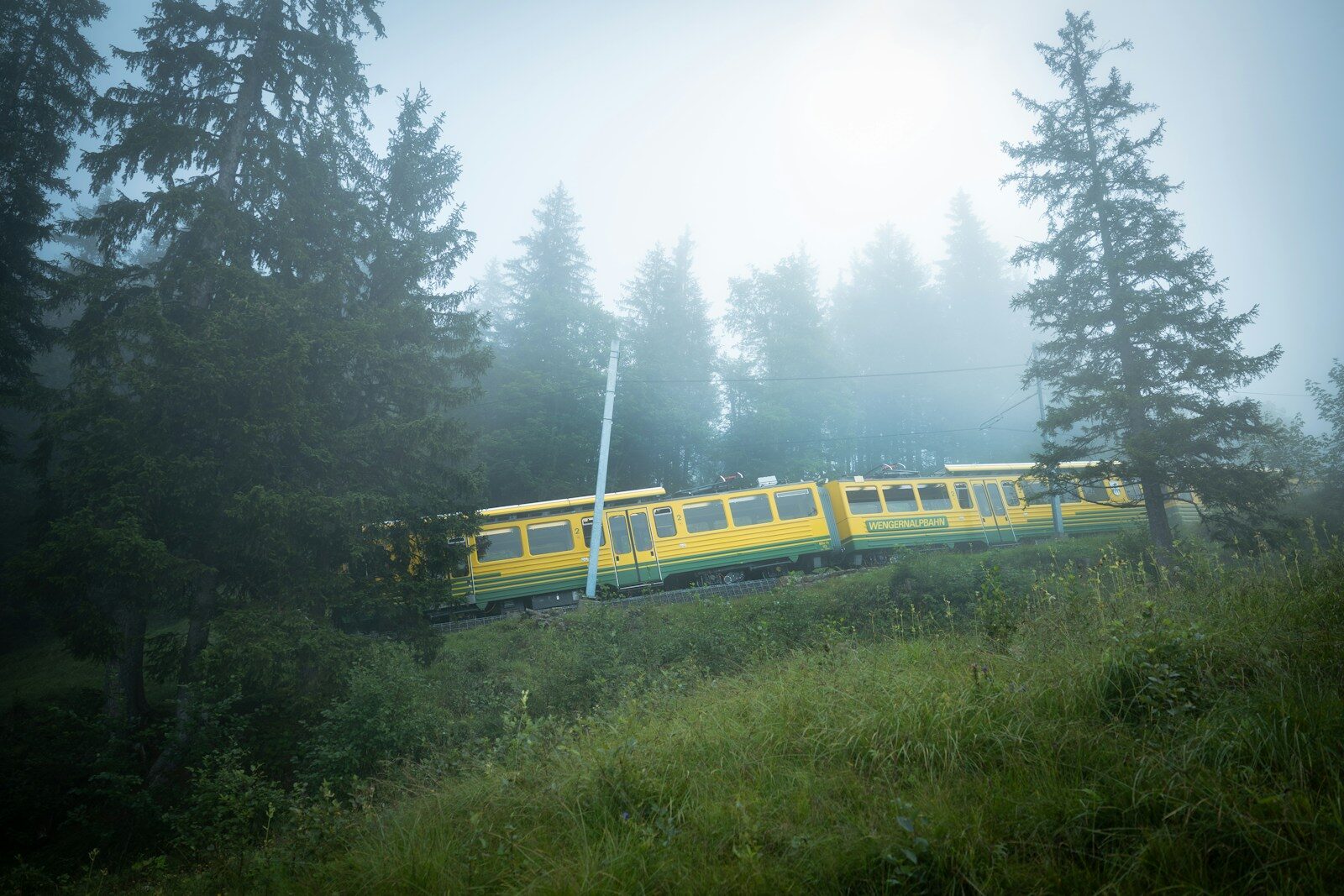
- Jungfraujoch — Top of Europe — Europe’s highest railway station at 3,454 metres, reached by cogwheel train from Grindelwald or Wengen. The Sphinx Observatory looks over the Aletsch Glacier; the Ice Palace is carved into the glacier itself.
- The Matterhorn & Gornergrat — The pyramid peak from Zermatt, best seen from the Gornergrat railway at sunrise, when the first light turns it gold.
- Lake Lucerne & Mount Rigi — Take a paddle steamer across the lake, then the cogwheel railway up Rigi, the “Queen of the Mountains,” for a panorama over a dozen lakes.
- Lauterbrunnen Valley — Seventy-two waterfalls in one valley, including Staubbach Falls dropping 297 metres beside the village church. The car-free village of Wengen and the cliff village of Mürren sit above it.
- Rhine Falls (Rheinfall) — Europe’s largest waterfall by volume, near Schaffhausen. Take the boat to the rock in the middle for the full thunder.
- Bernese Oberland passes — The Grimsel, Furka, and Susten passes by PostBus or car are among the great Alpine drives in Europe; the Furka Pass starred in the James Bond film Goldfinger.
- Lavaux Vineyards — Terraced vineyards above Lake Geneva, a UNESCO site, walkable between the villages of St-Saphorin and Lutry with wine tastings along the way.
- Aletsch Glacier — The longest glacier in the Alps, best viewed from Bettmerhorn or Eggishorn above the car-free village of Bettmeralp.
- Swiss National Park — The country’s only national park, in the Engadin valley: ibex, marmots, and larch forests, with strict leave-no-trace rules.
- Glacier Express route — The Zermatt to St. Moritz panoramic train crosses 291 bridges and 91 tunnels in about eight hours; the Landwasser Viaduct is the famous photo.
- Chillon Castle — On a rock in Lake Geneva near Montreux, Byron’s “Prisoner of Chillon” made it famous; it is Switzerland’s most visited historic building.
- Appenzell — Rolling green hills, painted farmhouses, and the Alpstein massif — the Switzerland of postcards, without the crowds of the Bernese Oberland.
🎟️ Book experiences in Switzerland
Tours we’d actually book — free cancellation on most. We may earn a commission if you book through these links, at no extra cost to you. Our affiliate disclosure: https://oneminuteworld.ca/affiliate-disclosure/
- From Zurich: Day Trip to Jungfraujoch — Top of Europe — bus, Eiger Express gondola and cogwheel train to Europe’s highest station, with the Sphinx Terrace and Ice Palace.
- From Lucerne: Day Trip to Jungfraujoch — Top of Europe — the same classic day from Lucerne, via Interlaken and Grindelwald Terminal.
- Browse all Zurich tours & activities
🎟️ More ways to book (Viator)
Tours we’d actually book — free cancellation on most. We may earn a commission if you book through these links, at no extra cost to you. Our affiliate disclosure: https://oneminuteworld.ca/affiliate-disclosure/
- Mount Titlis and Lucerne day trip from Zurich — rotating gondola to the Titlis summit, the Cliff Walk suspension bridge, and time in Lucerne old town.
- Mount Titlis private tour from Zurich with gondola ride — a private guide, train travel via Lucerne, and the rotating gondola to the glacier summit.
When to Visit & Getting Around
Summer (June–September) is hiking and lake season: all passes open, mountain railways running, and long daylight. July and August are busiest and priciest in the famous resorts. Winter (December–March) is ski season: Zermatt, St. Moritz, Verbier, and Davos are world-class, but also at their most expensive. Shoulder seasons (May and September–October) are the budget traveller’s sweet spot: fewer crowds, lower hotel rates, still-good weather, and autumn colours in October that rival anywhere in Europe. Spring (April–May) is muddy in the high Alps but lovely in Ticino and the lowlands.
Getting there: Zurich (ZRH) and Geneva (GVA) are the main international airports; Basel (BSL, actually in France) serves the northwest. From Zurich airport, a train reaches the city centre in about 10 minutes. Switzerland is in Schengen but not the EU, so most visitors enter visa-free for up to 90 days — check your nationality’s rules before travel.
Getting around is where Switzerland shines. The Swiss Travel Pass is the classic visitor ticket: in 2026, a 3-day second-class pass costs CHF 254, 6 days CHF 399, and 15 days CHF 499, covering trains, buses, boats, and city transport in over 90 towns, plus free entry to 500+ museums. Mountain railways are discounted, not free: Jungfraujoch is 25% off, most others up to 50% off, while Rigi, Stanserhorn, and Stoos are fully included. Do the maths before buying: the pass pays off when you ride long scenic routes most days; with fewer big journeys, the tourist Swiss Half Fare Card (CHF 150 for one month, halving almost every fare) or point-to-point tickets are often cheaper. Compare your exact route on sbb.ch. Panoramic trains (Glacier Express, Bernina Express) are covered by the pass but charge a separate seat reservation.
Inside cities, trams and buses are frequent and integrated — one ticket covers the whole network. For the famous mountain trips, book Jungfraujoch and Gornergrat tickets ahead in peak season; for ordinary trains, no reservation is needed — just board. Driving is easy but expensive (fuel, tolls via the CHF 40 annual motorway vignette, and pricey parking); for most visitors, the train is both cheaper and more scenic. Note that Swiss Travel Pass prices above are the 2026 tariffs valid until 31 December 2026 — verify on sbb.ch before purchase, as fares rise with the December timetable change.
Festivals worth timing: Basel Fasnacht (February/March, the country’s wildest carnival), Montreux Jazz Festival (July), the Locarno Film Festival (August), the Alpabzug cow processions (September), and the Zibelemärit onion market in Bern (November). Christmas markets in Zurich, Basel, and Montreux are among Europe’s best in December.
✈️ Find cheap flights to Switzerland — compare fares across airlines and booking sites in one search. Affiliate link: we may earn a commission at no extra cost to you.
🚗 Rent a car in Switzerland — compare rental prices across suppliers in one search. Affiliate link: we may earn a commission at no extra cost to you.
Budget
Switzerland is expensive, but the $100/day strategy works if you are disciplined. Prices below are per person per day in Swiss francs (CHF), based on October 2026 research, and drift with the season.
Budget (CHF 80–120/day): Hostel dorm (CHF 45–70 in cities, less in mountain hostels), supermarket and bakery food (a Migros or Coop picnic is CHF 10–15; a bakery lunch CHF 12–18), a Swiss Travel Pass or Half Fare Card amortised across big travel days, and free sights — hiking, lake swimming, old towns, and viewpoints cost nothing.
Mid-range (CHF 200–350/day): Three-star hotel or guesthouse (CHF 150–220), restaurant meals (CHF 25–45 per person for a main course), and one paid mountain day such as Jungfraujoch (about CHF 190 with a Travel Pass, CHF 130 with a Half Fare Card) or Gornergrat.
Comfort (CHF 500+/day): Design hotels in Zurich or Zermatt, fine dining, private tours, and first-class panoramic trains with gourmet meals.
Money-saving truths: cooking even half your meals is the single biggest saving — Swiss supermarkets are excellent and their ready meals are genuinely good. Tap water is superb everywhere, so never buy bottled water; fill up at the public fountains in every town. Stay in mountain hostels and small guesthouses rather than resort hotels. Use the free museum entry on a Swiss Travel Pass. And pick one or two great mountain days instead of riding every cable car — the free hiking trails often have better views than the paid summits.
Practical Tips
- Connectivity: Buy an eSIM before arrival or a local SIM (Swisscom, Sunrise, Salt) at the airport. Coverage is excellent, including in most Alpine valleys. Download offline maps for hiking areas.
- Cash: Cards are accepted almost everywhere, including mountain huts that have card machines — but carry CHF 50–100 in cash for small huts, rural buses, and markets.
- Luggage: Pack layers and a waterproof jacket even in summer — mountain weather changes hourly. Good walking shoes are essential; the country is built for walking.
- Power: Switzerland uses Type J plugs (three-pin) at 230V. Type C (European two-pin) plugs fit most sockets; UK and North American visitors need an adapter.
- Emergency numbers: 112 (European emergency), 144 (ambulance), 117 (police), 118 (fire). For mountain rescue, call 1414 (Rega air rescue).
- Sunday planning: Almost all shops are closed on Sundays. Buy food on Saturday, and plan Sunday for hiking, museums (which are open), and lake swimming — not shopping.
- Language trick: In German-speaking Switzerland, High German is understood everywhere even though locals speak dialect. A simple “Grüezi” greeting and “Merci vielmal” (thanks very much) will carry you far.
🛍️ Shop this guide: Switzerland packing essentials
As an Amazon Associate we earn from qualifying purchases — at no extra cost to you. Our affiliate disclosure: https://oneminuteworld.ca/affiliate-disclosure/
- Swiss Type J travel adapter — Switzerland’s three-pin sockets catch out visitors.
- Waterproof hiking boots
- Packable rain jacket
- Lightweight 20L daypack
- Portable charger (20,000mAh)
🧳 Plan your trip: Switzerland
Affiliate link: we may earn a commission at no extra cost to you.
- ✈️ Find cheap flights to Switzerland
- 🏨 Browse our Expedia Travel Shop
- 🎟️ Browse Zurich tours & activities
- 🛳️ Compare European river cruises on CruiseDirect — Rhine sailings calling at Basel.
Closing
Switzerland will not be the cheapest trip you ever take — but it may be the most satisfying. There is something about standing on a pass at dawn, watching the light hit the Matterhorn, or stepping off a train exactly on time into a village that smells of fresh bread and pine, that makes the careful budgeting feel worth it. Travel by rail, eat like a local, pick your mountain days wisely, and Switzerland opens up: not as a luxury postcard, but as a country you can actually explore, on foot, by train, and on a budget that works.
Come for the peaks. Stay for the precision. And leave room in the plan for one unplanned lake swim — Switzerland rewards the traveller who slows down.
🎬 [Switzerland in 60 Seconds — video link]
FAQ
How many days do you need in Switzerland? Five to seven days covers Zurich, Lucerne, Interlaken, and one great mountain day (Jungfraujoch or Zermatt). Ten days lets you add Geneva, Ticino, and a second mountain region at a relaxed pace.
Is Switzerland really that expensive? Yes — budget CHF 80–120/day travelling lean, CHF 200–350 mid-range, CHF 500+ in comfort. Supermarket meals, tap water, hostels, and the right rail pass are the levers that bring costs down.
Is the Swiss Travel Pass worth it? If you ride long scenic routes most days, yes — a 3-day pass is CHF 254 in 2026 and covers trains, buses, boats, city transport, and 500+ museums. With fewer big journeys, the CHF 150 tourist Half Fare Card or point-to-point tickets are often cheaper. Compare your exact route on sbb.ch.
When is the best time to visit Switzerland? June–September for hiking and lakes, December–March for skiing, and May or September–October for fewer crowds and lower prices. October brings spectacular autumn colour.
Do I need a car in Switzerland? No — the trains, buses, and boats cover the country superbly, and the pass system makes rail the easiest option. A car only helps for remote valleys and gives you parking costs and the CHF 40 motorway vignette in return.
Is Switzerland safe? Switzerland is one of the safest countries in the world for crime. The risks are natural: mountain weather, glacier crevasses, and river currents. Check forecasts, stay on marked trails, and never cross a closed path.
[…] Swiss Alps on a Budget: The $100/Day Strategy That Works […]
[…] Switzerland travel guide […]
[…] Switzerland travel guide — the Swiss Alps on a budget, and the other great mountain country in this series. […]