 admin
Introduction
Here is a fact that breaks most people’s sense of time: Cleopatra lived closer to the Moon landing than to the building of the Great Pyramid. She died in 30 BC — about 2,500 years after the pyramid was built, and about 2,000 years before Apollo 11 touched down in 1969. The pyramids were already ancient when Cleopatra ruled. They were already ancient when the Romans arrived. And they are still standing, still the only Wonder of the Ancient World left on Earth, while empires that came after them have risen and fallen and been forgotten.
Egypt is where history starts — a river, a desert, and five thousand years of wonders, home to about 115 million people. It is the Arab world’s most populous country, and its capital Cairo is the largest city in Africa, a megacity of 21 million where the call to prayer echoes over traffic that never stops, and where you can eat the best meal of your life standing up at a koshari counter for two dollars. But Egypt is not one trip. It is three, at least: the Cairo of the pyramids and the brand-new Grand Egyptian Museum; the Luxor of temples and tombs, where a single city holds a third of the world’s antiquities; and the slow Nile cruise south to Aswan, ending at Abu Simbel, where twice a year the sun walks into a temple built 3,300 years ago. This guide covers the classic 8-day route through all three — plus the Red Sea, the prices, the visa rules, and the practical tricks that keep the trip smooth.
Geography & Climate
Egypt covers just over a million square kilometres — roughly the size of Texas and California combined — but almost all of it is desert. The country that matters, the Egypt people live in, is a narrow green ribbon: the Nile Valley and the Delta, about 4% of the land, where some 95% of the 115 million population lives. The Nile, at about 6,650 kilometres, is the world’s longest river, and it flows south to north, which is why Egyptians call the north “Lower Egypt” and the south “Upper Egypt” — upstream is up.
The country divides into five travel regions. Cairo and Giza are the gateway — the pyramids, the museums, Islamic Cairo’s medieval streets, and the chaos that is the capital. Luxor is the open-air museum — Karnak, the Valley of the Kings, and more temples than you can see in three days. Aswan and the south are the beautiful, slow Nile — Philae Temple, Nubian villages, and the road to Abu Simbel. The Red Sea coast (Hurghada, Sharm el-Sheikh) is diving, beaches, and resorts. And the Western Desert (Siwa Oasis, the White Desert) is the Egypt almost nobody sees — salt lakes, hot springs, and dunes that look like another planet.
Climate is simple to plan around and brutal if you get it wrong. Cairo is mild in winter (20–25°C) and scorching in summer. Luxor and Aswan are worse: summer regularly passes 40°C, and the desert sun is merciless even in the shoulder months. The best months are October to April — warm days, cool nights, clear skies — with October–November and February–March the sweet spot. June to August is the cheapest window and the worst time to be in Luxor; December to February is the quietest, with the coldest desert nights and the best light for photography.
People & Demographics
About 115 million people live in Egypt — a young country, with a median age around 24–25, and one of the fastest-growing populations in the region. Greater Cairo alone holds 21–22 million people, making it the largest urban area in Africa and the Arab world; Alexandria, the Mediterranean port, is second at about 5.5 million. Most Egyptians live along the Nile or in the Delta; beyond the green strip, the desert is nearly empty.
Arabic is the official language, and the Egyptian dialect — thanks to a century of Egyptian film and television — is the most widely understood Arabic in the Arab world. English is widely spoken in tourism, and French and German are common at the Red Sea resorts. The population is overwhelmingly Muslim (about 90%, mostly Sunni), with a significant Coptic Christian minority of around 10% — one of the oldest Christian communities in the world, with churches in Cairo that date to the 4th and 5th centuries. What strikes visitors most is not a statistic but a temperament: Egyptians are famously warm, funny, and generous with their time — and the offer of tea is less a drink than a social contract.
Mini phrasebox: As-salamu alaykum (peace be upon you — the standard greeting) · Shukran (thank you) · La shukran (no, thank you) · Kam? (how much?) · Mumkin? (may I / is it possible?) · Yalla (let’s go) · Inshallah (God willing — the answer to most plans).
Culture, Etiquette & Daily Habits
Egypt runs on a few rules that, once learned, make everything easier. Always greet before asking anything — an “As-salamu alaykum” before “where is the museum?” is not optional politeness, it is the price of the conversation. Baksheesh (tipping) is a way of life — guides, drivers, guards, bathroom attendants, and the person who shows you the best angle for a photo all expect a small tip; keep EGP 10–20 notes handy and treat it as part of the price, not an extra. Haggling is expected in the bazaars — never accept the first price in Khan el-Khalili; offer about half, and meet in the middle with a smile. Friday is the holy day — many shops close for midday prayers, and the weekend runs Friday–Saturday.
Dress modestly away from the beach — cover shoulders and knees in religious sites and in rural areas; women should carry a scarf for mosque visits. Ask before photographing people, and be prepared to pay if they agree — the “free” photo with a local in costume at Giza comes with a tip expectation. Never agree to a camel ride without fixing the price first — the classic Giza scam is a cheap ride out and an expensive ride back. During Ramadan, be discreet about eating and drinking in public in smaller towns; tourist areas in Cairo and the resorts stay more open.
Do: greet first, tip generously and often, learn five words of Arabic, agree every price before you start, and drink the tea. Don’t: accept “the pyramid is closed today” (it isn’t), follow an unofficial “guide” at a site without agreeing a fee, drink tap water, or photograph inside the Royal Mummies Hall (it’s banned).
Lifestyle
Egyptian daily life runs on a rhythm that surprises first-timers: late mornings, long lunches, and evenings that start when the heat breaks. Breakfast is ful medames — fava beans with olive oil, lemon, and bread — eaten slowly, often with the family. Lunch is the main meal. Dinner is late and light, and the real social life happens after dark in the cafés of downtown Cairo, on the corniche in Alexandria, and on the feluccas drifting past Luxor.
Food is the country’s great leveller. Koshari is the national dish — lentils, rice, pasta, chickpeas, tomato sauce, and crispy onions, eaten standing up at a counter for a couple of dollars, and it is magnificent. Ful medames is the breakfast of the nation. Ta’ameya is Egyptian falafel, made with fava beans instead of chickpeas, and it is better than the chickpea version — fight us on this. Hawawshi is spiced meat baked into bread. And sugar-cane juice — pressed fresh on street corners, sweet, cold, and everywhere — is the drink that gets you through a hot afternoon at the sites.
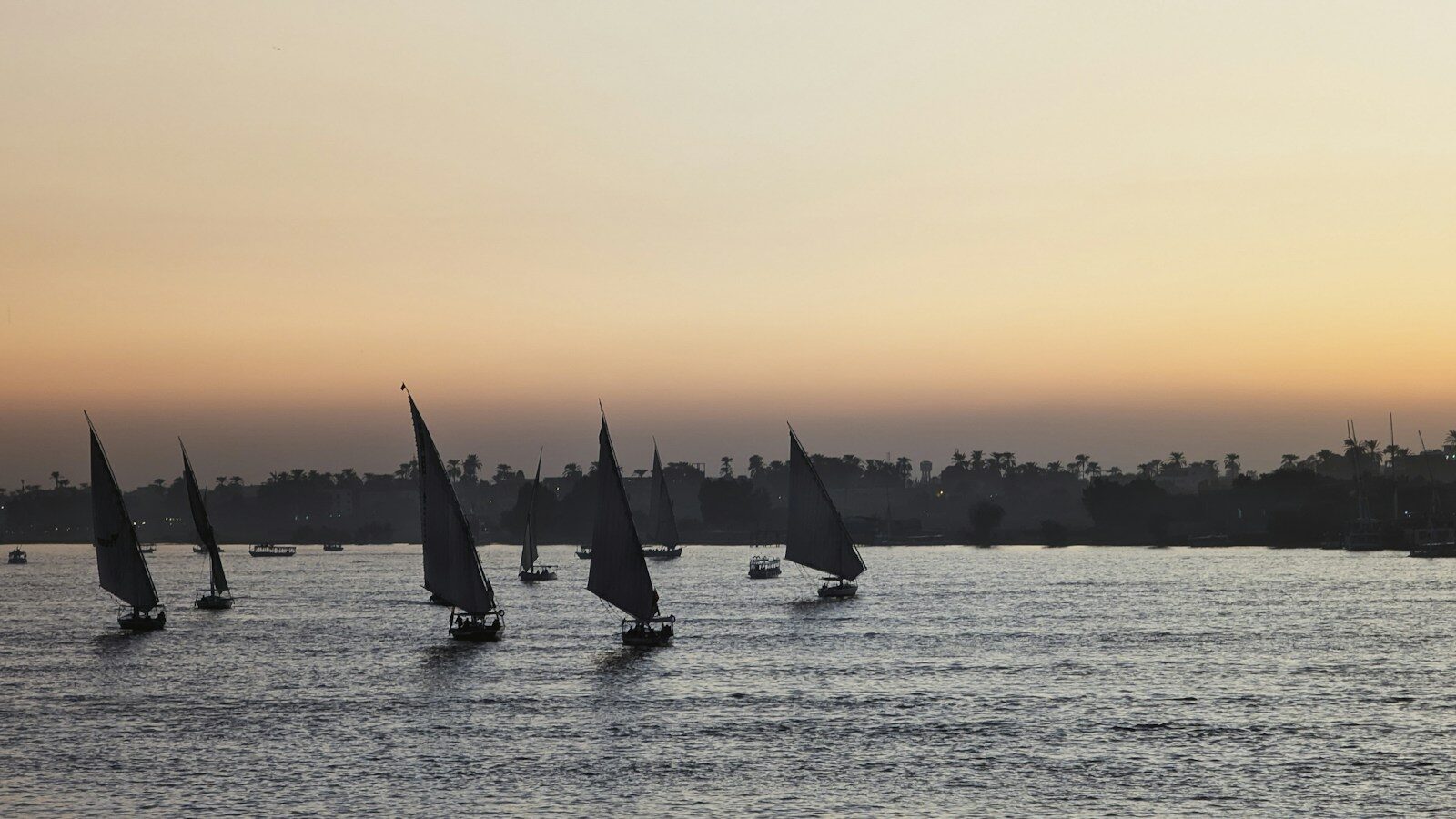
Work culture is a mix of the ancient and the modern: the bazaar traders of Khan el-Khalili work in the same shops their grandfathers did, while Cairo’s new administrative capital — a vast new city rising 45 km east of the old one — is the government’s bet on the future. Football is the national obsession: Al Ahly vs Zamalek is one of the fiercest derbies in world football, and Mohamed Salah is a national hero. Music runs from the classical Arabic of Umm Kulthum (still played everywhere) to mahraganat, the street-electronic sound of Cairo’s working-class neighbourhoods. And the Nile is not a tourist attraction — it is the working river of the country, with feluccas, cruise ships, and fishing boats sharing the same water the pharaohs sailed.
Main Cities
Cairo — the anchor. Twenty-one million people, the largest city in Africa, and the gateway to everything. The Giza plateau is technically in Giza, across the river, but Cairo is where you sleep, eat, and start. Three days covers the pyramids, the Grand Egyptian Museum, Islamic Cairo, and the Egyptian Museum in Tahrir — and the city rewards a fourth, for the bazaars and the Coptic quarter.
Giza — the plateau. Home to the three pyramids, the Sphinx, and the Solar Boat. It is a suburb of Cairo now, not a separate trip, and the new visitor centre and electric shuttles (since the 2025 reorganisation) have finally made it navigable. Half a day at the plateau, a full day with the GEM next door.
Luxor — “the world’s greatest open-air museum”. Karnak, Luxor Temple, the Valley of the Kings, Hatshepsut’s Temple, the Colossi of Memnon, Medinet Habu — a single city holds a third of the world’s antiquities, and three days is the minimum. Stay on the East Bank for the temples and the action, or the West Bank for the tombs and the quiet.
Aswan — the beautiful south. The Nile is at its most picturesque here: Philae Temple on its island, the Unfinished Obelisk, Nubian villages painted in every colour, and the High Dam. Aswan is the gateway to Abu Simbel, three hours south by road, and the start (or end) of the Nile cruise.
Alexandria — the Mediterranean port. Founded by Alexander the Great, home to the ancient library, now to the Bibliotheca Alexandrina, the Qaitbay Citadel on the site of the Pharos lighthouse, and the catacombs of Kom el Shoqafa. A day trip from Cairo, or two days if you like the sea air.
Hurghada — the Red Sea resort town. Diving, snorkelling, beaches, and package hotels. The classic add-on after the temples: three days of reef and sun to recover from the sightseeing.
Sharm el-Sheikh — the Sinai resort. Ras Mohammed National Park is one of the world’s great dive sites; the town itself is purpose-built for tourists, with everything that implies.
Siwa Oasis — the Egypt almost nobody sees. A desert oasis near the Libyan border, home to the Oracle of Amun that Alexander the Great consulted, salt lakes you float in, and hot springs under the stars. Two days from Cairo, and worth every hour of the drive.
Top Places to Visit
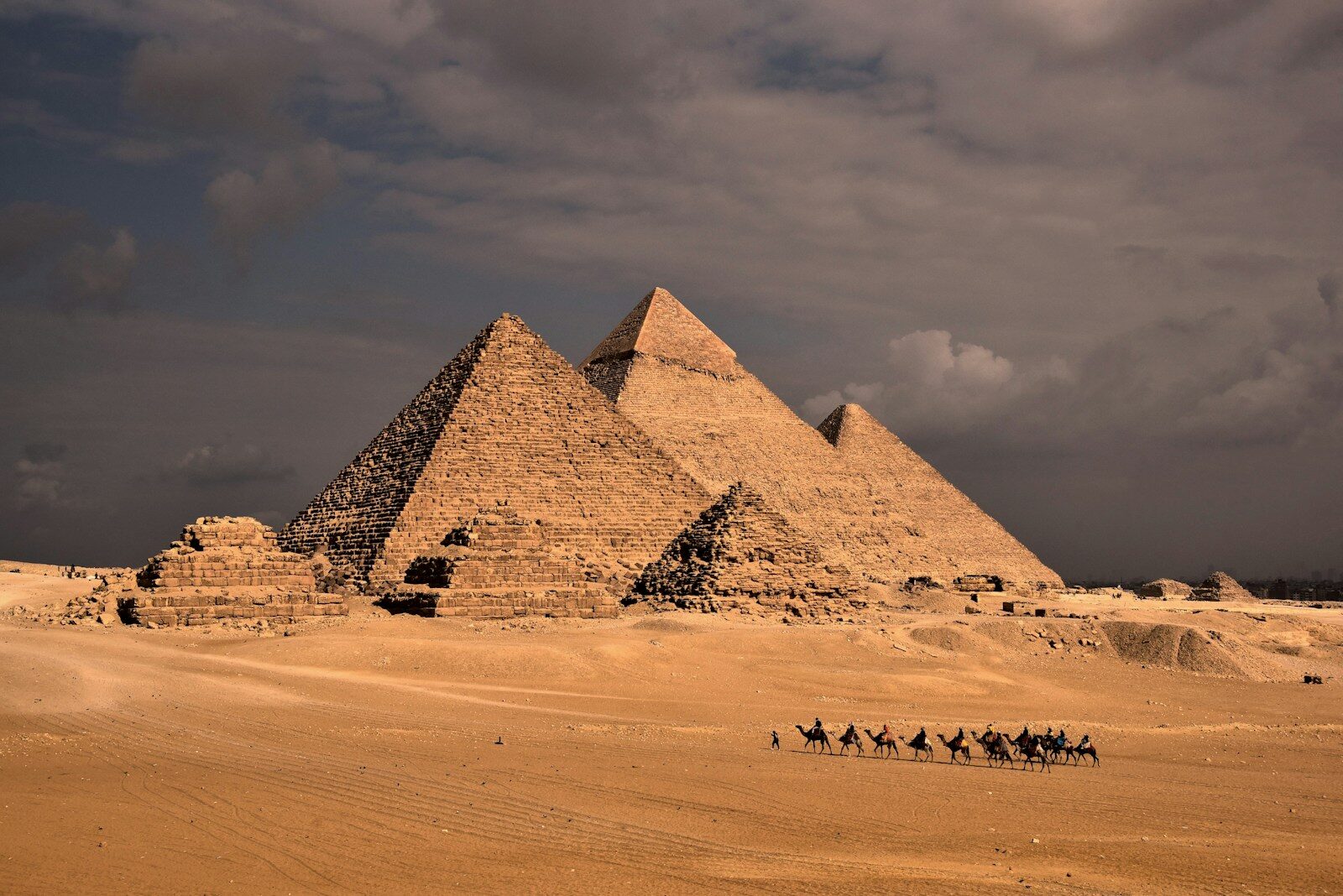
- The Pyramids of Giza & the Sphinx — the only Wonder of the Ancient World still standing. General admission EGP 700 for foreign adults; the Great Pyramid’s interior is a separate ticket (EGP 1,500, daily slots sell out — book ahead). Go at sunrise for the light and the empty plateau.
- The Grand Egyptian Museum (GEM) — opened fully in November 2025 beside the Giza plateau, the largest museum in the world devoted to a single civilisation, with the complete Tutankhamun collection. Foreign adult ticket ~US$35; tickets online only — the on-site ticket office is closed.
- The Egyptian Museum, Tahrir — the old museum in central Cairo, still worth a visit for the Royal Mummies Hall and the sheer density of its collection. Around EGP 550 for foreign adults.
- Khan el-Khalili, Cairo — the medieval bazaar: brass, spices, lamps, and the best people-watching in the city. Haggle, and agree prices first.
- Islamic Cairo — the Citadel of Saladin, the Mosque of Sultan Hassan, and Al-Azhar, one of the world’s oldest universities (founded 970–972).
- Coptic Cairo — the Hanging Church, the Ben Ezra Synagogue, and the Coptic Museum, in the oldest part of the city.
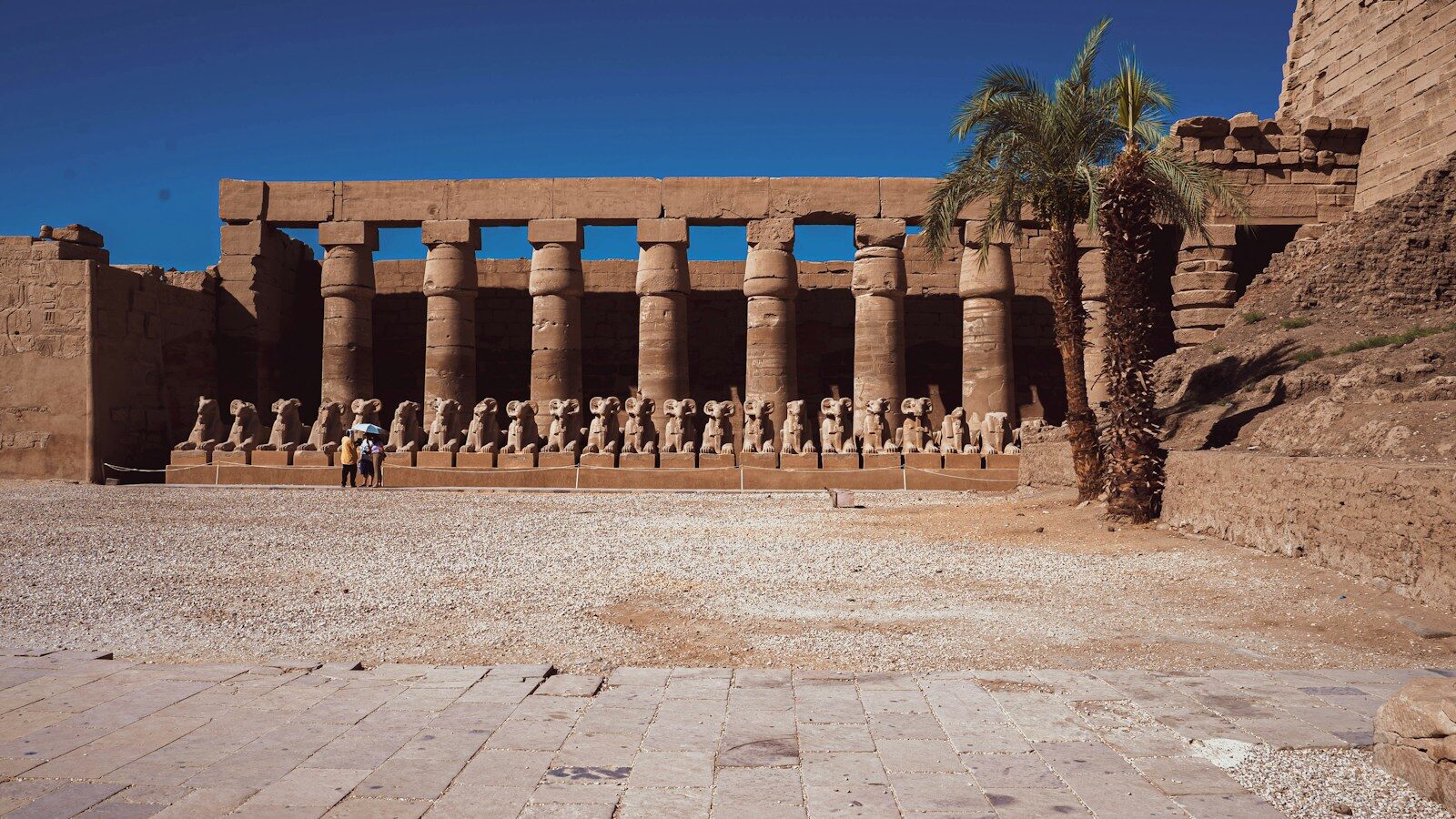
- Karnak Temple, Luxor — the largest temple complex ever built: the hypostyle hall alone has 134 columns, some 23 metres tall. EGP 600 for foreign adults.
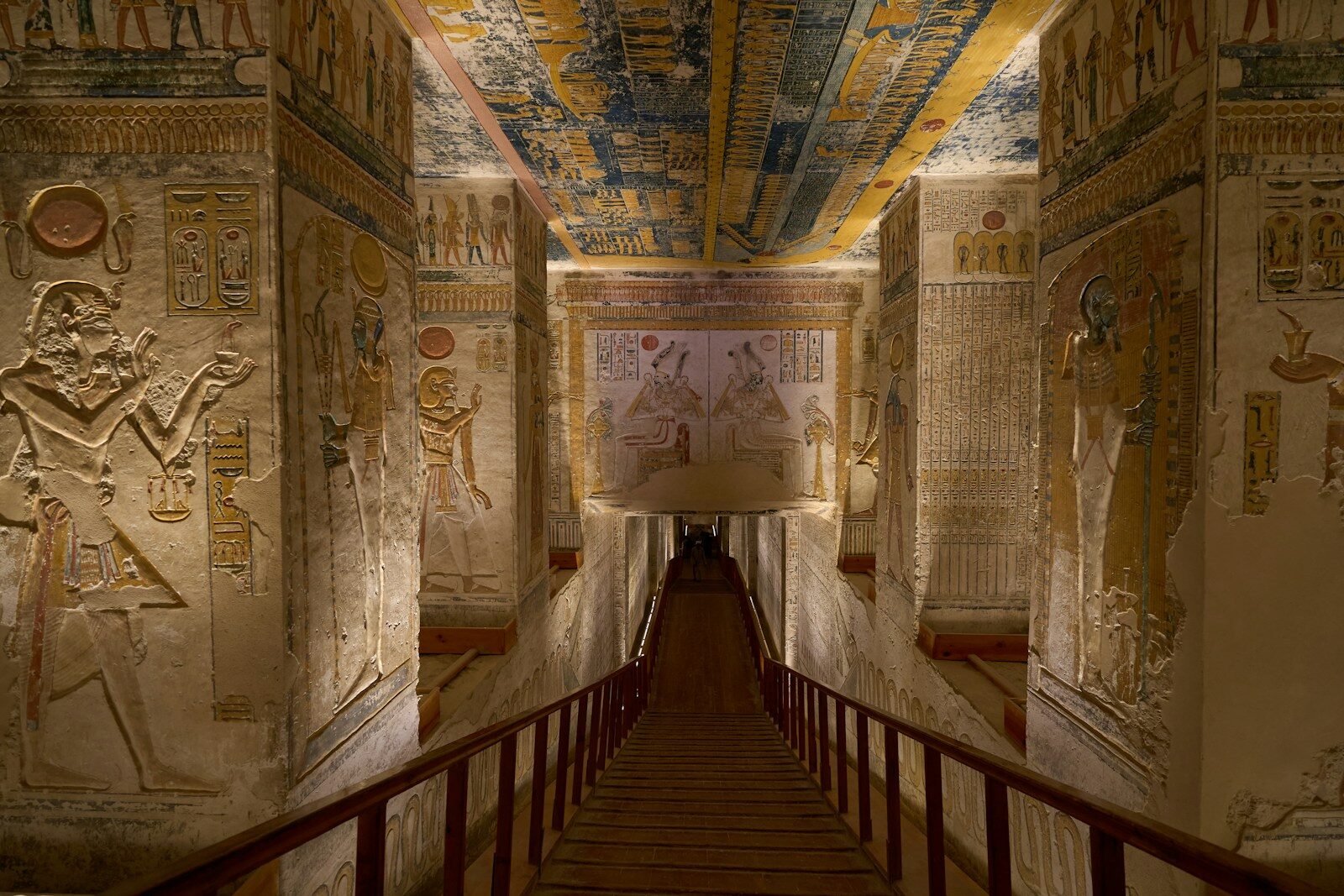
- Valley of the Kings, Luxor — the burial ground of the New Kingdom pharaohs. The standard ticket (EGP 750) covers three tombs from a rotating selection; Tutankhamun’s tomb is a separate EGP 700, and Nefertari’s tomb in the nearby Valley of the Queens — the most spectacularly painted of all — is EGP 1,800.
- Temple of Hatshepsut, Luxor — the terraced temple of Egypt’s great female pharaoh, cut into the cliffs of the West Bank. EGP 440.
- Philae Temple, Aswan — the island temple of Isis, rescued stone by stone from the rising waters of Lake Nasser. EGP 550, and the evening Sound and Light show is worth the stay.
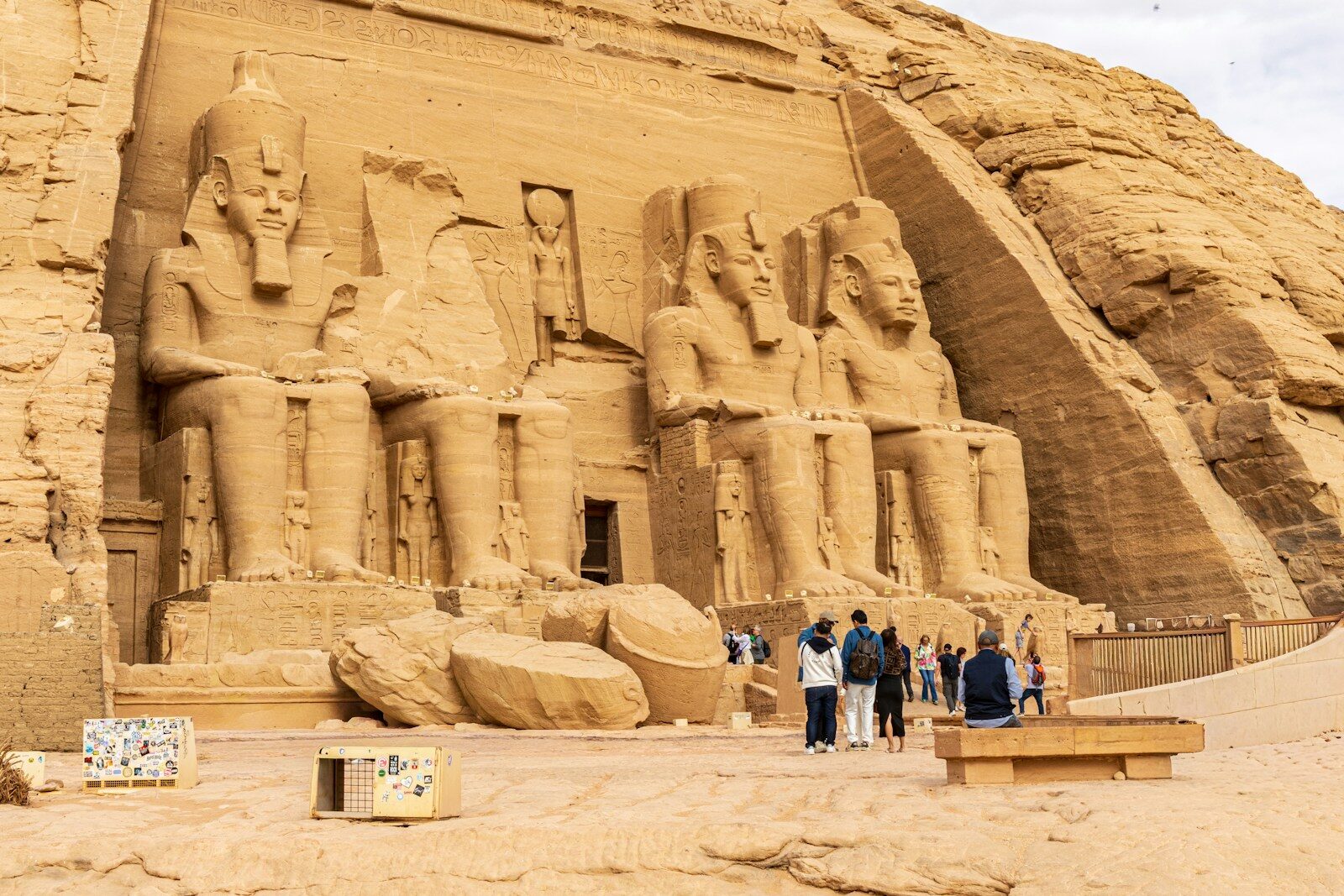
- Abu Simbel — the two colossal temples of Ramses II, moved 65 metres up the cliff by UNESCO in the 1960s to save them from the lake. On 22 February and 22 October, the sun aligns to illuminate the inner sanctuary. EGP 750 (EGP 1,200 on festival days).
- Saqqara & Dahshur — the Step Pyramid of Djoser (c. 2670 BC, the earliest colossal stone building in Egypt) and the Bent and Red pyramids, a day trip from Cairo that most visitors skip and shouldn’t.
- The White Desert — chalk-white rock formations in the Western Desert, best seen on an overnight camping trip from the Bahariya Oasis.
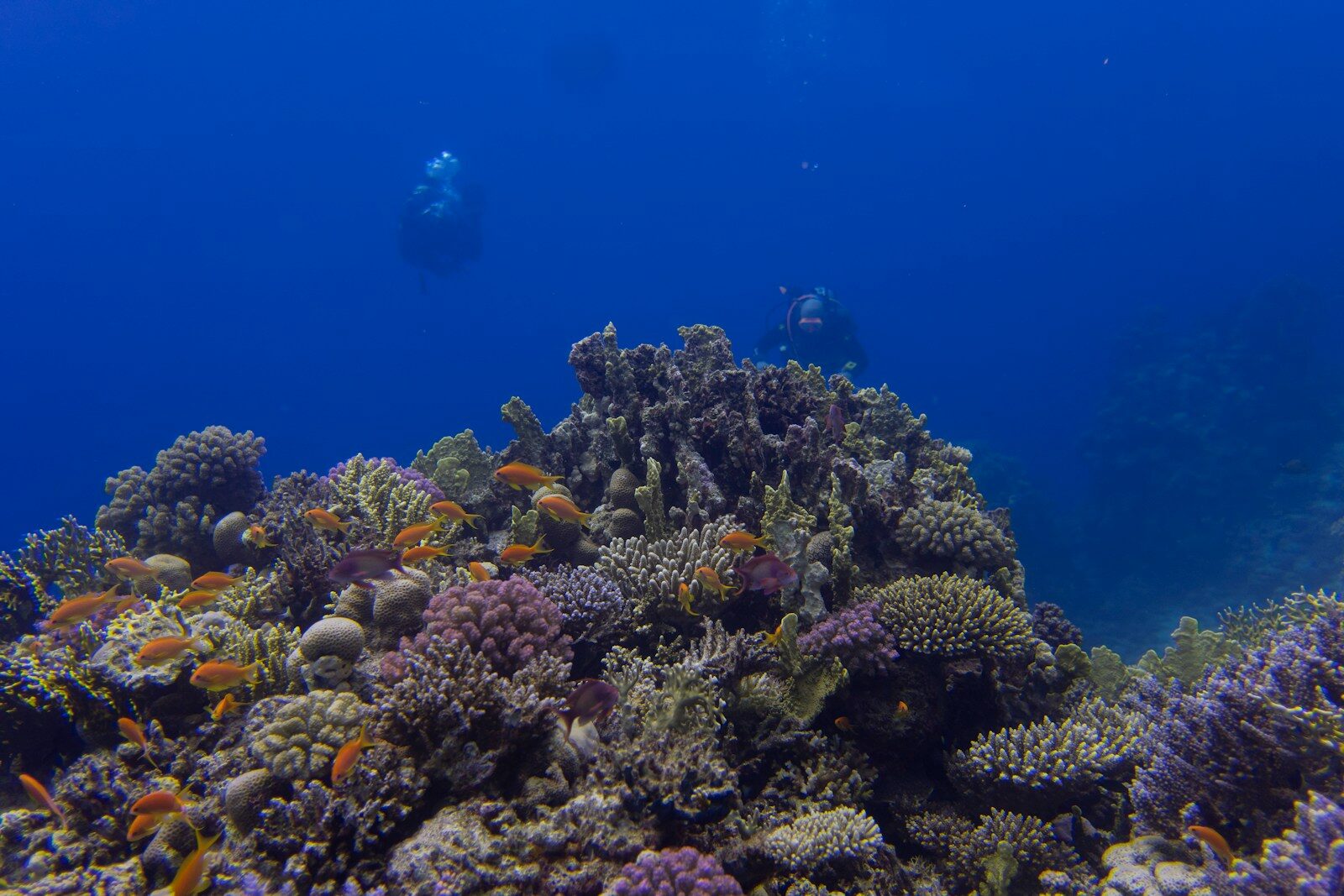
- Ras Mohammed National Park, Sharm el-Sheikh — coral walls, turtles, and some of the best diving in the Red Sea.
🎟️ Book experiences in Egypt
The tours we’d actually book — the classic Giza half-day, the private pyramids-plus-museum day, and the full-day tour with lunch. Free cancellation on most.
- Cairo: Giza Pyramids & Grand Egyptian Museum Private Tour — the Great Pyramid, the Sphinx, and the GEM with a personal guide and all entrance tickets included. From ~US$51.
- Cairo: Pyramids of Giza and the Sphinx Half-Day Guided Tour — skip-the-line entry, an expert Egyptologist, and the panoramic viewpoint for photos. From ~US$53.
- Cairo: Grand Egyptian Museum, Pyramids, Sphinx Tour & Lunch — the full day: GEM, pyramids, Sphinx, Valley Temple, and lunch. From ~US$97.
- Browse all Cairo tours & activities
Some links in this box are affiliate links — we may earn a commission at no extra cost to you. See our affiliate disclosure.
🎟️ More ways to book (Viator)
- Top Day Tour to Cairo by Sleeping Train — first-class overnight rail from Luxor, then a full day in Cairo: the Giza pyramids, the Egyptian Museum, and Old Cairo, with entry fees, lunch, and transfers included. From ~US$265.
- Private 6-Night and 7 Days in Cairo, Giza, Luxor & Nile Cruise with Flights — the whole classic route in one booking: Cairo, Giza, a 3-night 5-star Nile cruise, the Valley of the Kings, and domestic flights. From ~US$1,550.
Some links in this box are affiliate links — we may earn a commission at no extra cost to you. See our affiliate disclosure.
When to Visit & Getting Around
The verdict: October to April is the best time — warm days, cool nights, clear skies, and the sites at their most comfortable. October–November and February–March are the sweet spot. Winter (December–February) is the quietest and cheapest, with the best light for photography. Summer (June–August) is the cheapest window and the worst time to be in Luxor or Aswan, where temperatures regularly pass 40°C. Watch for: Ramadan (expected to begin around 8 February 2027 — confirm the lunar dates before travelling), when daytime restaurants close in smaller towns; and the Abu Simbel Sun Festival on 22 February and 22 October, when the sun aligns to light the inner sanctuary — book months ahead, and expect the temple ticket to rise to EGP 1,200 on those days.
Getting there: most visitors fly into Cairo International (CAI), the main hub, with direct flights from London, New York, Paris, and Toronto. Hurghada (HRG) and Sharm el-Sheikh (SSH) serve the Red Sea directly; Luxor (LXE) and Aswan (ASW) take domestic flights from Cairo in about an hour.
Getting around: the classic route is Cairo → Luxor → Nile cruise to Aswan → Abu Simbel, about 8 days. Domestic flights between Cairo and Luxor/Aswan run $60–255 per leg. The sleeper train is the classic budget option — an overnight first-class 2-berth cabin from Cairo to Luxor or Aswan. Nile cruises (Luxor↔Aswan, 3–4 nights) run $150–450 for a standard 3-night cruise, $400–800 premium, and $1,000–2,500+ for a 5–7-day dahabiya. In Cairo, Uber and Careem work well and avoid taxi haggling; the Cairo Metro is cheap — a few pounds a ride — but crowded at rush hour. Abu Simbel from Aswan is a 3-hour drive (group minibus ~€40–60 per person) or a 45-minute flight; there is no rail service.
✈️ Find cheap flights to Egypt — We may earn a commission if you book through this link, at no extra cost to you.
🚗 Rent a car in Egypt — We may earn a commission if you book through this link, at no extra cost to you.
Budget
Egypt is excellent value for visitors — the pound has lost much of its value in recent years — but the site fees are the budget killer. Daily budgets per person, excluding international flights (1 USD ≈ 50 EGP in November 2026):
- Budget — US$50–100/day. Hostel or guesthouse ($10–25), street food and koshari ($2–5 a meal), metro and microbuses, and one major site a day. Note: the major site fees alone run $80–120 over a 10-day trip, on top of this.
- Mid-range — US$120–250/day. A 3–4★ hotel ($40–90), restaurants ($8–20 a meal), a private driver or guide for a day, and a 3-night standard Nile cruise ($150–450).
- Comfort — US$300+/day. Five-star hotels (the Mena House at Giza, the Four Seasons in Cairo), a private Egyptologist guide, a premium cruise or dahabiya ($400–800+), and a driver for the whole trip.
Money-saving truths: the site fees are the real cost — buy the Luxor Pass ($130 standard / $250 premium, 5 days) or the Cairo Pass ($130, 5 days) if you plan to see a lot, and remember students pay half at most sites with valid ID. Travel in October–November or February–March for the best combination of price and weather. Eat where Egyptians eat — a full koshari meal costs a couple of dollars against $15+ in a tourist restaurant. Book the sleeper train instead of a flight. And carry a working Visa or Mastercard: the major sites are card-only for entry tickets now, and cash will not buy you in.
Practical Tips
- Get the visa right. Most nationalities need a tourist visa: US$30 single-entry, either as an e-visa from visa2egypt.gov.eg or on arrival at the airport (cash USD). The old $25 fee ended on 1 March 2026. A multiple-entry e-visa is $65. A higher fee has been announced from 1 January 2027 — check the official portal before you fly.
- Bring a working card — cash won’t buy site tickets. The major sites (Giza, the GEM, the Egyptian Museum, the Valley of the Kings) are card-only for entry now. Carry small EGP cash for tips, taxis, and small purchases, and change money at banks or authorised bureaux.
- Buy the passes if you see a lot. The Luxor Pass ($130 standard / $250 premium, 5 days) and the Cairo Pass ($130, 5 days) pay for themselves quickly at 2026 prices. Students pay half at most sites with valid ID (up to age 24).
- Agree every price before you start. Camel rides, “free” photos, unofficial guides, and taxi rides all have a second, higher price that appears afterwards. Agree the price in advance, in writing where possible — and walk away once if the number moves.
- Book the Great Pyramid interior and the GEM ahead. Khufu’s interior sells out daily, and GEM tickets must be bought online in advance (visit-gem.com) — the on-site ticket office is closed.
- Respect the sun. The desert sun is brutal even in winter — hat, sunscreen, and water at every site. Luxor and Aswan in summer regularly exceed 40°C; start the sites at opening time (06:00) and rest in the afternoon.
- Stay safe, stay normal. The FCDO advises against all travel to parts of North Sinai and the area west of the Nile in Upper Egypt near the Libyan border. Cairo, Luxor, Aswan, the Red Sea resorts, and the main tourist route are treated as normal destinations — standard vigilance, licensed guides, and the current advisory before you go. Emergency numbers: police 122, ambulance 123, tourist police 126.
🛍️ Shop this guide: Egypt packing essentials
Gear we’d actually pack for this trip. As an Amazon Associate we earn from qualifying purchases — at no extra cost to you. Our affiliate disclosure.
- Egypt travel guidebook — the temples make far more sense with a good guide in hand; the site signs alone won’t explain what you’re looking at.
- Universal travel adapter (Type C/F) — Egypt runs on Type C/F plugs at 220V; North American travellers need an adapter.
- Reef-safe sunscreen SPF 50 — the desert sun is brutal, and the Red Sea reefs need the reef-safe kind.
- Lightweight travel scarf — sun protection at the sites, a shawl for mosque visits, and a wrap for cold desert nights.
- Travel snorkel set — the Red Sea reefs are world-class, and your own mask beats a rented one every time.
🧳 Plan your trip: Egypt
Flights, stays, tours, and cruises — booked in one place. We may earn a commission if you book through these links, at no extra cost to you. Our affiliate disclosure.
- ✈️ Find cheap flights to Egypt — compare fares across airlines and booking sites in one search.
- 🏨 Browse our Expedia Travel Shop — hand-picked stays and travel deals from our curated storefront.
- 🎟️ Browse Cairo tours & activities — free cancellation on most.
- 🛳️ Compare Nile & Red Sea cruises on CruiseDirect — Nile cruises from Luxor to Aswan, and Red Sea sailings from Hurghada.
Closing
Egypt is the country that gives you five thousand years of stories in a single week: breakfast in a city that never sleeps, lunch in a temple older than most civilisations, dinner on a boat sailing the same river the pharaohs sailed. It is the only Wonder of the Ancient World still standing and the newest great museum on Earth; a river that made a desert bloom and a riddle about time that Cleopatra herself would have laughed at. Go for the pyramids, stay for the rest — and leave with a little sand in your shoes, a few words of Arabic, and the feeling that you have only just started.
FAQ
How many days do you need in Egypt?
Eight days is the sweet spot: three in Cairo and Giza, three in Luxor, and two on a Nile cruise to Aswan with Abu Simbel. Ten days adds the Red Sea; fourteen adds Alexandria and the Western Desert.
How much does a trip to Egypt cost?
Budget travellers manage US$50–100 a day; mid-range is US$120–250 a day; comfort starts around US$300 a day — all excluding international flights. A 8-day mid-range trip runs roughly US$1,200–2,500 per person on the ground, plus $80–120 in site entrance fees.
Do I need a visa for Egypt?
Yes — most nationalities need a tourist visa: US$30 single-entry, as an e-visa from visa2egypt.gov.eg or on arrival at the airport. The old $25 fee ended on 1 March 2026, and a higher fee has been announced from 1 January 2027.
When is the best time to visit Egypt?
October to April — warm days, cool nights, and the sites at their most comfortable. October–November and February–March are ideal. Summer is cheapest and worst for Luxor and Aswan, where temperatures regularly pass 40°C.
Is Egypt safe for tourists?
Yes, with normal vigilance on the main tourist route. The FCDO advises against travel to parts of North Sinai and near the Libyan border; Cairo, Luxor, Aswan, and the Red Sea resorts are treated as normal destinations. Petty scams — not crime — are the main risk: agree every price before you start.
Can you really go inside the Great Pyramid?
Yes — the Great Pyramid of Khufu is open to visitors on a separate ticket (EGP 1,500 for foreign adults, daily slots sell out — book ahead). The climb inside is steep, narrow, and hot; Khafre’s pyramid (EGP 280) is the cheaper, easier alternative.
Did Cleopatra really live closer to the Moon landing than to the pyramids?
Yes. Cleopatra died in 30 BC — about 2,500 years after the Great Pyramid was built (~2560 BC) and about 2,000 years before Apollo 11 landed in 1969.
Keep exploring
- Morocco travel guide — North Africa’s other great desert kingdom, from Marrakech’s souks to the Sahara dunes
- Turkey travel guide — where continents collide, from Istanbul’s bazaars to Cappadocia’s balloons
- Greece travel guide — the other side of the ancient Mediterranean, from Naxos and Paros to the Acropolis
- Italy travel guide — Rome, the Amalfi Coast, and the classic 10-day route
- Spain travel guide — Barcelona vs Madrid, and the country that shares Egypt’s Mediterranean shore