
 admin
Introduction
Canada holds sixty-two percent of all the lakes on Earth — more than 875,000 of them, by the standard count — and that one number tells you most of what you need to know about this country. It is the second-biggest nation on the planet, and most of it is gloriously empty: forty-two million people, three-quarters of them living within a few hours of the American border, and beyond that, forest and tundra and water, water everywhere.
This guide does the classic first trip properly: five days in Banff, the jewel of the Canadian Rockies, done at walking pace, with the turquoise lakes at dawn, the Icefields Parkway, Johnston Canyon’s catwalks, and the mountain town that knows exactly how good it has it. Along the way you’ll get the practical numbers that matter in 2026 — the 12.25-dollar park pass, the shuttle that sells out in minutes, the road that is closed to cars, and the one season when the lakes are actually blue. Then we’ll widen the lens: Toronto, Montreal, Vancouver, and Quebec City, for when Banff leaves you wanting the rest of the country too.
Geography & Climate
Canada covers about 9.98 million square kilometres — second only to Russia — and touches three oceans: the Atlantic, the Pacific, and the Arctic. Its coastline, at 243,042 kilometres, is the longest of any country on Earth, and it shares the world’s longest land border with the United States, roughly 8,891 kilometres. The country runs across six time zones, from Newfoundland (UTC−3:30, the only half-hour zone in North America) to British Columbia.
The landscape is a set of worlds stitched together: the Rocky Mountains in the west, the vast Canadian Shield of ancient rock and lake country in the centre, the prairies, the Great Lakes (which hold about 20% of the world’s surface freshwater), the St. Lawrence lowlands, and the Atlantic provinces. Banff sits in the front ranges of the Rockies in Alberta, where the town itself is at about 1,383 metres and the peaks around it push past 3,000.
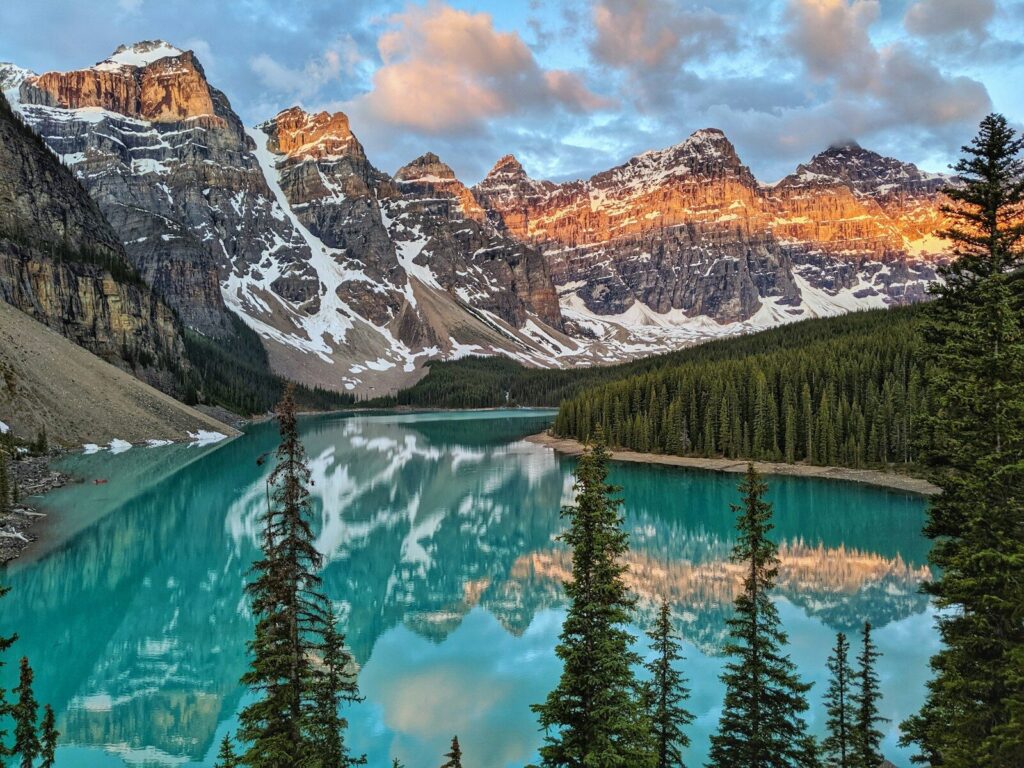
Climate is the first thing to respect. Banff’s summer is short and glorious — July days around 20–23°C, cool nights, long evenings — but the lakes are frozen from roughly November to early June, and the turquoise colour that makes Lake Louise famous (fine glacial rock flour suspended in the water) only peaks in July and August after the ice melts. Winter is a different country: Banff becomes a ski town, the lakes freeze solid, and the hot springs steam in −15°C air. Toronto and Montreal get real winters too (Montreal averages around −10°C in January, the prairies can hit −20°C or worse), while Vancouver stays mild and rainy, rarely dropping below freezing. Dress in layers in the mountains — the weather can change in an hour, and a sunny morning can turn to sleet by lunch.
Best time: for Banff, late June to September is the window for lakes and hiking, with July and August the peak for colour and the worst for crowds. Mid-September to early October brings the larch season — the golden larches of Larch Valley are the Rockies’ best autumn show — and thinner crowds. December to March is ski season. For the cities, May to October is the sweet spot, and late September to mid-October is the fall-colour season in Ontario and Quebec, worth planning a trip around on its own.
People & Demographics
Canada has about 41.8 million people (Statistics Canada, July 1, 2026) — the 38th-largest population in the world spread across the second-largest landmass, which is why the country feels so empty the moment you leave a city. Roughly 75% of Canadians live within a few hours of the US border. Toronto, at about 3 million people, is the largest city; Montreal, Vancouver, Calgary, Edmonton, and Ottawa follow, and the capital, Ottawa, is a quiet government town of about a million that punches above its weight on museums.
Canada is officially bilingual — English and French — and French is the everyday language of Quebec, where it is a point of identity as much as communication. Beyond the two official languages, the country is one of the most multicultural on Earth: more than one in five Canadians was born abroad, and Toronto is often called the most diverse city in the world, with over half its residents born outside Canada. Indigenous peoples — First Nations, Inuit, and Métis — make up about 5% of the population, with cultures and languages that predate the country by thousands of years.
Canadians are famously polite — the “sorry” is real, and Ontario even passed an Apology Act in 2009 saying an apology is not an admission of liability, because Canadians apologise so much it became a legal question. The median age is around 41, the cities are young and diverse, and the national character is a curious mix: modest on the surface, quietly proud underneath, and deeply attached to the outdoors. The median Canadian would rather be on a lake than almost anywhere else — which, given the number of lakes, is easy to arrange.
Culture, Etiquette & Daily Habits
Canadian culture runs on a few quiet rules: be polite, queue properly, tip properly, and never, ever feed the wildlife. The country is a federation of distinct cultures — French Quebec, the Maritimes, the Prairies, the West Coast — and the differences are real: Quebec has its own civil code, its own food (poutine was invented there in the 1950s), and its own relationship with the rest of the country. The national sports are ice hockey (a religion in winter) and lacrosse (officially the national summer sport), and the national drink is the Caesar — vodka and Clamato with a celery-salt rim, invented in Calgary in 1969.
Do:
- Say please, thank you, and sorry — it is not optional, it is the social contract.
- Tip 15–20% in restaurants and about 10–15% for taxis; the tip is not included in the bill.
- Dress in layers in the mountains and carry bear spray on Banff trails — and know how to use it before you need it.
- Learn a few French words before Quebec: “Bonjour” and “Merci” open every door.
- Queue. Canadians queue for everything, and they notice when you don’t.
- Give wildlife space: 30 metres for elk, 100 metres for bears. The fines are real, and a rutting elk is genuinely dangerous.
Don’t:
- Feed or approach wildlife — in Banff, this is enforced with heavy fines, and it gets animals killed.
- Assume the lakes are blue in May — they are usually still frozen until early June, and Moraine Lake Road closes in mid-October.
- Drive the Icefields Parkway at night in winter without winter tires — they are mandatory in BC mountain passes from October 1 to March 31.
- Expect dinner before 6pm in small towns, or after 10pm outside the big cities.
- Tip in Quebec the same way you would in the US — the rate is the same, but the tax is added after, so tip on the pre-tax amount.
- Call a Canadian an American. Just don’t.
Phrasebox (French, for Quebec): Bonjour (hello) · Merci (thank you) · S’il vous plaît (please) · L’addition, s’il vous plaît (the bill, please) · Où sont les toilettes? (where is the bathroom?) · Ça coûte combien? (how much?) · À la prochaine (see you later) · Désolé (sorry — the most Canadian word of all, in either language).
Lifestyle
Canadian daily life is shaped by two forces: the seasons and the outdoors. Summer is short and people use it hard — patios fill the moment the temperature hits 15°C, cottages on the lakes fill every weekend (the “cottage country” ritual is a national institution in Ontario), and the national parks are booked solid. Winter is long and Canadians lean into it: skating on the Rideau Canal in Ottawa (the world’s largest naturally frozen skating rink), skiing in Banff and Whistler, and the Quebec Winter Carnival in February.
Food is regional and proud of it. Poutine (fries, cheese curds, gravy) is the national dish, invented in Quebec. Montreal’s wood-fired bagels are honey-sweetened and endlessly argued about versus New York’s. Quebec produces about 70% of the world’s maple syrup. The Maritimes do lobster and seafood; British Columbia does wild salmon and spot prawns; Toronto does peameal bacon sandwiches; the Prairies do steak. And everywhere, there is Tim Hortons — the coffee-and-doughnut chain that is less a brand than a piece of national infrastructure, where a “double-double” (two cream, two sugar) is a phrase every Canadian understands.
Work culture is polite and consensus-driven, the working day typically 9 to 5, and the cities run on transit and coffee. Music is everywhere — Montreal’s jazz festival is one of the biggest in the world, Toronto’s film festival (TIFF, September) is a global event, and the Calgary Stampede (July) turns a modern city into a ten-day rodeo. Sport means hockey above all: a Saturday night in a Canadian bar during the playoffs is a cultural experience in itself.
Main Cities
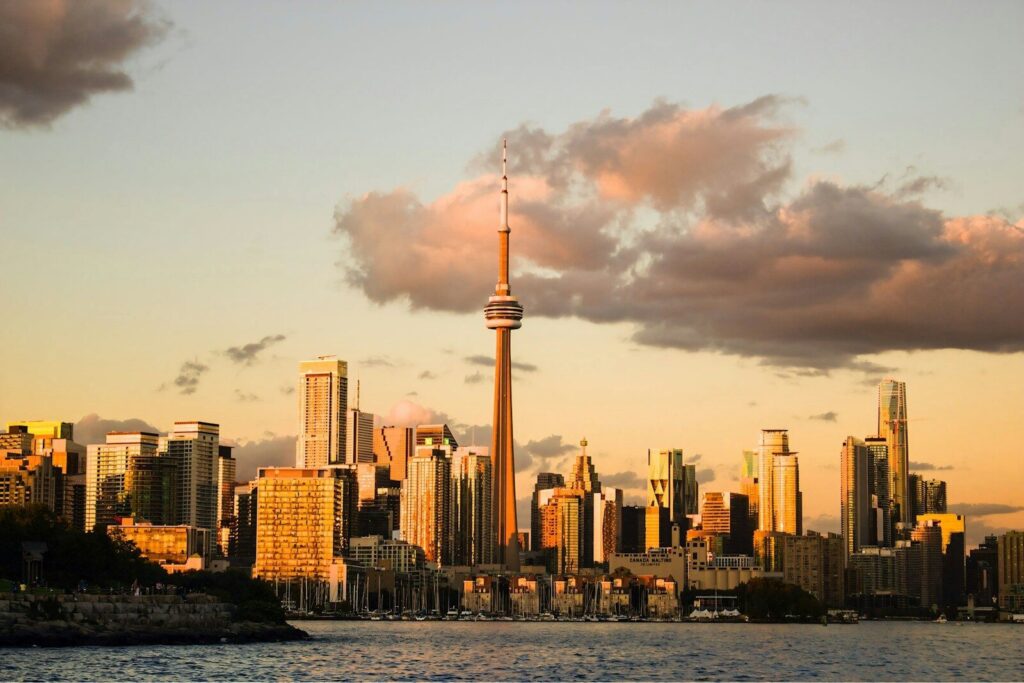
Toronto — the biggest city and the economic engine: the CN Tower (553 metres, once the world’s tallest free-standing structure), Kensington Market, the Distillery District, island ferries to the Toronto Islands, and a food scene that covers every cuisine on Earth. The TTC runs the subway, streetcars, and buses on a flat CAD 3.30 fare.
Montreal — the French soul of Canada: Old Montreal’s cobblestones, Mount Royal, the bagel shops of St-Viateur, the jazz festival in late June, and the best food city in the country by a clear margin. Come hungry and bring your French.
Vancouver — mountains meeting ocean: the Stanley Park seawall, Granville Island market, rainforest trails minutes from downtown, and the gateway to Whistler, 90 minutes up the Sea-to-Sky Highway. The mildest winter in Canada and the rainiest city — bring a jacket, not an umbrella (locals don’t use them).
Calgary — the Stampede city and the gateway to Banff, 90 minutes west: a modern downtown with the +15 skywalk network, superb steak, and the best jumping-off point for the Rockies. Fly into Calgary (YYC) for Banff — it is the only sensible gateway.
Ottawa — the capital: Parliament Hill, the Rideau Canal (skate it in winter), and the best museum cluster in the country — the National Gallery, the Canadian Museum of History across the river in Gatineau, and the War Museum.
Quebec City — the only walled city north of Mexico: Old Quebec is a UNESCO site, the Château Frontenac dominates the skyline, and the whole place feels like France with better poutine. The Winter Carnival in February is worth the cold.
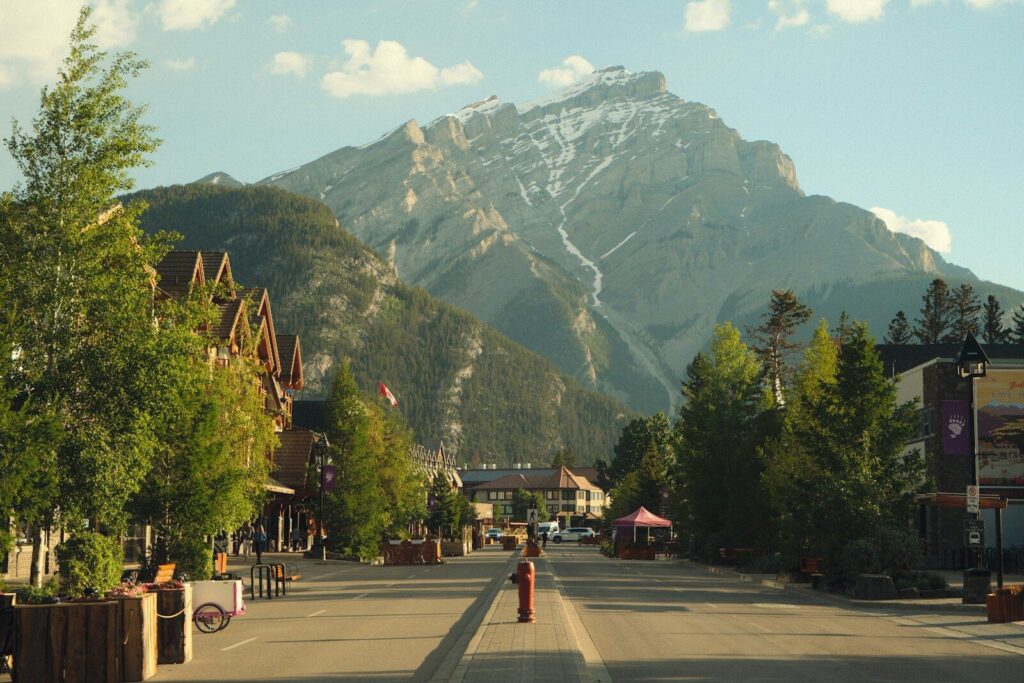
Banff — the Rockies town at the heart of this guide: hot springs, the gondola, Bow Falls, and a main street that ends in a mountain. Small, walkable, and expensive in summer — book early.
Halifax — the Atlantic harbour city: seafood, the Citadel, Maritime history, and the friendliest pubs in the country.
Victoria — the BC capital on Vancouver Island: Butchart Gardens, whale watching, afternoon tea, and the most British city in Canada.
Edmonton — the prairie city and the gateway to Jasper, with the biggest mall in North America (West Edmonton Mall) and the best northern-lights access from a major city in winter.
Top Places to Visit
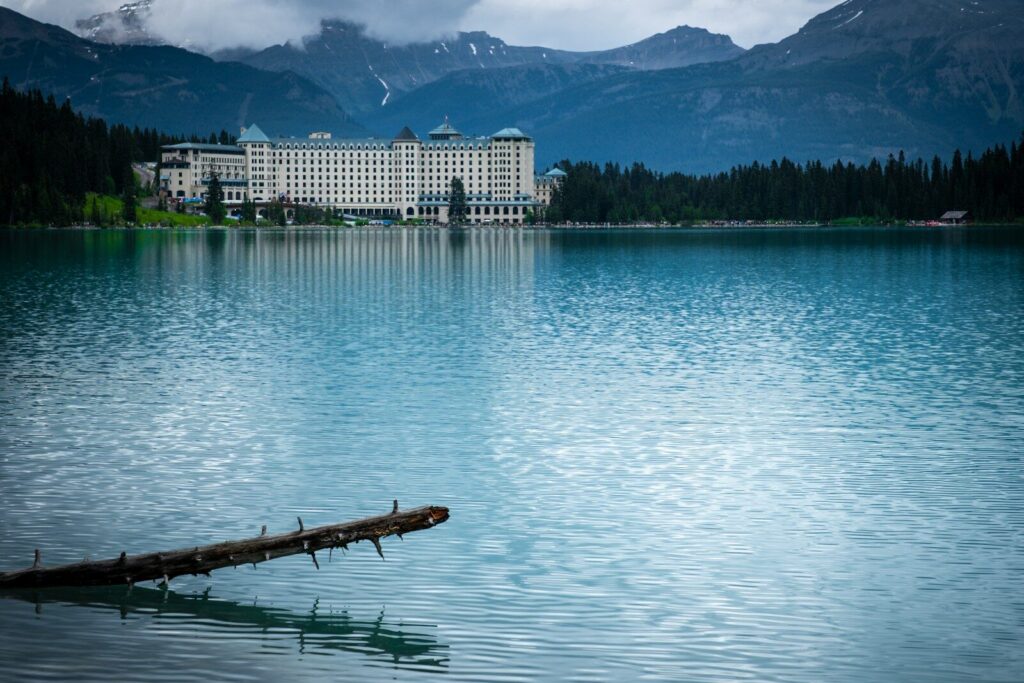
- Lake Louise — the postcard: milky-turquoise water, the Fairmont Château on its shore, the Victoria Glacier behind. Arrive before 8am or after 5pm, or take the shuttle — the car park fills by mid-morning.
- Moraine Lake — the more beautiful sister lake, under the Valley of the Ten Peaks. No private cars allowed; shuttle, tour, or transit only. Climb the Rockpile for the famous view.
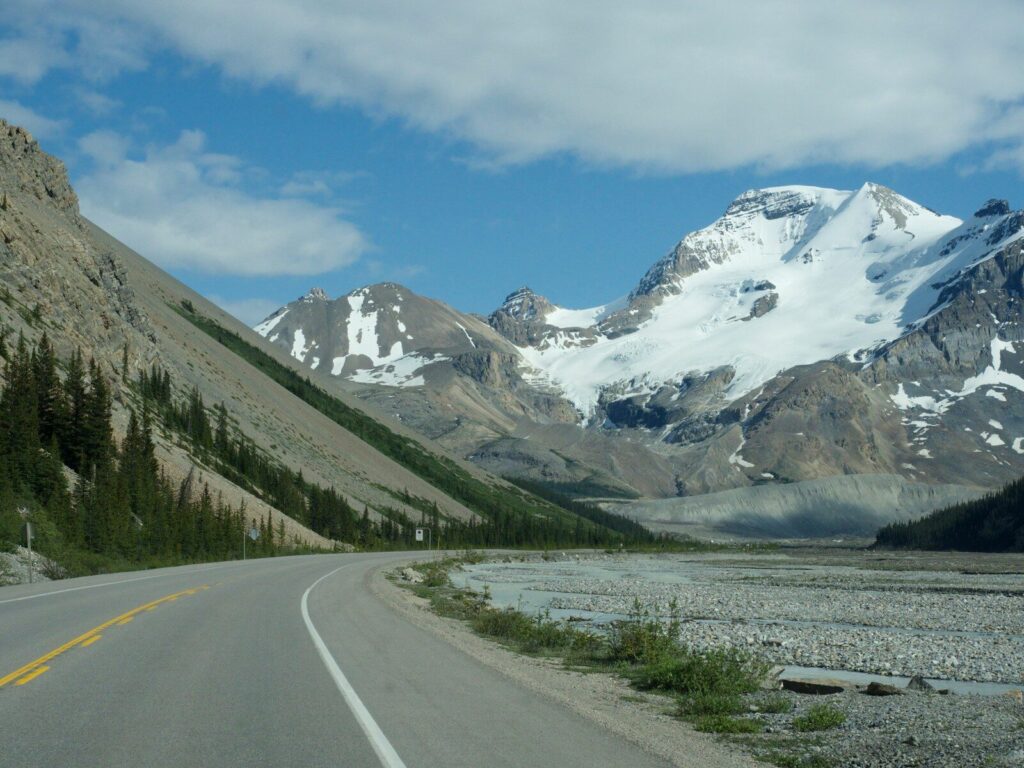
- Icefields Parkway — the 232-kilometre drive from Banff to Jasper, past Peyto Lake, the Columbia Icefield, and the Athabasca Glacier. Allow a full day, minimum.
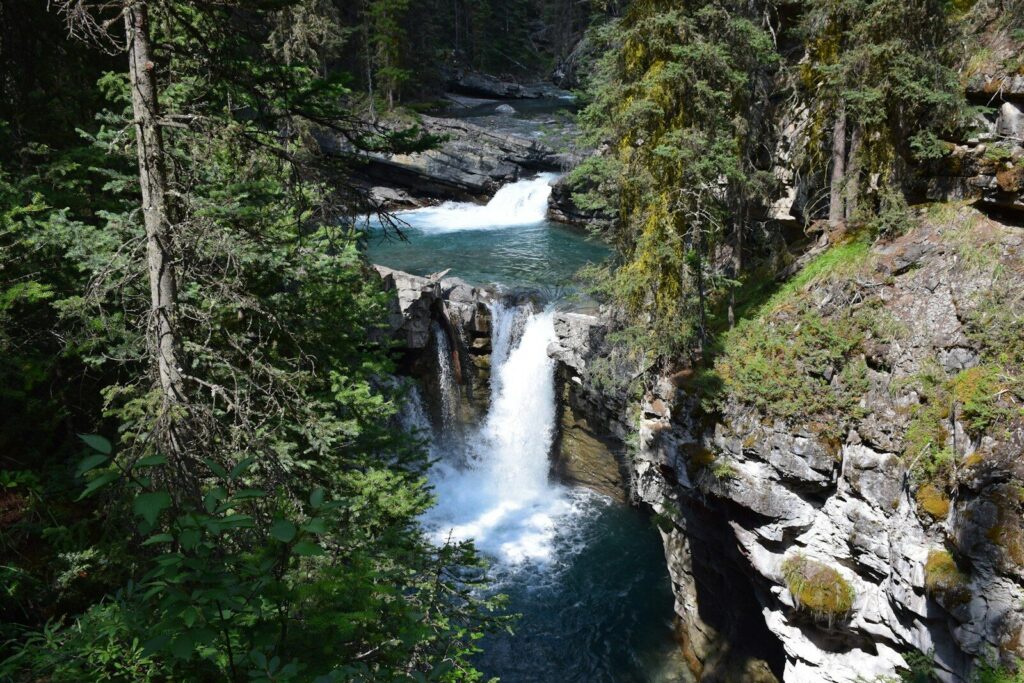
- Johnston Canyon — catwalks bolted to a limestone gorge, 2.7 km to the Lower Falls and 5.4 km to the Upper Falls. In winter it becomes an ice walk with frozen waterfalls.
- Banff Gondola — eight minutes to the top of Sulphur Mountain, 2,281 metres, for the best panorama in town. About CAD 76 for an adult.
- Lake Minnewanka — the big lake ten minutes from town: boat cruises (about CAD 75), picnic spots, and the best sunset in the park.
- Columbia Icefield & Athabasca Glacier — walk on a glacier (guided, with crampons) at the far end of the Parkway.
- Peyto Lake — the wolf-head-shaped lake seen from the Bow Summit viewpoint, the most photographed lake in the Rockies after Louise.
- Vermilion Lakes — the free sunrise spot five minutes from Banff town, with Mount Rundle reflected in the water.
- Banff Upper Hot Springs — the outdoor pool at the top of the mountain road, best at dusk in winter when the steam rises into −15°C air.
- Canmore — the quieter, cheaper, more local town 20 minutes east of Banff, with better restaurants and the same mountain views.
- Larch Valley & Sentinel Pass — the golden-larch hike from Moraine Lake, mid-September to early October, the best autumn walk in the Rockies.
🎟️ Book experiences in Banff
Tours we’d actually book — free cancellation on most. We may earn a commission if you book through these links, at no extra cost to you. Our affiliate disclosure.
- Banff: Lake Louise, Moraine or Emerald Lake and Johnston Canyon Photo Tour — the full day: Lake Louise, Moraine Lake, Johnston Canyon, and Banff town, with a photo challenge along the way, from $43.
- Banff Day Tour: Lake Louise, Moraine Lake & Emerald Lake — a full-day tour from Calgary, Canmore, or Banff with a national park pass and Moraine Lake entry included, from £84.
- Banff: Lake Louise, Moraine, Minnewanka, Emerald Lake & Banff — eleven hours across Banff and Yoho National Parks, with free time in Banff town, from £55.
- Browse all Banff tours & activities
🎟️ More ways to book (Viator)
More Banff tours with free cancellation on most. We may earn a commission if you book through these links, at no extra cost to you. Our affiliate disclosure.
- Banff National Park Full-Day Tour from Calgary — Moraine Lake and Lake Louise with special access to Moraine Lake, from $113.
- Lake Louise Small-Group Moraine Lake and Banff Tour — a small-group day (max 12 guests) with expedited access to both lakes, from $202.
When to Visit & Getting Around
Best time: late June to September for Banff’s lakes and hiking — July and August for the turquoise colour, mid-September to early October for the golden larches and thinner crowds. December to March is ski season at Sunshine Village, Lake Louise Ski Resort, and Mt Norquay. May and October are the quiet, cheap shoulders, but the lakes are often still frozen until early June and Moraine Lake Road closes in mid-October. For the cities, May to October is best; late September to mid-October is the fall-colour season in Ontario and Quebec. Festivals worth timing a trip around: the Calgary Stampede (July), the Montreal Jazz Festival (late June–early July), Winterlude in Ottawa (February), TIFF in Toronto (September), and the Quebec Winter Carnival (February).
Getting there: Calgary International Airport (YYC) is the gateway for Banff — about 90 minutes’ drive west on the Trans-Canada Highway. Toronto Pearson (YYZ), Montreal (YUL), and Vancouver (YVR) are the main international gateways for the cities. US citizens enter on a valid passport alone (no eTA, no visa, up to 6 months). Visa-exempt visitors flying in — UK, most of the EU, Australia, New Zealand, Japan, South Korea, and others — need an Electronic Travel Authorization (eTA): CAD $7, applied for online at canada.ca, usually approved in minutes, valid up to five years. Land and sea entries from the US need no eTA. Other nationalities generally need a visitor visa in advance — and apply only through canada.ca, never through a look-alike site that charges extra.
Getting around Banff: you do not need a car in Banff town — it is small and walkable, and the Roam public bus covers the town and the run to Lake Louise (Route 8X, Banff–Lake Louise Express, CAD 12.50 adult, year-round). But a car is the best way to do the Icefields Parkway and the wider park, so most visitors rent at Calgary Airport. Book months ahead for summer. Moraine Lake Road is closed to private vehicles — the only ways in are the Parks Canada shuttle, a commercial tour, or Roam transit. Book the Parks Canada shuttle the moment reservations open (mid-April; the rest release on a rolling two-day window and sell out in minutes): CAD 8 per adult plus a CAD 3.50 reservation fee, and one reservation covers both lakes via the free Lake Connector. And remember the park pass: every visitor who stops in Banff National Park needs one — CAD 12.25 per adult per day in 2026 (seniors CAD 10.75, youth 17 and under free), or the annual Discovery Pass at CAD 83.50, which pays for itself after about seven days of park visits. A summer 2026 free-admission window has ended, so standard fees apply.
Getting around the cities: Toronto’s TTC runs subways, streetcars, and buses on a flat CAD 3.30 fare (tap a PRESTO card, debit card, or phone), with a two-hour transfer and a CAD 13.50 day pass; the UP Express runs Pearson Airport to Union Station in about 25 minutes. Vancouver’s TransLink uses the Compass Card (1-zone CAD 2.85, all-zone DayPass CAD 12.55). Montreal’s STM runs on the OPUS card. Between cities, fly — Toronto to Vancouver is 4,400 kilometres, a five-hour flight or a four-day drive — and VIA Rail is scenic but slow (Toronto–Montreal is about five hours, from roughly CAD 45–90).
✈️ Find cheap flights to Canada — compare fares across airlines and booking sites in one search. We may earn a commission if you book through this link, at no extra cost to you.
🚗 Rent a car in Canada — compare rental prices for the Icefields Parkway, a Cabot Trail drive, or a Banff–Jasper road trip. We may earn a commission if you book through this link, at no extra cost to you.
Budget
Prices in Canadian dollars (CAD), with US dollars at roughly CAD 1.35–1.40 to the dollar (November 2026). Canada is not a budget destination, but it is more affordable than most travellers expect outside peak Rockies and big-city summer weeks — and the weak Canadian dollar helps everyone paying in USD, euros, or pounds.
- Budget (CAD 120–200 / ~$90–150 per day): hostel dorm or budget hotel (CAD 45–70), grocery and market meals, poutine and food trucks (CAD 10–15), the TTC or a Roam bus, and the free sights — Vermilion Lakes, the Bow River, Surprise Corner, and the lakeshores cost nothing beyond the park pass.
- Mid-range (CAD 300–450 / ~$220–330 per day): a hotel in Banff or Canmore (CAD 180–320 a night, often CAD 300–500+ in Banff in July), restaurant dinners with a local beer (CAD 25–50), the gondola, a Minnewanka cruise, and a guided day trip to the lakes.
- Comfort (CAD 550+ / ~$400+ per day): a Fairmont stay at Lake Louise or Banff Springs (CAD 400+ a night), private guides, a glacier walk on the Columbia Icefield, a helicopter tour, and fine dining in Toronto or Montreal.
Money-saving truths: Stay in Canmore instead of Banff town — same mountains, 20 minutes east, often CAD 100 a night cheaper, with better restaurants. The Parks Canada shuttle (CAD 8) is the best-value ticket in the park: one reservation unlocks both Lake Louise and Moraine Lake for the day. Cook a few meals — Banff has a grocery store, and a picnic at Lake Minnewanka beats a CAD 40 lunch. And watch the tax: prices are shown before tax, and Alberta adds only 5% GST, while Ontario adds 13% HST — the same meal costs noticeably more in Toronto than in Banff. The expensive mistakes are booking Banff hotels in July at the last minute (rooms double in price and sell out), paying in US dollars at tourist rates (always pay in CAD), and renting a car at the airport desk instead of booking months ahead.
Practical Tips
- Book the Moraine Lake shuttle the day reservations open. Mid-April for the season, then a rolling two-day window — seats sell out in minutes. No shuttle, no Moraine Lake: private cars are banned on the road.
- Carry bear spray on Banff trails — and know how to use it. Read the instructions before you hike, make noise on blind corners, and never, ever approach elk, especially in rut season (autumn). Keep 30 metres from elk and 100 metres from bears.
- Go to Lake Louise before 8am or after 5pm. The car park fills by mid-morning in summer, and the light is better at both ends of the day anyway. Sunrise at Vermilion Lakes is free and five minutes from town.
- Check the lakes before you go. Lake Louise and Moraine Lake are frozen from November to early June. If you visit in May, you will find ice, not turquoise — still beautiful, but not the postcard.
- Layer, always. Mountain weather changes in an hour: a sunny morning, a sleet shower by lunch, and a cold evening. A packable rain jacket and a warm layer belong in your daypack on every hike.
- Prices are shown before tax. Add 5% GST in Alberta, 13% HST in Ontario, and the local rate elsewhere — and tip 15–20% on the pre-tax amount in restaurants.
- Emergencies: 911 works nationwide. Plugs are US-style type A/B at 120V. Canada spans six time zones — check the local time when booking shuttles and tours across provinces, and remember Newfoundland runs on the half hour.
🛍️ Shop this guide
Gear we’d pack for Canada. We may earn a commission if you book through these links, at no extra cost to you. Our affiliate disclosure.
- Bear spray with holster — essential on Banff trails, and the holster keeps it on your hip, not buried in your pack.
- Waterproof hiking boots — Johnston Canyon’s catwalks are wet, the larch trails are muddy, and the Rockies are not a trainers kind of place.
- Packable rain jacket — mountain weather turns in an hour; this lives in your daypack on every hike.
- Insulated water bottle — altitude, sun, and long trails mean drinking far more water than you think.
- Compact binoculars — for elk at Vermilion Lakes, bears on the Parkway (from a safe 100 metres), and whales off Vancouver Island.
🧳 Plan your trip
One box, everything booked. We may earn a commission if you book through these links, at no extra cost to you. Our affiliate disclosure.
- ✈️ Find cheap flights to Canada — compare fares across airlines and booking sites in one search.
- 🏨 Browse our Expedia Travel Shop — hand-picked stays and travel deals from our curated storefront.
- 🎟️ Browse Banff tours & activities — free cancellation on most.
- 🛳️ Compare Alaska cruises on CruiseDirect — Inside Passage sailings from Vancouver that pair perfectly with a Banff trip.
Closing
Canada doesn’t do small. It holds sixty-two percent of the world’s lakes and a coastline longer than any other country’s, and it still feels like a secret — a mountain town where elk graze the main street, a lake so blue it looks edited, a drive so beautiful you keep pulling over. Five days in Banff is a beginning, not a trip: you’ll leave with the turquoise in your memory, poutine on your shirt, and the certain knowledge that you’ll be back — for Jasper, for the larches, for the cities, for the winter. Come layered, come early, and come ready to look twice — the best things here are hiding in plain sight, usually behind a mountain.
Keep exploring
- Switzerland travel guide — the Swiss Alps on a budget, and the other great mountain country in this series.
- Iceland travel guide — the Golden Circle vs the Ring Road, and another land of lakes, glaciers, and empty roads.
- Austria travel guide — Vienna and Salzburg on the classical music trail, for the mountain-and-culture combination.
- Mexico travel guide — Mexico City in 4 days, the other great North American trip in this series.
- Czechia travel guide — Prague in 2 days, the perfect weekend after the Rockies.
FAQ
How many days do you need in Banff?
Five days covers the essentials: Banff town and the gondola, Lake Louise and Moraine Lake, Johnston Canyon, Lake Minnewanka, and the Icefields Parkway. Add two days for Jasper, or three for the cities — a week to ten days total is the classic first Canada trip.
Is Banff expensive?
Yes, in summer — it is one of the priciest places in Canada. Budget travellers manage on CAD 120–200 a day (hostel, groceries, free sights); mid-range runs CAD 300–450. Staying in Canmore and cooking a few meals are the two biggest savings.
Do I need a visa for Canada?
US citizens need only a valid passport. Visa-exempt visitors flying in (UK, most of the EU, Australia, New Zealand, Japan, and others) need an eTA — CAD $7, applied for online at canada.ca, usually approved in minutes. Other nationalities generally need a visitor visa in advance.
What is the best month to visit Banff?
July and August for the turquoise lakes and full trail access; mid-September to early October for the golden larches and thinner crowds; December to March for skiing. Avoid May if you want blue lakes — they are usually still frozen until early June.
Is Canada safe for tourists?
One of the safest countries in the world for travellers, with normal big-city caution in Toronto, Montreal, and Vancouver. In the parks, the risk is wildlife, not crime: keep your distance from elk and bears, carry bear spray, and check trail conditions before you hike.
Can you drive to Moraine Lake?
No — Moraine Lake Road has been closed to private vehicles since 2023. The only ways in are the Parks Canada shuttle (CAD 8 plus a CAD 3.50 reservation fee — book the day reservations open), a commercial tour, or Roam transit. The same reservation covers Lake Louise via the free Lake Connector.
[…] Canada travel guide: Banff, lakes, and how to beat the crowds […]