 admin
Introduction
Jamaica is the Caribbean island that punches hardest above its weight. It is home to about 2.8 million people — roughly the population of Chicago — yet it gave the world reggae, the fastest human who ever lived, and a bobsled team from a country with no snow. It is the island of Bob Marley and Usain Bolt, of jerk chicken smoked over pimento wood and coffee grown in the clouds, of waterfalls you climb hand-in-hand and cliffs you jump from at sunset.
Most visitors see only one slice of it: the resort strip of Montego Bay, or the all-inclusive compounds of Ocho Rios. That is a fine holiday, but it is not Jamaica. The real island is the one outside the gates — the laid-back west end of Negril, the misty coffee farms of the Blue Mountains, the music-soaked streets of Kingston, and the wild, green east coast around Port Antonio, where a river runs straight into the sea. This guide covers all of it: the beaches and the mountains, the cities and the food, when to go, what it costs, and the practical rules that keep the trip smooth.
A note on 2026: Hurricane Melissa, a Category 5 storm, struck Jamaica’s south coast on 28 October 2025 — the strongest hurricane ever recorded to hit the island. Recovery has been fast: around 80% of hotel rooms were operating by November 2026, with 90% expected by 1 December, and all three international airports are at full operations. But a handful of resorts — several Hyatt-run properties around Montego Bay — are not expected back until early 2027. Confirm your hotel is open before you book, and check that any attraction on your list has reopened after the storm.
Geography & Climate
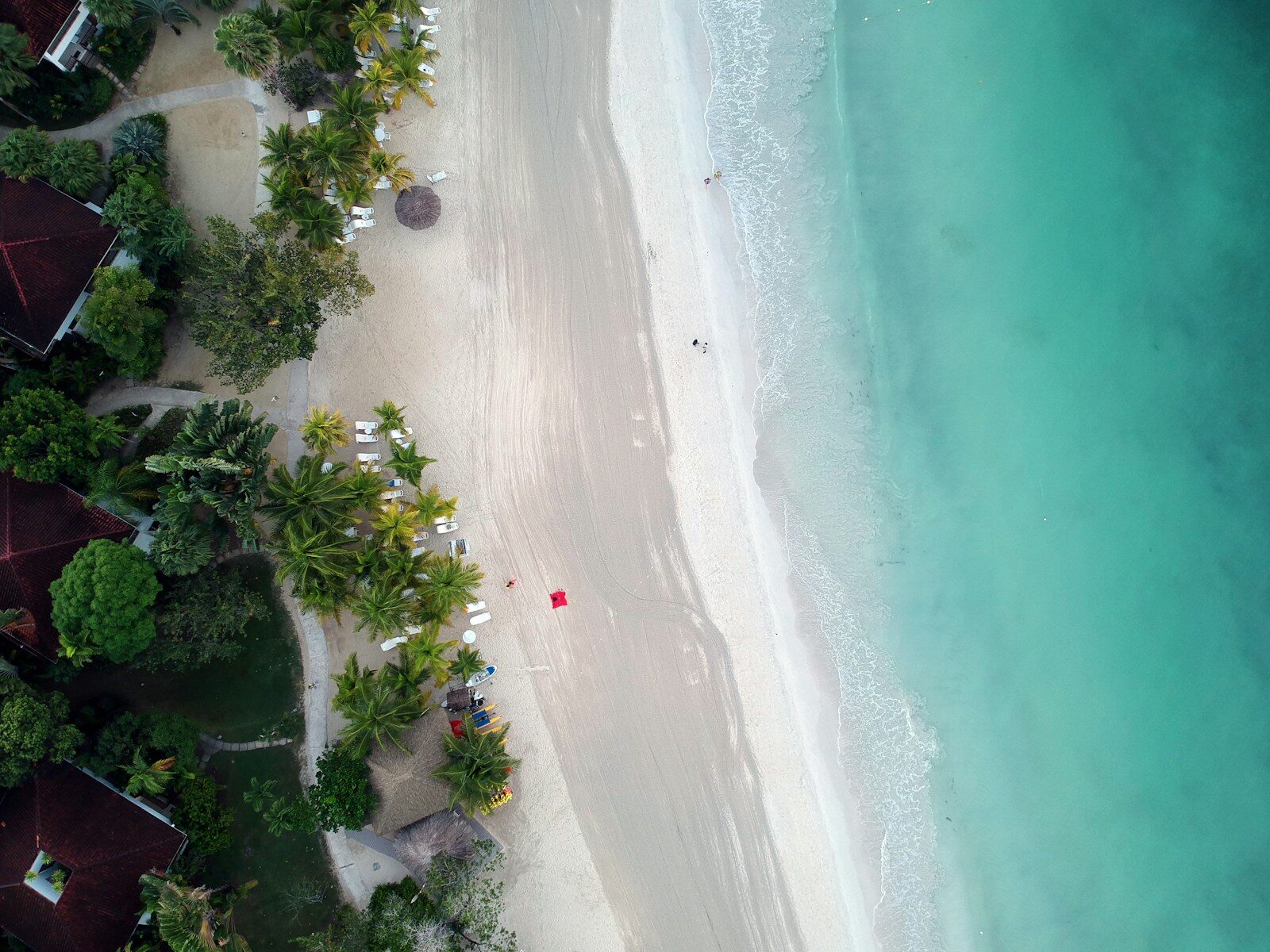
Jamaica sits in the Caribbean Sea, about 145 km south of Cuba and 190 km west of Hispaniola, and covers 10,991 km² — roughly the size of Connecticut, or a little smaller than Northern Ireland. It is the third-largest island in the Caribbean after Cuba and Hispaniola, and the largest English-speaking island in the region. A mountain spine runs down its centre, rising to Blue Mountain Peak at 2,256 m, while the interior’s Cockpit Country is a maze of cone-shaped limestone hills and sinkholes with barely a road crossing it. The Taíno, the island’s first people, called it Xaymaca — “land of wood and water” — and the name stuck.
The island divides into four travel regions. The north coast (Montego Bay, Ocho Rios, Negril) is the resort zone — white-sand beaches, cruise ports, and the famous falls. The south coast (Kingston, Port Royal, Treasure Beach) is the cultural coast — the capital, the music, the pirate history, and the quieter beaches. The Blue Mountains rise above Kingston in the east, a UNESCO World Heritage Site of cloud forest and coffee farms. And the far east (Port Antonio, Portland parish) is the wild card — the wettest, greenest, least-developed corner of the island, where rivers meet the sea.
Climate is tropical everywhere: 24–33°C year-round, and the sea never drops below about 27°C. It is rainfall and storm risk, not temperature, that define the seasons. The dry season (December–April) is the classic window — reliable sun, low humidity, calm seas, and the highest prices, peaking over Christmas and New Year. February and March are the driest months. The wet season (May–November) is hotter and cheaper, with short afternoon downpours and resort rates 15–25% lower in the shoulder months of May and November. The Atlantic hurricane season runs 1 June–30 November, with the real risk concentrated mid-August to mid-October; October is the wettest month islandwide. September–October is the cheapest time to visit and the riskiest — travel insurance is non-negotiable in that window. One quirk: the north-east around Port Antonio is the wettest part of the island, with rain possible all year, though February to April is driest there.
People & Demographics
About 2.8 million people live in Jamaica — the third-most populous English-speaking country in the Americas after the USA and Canada — and a diaspora roughly as large again lives abroad, mainly in the USA, the UK, and Canada. Roughly 90% of the population is of African descent, with mixed, East Indian, Chinese, European, and Middle Eastern minorities, which is exactly what the national motto means: “Out of Many, One People.”
English is the official language, and visitors get by fine in it everywhere. But day to day, most Jamaicans speak Jamaican Patois — an English-based creole with West African roots, musical and fast, and the language of the island’s music. The country is predominantly Christian, with many denominations, while Rastafari — born in Kingston in the 1930s — is a small movement with an outsized cultural footprint: its music, its food, and its philosophy of “irie” (everything is fine) colour the whole island.
The population is young and mostly urban. Kingston’s metro area holds roughly 600,000 people, Montego Bay is the second city and the main resort hub, and the rest of the island is a patchwork of small towns, fishing villages, and farming parishes. What strikes visitors most is not a statistic but a temperament: Jamaicans are famously warm, funny, and direct, and a stranger who asks where you are from is usually being friendly, not nosy.
Mini phrasebox: Wah gwaan (what’s going on / hello) · Irie (everything’s fine) · Good morning / Good afternoon (always greet people first) · Ya mon (yes, of course) · No problem (the national motto of service) · Respect (a greeting and a farewell) · Small up yuhself (make room / squeeze in) · Likkle more (a little more).
Culture, Etiquette & Daily Habits
Jamaican culture runs on music, food, and an unhurried rhythm that visitors from faster countries need a day to adjust to. Greetings matter more here than almost anywhere: always open with “Good morning” or “Good afternoon” — failing to acknowledge someone is considered rude. Address elders as “Mr.” or “Miss” plus their surname. A handshake on introduction, warmth after that, and small talk before business.
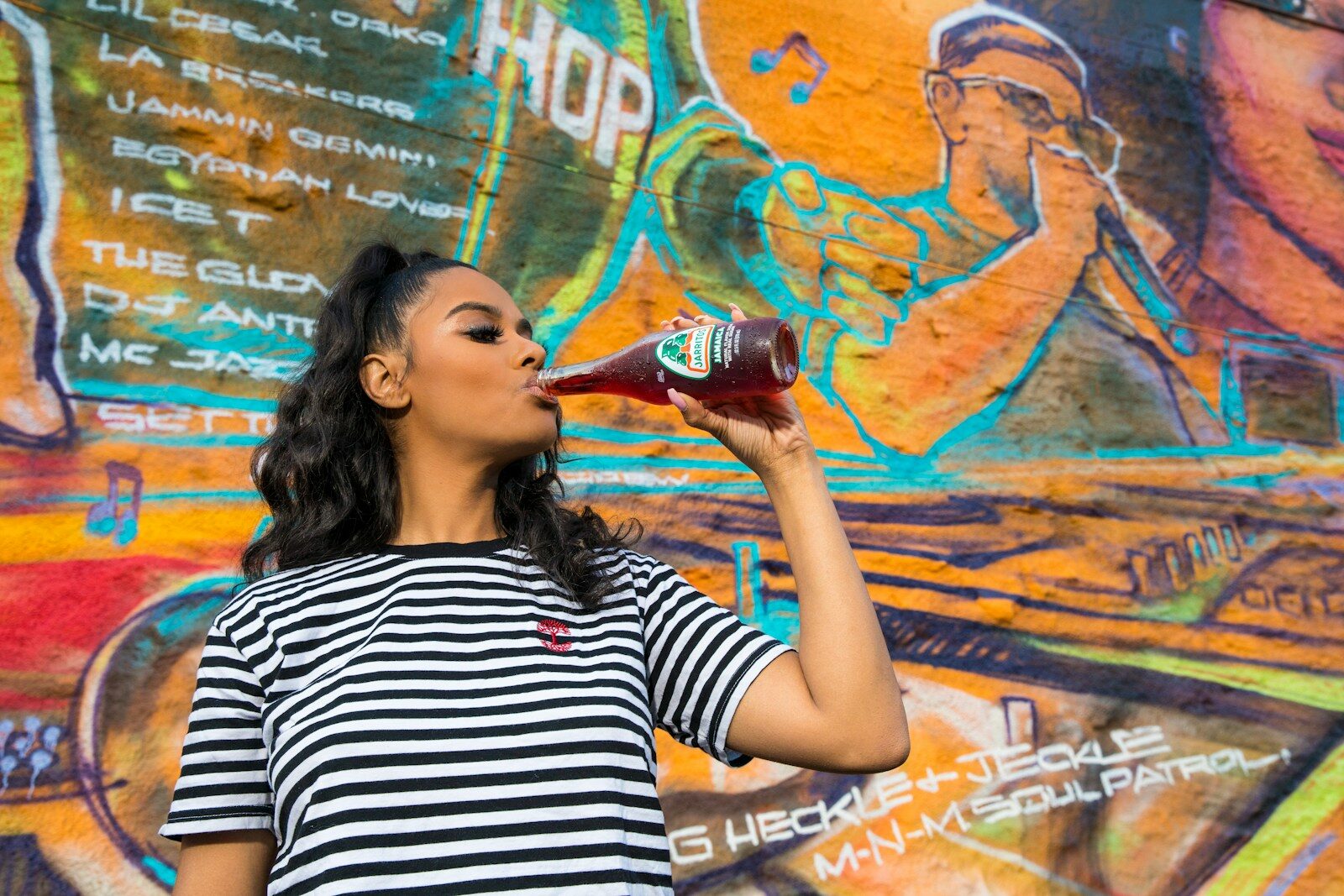
Music is not background here; it is the national soundtrack. Ska and rocksteady in the 1960s gave birth to reggae, which UNESCO inscribed on its Intangible Cultural Heritage list in November 2018 — an entire genre declared a world treasure. Kingston became a UNESCO Creative City of Music in 2015, and Trench Town, where Bob Marley lived and learned his craft, is still called the cradle of reggae. You will hear music everywhere: corner shops, route taxis, beach bars, and the sound systems that roll through neighbourhoods on a Friday night. Dancing is a social skill, not a performance — if a Jamaican invites you to dance, say yes and follow their lead.
Food is the other culture. The national dish is ackee and saltfish — ackee fruit sautéed with salted cod, onion, tomato, and Scotch bonnet pepper, usually for breakfast with fried dumplings or boiled green banana. Jerk is a method before it is a flavour: meat rubbed with pimento (allspice), Scotch bonnet, thyme, and scallion, slow-cooked over pimento wood, which supplies as much of the taste as the seasoning. Tradition credits the Maroons, escaped enslaved Africans who cooked pork in hiding, with inventing it — and Boston Bay in Portland is jerk’s acknowledged home. The national snack is the patty — flaky turmeric-yellow pastry filled with spiced beef, chicken, or vegetables, often eaten inside a soft coco bread, for about US$2–4.
Do: greet everyone when you enter a small shop; agree taxi fares before you get in (taxis are unmetered); bring cash in small bills — many small businesses can’t break large notes; try the jerk at a roadside pit, not just at the resort; dress a little smarter in Kingston in the evening.
Don’t: wear swimwear away from the beach in town; wear camouflage clothing (reserved for the military); smoke marijuana in public — it is decriminalised in small amounts, not legal for tourists; accept drinks from strangers; photograph people without asking, and be prepared to tip if they agree.
Tipping: 10–15% in tourist restaurants if no service charge is included — check the bill, because a 10% service charge plus tax is common. Tour guides: US$5–10 a day. Taxi drivers don’t expect tips, though rounding up is appreciated. Hotel housekeeping: a couple of dollars a night.
Lifestyle
Daily life in Jamaica is lived outdoors and late. Breakfast is early and hearty (ackee and saltfish, strong Blue Mountain coffee). Lunch is the main meal, taken seriously and unhurried. Dinner is late, and the evenings belong to music — sound systems, dominoes slapped down on plastic tables, and the beach bars of Negril filling up for sunset. Sundays are church-and-family days, and some attractions — the Bob Marley Museum among them — close on Sundays.
Work culture is relationship-first: meetings start with chat, deadlines flex, and personal connection matters. The cities are tech-savvy — Kingston has a modern business district and the island is well connected — but the rhythms are still Caribbean: long lunches, late nights, and a weekend that starts on Friday afternoon. Sport is everywhere: cricket and football are the games, but sprinting is the obsession. Usain Bolt — the fastest human ever, 100 m in 9.58 seconds, a record set in Berlin in 2009 that still stands — comes from Sherwood Content, a village in Trelawny parish, and his name is on murals, bars, and school walls across the island. And then there is the bobsled: in 1988, a team from a tropical island with no snow qualified for the Calgary Winter Olympics, trained on concrete, crashed at about 85 mph — and inspired Disney’s Cool Runnings.
Main Cities
Kingston — The capital, and the one place in Jamaica that is not a beach — which is exactly why it is worth visiting. This is where ska, rocksteady, reggae, and dancehall were all born. The Bob Marley Museum at 56 Hope Road is the pilgrimage site: Marley’s former home, now a guided-only museum (US$25 adults, tours Monday–Saturday, closed Sundays), with the bullet holes from the 1976 assassination attempt still in the back wall. Devon House, an 1881 great house famous for its ice cream, and Emancipation Park, seven free acres in New Kingston, round out a day. Trench Town, reggae’s cradle, is best visited with a guide. Best for: music, food, and anyone who thinks Jamaica is only beaches.
Montego Bay (“MoBay”) — The main resort city and cruise port, where most visitors land at Sangster International Airport. The Hip Strip (Gloucester Avenue) is the tourist strip of bars, restaurants, and shops; Doctor’s Cave Beach is the classic pay-to-enter white-sand beach in town; and the Rose Hall Great House, an 18th-century plantation house famous for the “White Witch” Annie Palmer ghost legend, draws the evening tours. Best for: the resort base, the first night, and the Luminous Lagoon at nearby Falmouth.
Negril — The most laid-back resort town on the island, at the western tip, with the best sunsets in Jamaica. Seven Mile Beach is the long, flat stretch of white sand lined with bars and guesthouses; the West End cliffs hold Rick’s Café, the famous sunset bar where cliff jumpers leap from ledges up to 35 feet. Negril was largely spared by Hurricane Melissa and its resorts reopened fastest. Best for: slow days, sunset, and the island’s most relaxed vibe.
Ocho Rios — The cruise-port town and the falls-and-adventure hub, about two hours by road from Montego Bay. Dunn’s River Falls is here, plus the Blue Hole jungle pools, Mystic Mountain’s rainforest bobsled ride, and the Ian Fleming International Airport. Best for: the classic day of falls, rafting, and adventure.
Port Antonio — The small harbour town in the far east, about 100 km from Kingston, and the wettest, greenest, least-developed part of the island. The Blue Lagoon, Reach Falls, Frenchman’s Cove, and the Rio Grande bamboo rafting are all within a short drive. The east was hit less hard by Hurricane Melissa, and its beaches reopened within weeks. Best for: travellers who have done the resorts and want the Jamaica almost nobody sees.
Falmouth — The Georgian port town between Montego Bay and Ocho Rios, home to the Luminous Lagoon (Glistening Waters), where micro-organisms light the water at night on boat trips after dark. Best for: a one-night stop and the lagoon.
Top Places to Visit
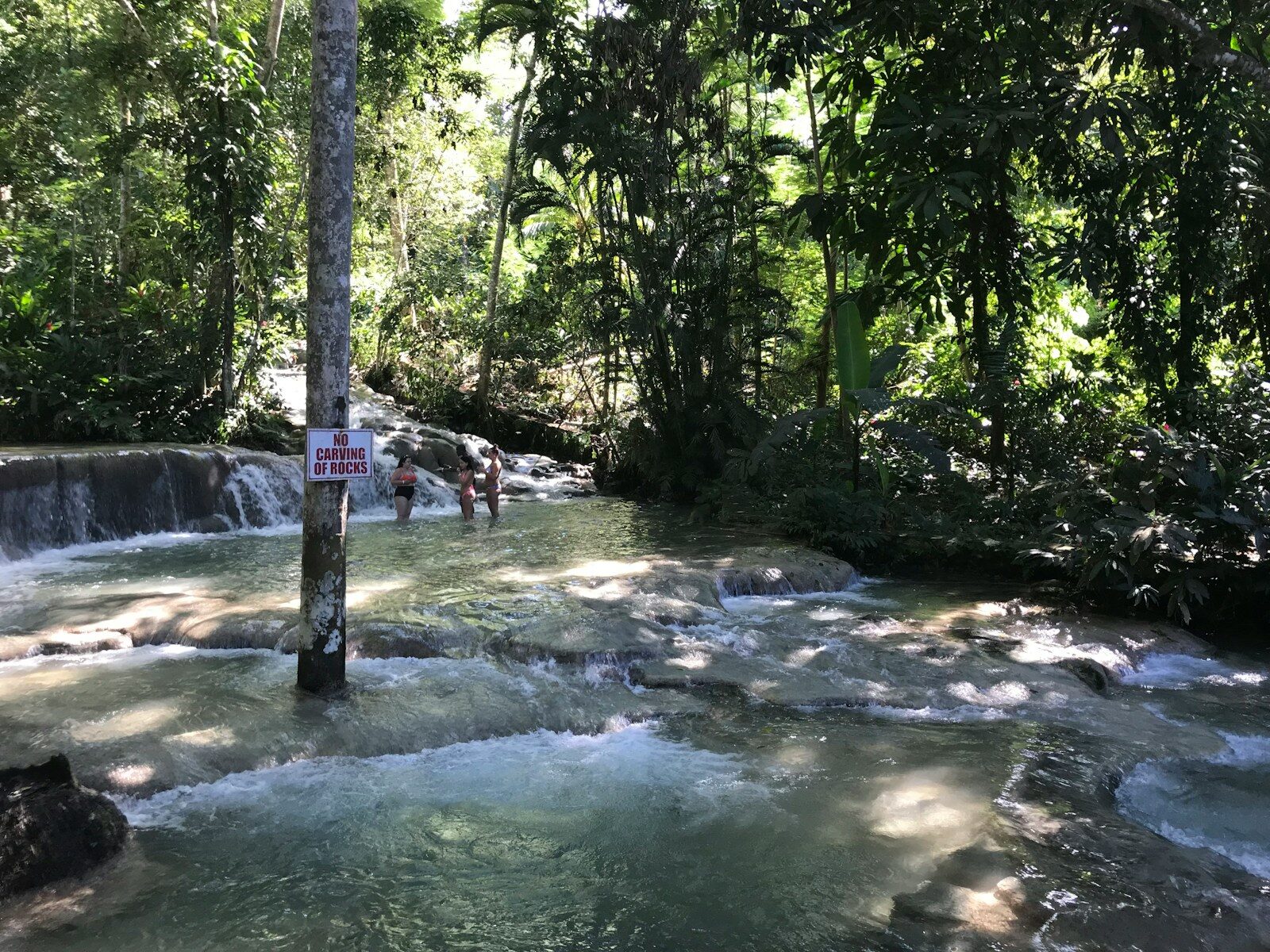
- Dunn’s River Falls — The island’s most-visited attraction: a 180-foot terraced limestone cascade you climb hand-in-hand in a human chain, guided, ending where the river meets the Caribbean. US$25 adults. Reopened November 2025 after Hurricane Melissa. Avoid cruise-ship days — check the Ocho Rios ship schedule first.
- Seven Mile Beach, Negril — The long white-sand beach that defines the island’s laid-back west end: calm, shallow, turquoise water, bars and guesthouses along the sand, and vendors offering everything from crafts to boat trips.
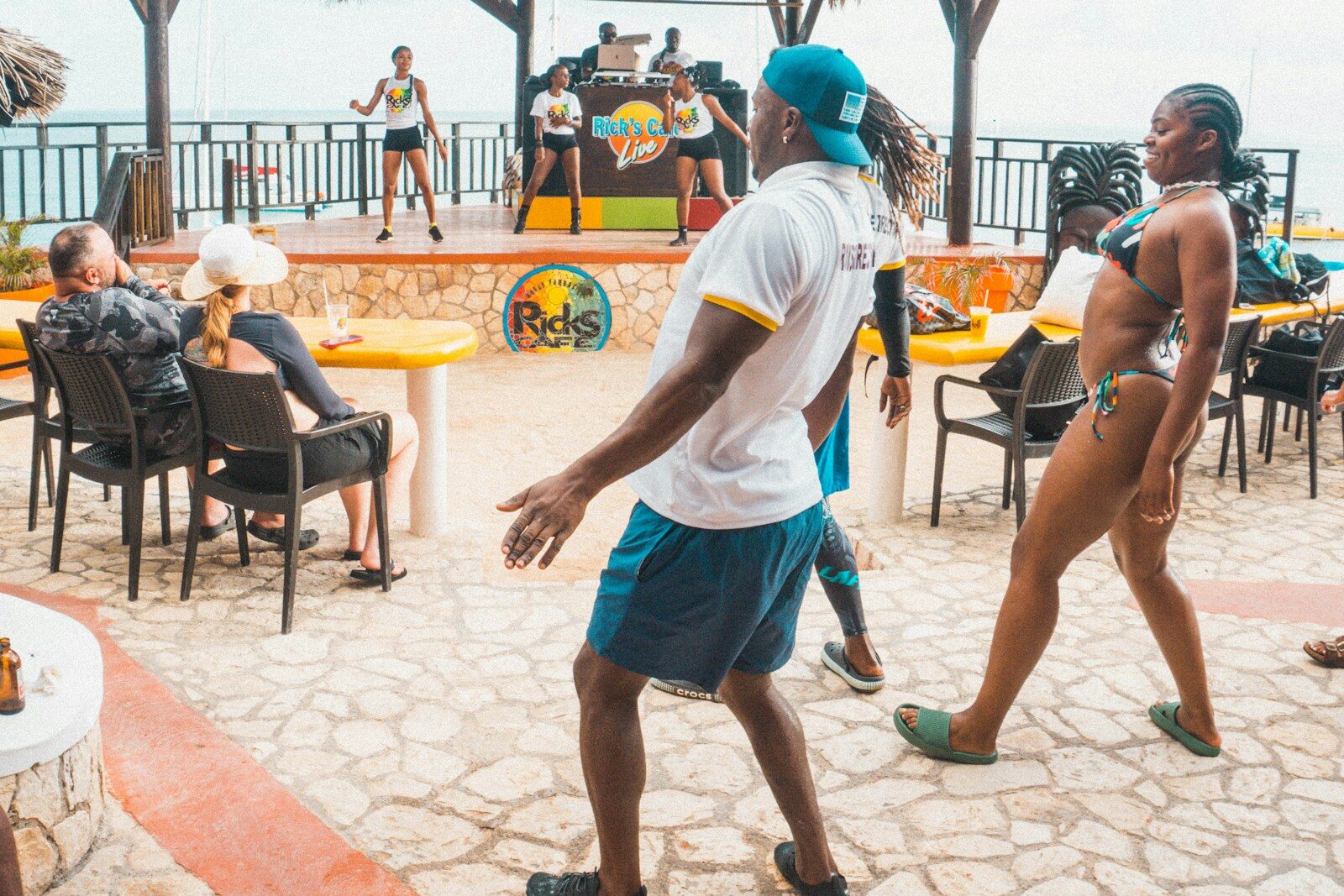
- Rick’s Café, Negril — The famous cliff-top sunset bar on the West End cliffs. Cliff jumping from ledges up to 35 feet, live reggae, and the best sunset on the island. Entry is charged and drink prices are steep — the same sunset is free from cheaper cliff bars along the road.
- Bob Marley Museum, Kingston — Marley’s former home at 56 Hope Road: a 75–90 minute guided tour including a short film, the recording studio, and One Love Café. US$25 adults, closed Sundays.
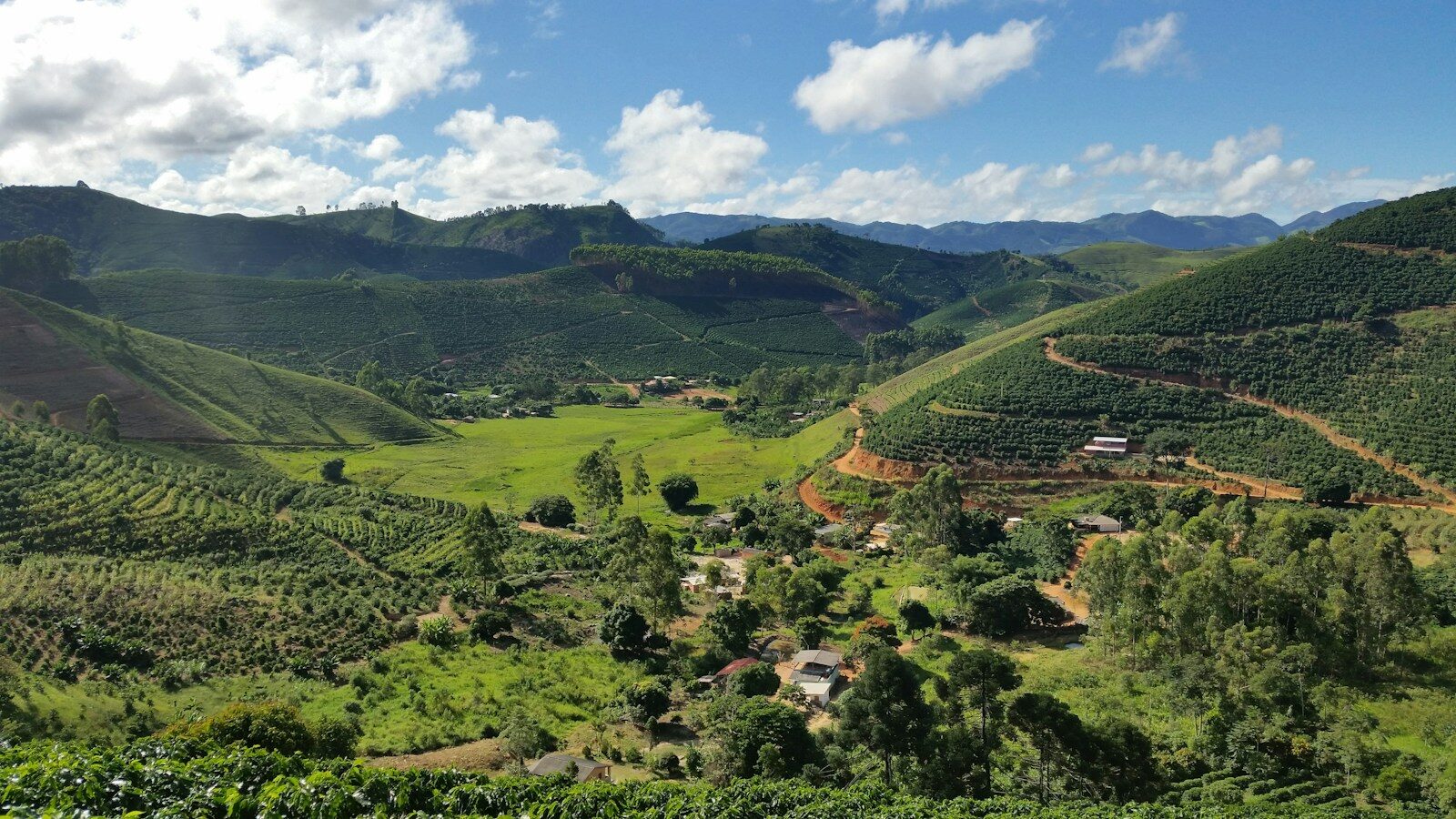
- Blue Mountains — Coffee farms above 1,500 m, misty ridges, and the hike to Blue Mountain Peak (2,256 m) — an overnight climb from Whitfield Hall for sunrise. The slopes grow Blue Mountain coffee, among the world’s most prized.
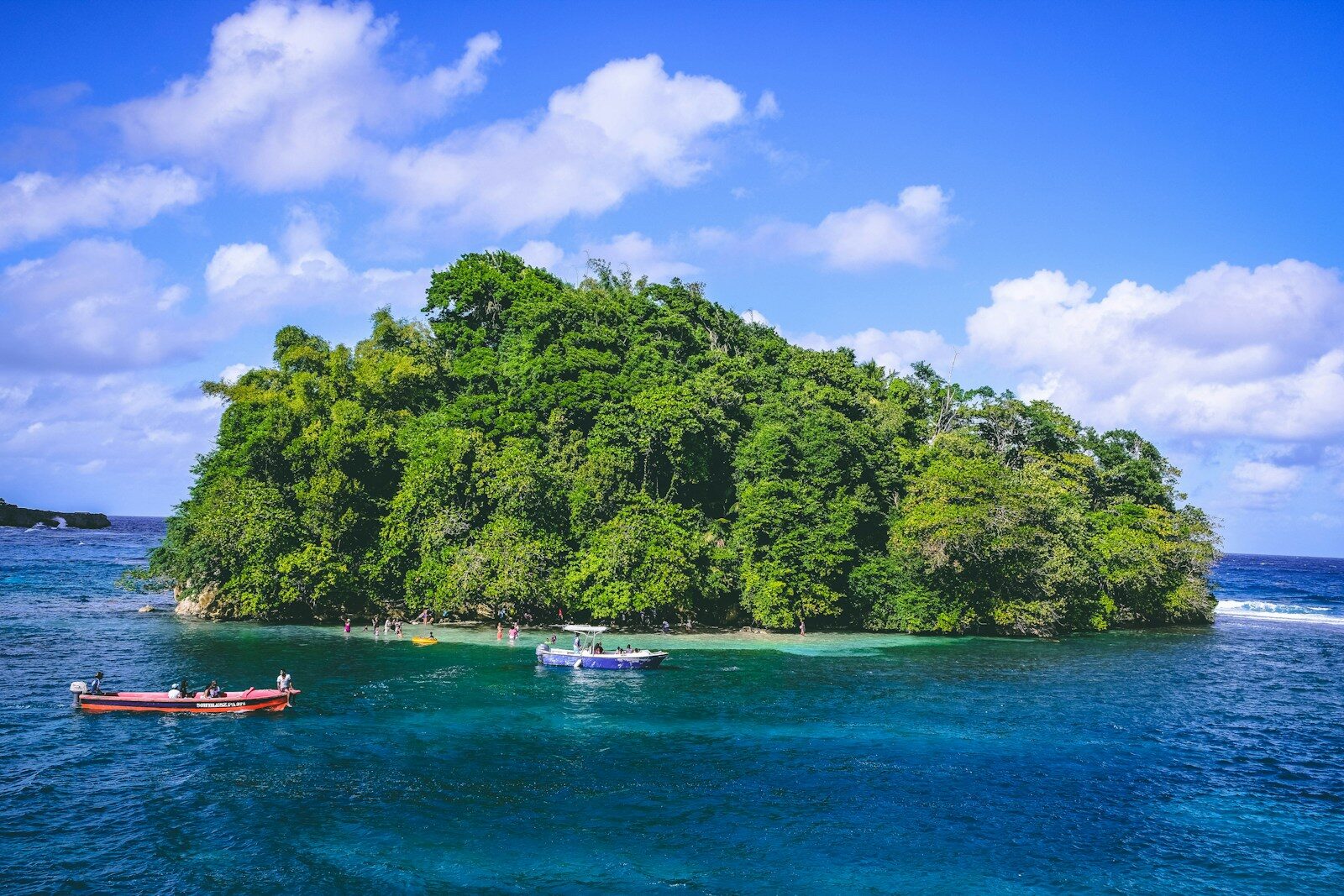
- Blue Lagoon, Port Antonio — A sheltered lagoon where cold spring water meets the sea, its colour shifting turquoise to deep blue, about 60 m deep. Boat trips or shore access.
- Reach Falls — Cascades over limestone tiers into jade pools, with a cave behind the falls; famously featured in the 1988 film Cocktail. Entry around €15 — confirm it is open before setting out, as it needed repairs after Hurricane Melissa.
- Luminous Lagoon, Falmouth — Micro-organisms light the water at night; boat trips after dark, about 30 minutes east of Montego Bay.
- Rose Hall Great House, Montego Bay — The 18th-century Georgian plantation house of the “White Witch” Annie Palmer; the evening ghost tours are the draw.
- Boston Bay, Portland — The acknowledged birthplace of jerk: roadside pits smoking pork and chicken over pimento wood, plus a surf beach when the swell is up.
- Rio Grande rafting, Portland — A slow 2.5–3 hour float down the river on a 30-foot bamboo raft through rainforest, about €60–80 per raft.
- Nine Mile, St Ann — Bob Marley’s birthplace and mausoleum in the hills: a guided tour of the childhood home, the family cemetery, and Mt Zion Rock, his meditation spot.
🎟️ Book experiences in Jamaica
The three tours we’d actually book — Dunn’s River Falls and the Blue Hole, a Blue Mountains coffee tour, and the Negril sunset run. Free cancellation on most.
- From Ocho Rios: Blue Hole & Dunn’s River Falls Tour — cliff jumps and rope swings at the Blue Hole, then the guided climb up the 600-foot falls, all admission fees included. From ~US$85.
- Kingston Blue Mountains Tour with Coffee Tasting — a coffee farm in the clouds, tastings at the estate, and stories of the mountains. 4.8/5 from 139 reviews. From ~US$90.
- Rick’s Cafe & 7 Mile Beach Day Tour from Montego Bay — Seven Mile Beach by day, cliff jumping and sunset at Rick’s Café. From ~US$45.
- Browse all Jamaica tours & activities
Some links in this box are affiliate links — we may earn a commission at no extra cost to you. See our affiliate disclosure.
🎟️ More ways to book (Viator)
- Jamaica Combo Tour: Dunn’s River Falls and Bob Marley’s Nine Mile — Marley’s birthplace and mausoleum in the morning, the falls climb in the afternoon, lunch and all entrance fees included. From ~US$145.
- Dunn’s River Falls, Bob Marley House & Luminous Lagoon Tour from Montego Bay — three of Jamaica’s most interesting attractions in one day, ending with the glowing lagoon after dark.
Some links in this box are affiliate links — we may earn a commission at no extra cost to you. See our affiliate disclosure.
When to Visit & Getting Around
The verdict: December to April is the best weather — dry, sunny, and calm — and also the most expensive. February and March are the driest months and the sweet spot inside peak season. May and the first three weeks of November are the value windows: 15–25% cheaper, warm, and mostly dry, with only short afternoon showers. September–October is the cheapest and the riskiest — peak hurricane season — so insure any trip in that window and watch the forecast. Watch for: the Jamaica Carnival in April, the Reggae Sumfest in Montego Bay in July, and the Marley birthday celebrations in February.
Getting there: three international airports serve the island. Sangster International in Montego Bay (MBJ) is the busiest, with the most international flights. Norman Manley International in Kingston (KIN) is the capital’s airport, and Ian Fleming International near Ocho Rios (OCJ) is the third. All three are at full operations after Hurricane Melissa. Most visitors fly into Montego Bay and stay on the north coast; Kingston is the better arrival point if the Blue Mountains or the capital are your priority.
Getting around: the Knutsford Express is the gold-standard intercity coach — modern, air-conditioned, with WiFi and luggage storage, bookable online. Published one-way adult fares: Montego Bay airport to Negril J$2,500 (~US$16), Montego Bay to Ocho Rios J$2,900 (~US$18), Montego Bay to Kingston J$4,400 (~US$28), Kingston to Negril J$5,100 (~US$32). Journey times: Montego Bay to Negril about 2 hours by coach, Montego Bay to Kingston 3.5–4 hours. Route taxis are the local workhorse — shared cars and minibuses on fixed routes, very cheap (US$1–5 for most hops), crowded, and hard with luggage; look for red PP (Public Passenger) plates. Licensed tourist taxis (JUTA) are the vetted option from airports — agree the fare before getting in, as taxis are unmetered. Private airport transfers run about US$35–60 per person each way. Uber does not operate in Jamaica.
Driving: Jamaica drives on the left (British legacy), steering wheel on the right. Compact rental cars run about US$40–80 a day plus mandatory insurance. The main North Coast Highway is smooth and well-paved; secondary and rural roads are narrow, winding, potholed, and poorly signed — a 4WD helps inland. Rent only if you have left-side driving experience, and never drive unfamiliar rural roads at night. There is no passenger rail for tourists, and domestic charter flights connect Kingston and Montego Bay in about 25 minutes versus three hours by road.
✈️ Find cheap flights to Jamaica — compare fares across airlines and booking sites in one search. We may earn a commission if you book through this link, at no extra cost to you.
🚗 Rent a car in Jamaica — compare rental prices across providers, with free cancellation on most bookings. We may earn a commission if you book through this link, at no extra cost to you.
Budget
Jamaica is a mid-priced Caribbean destination — cheaper than the Bahamas or Barbados, pricier than the Dominican Republic. Daily budgets per person, excluding international flights:
- Budget — US$60–100/day. Guesthouse or budget inn (US$40–120 a room), local food (patties, cookshop plates, jerk from a roadside pit), route taxis, and one or two paid highlights. A couple eating mostly local manages about US$30–50 a day on food.
- Mid-range — US$130–275/day. A comfortable small hotel (US$80–180 a room, or US$200–350 in peak season), casual restaurants (US$10–20 a meal), a rental car or private transfers, and a tour or two.
- Comfort — US$350–700+/day. Luxury resorts and villas (US$250–700+ a room), all-inclusive upper tiers (US$650–830+ per person per night), fine dining (US$90–230 per person), and private drivers.
Resort rates climb 30–60% in high season and spike over Christmas and New Year. Kingston is the most affordable base; Montego Bay and Negril are the most expensive. Money-saving truths: pay in Jamaican dollars where you can — USD is widely accepted in tourist areas, often at a poor rate; eat where Jamaicans eat (a cookshop plate runs J$800–2,000, about US$5–13); take the Knutsford Express between cities instead of private transfers; and travel in May or November for the shoulder-season discount. The currency is the Jamaican dollar (JMD), about J$158 to US$1 in November 2026. Cards work at resorts, supermarkets, and larger restaurants; carry cash in JMD for patty shops, route taxis, and small vendors.
Practical Tips
- Complete the C5 form before you fly. Every arriving passenger must fill in the online Immigration/Customs declaration at enterjamaica.gov.jm — it is free and mandatory since September 2023. A paper card is the alternative, but the online form is faster.
- Visa rules are generous. US, Canadian, UK, and most EU citizens enter visa-free for tourism, typically up to 90 days. Bring a passport valid for at least six months beyond your planned departure, plus a return or onward ticket. Confirm the exact stay length for your nationality at PICA (pica.gov.jm).
- Confirm your hotel is open. After Hurricane Melissa, most rooms are back, but a handful of resorts around Montego Bay are not expected to reopen until early 2027. Check directly with the property before you book — and check that the attractions on your list have reopened too.
- Use licensed transport. Resort transfers or licensed taxis (red PP plates, or JUTA) only — never an unmarked car. Pre-book airport transfers, especially after 9–10 p.m. Don’t drive at night outside towns.
- Stay in the resort zones after dark. The three resort zones — Negril, the Montego Bay strip, Ocho Rios — are well-patrolled and low-risk. Be particularly careful in parts of Kingston, Spanish Town, Savanna-la-Mar, and parts of Montego Bay. The US State Department rates Jamaica Level 2 (“Exercise Increased Caution”) overall, with Level 3 for named communities — read the current advisory before you go.
- Connectivity and cash. Power is Type A/B plugs at 120V, the same as the USA and Canada — no adapter needed for North American travellers. ATMs are inside banks, malls, and hotels; use them in daylight and cover the keypad, as card skimming happens. Keep your passport and spare cash in the hotel safe and carry a photocopy.
- The hustle is the real annoyance, not crime. Persistent vendors on public beaches and in tourist areas offer crafts, braiding, boat rides, and weed every few minutes. A calm, friendly “no thanks, I’m good” handles almost all of it. Resort-only beaches filter most of it out.
🛍️ Shop this guide: Jamaica packing essentials
Gear we’d actually pack for this trip. As an Amazon Associate we earn from qualifying purchases — at no extra cost to you. Our affiliate disclosure.
- Water shoes — Dunn’s River Falls is climbed barefoot or in water shoes on wet limestone; grip matters more than comfort.
- Reef-safe sunscreen — the Negril and Port Antonio reefs will thank you; the equatorial sun is brutal on long beach days.
- Waterproof dry bag (20L) — river rafting, waterfall climbs, and boat trips soak unprotected bags.
- Waterproof phone pouch — for the Dunn’s River climb and the Luminous Lagoon boat trip.
- Travel-size mosquito repellent — dusk in the mountains and the Port Antonio rainforest both demand it.
🧳 Plan your trip: Jamaica
Flights, stays, tours, and cruises — booked in one place. We may earn a commission if you book through these links, at no extra cost to you. Our affiliate disclosure.
- ✈️ Find cheap flights to Jamaica — compare fares across airlines and booking sites in one search.
- 🏨 Browse our Expedia Travel Shop — hand-picked stays and travel deals from our curated storefront.
- 🎟️ Browse Jamaica tours & activities — free cancellation on most.
- 🛳️ Compare Caribbean cruises on CruiseDirect — sailings calling at Montego Bay, Ocho Rios, and Falmouth.
Closing
Jamaica is the island that should not work on paper — a country of 2.8 million people that produced the fastest man in history, a music genre UNESCO declared a world treasure, and a bobsled team from a place with no snow — and yet it works, gloriously, every single day. Go for the beaches, but stay for the rest: the jerk pit in Boston Bay, the coffee farm in the clouds, the sound system on a Kingston street, the sunset at Rick’s Café. One love, many flavours — and a trip that will stay with you long after the tan fades.
Keep exploring
- Dominican Republic Travel Guide: Punta Cana vs the North Coast — Picking Your DR Beach
- Costa Rica Travel Guide: Two Coasts, One Pura Vida
- Mexico Travel Guide: Mexico City in 4 Days — Tacos, Temples & Frida Kahlo
- Panama Travel Guide: Panama City in 2 Days — The Canal, Casco Viejo & the Causeway
- Colombia Travel Guide: Cartagena + Medellín in 7 Days — Colombia’s Two Faces
FAQ
Is Jamaica safe for tourists in 2026?
Mostly, yes — with the usual Caribbean common sense. The three resort zones (Negril, the Montego Bay strip, Ocho Rios) are well-patrolled and low-risk. The US State Department rates Jamaica Level 2 (“Exercise Increased Caution”) overall, with Level 3 for named communities in Kingston, Spanish Town, and parts of Montego Bay. Use licensed taxis, don’t drive at night outside towns, and read the current advisory before you go.
How many days do you need in Jamaica?
Five to seven days is the sweet spot: two days on the north coast (Montego Bay and Ocho Rios), two in Negril, one in Kingston, and a day in the Blue Mountains or Port Antonio. A week lets you do both coasts plus the capital without rushing. Three days works for a single base — Negril for relaxation, or Montego Bay for the resort experience.
When is the best time to visit Jamaica?
December to April is the best weather — dry, sunny, and calm — with February and March the driest months. May and early November are the value windows, 15–25% cheaper. Avoid September–October unless you are comfortable with peak hurricane-season risk and have travel insurance.
Is Jamaica expensive?
Mid-priced for the Caribbean. Budget travellers manage US$60–100 a day, mid-range trips run US$130–275 a day, and luxury trips start at US$350 a day. Food is the big variable: a cookshop plate costs US$5–13, while a tourist-area restaurant dinner can run US$30–65 a person.
Do I need a visa for Jamaica?
US, Canadian, UK, and most EU citizens enter visa-free for tourism, typically up to 90 days. Every arriving passenger must complete the free online C5 Immigration/Customs form at enterjamaica.gov.jm before or on travel. Confirm the exact stay length for your nationality at PICA (pica.gov.jm).
Is Jamaica open after Hurricane Melissa?
Yes — and recovering fast. Around 80% of hotel rooms were operating by November 2026, with 90% expected by 1 December, and all three international airports are at full operations. Dunn’s River Falls, Doctor’s Cave Beach, and most major attractions have reopened. A handful of resorts around Montego Bay are not expected back until early 2027, so confirm your hotel is open before you book.