
 admin
Introduction
Costa Rica abolished its army in 1948 and spent the money on schools, hospitals, and saving the rainforest — and that one decision explains almost everything you will love about this country. It is tiny, about the size of West Virginia, yet it holds roughly five percent of all the species on Earth: nine hundred kinds of birds, jaguars in the jungle, sloths in the trees above the road, and five of the world’s seven sea turtle species nesting on its beaches. A quarter of the whole country is protected parkland, and the national greeting — pura vida, pure life — is less a slogan than a operating system.
This guide does the classic first trip properly: seven days across both coasts, from the volcano country of Arenal to the cloud forest of Monteverde and the beaches of Manuel Antonio on the Pacific, with a look at the wilder Caribbean side for when you want the road less travelled. Along the way you will get the practical numbers that matter in 2026 — the $18 park ticket you must book online, the $8 bus that beats the $60 shuttle, the season when the rivers run turquoise, and the truth about Costa Rica’s prices (it is the most expensive country in Central America, and worth every colón).
Geography & Climate
Costa Rica covers about 51,100 square kilometres in Central America, wedged between Nicaragua to the north and Panama to the south, with the Pacific Ocean on its west coast and the Caribbean Sea on its east. It is small enough to drive across in a day — and varied enough that the drive crosses twelve distinct climate zones, from dry tropical forest to cloud forest to coral reef, from steaming lowland rainforest to the cold páramo grasslands above 3,000 metres.
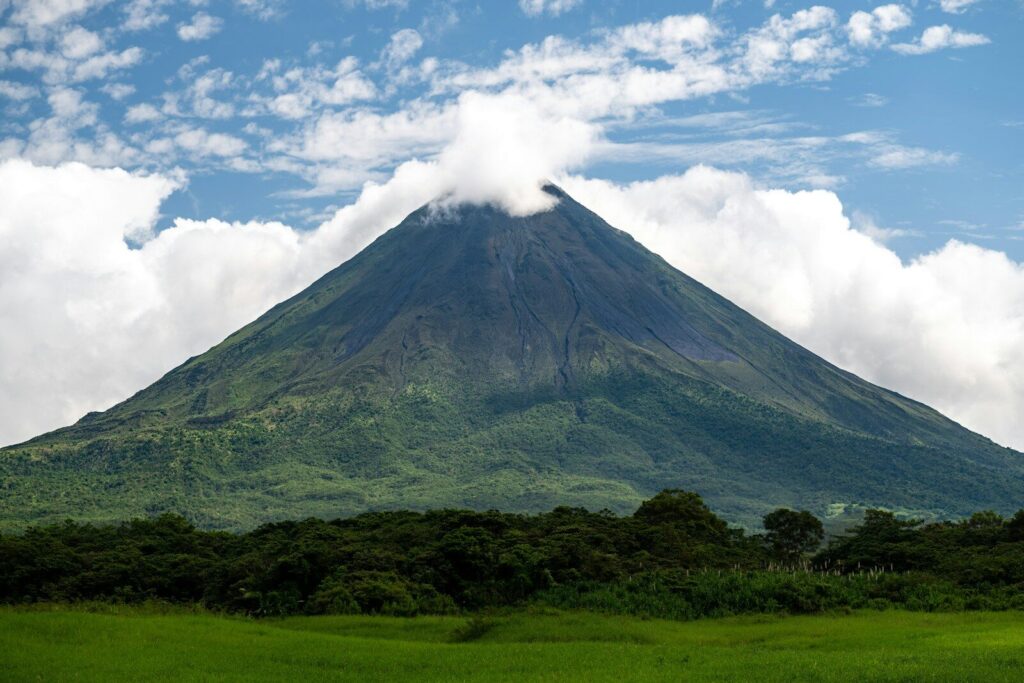
The spine of the country is a chain of volcanoes. Arenal, the near-perfect cone that dominates postcards, rises 1,633 metres above the town of La Fortuna; it erupted catastrophically in 1968 and stayed active until 2010, and has been resting ever since. Poás, near San José, has one of the largest active craters on Earth and last erupted in April 2017. Irazú, the highest volcano in the country at 3,432 metres, is the only place in Costa Rica where, on a clear day, you can see both oceans at once. Between the volcanoes lie the Central Valley — the cool, spring-like highlands around San José where most Costa Ricans live — and the lowland rainforests of the Osa Peninsula and Tortuguero, some of the wildest country left in the Americas.
Climate splits the country in two. The Pacific coast and Central Valley have a dry season from December to April and a rainy season from May to November, when afternoons bring heavy but usually brief downpours. The Caribbean coast runs on the opposite rhythm: its driest, sunniest months are September and October, exactly when the Pacific is at its wettest, and it rains somewhere on the Caribbean side most of the year. Temperatures are tropical everywhere: 27–32°C on the coasts, 18–24°C in the Central Valley, and much cooler in the cloud forest, where Monteverde sits at 1,400 metres and the mist rolls in by mid-afternoon most days.
Best time: December to April is the classic window — dry trails, clear volcano views, and the easiest wildlife spotting — but it is also peak season, when Manuel Antonio’s daily visitor cap sells out weeks ahead. May to November is the green season: cheaper hotels, empty trails, lusher forest, and rain that mostly falls in the afternoon. For the Caribbean side, aim for September–October. Turtle watchers should plan around nesting: green turtles in Tortuguero from July to October, leatherbacks on the Caribbean from March to June, and olive ridley mass arrivals (arribadas) on Pacific beaches like Ostional.
People & Demographics
Costa Rica has about 5.2 million people — roughly the population of a single large city, spread across a country the size of a US state. About half live in the Greater Metropolitan Area around San José, in the Central Valley; the rest are scattered through small towns, farming valleys, and coastal villages. The population is one of the healthiest and longest-lived in the Americas: life expectancy is around 80 years, higher than in the United States, achieved on a fraction of the healthcare spending — and the Nicoya Peninsula is one of the world’s five Blue Zones, places where people routinely live past 90 and 100.
Costa Ricans call themselves Ticos (men) and Ticas (women), from their habit of adding the diminutive suffix -tico to words. The population is mostly mestizo, of mixed Spanish and Indigenous descent, with Afro-Caribbean communities concentrated on the Caribbean coast around Limón and Puerto Viejo — where you will hear Jamaican patois alongside Spanish — and Indigenous peoples, including the Bribri and Cabécar, living mainly in the Talamanca mountains and the southern zone. Spanish is the official language; English is widely spoken in tourist areas, and many guides are fully bilingual. The country is one of Latin America’s most stable democracies — it has held uninterrupted democratic elections since 1949, the year after the army was abolished.
Culture, Etiquette & Daily Habits
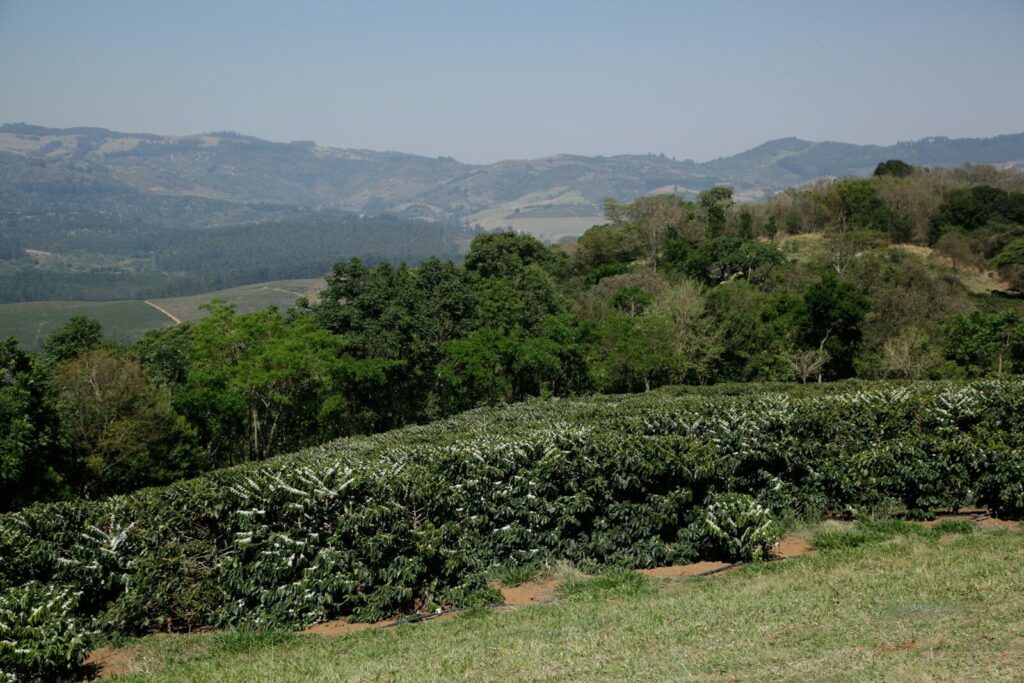
Costa Rican culture runs at a different speed, and pura vida is the instruction manual. It means hello, goodbye, thank you, you’re welcome, no problem, and everything is fine — and people genuinely live it. The phrase itself came from a 1956 Mexican film about an unlucky man who said it every time things went wrong; Costa Ricans adopted it, and it stuck. The other national institution is coffee: by law, since 1989, only arabica beans may be grown in Costa Rica, and the traditional breakfast is gallo pinto — rice and beans fried with peppers, onions, cilantro, and Lizano sauce — eaten with eggs, cheese, and plantain.
Do:
- Say pura vida back — it is a greeting, a thank you, and a mood all at once, and using it marks you as a guest who is paying attention.
- Learn a few Spanish words before you go: buenos días, gracias, por favor, la cuenta, por favor (the bill, please), ¿cuánto cuesta? (how much?). Effort is always appreciated, even when the other person switches to English.
- Eat at sodas — the small family-run diners where a casado (rice, beans, salad, plantain, and a protein) costs a few dollars and tastes like someone’s grandmother made it. That is the real Costa Rica.
- Respect wildlife distance: never feed monkeys or sloths, never touch a turtle, and never use flash photography on animals at night. In Manuel Antonio, rangers enforce this — and the fines are real.
- Carry cash in small colón notes for buses, sodas, and markets; many small places do not take cards.
- Greet people when you enter a shop or a bus — a buenos días costs nothing and opens every door.
Don’t:
- Expect street addresses to work — Costa Rica famously has almost no street names or numbers outside the big cities. Directions are by landmarks: “200 metres south of the church, next to the big mango tree.” Save offline maps and ask locals.
- Assume dollars get you the best price — hotels, tours, and park fees are quoted in dollars, but at sodas, markets, and on buses you will almost always do better paying in colones.
- Bring food into Manuel Antonio National Park — it is banned, bags are checked, and the monkeys will steal anything you smuggle in anyway.
- Drive at night on rural roads if you can avoid it — potholes, unmarked speed bumps, pedestrians, and the odd cow make it genuinely hazardous.
- Tip like you are in the US — restaurant bills already include a 10% service charge and 13% VAT, so an extra tip is a bonus, not an obligation.
- Rush. The country runs on tico time, and the whole point of coming here is to slow down to its speed.
Phrasebox (Spanish): Pura vida (pure life — hello/goodbye/thank you) · Buenos días (good morning) · Gracias (thank you) · Por favor (please) · La cuenta, por favor (the bill, please) · ¿Cuánto cuesta? (how much does it cost?) · Casado (the classic plate: rice, beans, salad, plantain, protein) · Soda (small family diner) · ¡Qué chiva! (how cool!)
Lifestyle
Daily life in Costa Rica is built around the outdoors and the table. The workday starts early — sunrise is around 5:30 am year-round, and so is breakfast — and the soda is the social centre of every town: plastic chairs, a television in the corner, and a casado that costs less than a coffee back home. Coffee is not a drink here, it is a ritual: the traditional chorreado method pours hot water through a cloth filter, and the afternoon coffee break, usually with a sweet empanada or a slice of tres leches, is sacred.
Food is simple, fresh, and everywhere. Gallo pinto for breakfast; casado for lunch; fresh ceviche and whole fried fish on the coasts; olla de carne (beef and vegetable soup) on a rainy highland day; tropical fruit — mango, papaya, pineapple, and the sour-sweet cas — sold by the roadside. The Caribbean side has its own kitchen: rice and beans cooked in coconut milk, spicy jerk, and rondon, a coconut-milk seafood stew. Beer is Imperial and Pilsen; the national cocktail is the chiliguaro, a shot of guaro (sugarcane liquor) with tomato juice and hot sauce.
Sport is football first — the national team, La Sele, reached the World Cup quarter-finals in 2014 — followed by surfing, which is less a sport than a way of life on both coasts. Tamarindo, Santa Teresa, Jacó, and Pavones on the Pacific, and Puerto Viejo on the Caribbean, are all serious surf towns. And then there is the wildlife: Costa Ricans grow up with toucans on the garden fence and monkeys raiding the mango tree, and the national pride in that wildness is genuine — this is the first country in the world to reverse deforestation, taking forest cover from 21% in 1983 to over 52% today, and nearly all of its electricity comes from renewable sources.
Main Cities
San José — the capital, and the city most visitors rush through too fast. It is not pretty in the postcard sense, but it is the country’s cultural heart: the gold-domed National Theatre (1897), the Central Market founded in 1880, the National Museum in a former military barracks, and the Pre-Columbian Gold Museum. Base yourself here for day trips to Poás Volcano and the coffee farms of the Central Valley, then move on — the real Costa Rica is outside the city.
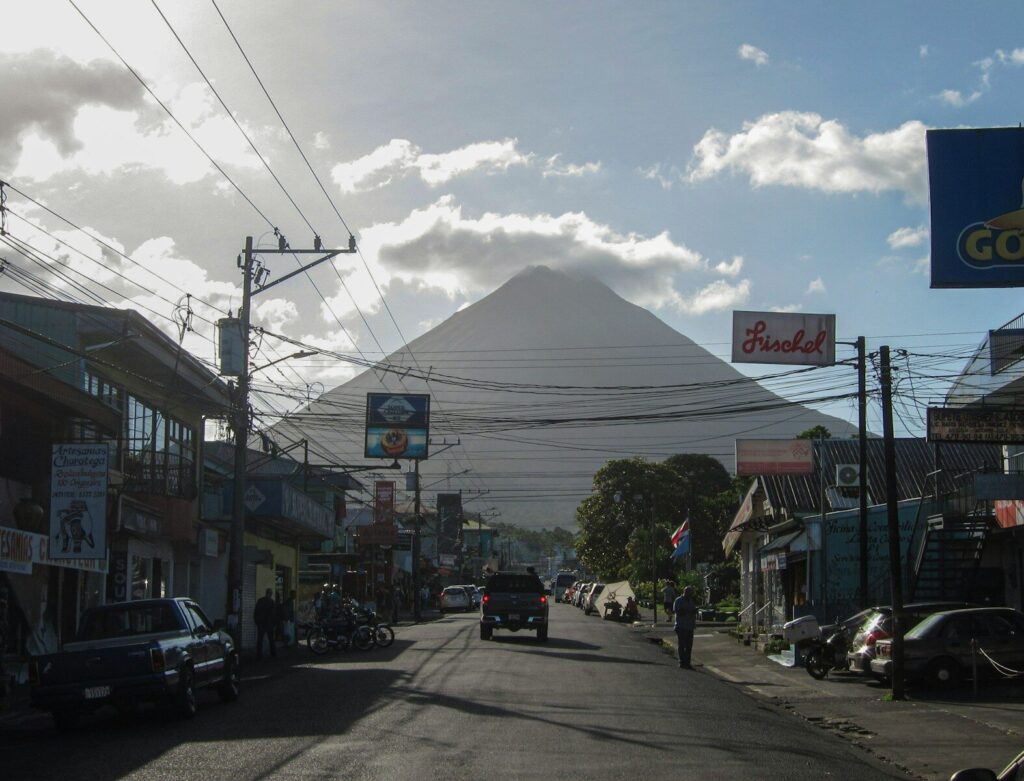
La Fortuna — the adventure capital, at the foot of Arenal Volcano. A small, friendly town of hotels, hot springs, and tour operators, and the base for the volcano, the waterfall, the hanging bridges, and the best hot springs in the country. Come for two or three days and do not rush the soak.
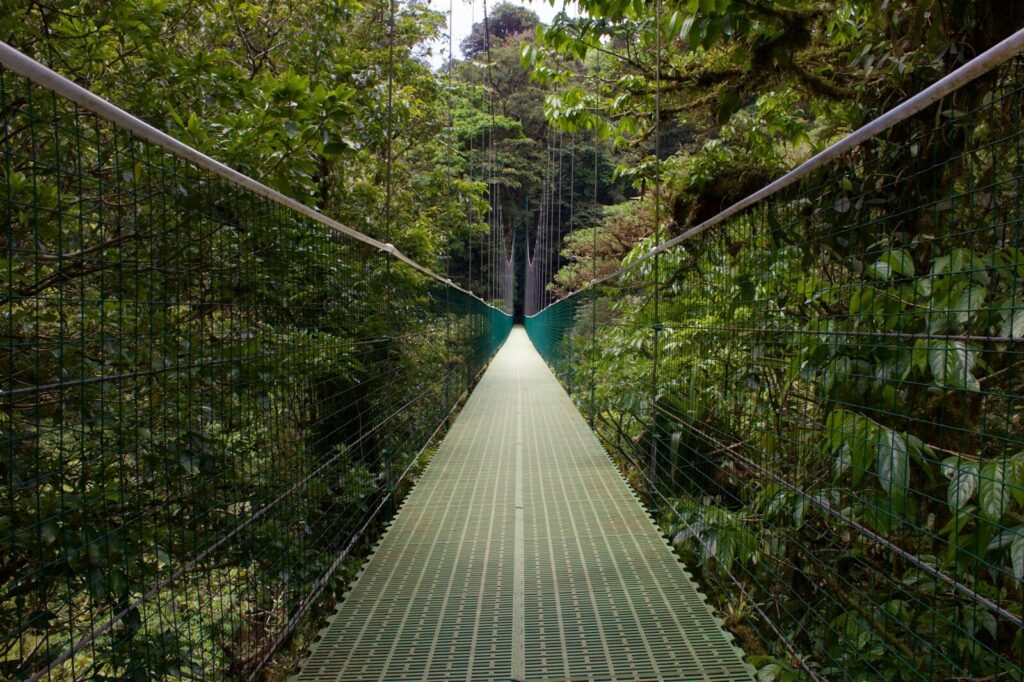
Monteverde / Santa Elena — the cloud-forest town, 1,400 metres up in the Tilarán mountains. A former Quaker settlement turned ecotourism hub, with the famous reserve, the hanging bridges, the butterfly garden, and the night walks where guides spot sleeping birds and tree frogs with a flashlight. It is cool, misty, and a world away from the beach towns.
Quepos & Manuel Antonio — the gateway town and the national park next door. Quepos is a working fishing port with good restaurants and a marina; Manuel Antonio, ten minutes down the road, is the country’s most visited park — rainforest trails full of monkeys and sloths ending at white-sand coves. Stay in Quepos, visit the park early.
Tamarindo — the Pacific’s surf town, in Guanacaste’s dry northwest. Wide beach, consistent waves, a long strip of restaurants and bars, and the leatherback turtles of nearby Playa Grande. It is the most developed beach town in the country — and the easiest place to learn to surf.
Jacó — the closest beach to San José (about 90 minutes), and the liveliest: surf, nightlife, and a long black-sand beach. It is also the base for day trips to Carara National Park, where scarlet macaws fly over the rainforest at dawn and dusk.
Puerto Viejo de Talamanca — the Caribbean’s answer to Tamarindo, but slower, reggae-flavoured, and Afro-Caribbean to its core. Bike the coastal road past jungle and beach, eat rice and beans in coconut milk, and take a boat to the reef at Cahuita. The vibe is the point.
Liberia — the capital of Guanacaste and the gateway to the dry northwest, with Costa Rica’s second international airport. A good base for the beaches of the Papagayo Peninsula and the Rincon de la Vieja volcano, where mud pots bubble and waterfalls hide in the dry forest.
Cartago — the old colonial capital, at the foot of Irazú Volcano. Come for the Basilica of Our Lady of the Angels, the country’s most important pilgrimage site, and for the Orosi Valley — coffee, hot springs, and the oldest church in the country, all in one green bowl.
Uvita — the quiet star of the southern Pacific. The Marino Ballena National Park’s sandbar forms a whale’s tail at low tide, humpbacks pass offshore from December to April and July to November, and the Nauyaca Waterfalls are a two-tiered jungle swim. This is Costa Rica before the crowds arrive.

Top Places to Visit
- Arenal Volcano National Park — the perfect cone, the 1993 lava-flow trail, and the views that made La Fortuna famous. Entry $16.95, card only at the booth.
- Monteverde Cloud Forest Reserve — mist, moss, hanging bridges, and the resplendent quetzal (best February–May). $29, book online — no walk-ins since December 2025.
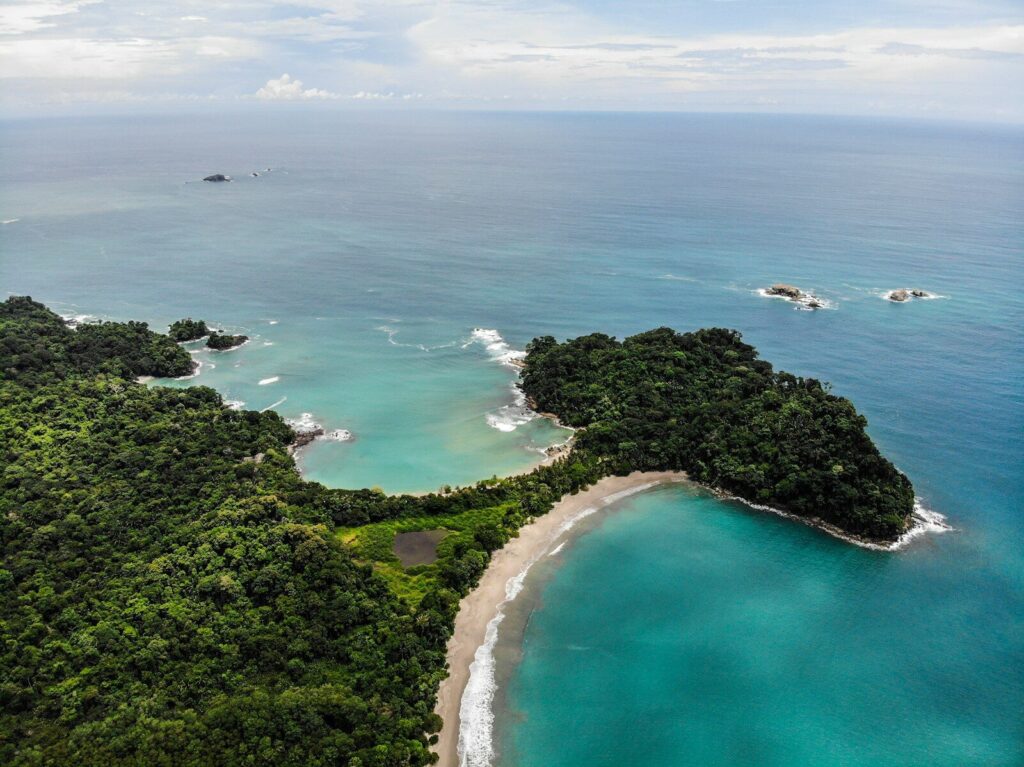
- Manuel Antonio National Park — the country’s smallest and most visited park: monkeys, sloths, and white-sand coves in one walk. $18.08, online only, closed Tuesdays.
- Corcovado National Park — the most biologically intense place on Earth, on the remote Osa Peninsula. Guide mandatory, $16.95, only 560 visitors a day.
- Tortuguero National Park — the “Amazon of Costa Rica”: canals, jungle, and sea turtles, reachable only by boat or small plane. $16.95.
- La Fortuna Waterfall — a 70-metre cascade down a jungle cliff into a turquoise pool, 500 steps down and worth every one. $20.
- Río Celeste, Tenorio Volcano National Park — the river that runs an impossible milky blue, from a natural chemical reaction where two streams meet. $13.56, online only.
- Poás Volcano National Park — one of the largest active craters on Earth, with a steaming turquoise lake at the bottom. $16.95, online only, last entry 2 pm.
- Marino Ballena National Park — the whale-tail sandbar at Uvita, and humpbacks offshore twice a year. $6.78.
- Cahuita National Park — Caribbean reef, white-sand beach, and monkeys on the coastal trail, with a voluntary donation at the Kelly Creek entrance.
- Nicoya Peninsula — a Blue Zone of longevity, wild beaches, and the olive ridley turtle arrivals at Ostional.
- Irazú Volcano National Park — the highest volcano in the country, where on a clear day you can see both oceans.
🎟️ Book experiences in Costa Rica
Tours we’d actually book — free cancellation on most. We may earn a commission if you book through these links, at no extra cost to you. Our affiliate disclosure.
- San José Central Market Bites and Sights Walking Tour — the city’s oldest market (founded 1880), tropical fruit tastings, and a chorreado coffee lesson, from $32.
- Arenal Volcano, Waterfalls, Coffee and Hot Springs — full-day tour from San José — coffee farm, La Paz Waterfall, lunch at the foot of the volcano, and a long soak in Paradise Hot Springs, from $165.
- Manuel Antonio National Park all-inclusive day trip from San José — guided rainforest walk, beach time, breakfast and lunch included, from $122.
- Browse all San José tours & activities
🎟️ More ways to book (Viator)
Multi-day tours for travellers who want the logistics handled. We may earn a commission if you book through these links, at no extra cost to you. Our affiliate disclosure.
- 3-Day Arenal Volcano, Monteverde & Manuel Antonio Tour from San José — the three icons in three days, with hotels and transport included, from $850.
- 11-Day Jewels of Costa Rica from San José — Tortuguero, Arenal, Monteverde, and Manuel Antonio in one guided loop, with 10 nights of accommodation.
When to Visit & Getting Around
Seasons: December to April is the dry season on the Pacific side and in the Central Valley — the best weather, the clearest volcano views, and the highest prices. May to November is the green season: afternoon rain, empty trails, lusher forest, and hotel rates that can drop by a third. The Caribbean side flips the script — September and October are its driest, sunniest months. December 20 to January 5 and Holy Week (Semana Santa) are the busiest periods of the year: book Manuel Antonio and Corcovado four to six months ahead if you are travelling then.
Festivals worth catching: the Fiestas de Palmares in January (two weeks of concerts, bull runs, and the country’s biggest party, outside San José); the Día de la Independencia on September 15, with school parades and lantern processions in every town; the oxcart parade in San Antonio de Escazú in March; and the arribadas — mass olive ridley turtle arrivals — on Ostional and other Pacific beaches, which peak around the new moon from August to November.
Getting there: most visitors fly into Juan Santamaría International Airport (SJO) outside San José, or Daniel Oduber Airport (LIR) in Liberia for the Guanacaste beaches. The $29 departure tax is usually included in your ticket.
Getting around: public buses are the budget backbone — the San José–Monteverde bus costs ₡3,900 (about $8.60), and most intercity routes run for a few dollars. Tourist shuttles (Interbus, Caribe Shuttle, and hotel shuttles) run the popular routes for $54–62 and pick you up at your hotel. The jeep-boat-jeep crossing between Arenal and Monteverde is the classic shortcut — a boat across Lake Arenal instead of the three-hour drive around it. Domestic flights with Sansa link San José to Quepos, Liberia, Tortuguero, and the Osa Peninsula in under an hour. Renting a car gives you the most freedom, especially on the Nicoya Peninsula and the southern Pacific — but budget for the mandatory insurance, which adds $30–45 a day on top of the advertised rate, and get a 4×4 if you are heading to Monteverde or the Osa in the rainy season. Roads are mostly paved on the main routes, but rural roads are another story entirely.
✈️ Find cheap flights to Costa Rica — We may earn a commission if you book through this link, at no extra cost to you.
🚗 Rent a car in Costa Rica — We may earn a commission if you book through this link, at no extra cost to you.
Budget
Costa Rica is the most expensive country in Central America — hotels and guided tours can cost as much as in Western Europe, while a casado at a soda stays good value. Budget in US dollars, since almost everything in tourism is quoted in them, and carry colones for the small stuff.
Budget — $45–80/day: hostel dorm ($12–20), sodas and market food ($15–20), public buses ($5–10), and free or cheap activities — beaches, the Cahuita trail, and the Arenal 1968 viewpoint. One park entry ($17–18) is a big day out at this level.
Mid-range — $100–160/day: a boutique hotel or lodge ($60–90), a rental car shared between two ($25–35 each), one paid activity a day (a hanging-bridges walk, a hot-springs day pass, or a guided night walk, $25–50), and restaurant dinners ($15–25).
Comfort — $200–350/day: a lodge with a view ($120–200), private transfers, guided tours with a naturalist guide ($50–80), hot springs at Tabacón or Baldi ($50–115 day pass), and dinners at the best restaurants in town ($30–50).
Money-saving truths: travel in the green season (May–November) and save 20–30% on hotels; eat at sodas instead of tourist restaurants and halve your food bill; take the public bus instead of the $60 shuttle; book Manuel Antonio and Monteverde tickets yourself online instead of through a tour; and skip the rental car in San José and La Fortuna, where tours and shuttles cover everything — rent only for the Nicoya Peninsula and the south, where the bus network thins out.
Practical Tips
- Book the parks online, in advance. Manuel Antonio, Poás, Río Celeste, and Monteverde’s main reserve sell tickets online only — Manuel Antonio’s daily cap sells out weeks ahead in the dry season, and there is no gate sale. Arenal is the exception: buy at the booth on the day, card only, no cash.
- Money: the colón (CRC) is the official currency, roughly ₡450–500 to the dollar. Pay in colones at sodas, markets, and on buses; pay in dollars for hotels, tours, and park fees. ATMs dispense both — take the largest withdrawal possible, since the fee is charged per withdrawal. Never change money at the airport.
- Connectivity: buy a local SIM (Kolbi, Claro, or Liberty) at the airport or any supermarket, or use an eSIM — coverage is good in towns and on the main roads, patchy in the Osa and Tortuguero. Wi-Fi is standard in hotels and cafés.
- Packing: rain jacket even in the dry season (Monteverde is misty year-round), closed-toe shoes for trails, a dry bag for boat trips and waterfall swims, reef-safe sunscreen, and insect repellent — the mosquitoes are real, especially at dusk in Tortuguero and the Osa.
- Power: Type A/B plugs, 120V — the same as the US and Canada. No adapter needed for North American travellers.
- Safety: Costa Rica is one of the safest countries in Central America, but petty theft happens — never leave valuables in a parked car, especially at trailheads and beaches, and keep your passport in the hotel safe. The US State Department rates the country Level 2 (exercise increased caution). Emergency number: 911.
- Wildlife rules: keep your distance, never feed animals, and never use flash at night. Sloths, monkeys, and toucans are everywhere — and the reason they stay wild is that visitors leave them alone.
🛍️ Shop this guide
Gear that earns its place in a Costa Rica daypack. We may earn a commission if you buy through these links, at no extra cost to you. Our affiliate disclosure.
- Compact binoculars — for quetzals in Monteverde, toucans in Manuel Antonio, and scarlet macaws at Carara.
- Waterproof hiking shoes — muddy cloud-forest trails and 500 steps down to La Fortuna Waterfall.
- Packable rain jacket — afternoon rain is a fact of life here, even in the dry season.
- Dry bag — for boat trips to Tortuguero, waterfall swims, and sudden downpours on the trail.
- Reef-safe sunscreen — the equatorial sun is fierce, and the reefs at Cahuita will thank you.
🧳 Plan your trip
Everything in one place. We may earn a commission if you book through these links, at no extra cost to you. Our affiliate disclosure.
- ✈️ Find cheap flights to Costa Rica — compare fares across airlines and booking sites in one search.
- 🏨 Browse our Expedia Travel Shop — hand-picked stays and travel deals from our curated storefront.
- 🎟️ Browse San José tours & activities — free cancellation on most.
- 🛳️ Compare Panama Canal cruises on CruiseDirect — sailings that pair perfectly with a Costa Rica trip, continuing south through the canal.
Keep exploring
- Mexico Travel Guide: Mexico City in 4 Days — Tacos, Temples & Frida Kahlo
- Spain Travel Guide: Barcelona vs Madrid — Which City Should You Visit First?
- Iceland Travel Guide: The Golden Circle vs the Ring Road
- Switzerland Travel Guide: Swiss Alps on a Budget
- Portugal Travel Guide: Lisbon in 3 Days + Day Trips to Sintra & Porto
Closing
Costa Rica is the rare destination that delivers exactly what it promises: the wildlife is really that close, the forest is really that green, and the people really do greet you with pura vida and mean it. It is not the cheapest trip you will take, and it is not the easiest — the roads are rough, the rain is real, and the monkeys will steal your lunch if you let them. But a country that gave up its army to protect its rainforest has its priorities straight, and a week here has a way of recalibrating yours.
Go for the volcanoes and the beaches. Stay for the slowness. And when someone asks how the trip was, you already know the answer.
FAQ
Is Costa Rica safe for tourists?
Yes — it is one of the safest countries in Central America, with a stable democracy and no army since 1948. The main risk is petty theft: never leave valuables in a parked car, especially at trailheads and beaches. The US State Department rates it Level 2 (exercise increased caution). Emergency number: 911.
How many days do I need in Costa Rica?
Seven days is the sweet spot for a first trip: two days in Arenal/La Fortuna, two in Monteverde, two in Manuel Antonio, and one in San José. Add three more days for the Caribbean side (Puerto Viejo and Cahuita) or for Tortuguero, and two more for the Osa Peninsula — both are worth it, and both need the extra time.
When is the best time to visit Costa Rica?
December to April is the dry season on the Pacific side — the best weather and the highest prices. May to November is the green season: cheaper, lusher, and quieter, with rain mostly in the afternoon. For the Caribbean coast, September and October are the driest months.
Do I need a car in Costa Rica?
Not everywhere. San José, La Fortuna, and Manuel Antonio are easy by bus and shuttle, and the jeep-boat-jeep crossing links Arenal and Monteverde. A car is worth it for the Nicoya Peninsula and the southern Pacific, where buses thin out — get a 4×4 in the rainy season, and budget $30–45 a day for mandatory insurance on top of the rental rate.
Is Costa Rica expensive?
It is the most expensive country in Central America. Budget travellers can manage on $45–80 a day with hostels, sodas, and public buses; mid-range trips run $100–160 a day; comfort travel is $200–350. The biggest savings come from travelling in the green season and eating at sodas.
Do I need to speak Spanish?
No — English is widely spoken in tourist areas, and most guides are bilingual. But a few words of Spanish go a long way, especially outside the main towns, and pura vida is the one phrase you will use a hundred times a day.
[…] Costa Rica travel guide: two coasts, one pura vida […]
[…] Costa Rica travel guide: two coasts, cloud forests, and pura vida […]
[…] Costa Rica travel guide: two coasts, cloud forests, and pura vida — Central America’s wildlife capital, and the same “pick a season” puzzle as Patagonia. […]
[…] Costa Rica travel guide: two coasts, cloud forests, and pura vida — the neighbour on the other side, Central America’s wildlife capital, and the natural next stop after Panama’s highlands. […]