 admin
Introduction
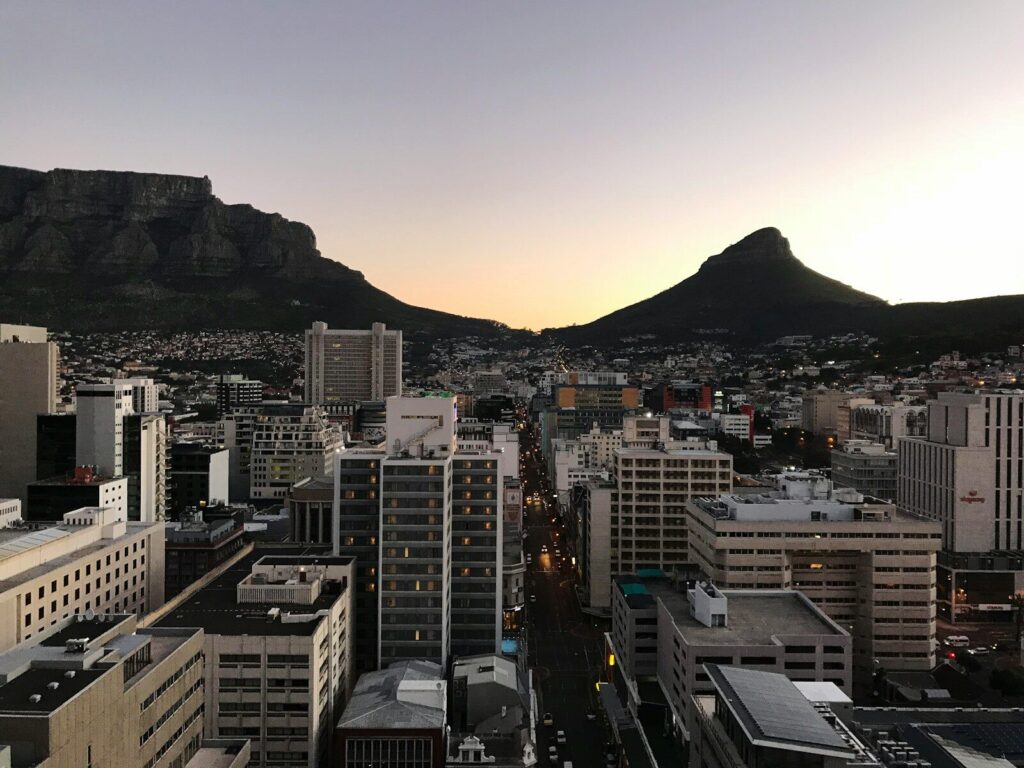
Here is a fact that breaks most people’s sense of time: Table Mountain is older than the Himalayas — about six times older. The flat-topped mountain that watches over Cape Town is roughly 240 million years old, its rocks nearer 600 million, while the Himalayas are a mere 40 million. The mountain was already ancient when the first dinosaurs appeared, and it was already old when the Dutch landed at its foot in 1652. It is the perfect symbol of the country beneath it: South Africa is a place where deep time and living history sit side by side — where you can stand on a mountain older than the world’s greatest range in the morning, walk through the prison cell where Nelson Mandela spent 18 years in the afternoon, and watch lions hunt at dawn the next day.
South Africa is a world in one country. Two oceans meet at its southern tip. Three capital cities share the job of running it. Twelve official languages are spoken across it. And in a single trip you can do things that normally take three continents: ride a cable car up a New7Wonder of Nature, watch penguins waddle across a city beach, taste pinotage in valleys planted in the 1600s, and drive yourself through a reserve the size of Wales looking for the Big Five. This guide covers the route that makes it all work in one trip: four days in Cape Town, then the safari choice every visitor faces — Kruger or Addo Elephant Park — plus the prices, the visa rules, the seasons, and the practical tricks that keep the trip smooth.
Geography & Climate
South Africa covers about 1.22 million square kilometres — roughly five times the UK — at the southern tip of Africa, with some 2,800 kilometres of coastline along two oceans: the cold Atlantic on the west, the warm Indian Ocean on the east. The country divides into regions that feel like different countries. The Western Cape is Mediterranean: Cape Town, the Winelands, the Cape Peninsula, and the Garden Route, with hot dry summers and cool wet winters. The Highveld around Johannesburg and Pretoria is high plateau — sunny, dry, and cool at night. KwaZulu-Natal is subtropical and humid, with Durban’s beaches. And the Lowveld in the north-east is Kruger country: hot, bush-covered savanna that turns gold in the dry winter.
The climate trick that catches first-timers is that the Western Cape’s seasons run backwards from the rest of the country. Most of South Africa gets its rain in summer, from October to April, in afternoon thunderstorms. The Western Cape gets its rain in winter, from May to August, while its summers are dry and warm. That means the best month for a game drive in Kruger is one of the wettest months in Cape Town — and the trip in this guide is built around that tension. The Garden Route, between the two systems, is the exception: mild all year, with rain spread through the year, much of it at night.
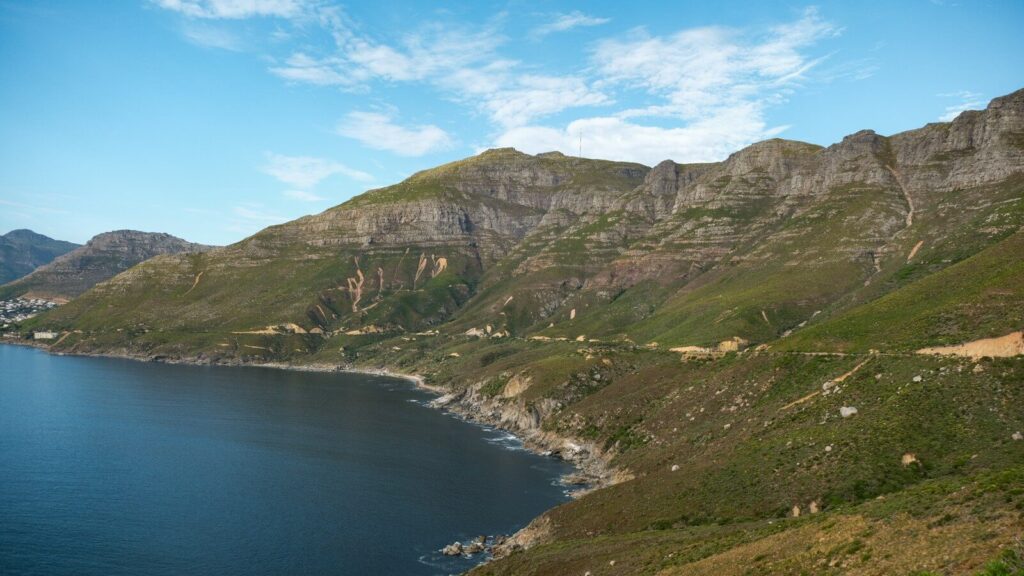
The landscape is the trip’s real star. Table Mountain’s 3-kilometre flat summit, the Twelve Apostles marching down the Atlantic coast, Chapman’s Peak Drive — one of the world’s great coastal roads — the Drakensberg escarpment, the Kalahari’s red dunes, and the fynbos of the Cape Floral Region, a UNESCO-listed floral kingdom with more plant species than the entire United Kingdom in an area the size of a small county. South Africa has 10 UNESCO World Heritage Sites, from Robben Island to the 3.6-billion-year-old Barberton Makhonjwa Mountains — among the oldest rocks on Earth.
People & Demographics
About 64 million people live in South Africa — a young country, with a median age around 29, and one of the most diverse populations on Earth. Roughly 81% are Black African, about 8% Coloured, 7% White, and 3% Indian or Asian, in the official categories the country uses — and within those numbers are Zulu, Xhosa, Sotho, Tswana, Afrikaans, English, Indian, Cape Malay, and many other communities, each with its own food, music, and traditions. It is the “Rainbow Nation” in the most literal sense, and the diversity is the point of the trip as much as the scenery.
Language is the first thing that tells you so: South Africa has twelve official languages, more than any other country. Zulu is the most-spoken home language (about a quarter of the population), followed by Xhosa and Afrikaans. English is the language of government, business, and tourism, and it is widely spoken everywhere a visitor goes — but learning a greeting in Zulu or Afrikaans opens doors that English alone does not. The largest cities are Cape Town (about 4.9 million in the metro), Johannesburg (about 4.8 million), Durban (about 4 million), and Pretoria (about 2.8 million), and the urban-rural split is stark: most South Africans live in the cities and the eastern coastal belt, while the vast interior — the Karoo, the Kalahari — is nearly empty.
What strikes visitors most is not a statistic but a temperament. South Africans are famously warm, direct, and funny — strangers will talk to you in a queue, a guide will tell you his life story on a game drive, and the offer of a braai is less an invitation than a social contract. The country has also lived through a history that is still visible everywhere: the Dutch landing of 1652, the British era, the gold rush that built Johannesburg in 1886, apartheid from 1948 to 1994, and the democratic transition led by Nelson Mandela, who walked free from Robben Island in 1990 and became president in 1994. That history is not background here — it is the trip.
Mini phrasebox: Sawubona (hello, Zulu) · Dankie (thank you, Afrikaans) · Enkosi (thank you, Xhosa) · Yebo (yes) · Lekker (nice / great) · Howzit (hi, informal) · Sharp sharp (all good / cool).
Culture, Etiquette & Daily Habits
South Africa runs on a few rules that, once learned, make everything easier. Always greet before asking anything — a “Howzit” or “Sawubona” before “where is the museum?” is not optional politeness, it is the price of the conversation. Tipping is expected everywhere — 10–15% in restaurants (service charge is rarely included), R200–400 a day for a safari guide and tracker, R5–10 for the petrol attendant (all stations are full-service) and for the car guard who watches your parked car. The braai is sacred — the barbecue is a social institution, not just a meal, and if you are invited, you go. Drive on the left, and treat dark traffic lights as four-way stops.
Dress is casual almost everywhere — Cape Town and Johannesburg are jeans-and-sneakers cities — but cover up at religious sites and in rural areas. Ask before photographing people, especially in townships and rural villages. Don’t feed the baboons at Cape Point — they are wild, fast, and will snatch bags straight out of your hands. Never leave bags visible in a parked car — smash-and-grab is the petty crime that actually happens to tourists. Don’t enter a township unguided — go with a local guide, who will show you a community, not a safari.
Do: greet first, tip the car guard, learn five words of Zulu or Afrikaans, accept the braai invitation, and drink the rooibos. Don’t: walk alone after dark in city centres, use your phone at a traffic light with the window down, assume the mountain will be open (check the wind), or call the country “Africa” as if it were one place — South Africans will laugh, and they will be right.
Lifestyle
South African daily life runs on a rhythm that surprises first-timers: early mornings, long lunches, and evenings that start when the heat breaks. Breakfast is rusks dipped in coffee or a full farm breakfast. Lunch is the main meal. Dinner is late and often cooked outdoors — the braai is where the country’s social life actually happens, from suburban backyards to beachside braai spots on a Sunday afternoon.
Food is the country’s great leveller, and it is gloriously mixed. Braai is the national pastime — boerewors (farmers’ sausage), lamb chops, and sosaties over coals. Bobotie is spiced mince under an egg custard, the Cape Malay classic. Bunny chow is Durban curry served in a hollowed-out loaf of bread, eaten with your hands. Biltong — air-dried cured meat — is sold everywhere and eaten constantly. Melktert (milk tart) is the dessert. And rooibos, the red-bush tea grown only in the Cederberg mountains, is the drink that gets you through a hot afternoon. Wine is the other half of the story: the Cape Winelands, planted from 1659, produce world-class wines, and pinotage — a cross of pinot noir and cinsaut created in South Africa in 1925 — is the grape you will not find anywhere else.
Work culture is a mix of the old and the new: the traders of the Greenmarket Square flea market work in the same squares their grandparents did, while Cape Town’s tech scene and Johannesburg’s financial district run on the same hours as London. Sport is the national obsession: rugby (the Springboks, four-time world champions), cricket, and football — and the 2010 World Cup stadiums are still part of the skyline. Music runs from the jazz of Cape Town’s District Six to amapiano, the house-music sound that took over the world from Johannesburg’s townships. And the bush is not a tourist attraction — it is the working landscape of the country, where game rangers, trackers, and conservationists do the job that keeps the Big Five alive.
Main Cities
Cape Town — the anchor, and the Mother City. About 4.9 million people in the metro, and the most beautiful city setting in Africa: Table Mountain on one side, the Atlantic on the other. Four days covers Table Mountain, Robben Island, the V&A Waterfront, Bo-Kaap, Kirstenbosch, and the Cape Peninsula — and the city rewards a fifth, for the Winelands.
Johannesburg — the economic heart. About 4.8 million people, built on gold in 1886, and the gateway to Kruger via OR Tambo Airport. The Apartheid Museum, Soweto’s Vilakazi Street (the only street in the world that was home to two Nobel Peace Prize winners — Mandela and Tutu), Constitution Hill, and the Maboneng arts precinct are the must-dos. Most visitors pass through in a day; two days is better.
Durban — the subtropical Indian Ocean port. About 4 million people, the Golden Mile beachfront, uShaka Marine World, the Indian markets of the city centre, and the best bunny chow on Earth. The warm-water alternative to Cape Town, and the gateway to the Drakensberg and the KwaZulu-Natal battlefields.
Pretoria (Tshwane) — the administrative capital. About 2.8 million people, the Union Buildings where Mandela was inaugurated, and jacaranda-lined streets that turn purple in October and November. An easy day trip from Johannesburg on the Gautrain.
Gqeberha (Port Elizabeth) — the gateway to Addo. About 1.3 million people, 40 minutes from Addo Elephant Park, and the eastern end of the Garden Route. Most visitors pass through on the way to the elephants; the city itself is a quiet beach town.
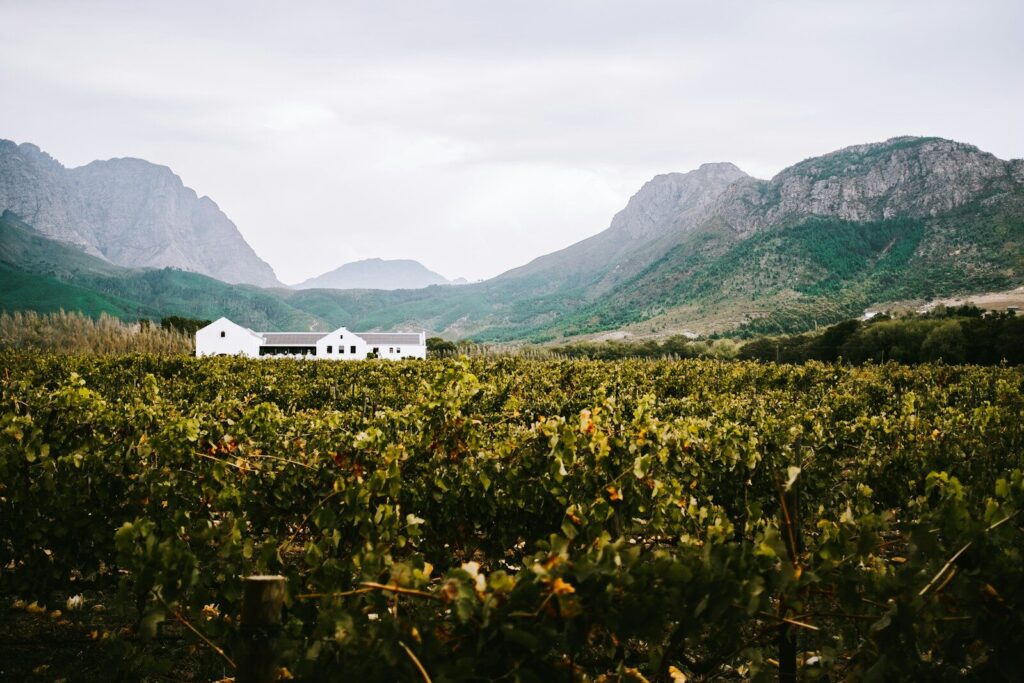
Stellenbosch & Franschhoek — the Winelands. South Africa’s oldest wine route (Stellenbosch was founded in 1679), oak-lined streets, Cape Dutch architecture, and the Franschhoek Wine Tram, a hop-on hop-off tram through the valley’s estates. A day trip from Cape Town, or a night in a vineyard guesthouse.
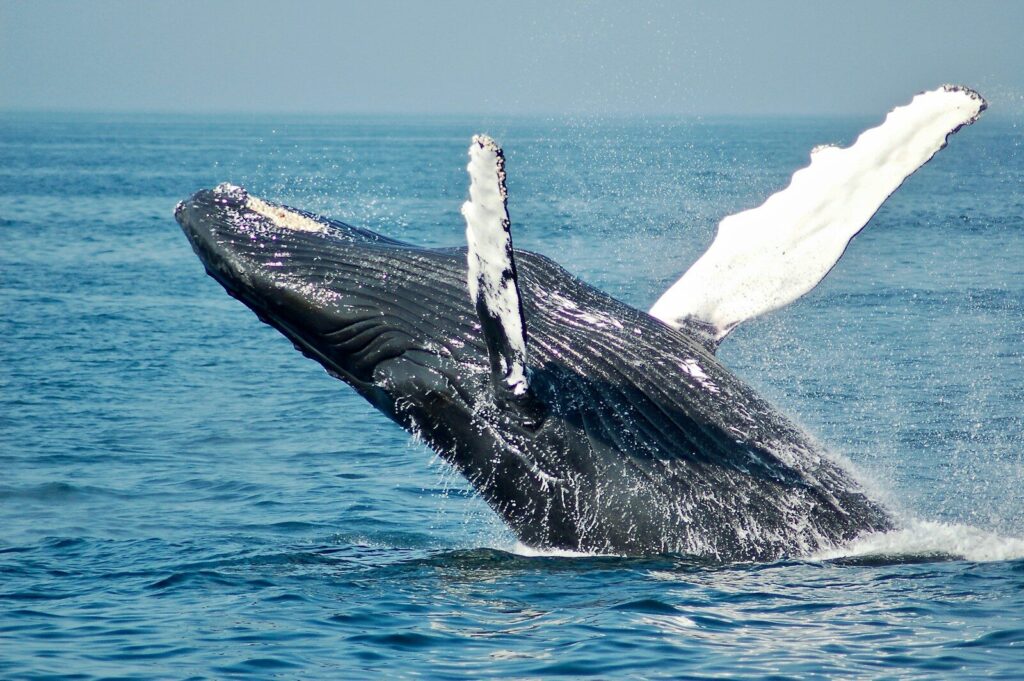
Hermanus — the whale capital. A small town on Walker Bay where southern right whales come so close to shore you can watch them from the cliff path, June to November, peaking in September and October.
Knysna — the Garden Route’s lagoon town. Oysters, the Heads (the two sandstone cliffs guarding the lagoon mouth), and the forests of the Garden Route National Park behind it.
Top Places to Visit
- Table Mountain, Cape Town — one of the New7Wonders of Nature, 1,086 metres above the city, with a 3-kilometre flat top and the “tablecloth” cloud that drapes it in the south-easter. Cableway return R475 online / R530 at the office (valid 7 days); or hike up Platteklip Gorge and ride down. Go early — the wind closes the cableway without notice.
- Robben Island, Cape Town — the UNESCO-listed prison island where Mandela spent 18 of his 27 years behind bars. Ferry + guided tour R600 for international adults; 3.5–4 hours from the Nelson Mandela Gateway at the V&A Waterfront. Book 2–3 weeks ahead in December–January; it cancels for swell.
- V&A Waterfront, Cape Town — South Africa’s most-visited destination: a working harbour turned into shops, restaurants, the Zeitz Museum of Contemporary Art Africa, and the Two Oceans Aquarium. Free to enter; the Robben Island ferry leaves from here.
- Bo-Kaap, Cape Town — the brightly coloured Malay Quarter on the slopes of Signal Hill: cobbled streets, Cape Malay food, and the most photographed houses in the country.
- Kirstenbosch National Botanical Garden, Cape Town — founded in 1913 on the eastern slopes of Table Mountain, part of the UNESCO Cape Floral Region, with the famous Tree Canopy Walkway (“Boomslang”). R270 for international adults.
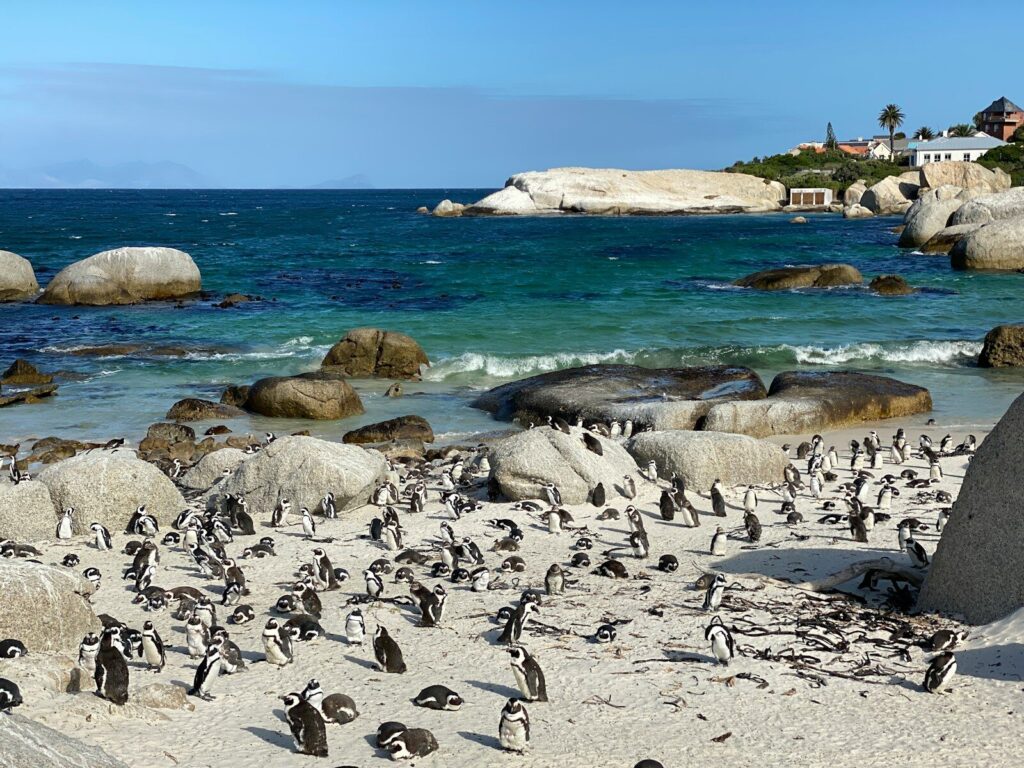
- Boulders Beach, Simon’s Town — a colony of African penguins on a white-sand beach between granite boulders. R282 for international adults; boardwalks keep you close without disturbing the birds.
- Cape Point & the Cape of Good Hope — the southwestern tip of Africa, where the cold Benguela and warm Agulhas currents meet. R592 for international adults; take the Flying Dutchman funicular to the lighthouse, and watch for baboons.
- Chapman’s Peak Drive — the 9-kilometre coastal road between Hout Bay and Noordhoek, one of the world’s great drives, with a small toll.
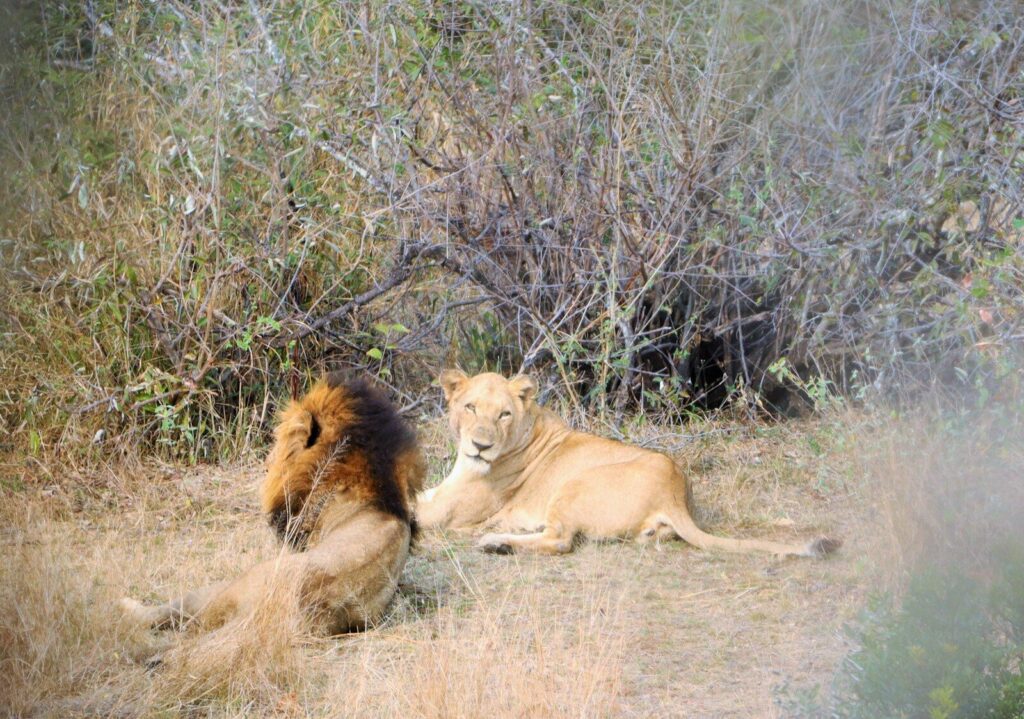
- Kruger National Park — the flagship safari: ~19,485 km² of Big Five country, self-drive or guided, with rest camps from ~R1,958 a night and a R692/day international conservation fee. Best May–September.
- Addo Elephant National Park — the malaria-free alternative, 40 minutes from Gqeberha: ~600 elephants, the Big Seven (the Big Five plus southern right whale and great white shark), and a R565/day international conservation fee.
- The Garden Route — the 750-kilometre coastal drive from Cape Town to Gqeberha: Knysna’s lagoon, the Heads, Tsitsikamma’s forests and suspension bridges, and Oudtshoorn’s ostrich farms.
- Stellenbosch Winelands — the oldest wine route in the country: tastings, cellar tours, and Cape Dutch estates, an hour from Cape Town.
- Hermanus — land-based whale watching from the cliff path, June to November.
- The Drakensberg — the “Dragon Mountains” on the KwaZulu-Natal border: hikes, San rock art, and snow in winter.
- iSimangaliso Wetland Park — a UNESCO site on the KwaZulu-Natal coast: hippos, crocodiles, and the nesting turtles of Sodwana Bay.
🎟️ Book experiences in South Africa
The tours we’d actually book — the Robben Island ferry with an ex-prisoner guide, the one-day Table Mountain + penguins + Cape Point loop, and the Winelands tram. Free cancellation on most.
- Cape Town Tour: Table Mountain, Penguins & Cape Point + Pickup — the one-day loop: Bo-Kaap, Table Mountain cable car, Chapman’s Peak, Cape Point, and the Boulders penguins, with hotel pickup. From ~US$55.
- Cape Town: Robben Island Ferry Ticket and Guided Prison Tour — skip-the-line ferry and a guided tour of the prison with a former political prisoner, including Mandela’s cell. From ~US$77.
- From Cape Town: Franschhoek Wine Tram Hop-on Hop-off — the vintage tram and open-air bus through the Winelands, hopping between estates for tastings. From ~US$51.
- Browse all Cape Town tours & activities
Some links in this box are affiliate links — we may earn a commission at no extra cost to you. See our affiliate disclosure.
🎟️ More ways to book (Viator)
- Cape Town 3-Day Private Tour: Table Mountain and Robben Island — 10 highlights in 3 days with a private guide and driver: Robben Island, Table Mountain, Cape of Good Hope, Boulders penguins, and the Winelands, all entrance fees included. From ~US$798.
- Robben Island and Iconic Table Mountain Tour — a full day with a small group (max 13): Robben Island, Table Mountain, Bo-Kaap, and St George’s Cathedral, with transfers included. From ~US$145.
Some links in this box are affiliate links — we may earn a commission at no extra cost to you. See our affiliate disclosure.
When to Visit & Getting Around
The verdict: February to April and September to November are the best months overall — warm, mostly dry, and clear of the peak-summer crowds. But South Africa is really two trips in one, and the seasons pull in opposite directions: the safari is best in the dry winter (May–September, peaking in September–October, when the bush is thin and the animals gather at the water), while Cape Town is best in the dry summer (December–March) and the shoulder months. The sweet spot for doing both in one trip is September to November: the bush is still dry for game viewing, Cape Town is warming up, the whales are off Hermanus, and the wildflowers are out in Namaqualand. Avoid mid-December to mid-January if you can — the festive fortnight fills the parks and lodges and pushes prices to their peak. Watch for: the Cape Town International Jazz Festival (main weekend 19–21 March 2027), and Ramadan (expected to begin around 8 February 2027 — limited practical impact for tourists here).
Getting there: most visitors fly into Cape Town International (CPT) or OR Tambo, Johannesburg (JNB), with direct flights from London, New York, Paris, Toronto, and Sydney. The classic route is to fly into Cape Town, spend four days there, then fly to Johannesburg and drive or fly on to Kruger — or to fly into Gqeberha for Addo.
Getting around: South Africa is a driving country. Domestic flights between Cape Town and Johannesburg take about 2 hours and typically run US$50–200 per leg booked in advance (FlySafair, Airlink, SAA, CemAir). In Johannesburg and Pretoria, the Gautrain rapid rail links OR Tambo Airport to Sandton in 15 minutes (about R105–125) and on to Pretoria in about 35 minutes; fares were frozen for 2026, and you pay with a Gautrain Card or a contactless bank card. In Cape Town, the MyCiTi bus covers the city and the airport (fares R4.80–R26.70, airport route a fixed R99, on a reloadable myconnect card). Uber and Bolt work well in the big cities and are the safe default at night. Intercape coaches run the long distances (Cape Town–Johannesburg is an overnight bus), and the Baz Bus is the backpacker hop-on hop-off along the Garden Route. There is no useful intercity passenger rail for tourists — fly or drive instead. And for the safari, a rental car is the move: economy cars from about R280–350 a day pre-booked online (walk-up rates run 40–60% higher), petrol around R22–25 a litre, and you drive on the left.
✈️ Find cheap flights to South Africa — compare fares across airlines and booking sites in one search. We may earn a commission if you book through this link, at no extra cost to you.
🚗 Rent a car in South Africa — compare rental prices across providers, with free cancellation on most bookings. We may earn a commission if you book through this link, at no extra cost to you.
Budget
South Africa is genuinely cheap for visitors — the rand trades around R17.50 to the dollar — but the safari is where the money goes. Daily budgets per person, excluding international flights (1 USD ≈ R17.50 in November 2026):
- Budget — US$50–90/day (R900–1,600). Hostel or guesthouse (R350–700), street food, supermarket meals and bunny chow (R100–200), MyCiTi/Gautrain/Uber, and one paid attraction a day. Note: the Kruger conservation fee alone is R692 a day (about US$40), so a self-drive safari day costs more than a Cape Town day.
- Mid-range — US$120–220/day (R2,100–3,900). A 3–4★ hotel or guesthouse (R1,000–2,000), restaurants (R250–500 a meal), a rental car at ~R300 a day, and a guided day tour or two. A 3-night mid-range safari runs US$600–1,200 a night at a private lodge — budget it as a separate line, not a daily rate.
- Comfort — US$300+/day (R5,250+). Boutique hotels and Winelands estates, a private guide and driver, and a 3-night stay at a mid-luxury or ultra-luxury lodge (US$1,500–3,500+ a night at the very top — Singita, Londolozi, MalaMala).
Money-saving truths: the weak rand is the discount — everything from restaurants to rental cars costs a fraction of European or North American prices. Self-drive Kruger beats a lodge by an order of magnitude — a rest-camp bungalow from ~R1,958 a night plus the R692 conservation fee, against US$600+ a night at a private lodge, for the same lions. Book the cableway online (R475 vs R530 at the office) and the Robben Island ferry weeks ahead. Eat braai and bunny chow, not hotel restaurants. And travel in February–April or September–November for the best combination of price and weather.
Kruger vs Addo — the call: Kruger is the real thing — 19,485 km², the Big Five, the best game viewing in the country, and the dry winter (May–September) is the time to go. But it is far (a flight plus a 4–5-hour drive from Johannesburg, or a flight to Skukuza), it costs R692 a day in conservation fees alone, and it is a malaria area. Addo is the easy one — 40 minutes from Gqeberha’s airport, malaria-free, the Big Seven (the Big Five plus southern right whale and great white shark), and R565 a day. If you have 3+ days and safari is the point of the trip, go Kruger. If you have a day and you are already on the Garden Route, Addo is the smart call — and for families with small children, the malaria-free part decides it.
Practical Tips
- Get the entry rules right. US, UK, EU, Canadian, and Australian passport holders enter visa-free for up to 90 days — nothing to arrange in advance. But your passport must be valid for at least 30 days beyond your departure and have at least two blank pages for entry and exit stamps; the blank-pages rule causes more refused boardings than anything else. And since 1 July 2026, everyone entering or leaving must file the SARS Traveller Declaration online within 24 hours of travel.
- Book Robben Island first. It sells out weeks ahead in December–January and cancels for swell — book it for early in your trip so you have rebooking room if the ferry is cancelled.
- Buy the cableway ticket online. R475 online against R530 at the office, and the ticket stays valid for 7 days — your insurance against the wind closing the mountain. Check the webcam before you go.
- Book Kruger rest camps early. SANParks rest camps sell out months ahead for July–September; book at sanparks.org, and remember the R692/day international conservation fee is charged on top of the bed.
- Bring a Type M adapter. South Africa’s big three-round-pin plug is used almost nowhere else — buy the adapter before you fly, not at the airport. Voltage is 230V/50Hz.
- Malaria tablets for Kruger — take prophylaxis advice from a travel clinic, especially November to April. Addo, Madikwe, and the Western Cape reserves are malaria-free.
- Stay safe, stay normal. The main tourist areas — the V&A Waterfront, Camps Bay, the Winelands, the national parks, the Garden Route — are well set up for visitors. Use Uber or Bolt at night, don’t walk alone after dark in city centres, keep valuables out of sight, and never leave bags visible in a parked car. Emergency numbers: 112 (general, from any mobile), police 10111, ambulance and fire 10177. Check the current travel advisory before you go.
🛍️ Shop this guide: South Africa packing essentials
Gear we’d actually pack for this trip. As an Amazon Associate we earn from qualifying purchases — at no extra cost to you. Our affiliate disclosure.
- South Africa travel guidebook — Kruger’s animals and Cape Town’s history both make far more sense with a good guide in hand.
- South Africa Type M travel adapter — the big three-round-pin plug is used almost nowhere else; a universal adapter without the Type M pin will not help you.
- Compact safari binoculars (8×42) — the difference between a distant speck and a leopard in a tree on a Kruger game drive.
- Reef-safe sunscreen SPF 50 — the southern-hemisphere sun is fierce even on cloudy days, on safari and at the beach.
- Packable sun hat (UPF 50) — Table Mountain’s summit and a Kruger game drive both have exactly zero shade.
🧳 Plan your trip: South Africa
Flights, stays, tours, and cruises — booked in one place. We may earn a commission if you book through these links, at no extra cost to you. Our affiliate disclosure.
- ✈️ Find cheap flights to South Africa — compare fares across airlines and booking sites in one search.
- 🏨 Browse our Expedia Travel Shop — hand-picked stays and travel deals from our curated storefront.
- 🎟️ Browse Cape Town tours & activities — free cancellation on most.
- 🛳️ Compare South Africa cruises on CruiseDirect — sailings calling at Cape Town, Durban, and Gqeberha, including repositioning cruises around the Cape.
Closing
South Africa is the country that gives you a whole world in a single trip: breakfast under a mountain older than the Himalayas, lunch in a prison cell that changed a nation, dinner on a braai under southern stars, and dawn in a reserve where lions still hunt the way they always have. It is three capitals, twelve languages, two oceans, and one of the last great wild places on Earth — and it is cheaper than almost anywhere else you could do all of that. Go for Table Mountain, stay for the rest — and leave with a little red dust on your shoes, a few words of Zulu, and the feeling that you have only just started.
FAQ
How many days do you need in South Africa?
Seven to ten days is the sweet spot: four in Cape Town (Table Mountain, Robben Island, the Peninsula, and the Winelands), then three on safari — Kruger if you have the time, Addo if you are on the Garden Route. Two weeks adds Johannesburg, the Garden Route drive, and Hermanus.
How much does a trip to South Africa cost?
Budget travellers manage US$50–90 a day; mid-range is US$120–220 a day; comfort starts around US$300 a day — all excluding international flights. A 10-day mid-range trip runs roughly US$1,500–2,500 per person on the ground, plus the safari: a 3-night mid-luxury lodge stay is US$1,800–3,600 per person, while self-drive Kruger is a fraction of that.
Do I need a visa for South Africa?
No — if you hold a US, UK, EU, Canadian, or Australian passport, you enter visa-free for up to 90 days, with a permit stamped on arrival. Your passport must be valid for at least 30 days beyond your departure and have two blank pages. Everyone must also file the SARS Traveller Declaration online within 24 hours of travel.
When is the best time to visit South Africa?
September to November is the best all-round window: the bush is still dry for safari, Cape Town is warming up, and the whales are off Hermanus. For safari alone, May–September is best (peak sightings September–October). For Cape Town alone, February–April is the sweet spot.
Kruger or Addo Elephant Park — which safari should I choose?
Kruger if you have 3+ days and safari is the point of the trip: bigger, wilder, the best game viewing in the country, but a flight plus a long drive from Johannesburg and a malaria area. Addo if you have a day and you are on the Garden Route: 40 minutes from Gqeberha, malaria-free, the Big Seven, and cheaper. Families with small children should pick Addo.
Is South Africa safe for tourists?
Yes, with normal vigilance in the main tourist areas. The V&A Waterfront, Camps Bay, the Winelands, the national parks, and the Garden Route are well set up for visitors. Use Uber or Bolt at night, don’t walk alone after dark in city centres, keep valuables out of sight, and never leave bags visible in a parked car. Check the current travel advisory before you go.
Is Table Mountain really older than the Himalayas?
Yes — about six times older. Table Mountain is roughly 240 million years old (its rocks nearer 600 million), while the Himalayas are only about 40 million years old. Its flat summit was once the bottom of a valley floor.
Keep exploring
- Egypt travel guide — North Africa’s other great ancient wonder, from the pyramids of Giza to a Nile cruise
- Morocco travel guide — Marrakech’s souks, the Atlas Mountains, and the Sahara dunes
- Peru travel guide — Machu Picchu, the Sacred Valley, and the Andes’ high-altitude twin to the Drakensberg
- Jamaica travel guide — another warm-water escape with mountains, music, and a very different coast
- USA travel guide — the other side of the Atlantic, from the national parks to the big-city breaks