 admin
🎬 [Morocco in 60 Seconds — video link]
Introduction
Morocco is the country that should not quite exist — and yet it does, gloriously. It is the only African country with both an Atlantic and a Mediterranean coastline, fourteen kilometres from Spain at its narrowest point, and it feels like three countries folded into one: Africa, Arabia, and a little bit of Europe, all arguing cheerfully in the same souk. It is home to about 37 million people, and to the world’s oldest university, founded by a woman in 859; to a square UNESCO protects not for its buildings but for its storytellers; to a mosque whose minaret rises 210 metres over the ocean; and — the fact that stops every first-time visitor mid-sentence — to goats that climb trees.
Most visitors land in Marrakech, get gloriously lost in the medina, and then face the real question: how much of Morocco can you actually see in a week? The answer is more than you think. Marrakech is the anchor — three days there covers the souks, the palaces, and Jemaa el-Fnaa at sunset — and from it, the whole country fans out: Fes and its medieval tanneries to the north, the blue streets of Chefchaouen in the Rif Mountains, the Atlantic wind of Essaouira, and the Sahara dunes of Merzouga, three days away by road through the High Atlas. This guide covers all of it: the cities and the desert, when to go, what it costs, and the practical rules — including how to survive the souks without overpaying for everything — that keep the trip smooth.
Geography & Climate
Morocco sits in the north-west corner of Africa, covering 446,550 km² — roughly the size of California, or about twice the size of the United Kingdom. It is the only African country with coastlines on two seas: the Atlantic to the west and the Mediterranean to the north, separated by the Strait of Gibraltar, where on a clear day you can see Spain. Between the coasts and the desert, the country is split by three mountain ranges — the Rif in the north, the Middle Atlas, and the High Atlas, home to Jebel Toubkal at 4,167 m, North Africa’s highest peak — and beyond them, the Sahara begins.
The country divides into five travel regions. The imperial cities (Marrakech, Fes, Meknes, Rabat) are the historic heart — medinas, palaces, and souks. The north (Tangier, Chefchaouen, the Rif) is greener, cooler, and closer to Europe in feel. The Atlantic coast (Casablanca, Essaouira, Agadir) is the windy, surfy, seafood side. The Atlas Mountains are Berber villages, trekking, and the road to the desert. And the Sahara (Merzouga, Erg Chebbi) is the dunes — the postcard Morocco, a three-day loop from Marrakech.
Climate varies more than most visitors expect. Marrakech is hot and dry: summer days push past 40°C, winter days are a mild 20°C with cold nights. The coast is moderated by the Atlantic — Essaouira rarely tops 25°C even in August, thanks to the trade winds. The mountains are cool year-round and snowy in winter (yes, you can ski in Morocco). The desert swings wildly: scorching days and freezing nights in winter, and 45°C+ in high summer. The best months are March to May and September to November — warm days, cool nights, clear skies. June to August is the cheapest window for the cities and the worst for the desert; December to February is the quietest, with the coldest desert nights.
People & Demographics
About 37 million people live in Morocco — a young country, with a median age of around 29 and more than a quarter of the population under 15. The population is a blend of Arab and Amazigh (Berber) heritage, with the Amazigh identity especially strong in the Atlas Mountains and the south, where Tamazight is the everyday language. Arabic and Tamazight are the two official languages; French is widely used in business, government, and tourism, and Spanish is common in the north around Tangier and Tetouan. English is understood in the tourist centres but is not widely spoken outside them.
The country is overwhelmingly Muslim, and Islam shapes the daily rhythm — the call to prayer five times a day, Friday as the holy day (and the traditional couscous day), and Ramadan, when the whole country shifts its hours. Morocco is a constitutional monarchy under King Mohammed VI, and the royal family is a visible, respected presence. What strikes visitors most is not a statistic but a temperament: Moroccans are famously hospitable, and the offer of mint tea is less a drink than a social contract — accept it, sit down, and the conversation begins.
Mini phrasebox: Salam alaykum (peace be upon you — the standard greeting) · Shukran (thank you) · La shukran (no, thank you) · Bshhal? (how much?) · Ghali bzzaf (too expensive — your best souk phrase) · Inshallah (God willing — the answer to most plans) · Baraka (blessing / enough) · Yallah (let’s go).
Culture, Etiquette & Daily Habits
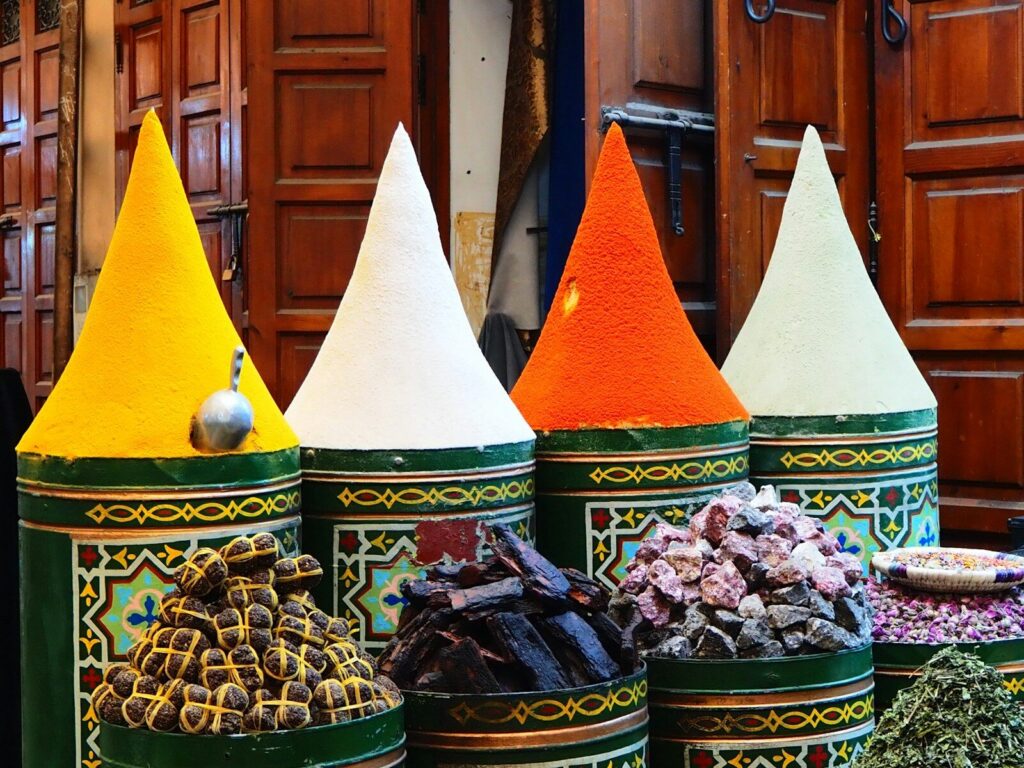
Morocco runs on a few rules that, once learned, make everything easier. Always greet before asking anything — a “Salam alaykum” before “where is the museum?” is not optional politeness, it is the price of the conversation. Haggling is expected in the souks — never accept the first price; offer about half, and meet in the middle with a smile. Mint tea is a ritual, not a beverage: poured from a height to make foam, served in small glasses, and offered to guests, customers, and new friends alike — refusing it is possible, but accepting it opens doors.
Dress modestly away from the beach — cover shoulders and knees in the medina and in religious sites; women should carry a scarf, as non-Muslims cannot enter most mosques (the Hassan II Mosque in Casablanca is the famous exception, on a guided tour). Ask before photographing people, especially in the medina, and be prepared to pay if they agree. Friday is couscous day — many shops close for Friday prayers around midday, and the best couscous of the week is served on Friday. During Ramadan, be discreet about eating and drinking in public in smaller towns; tourist areas in Marrakech stay more open, and the country shifts to UTC+0 for the month.
Do: bargain with good humour, accept the tea, learn five words of Arabic or French, tip your guide, and say “la shukran” with a smile. Don’t: accept “free” henna or “free” gifts in Jemaa el-Fnaa (they come with a price), follow an unofficial “guide” in Fes without agreeing a fee first, drink tap water, photograph a stranger’s children, or wear revealing clothing in rural areas.
Lifestyle
Moroccan daily life runs on a rhythm that surprises first-timers: late mornings, long lunches, and evenings that start when the heat breaks. Breakfast is bread, olive oil, and msemen (flaky flatbread) with mint tea. Lunch is the main meal — tagine or couscous, eaten slowly, often with the family. Dinner is late and light, and the real social life happens after dark in Jemaa el-Fnaa, in the cafés, and on the rooftops.
Food is the country’s great leveller. Tagine — slow-cooked stew in a conical clay pot, chicken with preserved lemon, lamb with prunes — is the everyday classic. Couscous is the Friday dish, steamed by hand and served with vegetables and meat. Pastilla is the sweet-savoury surprise: flaky pastry filled with pigeon or chicken, almonds, and cinnamon, dusted with sugar. Harira is the soup of Ramadan. And mint tea — poured from a height, sweet, and served everywhere — is the national drink, sometimes jokingly called “Moroccan whiskey” (there is no alcohol in it). Argan oil, produced by women’s cooperatives in the Souss region, is the country’s liquid gold — culinary and cosmetic, and worth buying from a cooperative rather than a street stall.
Work culture is a mix of the traditional and the modern: the medina’s artisans work in the same workshops their grandfathers did, while Casablanca’s business district runs on French, finance, and the country’s new high-speed rail. Football is the national obsession — Morocco co-hosts the 2030 FIFA World Cup with Spain and Portugal, and the team’s 2022 World Cup semi-final run is still talked about everywhere. Music runs from Gnawa (UNESCO-listed, with African roots) to chaabi pop to the storytellers of Jemaa el-Fnaa. And the souks are not a tourist show — they are the working economy of the medina, where 160,000 people live inside Marrakech’s old walls.
Main Cities
Marrakech — the anchor. Founded around 1070, the “Red City” is Morocco’s tourist magnet: Jemaa el-Fnaa, the Koutoubia minaret, the souks, the Majorelle Garden, and the palaces. Stay in a riad inside the medina for the full experience. Three days is the minimum; the city rewards a fourth.
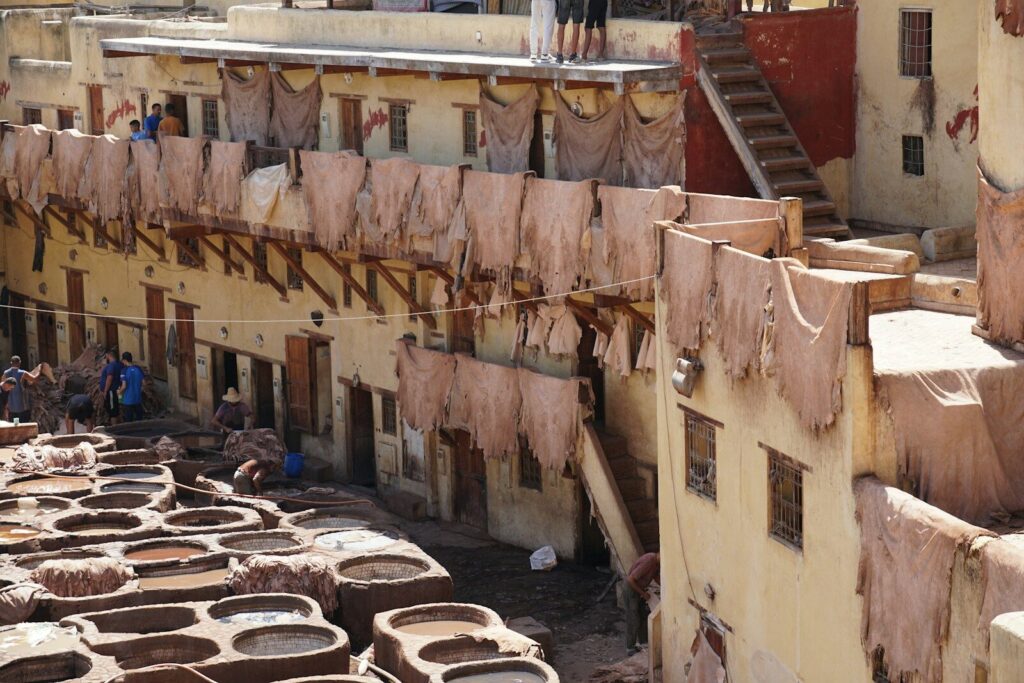
Fes — the spiritual and cultural capital. Fes el-Bali is often described as the world’s largest car-free urban area — a medieval medina of some 9,000 alleyways, home to the Chouara Tannery and the University of al-Qarawiyyin, founded in 859 by Fatima al-Fihri and cited by Guinness as the world’s oldest continuously operating university. Get gloriously lost, then hire an official guide.
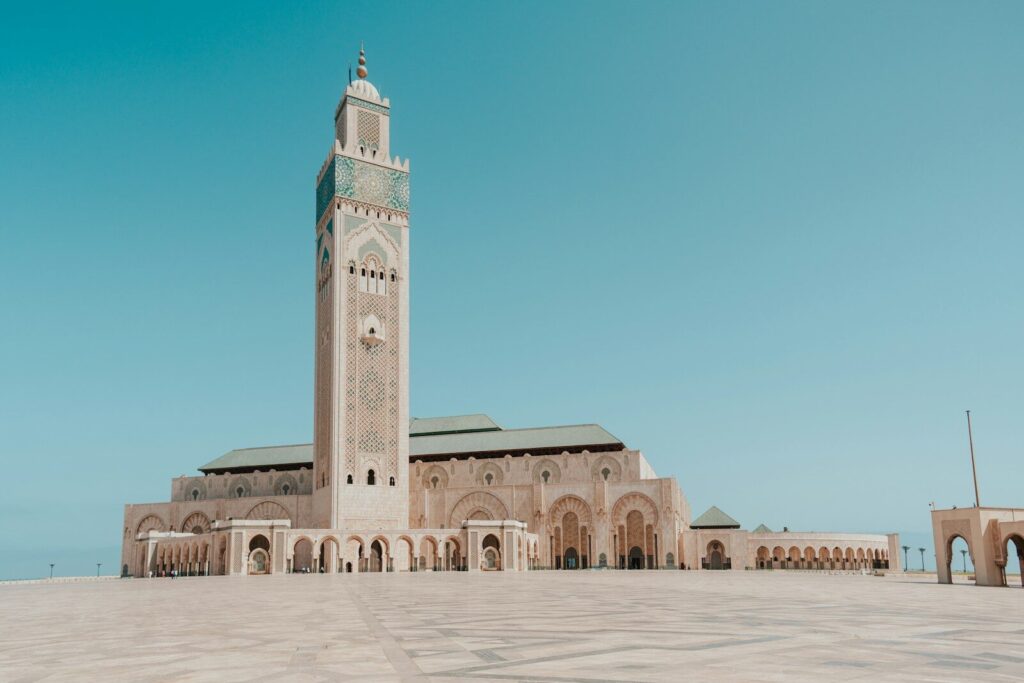
Casablanca — the economic capital and Atlantic port, where most visitors fly in. The Hassan II Mosque is the draw: completed in 1993, built partly over the ocean, its minaret rising about 210 metres — one of the tallest in the world. One day is enough for most travellers.
Rabat — the capital since 1912, quieter and more liveable than the tourist cities: the Kasbah of the Udayas, the Hassan Tower, and the royal palace. A good first or last stop.
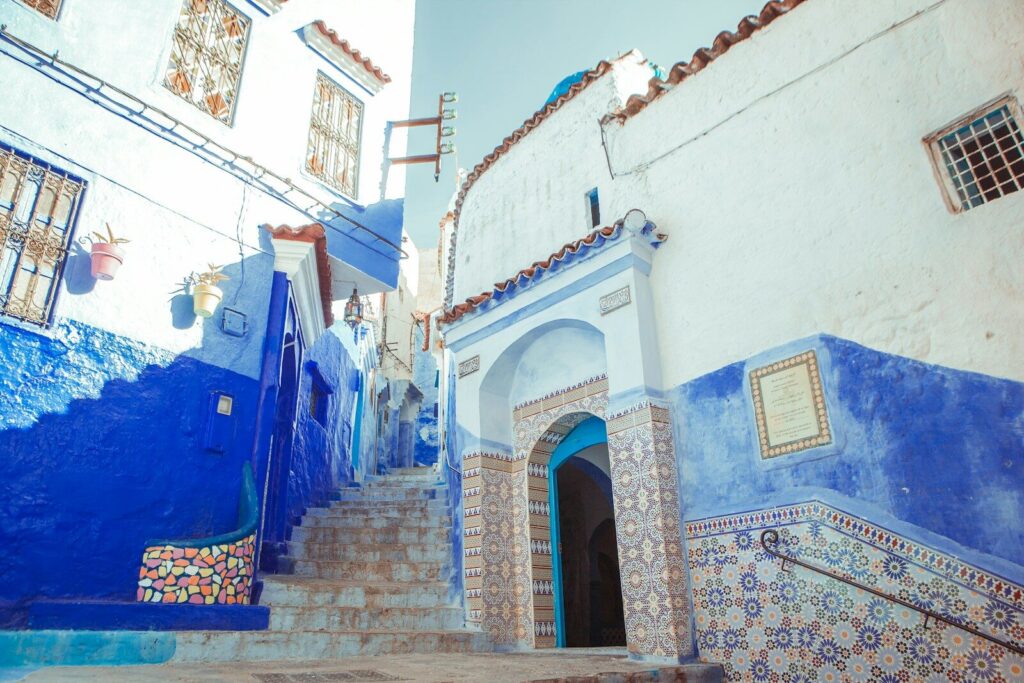
Chefchaouen — the Blue City in the Rif Mountains. Its old town is painted in shades of blue, and it is the most photographed town in Morocco. Two days, reached from Fes or Tangier.
Tangier — the gateway to Europe. Ferries to Spain run in 35–60 minutes, and the Al Boraq high-speed train starts here. The medina and the Kasbah are worth a day; the city’s literary, Beat-era history adds flavour.
Essaouira — the windy Atlantic port, white-and-blue medina, surfing, and some of Morocco’s best seafood. Three hours from Marrakech, and the perfect decompression stop after the medina’s intensity.
Ouarzazate — the “gateway to the Sahara”, a film-studio town on the road to Aït Benhaddou and Merzouga. Stop here on the desert loop, not as a destination in itself.
Top Places to Visit
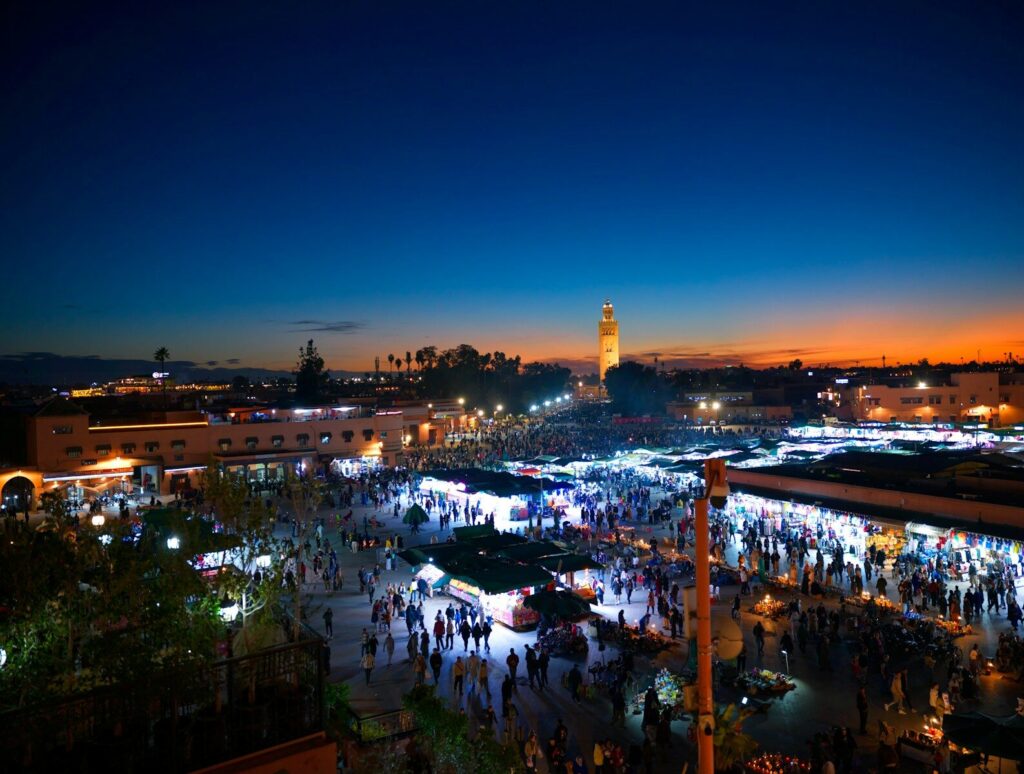
- Jemaa el-Fnaa, Marrakech — the square UNESCO protects for its storytellers, not its buildings; by day orange-juice stalls and snake charmers, by night one of the world’s great open-air food courts.
- Koutoubia Mosque, Marrakech — the 12th-century Almohad minaret, the city’s landmark and the “sister” of the Giralda in Seville.
- Majorelle Garden, Marrakech — Yves Saint Laurent’s cobalt-blue garden; 170 MAD for foreign adults, and the Berber Museum inside is a 60 MAD supplement. Book ahead — tickets sell out.
- Bahia Palace, Marrakech — eight hectares of painted-cedar courtyards, built in the 1860s and 1890s; 100 MAD for foreign adults, and the single most rewarding 100 MAD in the city.
- Ben Youssef Madrasa, Marrakech — a 16th-century Quranic school of carved cedar and zellige tilework; 50 MAD.
- Chouara Tannery, Fes — hides still softened and dyed in stone vats using methods passed down for centuries. View from a leather shop’s terrace (expect a polite sales pitch after).
- Aït Benhaddou — the fortified ksar, UNESCO-listed since 1987, that starred in Gladiator and Game of Thrones.
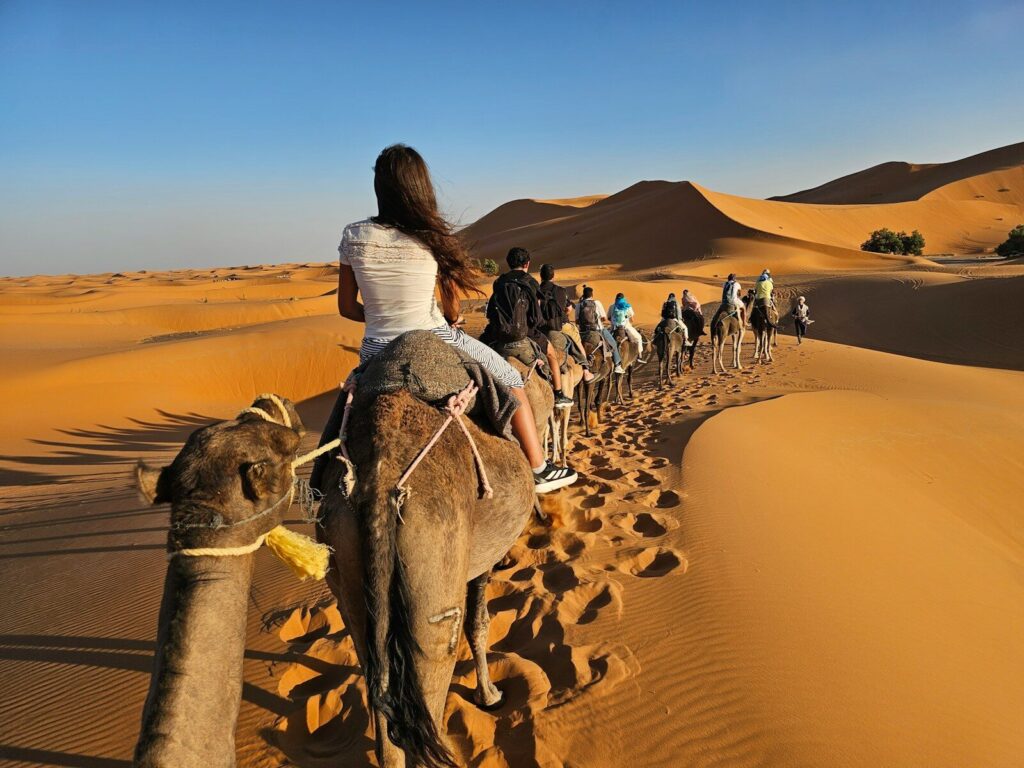
- Erg Chebbi dunes, Merzouga — the Sahara proper: camel treks at sunset, sandboarding, and a night in a Berber camp under the stars.
- Todra Gorge — 300-metre canyon walls, a cool walk between them, and the classic stop on the desert loop.
- Volubilis — Roman ruins near Meknes, with floor mosaics still in place; UNESCO-listed, and the best-preserved Roman site in Morocco.
- Hassan II Mosque, Casablanca — the 210-metre minaret over the Atlantic; one of the few Moroccan mosques non-Muslims can enter, on a guided tour.
- The argan-tree goats, Souss Valley — goats climbing argan trees for the fruit, between Marrakech and Essaouira. The honest note: many roadside scenes are staged, with herders charging for photos. The real behaviour happens in the countryside, away from the tourist roads — and the oil is best bought from a women’s cooperative.
🎟️ Book experiences in Morocco
The tours we’d actually book — the classic 3-day Sahara run to Merzouga, with camel treks, Aït Benhaddou, and a night in a desert camp. Free cancellation on most.
- From Marrakech: Merzouga 3-Day Desert Safari with Food — High Atlas, Aït Benhaddou, Todra Gorges, camel ride at sunset and sunrise, Berber camp. 4.6/5 from 15,640 reviews. From ~US$108.
- Marrakesh: 3-Day Merzouga Sahara Desert Tour, Quad, Camel, Camp Dinner Show — the same classic route with quad biking and sandboarding added, and a dinner show at camp. 4.9/5 from 2,481 reviews. From ~£49.
- Browse all Marrakech tours & activities
Some links in this box are affiliate links — we may earn a commission at no extra cost to you. See our affiliate disclosure.
🎟️ More ways to book (Viator)
- From Marrakech: 3-Day Merzouga Sahara Desert Tour, Camp & Camel — Aït Benhaddou, camel trek through the Erg Chebbi dunes, dinner and live Saharan music around the campfire. Free cancellation up to 24 hours before.
- Sahara Desert, Merzouga, Erg Chebbi 3-Day Tour from Marrakech — Tizi-n-Tichka pass, Aït Benhaddou with a guide, camel caravan in Erg Chebbi, dinner under the stars at a Berber camp. From ~US$135.
Some links in this box are affiliate links — we may earn a commission at no extra cost to you. See our affiliate disclosure.
When to Visit & Getting Around
The verdict: March to May and September to November are the best months — warm days, cool nights, clear skies, and the desert at its most comfortable. Winter (December–February) is the quietest and cheapest, with mild city days and cold desert nights — pack layers for the camp. Summer (June–August) is the cheapest window for the cities and the worst for the desert, where temperatures pass 45°C. Watch for: Ramadan (expected to begin around 8 February 2027 — confirm the lunar dates before travelling), when daytime restaurants close in smaller towns and the country shifts to UTC+0; and the Marrakech International Marathon in late January.
Getting there: two international airports serve most visitors. Casablanca Mohammed V (CMN) is the main international hub; Marrakech Menara (RAK) is the tourist gateway, with direct flights from London, New York, Paris, and Toronto. Fes, Tangier, Agadir, and Rabat also take international flights.
Getting around: the ONCF trains are reliable and comfortable. Marrakech to Fes in second class runs 150–220 MAD; Casablanca to Marrakech takes about three hours. The Al Boraq high-speed train — Africa’s first — runs Tangier to Casablanca in about 2 hours 10 minutes. Petit taxis handle city hops for 5–30 MAD — insist on the meter or agree the price first, as drivers don’t always run it. Grand taxis cover intercity routes at roughly 50–100 MAD per seat. The classic 3-day Sahara loop from Marrakech (via Aït Benhaddou, Todra Gorge, and Merzouga) runs 1,200–2,500 MAD shared, or about €95–135 on the big booking platforms. Car rental starts from about 300 MAD a day — the roads are good, but the medinas are not built for cars.
✈️ Find cheap flights to Morocco
We may earn a commission if you book through this link, at no extra cost to you.
We may earn a commission if you book through this link, at no extra cost to you.
Budget
Morocco is cheap by European standards and getting less cheap in the places tourists cluster. Daily budgets per person, excluding international flights (1 USD ≈ 10 MAD in November 2026):
- Budget — US$40–60/day (350–600 MAD). Hostel dorm (80–150 MAD), street food and casual lunches (25–50 MAD), mint tea (10–20 MAD), petit taxis, and one paid highlight. A tajine at a local restaurant runs 50–100 MAD; a full meal in Jemaa el-Fnaa about 30–50 MAD.
- Mid-range — US$70–110/day (700–1,300 MAD). A private room in a riad (250–600 MAD) or a mid-range hotel double (600–1,200 MAD), mid-range restaurants (80–150 MAD a meal), a shared Sahara tour, and intercity trains.
- Comfort — US$180+/day (1,800+ MAD). Luxury riads (La Mamounia from about 4,200 MAD a night), fine dining (200–500 MAD a meal), private desert tours, and a driver for the Atlas loop.
Money-saving truths: there are roughly three prices in Morocco — the local price, the regular price, and the tourist price — and haggling is how you move between them. Pay in dirhams where you can: the dirham is a closed currency you cannot buy before arrival, so change cash at the airport, a bank, or an authorised bureau, and keep your exchange receipts. Eat where Moroccans eat — a cookshop tajine is 50–100 MAD against 200+ in a tourist restaurant. Travel in the shoulder seasons for the best combination of price and weather. Cards work at larger hotels and restaurants; carry cash daily for the medina, the souks, and small towns.
Practical Tips
- Visa rules are generous. US, UK, EU, Canadian, Australian, and New Zealand citizens enter visa-free for up to 90 days. Bring a passport valid for at least six months beyond your planned departure. A form is completed on arrival.
- Bring cash — and change it on arrival. The dirham is a closed currency: you cannot buy it before you arrive or take it out of the country. ATMs are everywhere in the cities; change cash at the airport, a bank, or an authorised bureau de change, and keep your receipts.
- Haggle with a smile, and walk away once. In the souks, offer about half the first price and meet in the middle. Walking away is the single most effective negotiating move — the price usually drops before you reach the next stall.
- Book the Majorelle Garden ahead. Tickets sell out — 170 MAD for foreign adults, plus 60 MAD for the Berber Museum inside. The four Ministry of Culture sites (Bahia Palace, El Badi, Saadian Tombs, Ben Youssef Madrasa) run 100 MAD each for foreign adults, with no combined pass.
- Dress for the medina, not the beach. Cover shoulders and knees outside resort areas, and carry a scarf for mosque visits. Bikinis are for the beach and the hotel pool only.
- Use official guides in Fes. Fes el-Bali has some 9,000 alleyways, and the unofficial “guides” who attach themselves to lost visitors charge what they like. Agree a fee first, or hire through your riad.
- Stay safe, stay normal. The US State Department rates Morocco Level 2 (“Exercise Increased Caution”) as of 2026, driven mainly by broader regional risk; the UK, Canadian, and Australian ministries treat it as a standard destination requiring normal vigilance. Petty theft and scams — fake guides, “free” henna — are the real risks. Use licensed taxis at night, keep valuables out of sight in crowded souks, and read the current advisory before you go. Emergency numbers (widely listed): police 19, ambulance and fire 15.
🛍️ Shop this guide: Morocco packing essentials
Gear we’d actually pack for this trip. As an Amazon Associate we earn from qualifying purchases — at no extra cost to you. Our affiliate disclosure.
- Pure argan oil — the real thing, for hair and skin, at a fraction of the medina’s tourist price — and a good reference for what the cooperatives sell.
- Universal travel adapter (Type C/E) — Morocco runs on Type C/E plugs at 230V; North American travellers need an adapter.
- Desert scarf / shemagh — doubles as sun protection in the Sahara, a shawl for mosque visits, and a blanket on cold desert nights.
- Hidden travel money belt — crowded souks are pickpocket territory; keep the passport and spare cash out of sight.
- Packing cubes — a week in Morocco means city, mountains, and desert in one bag; cubes keep the layers separate.
🧳 Plan your trip: Morocco
Flights, stays, tours, and cruises — booked in one place. We may earn a commission if you book through these links, at no extra cost to you. Our affiliate disclosure.
- ✈️ Find cheap flights to Morocco — compare fares across airlines and booking sites in one search.
- 🏨 Browse our Expedia Travel Shop — hand-picked stays and travel deals from our curated storefront.
- 🎟️ Browse Marrakech tours & activities — free cancellation on most.
- 🛳️ Compare Mediterranean cruises on CruiseDirect — sailings calling at Casablanca and Tangier.
Closing
Morocco is the country that gives you three continents’ worth of stories in a single week: breakfast in a medina that has not changed in a thousand years, lunch in a blue mountain town, dinner in a desert camp under stars so bright they feel close enough to touch. It is the oldest university in the world and the newest high-speed train in Africa; a 210-metre minaret over the ocean and a square protected for its storytellers; a souk where haggling is a sport and a tree full of goats. Go for the desert, stay for the rest — and leave with a little argan oil, a few words of Arabic, and the feeling that you have only just started.
🎬 [Morocco in 60 Seconds — video link]
FAQ
How many days do you need in Morocco?
Seven days is the sweet spot: three in Marrakech, two on the desert loop to Merzouga, and two in Fes or Chefchaouen. Ten days adds Essaouira and the coast; fourteen covers the full loop from Tangier to the Sahara.
How much does a trip to Morocco cost?
Budget travellers manage US$40–60 a day; mid-range is US$70–110 a day; comfort starts around US$180 a day — all excluding international flights. A 7-day mid-range trip runs roughly US$600–1,100 per person on the ground.
Is Morocco safe for tourists?
Yes, with normal vigilance. The US State Department rates Morocco Level 2 (“Exercise Increased Caution”) as of 2026; the UK, Canadian, and Australian ministries treat it as a standard destination. Petty theft and scams are the main risks — use licensed taxis at night and keep valuables out of sight in crowded souks.
When is the best time to visit Morocco?
March to May and September to November — warm days, cool nights, and the desert at its most comfortable. Summer is cheapest for the cities and worst for the desert; winter is quietest, with cold desert nights.
Do I need a visa for Morocco?
US, UK, EU, Canadian, Australian, and New Zealand citizens enter visa-free for up to 90 days, with a passport valid for at least six months. A form is completed on arrival.
Can you really see goats in trees in Morocco?
Yes — Tamri goats climb argan trees in the Souss Valley of south-western Morocco to eat the fruit. Many roadside scenes on the Marrakech–Essaouira road are staged for photos, so watch for them in the countryside instead, and buy argan oil from a women’s cooperative.
Keep exploring
- Spain travel guide — fourteen kilometres across the strait, and the other half of the Al-Andalus story
- Portugal travel guide — Lisbon, Sintra, and the Atlantic coast that shares Morocco’s ocean
- Turkey travel guide — where continents collide, from Istanbul’s bazaars to Cappadocia’s balloons
- Greece travel guide — the other side of the Mediterranean, from Naxos and Paros to the Acropolis
- Italy travel guide — Rome, the Amalfi Coast, and the classic 10-day route