 admin
🎬 Dominican Republic in 60 Seconds
Introduction
The Dominican Republic is the Caribbean’s greatest overachiever — and the hardest to sum up in one beach. It is the island that gave the world merengue and bachata, produced more Major League baseball players than any country outside the United States, and holds both the Caribbean’s highest mountain and its lowest lake. It is also home to Santo Domingo, founded in 1498, the oldest continuously inhabited European city in the Americas, where you can walk the first paved street in the New World and stand in the first cathedral of the Americas before lunch.
But most visitors face one decision before any of that: which coast? Punta Cana, on the flat eastern tip, is the polished resort machine — 30 kilometres of white sand, calm turquoise water, and all-inclusive hotels where you never have to make a decision. The north coast, around Puerto Plata and Samaná, is the older, wilder, cheaper DR — mountains crashing into the Atlantic, real towns, waterfalls you slide down, and kiteboarding beaches where the wind never stops. They are five or six hours apart by road, so on a normal trip you pick one. This guide makes the call for you, then covers the rest of the country: the capital, the islands, the mountains, when to go, what it costs, and the practical rules that keep the trip smooth.
Geography & Climate
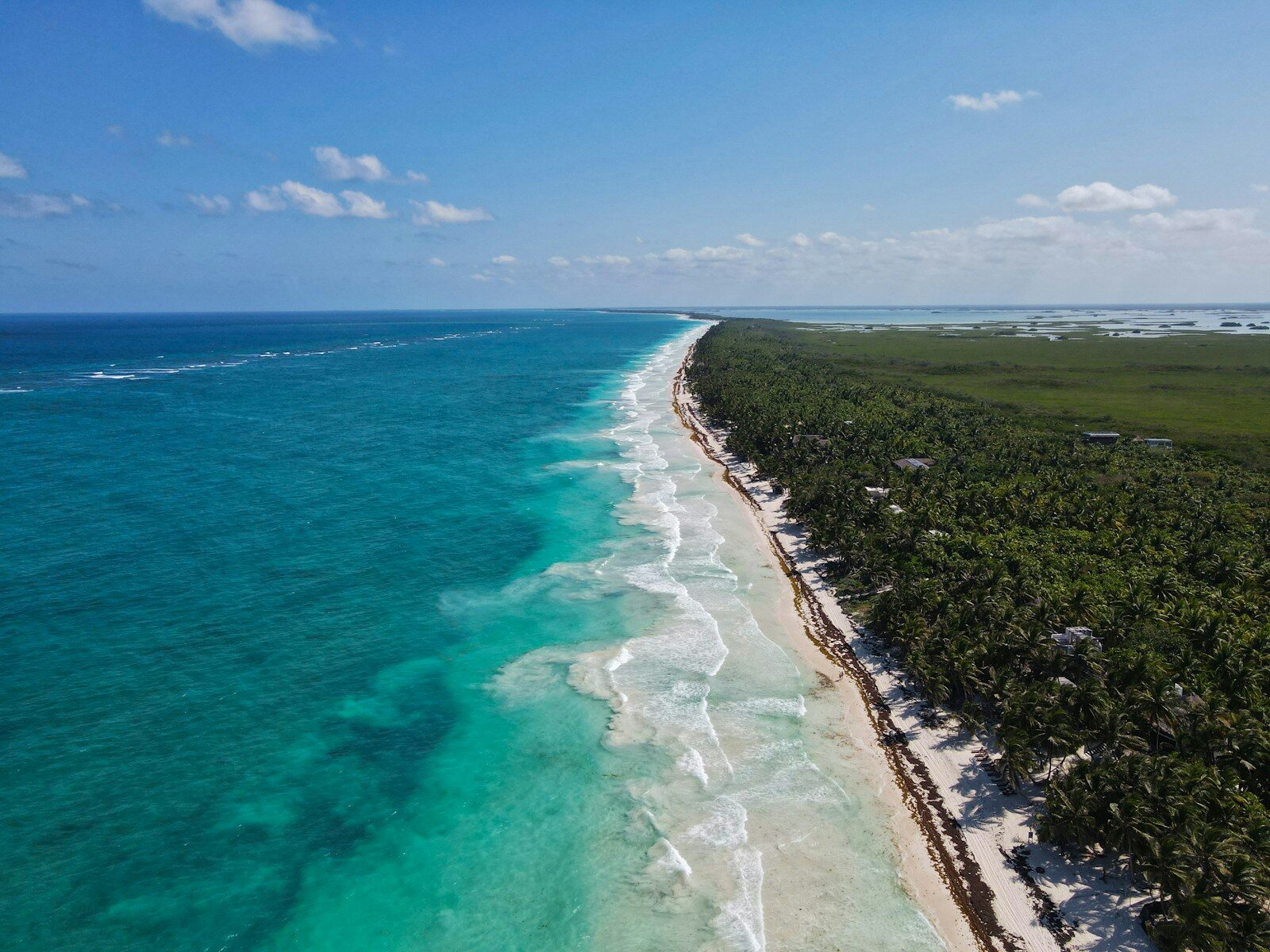
The Dominican Republic fills the eastern two-thirds of Hispaniola, the Caribbean’s second-largest island, which it shares with Haiti to the west. It covers 48,670 km² — roughly the size of Slovakia — and packs an unlikely amount of variety into that space: the flat, resort-lined east coast; the mountain-backed Atlantic north coast; the dry, cactus-dotted southwest; and the Cordillera Central running down the spine, home to Pico Duarte (3,098 m), the highest peak in the Caribbean. At the other extreme sits Lake Enriquillo, a hypersaline lake about 44 metres below sea level — the Caribbean’s lowest point — where American crocodiles bask in a desert-like rift valley. One island, both extremes.
The country divides into four travel regions. The east coast (Punta Cana, Bávaro, Cap Cana, La Romana, Bayahibe) is the resort zone — flat, sunny, and built for beach holidays. The north coast (Puerto Plata, Sosúa, Cabarete, the Samaná Peninsula) is the adventure coast — mountains, waterfalls, surf, and whales. The south coast (Santo Domingo, Boca Chica, Barahona, Pedernales) mixes the capital’s history with the wild, empty beaches of the far southwest. The central mountains (Jarabacoa, Constanza) are the cool escape — pine forests, rivers, and the trailhead for Pico Duarte.
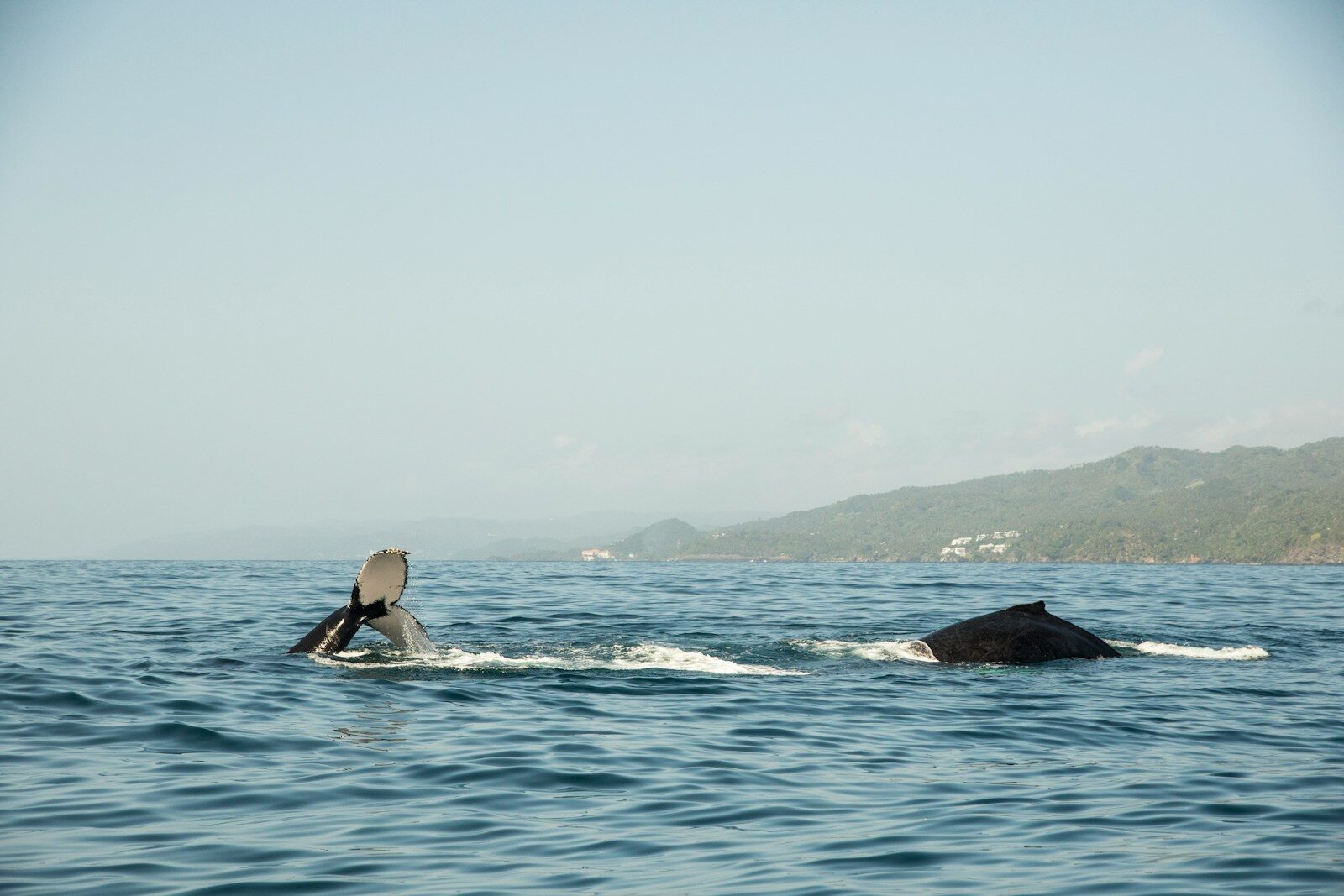
Climate is tropical everywhere: 28–31°C on the coasts year-round, cooler in the mountains (Constanza’s nights can drop below 10°C, and frost is possible near Pico Duarte’s summit). There are two seasons, not four. The dry season (December–April) is the classic window — reliable sun, low humidity, calm seas, and the highest prices, peaking over Christmas and New Year. The green season (May–November) is hotter and cheaper, with short afternoon downpours and resort rates 30–50% lower. The Atlantic hurricane season runs 1 June–30 November, with the real risk concentrated August–October; direct hits are rare, but a passing storm can wipe out days of plans, so insure any trip in that window. One quirk: the north coast’s rain pattern is the reverse of the east’s — Puerto Plata is wettest November–January and driest June–September, so the “best month” depends on which coast you pick. The seasonal highlight is Samaná Bay, where humpback whales gather to breed from mid-January to the end of March.
People & Demographics
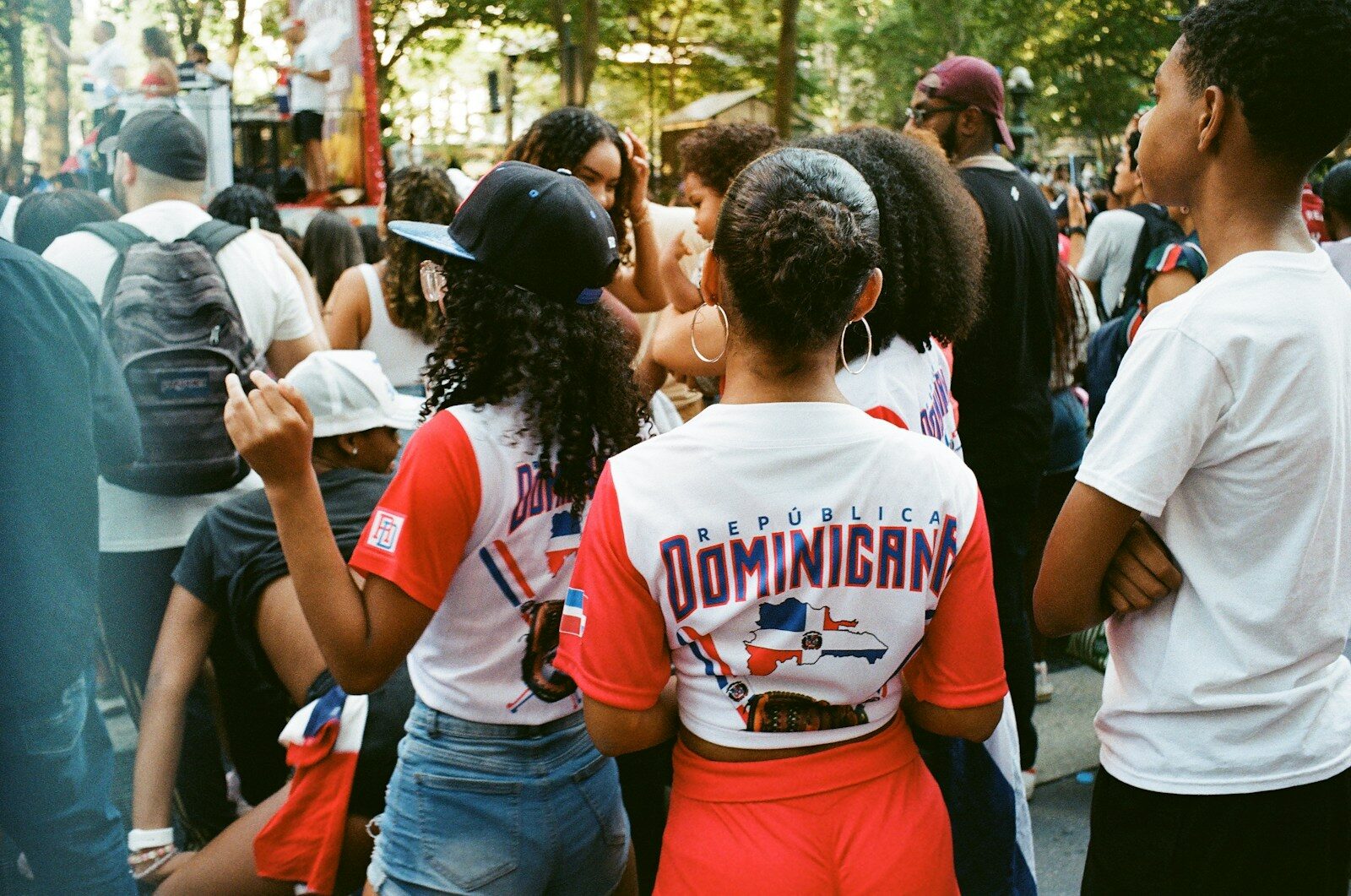
About 11 million people live in the Dominican Republic — the most populous country in the Caribbean. Roughly seven in ten Dominicans identify as mixed-race (of Spanish, African, and Taíno ancestry), with White and Black minorities and smaller Lebanese, Chinese, and Haitian-descended communities. The population is young (median age around 30) and mostly urban: about three-quarters live in towns and cities, with roughly 3.3 million in the Santo Domingo metro area and around a million in Santiago, the second city. There is also a large diaspora — millions of Dominicans live in the United States, above all in New York, and the money they send home is a visible part of the economy.
Spanish is the official language, and Dominican Spanish is fast, musical, and full of local slang — “¿Qué lo que?” is the local “What’s up?”. English is widely understood in Punta Cana resorts and tourist offices, and much less so in small towns and on the north coast, where a few phrases pay off fast. The country is predominantly Christian, with a Catholic tradition and a large, fast-growing Evangelical movement (exact shares vary sharply between surveys, so take any single figure with a grain of salt). Baseball is the shared religion that needs no survey: pelota is the national obsession, played on every patch of dirt in the country, and the DR is the world’s great factory of Major League talent.
Mini phrasebox: Hola (hello) · Buenos días (good morning) · Gracias (thank you) · Por favor (please) · ¿Cuánto cuesta? (how much does it cost?) · La cuenta, por favor (the bill, please) · ¿Dónde está…? (where is…?) · No hablo mucho español (I don’t speak much Spanish) · ¡Qué lo que! (what’s up!) · Tranquilo (relax / no worries) · Una fría, por favor (a cold one [beer], please).
Culture, Etiquette & Daily Habits
Dominican culture runs on warmth, music, and tranquilo — the unhurried rhythm that visitors from faster countries need a day to adjust to. Greetings are physical and warm: a handshake on introduction, a cheek kiss between acquaintances, and small talk before business. Personal space is closer than in North America, and a stranger who asks where you are from is usually being friendly, not nosy. Dominicans are famously proud of their music, their baseball, and their food, in that order — and they will happily explain all three at length.
Music is not background here; it is the national soundtrack. Merengue, the fast, accordion-driven national dance, and bachata, its slower, guitar-led cousin about love and heartbreak, were both born on this island and are both on UNESCO’s intangible heritage list. You will hear them everywhere: corner stores, buses, beach bars, and the colmados (corner shops) that double as neighbourhood social clubs. Dancing is a social skill, not a performance — if a Dominican invites you to dance, say yes and follow their lead.
Food is the other culture. The everyday plate is la bandera dominicana — rice, beans, and meat (usually chicken) with salad and fried plantain. Sancocho, a hearty root-vegetable and meat stew, is the Sunday family dish and the claimed cure for everything. Breakfast is mangú, mashed green plantains with fried eggs, cheese, and salami. The coast adds fresh fish, lobster in season, and ceviche-style preparations. Wash it down with Presidente beer (order “una fría”), Brugal rum, or mamajuana, the rum-wine-honey-herb infusion sold in decorated bottles everywhere.
Do: greet people when you enter a small shop or colmado; agree taxi fares before you get in (taxis are unmetered); bring cash in small bills — many small businesses can’t break large notes; try to dance when invited; dress a little smarter in Santo Domingo in the evening.
Don’t: wear swimwear away from the beach in town; photograph people without asking, especially in rural areas; expect punctuality on island time — the bus leaves when it leaves; assume the resort is the country — the real DR is outside the gates.
Tipping: 10% in restaurants is customary (check the bill — a 10% service charge is often already added). Tour guides: US$5–10 a day. Taxi drivers don’t expect tips, though rounding up is appreciated. Hotel housekeeping: a couple of dollars a night.
Lifestyle
Daily life in the Dominican Republic is lived outdoors and late. Breakfast is early and hearty (mangú and strong coffee). Lunch is the main meal, taken seriously and unhurried. Dinner is late (8–9 pm), and the evenings belong to music — colmados with speakers on the pavement, baseball on the television, dominoes slapped down on plastic tables. Sundays are family days, and the beach is where families go: on a Sunday afternoon, Playa Boca Chica or Sosúa fills with Dominican families, coolers, and portable speakers, and that is the most local beach experience you can have.
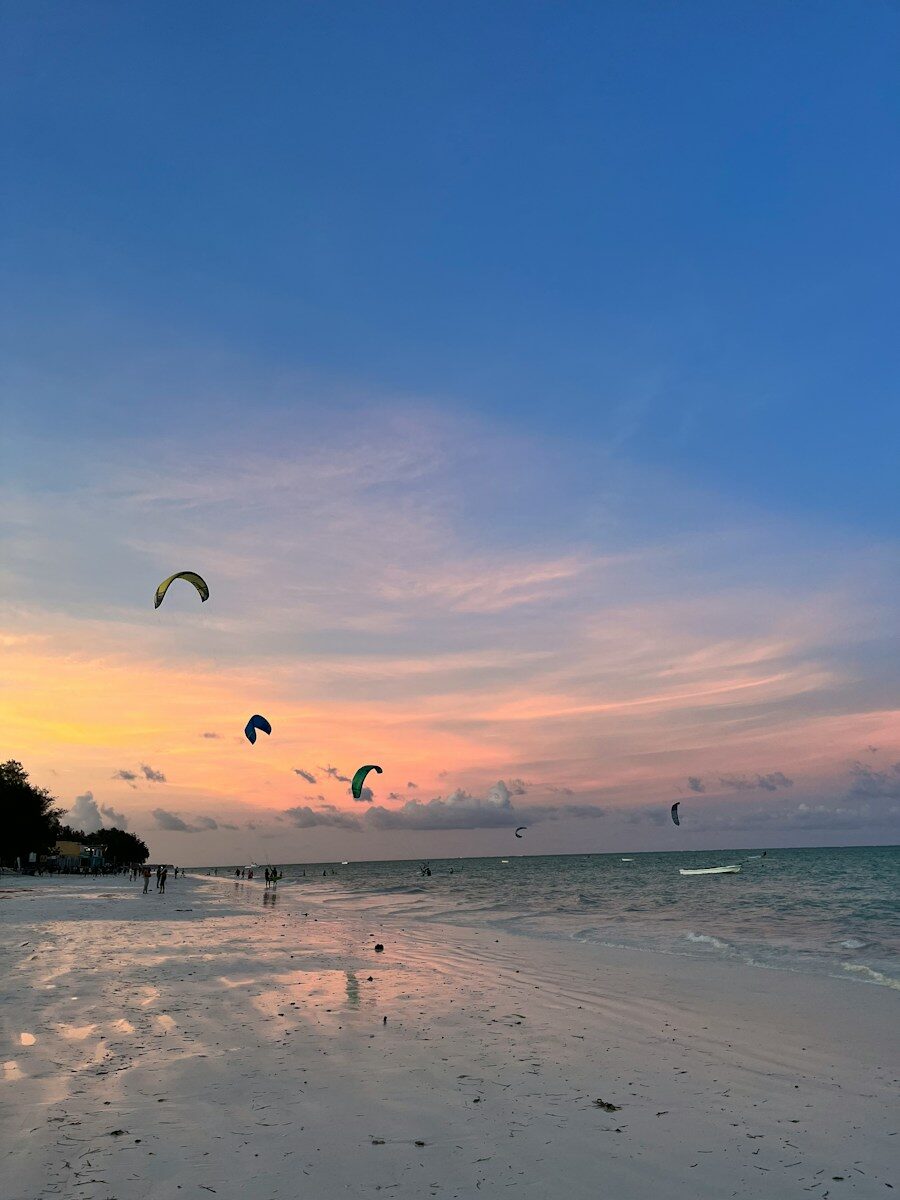
Work culture is relationship-first: meetings start with chat, deadlines flex, and personal connection matters. The cities are tech-savvy — Santo Domingo has the Caribbean’s only metro system, and Uber works in the capital and Punta Cana — but the rhythms are still Latin: long lunches, late nights, and a weekend that starts on Friday afternoon. Sport is everywhere: baseball dominates (the winter league, October–January, is the hottest ticket in the country), basketball is the second game, and the north coast’s trade winds make Cabarete one of the world’s great kiteboarding towns. Carnival in February — above all the Sunday parades in La Vega, with their horned diablos cojuelos costumes — is the biggest party of the year.
Main Cities
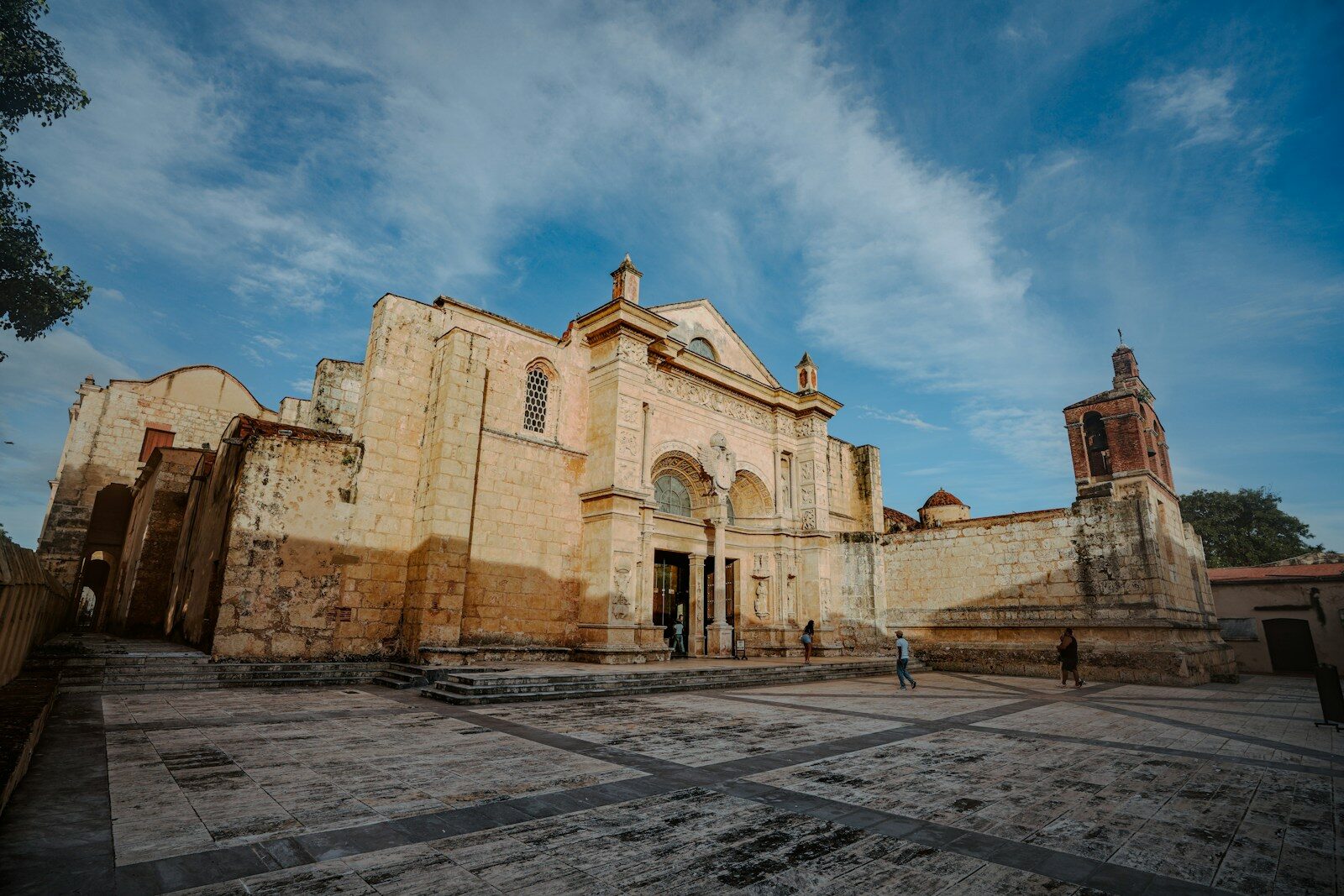
Santo Domingo — The capital, and the one place in the DR that is not a beach. The Zona Colonial is the oldest continuously inhabited European settlement in the Americas (founded 1498, UNESCO-listed since 1990): the first cathedral, the first paved street (Calle Las Damas, 1502), the first university, the Alcázar de Colón palace, and the Fortaleza Ozama fortress, all still standing in a walkable old town of plazas, cafés, and domino games. The modern city beyond the walls has the Malecón seafront, the metro, museums, and the best restaurants in the country. Give it two days — one for the Zona Colonial, one for Los Tres Ojos caves and the Faro a Colón lighthouse. Best for: history, food, and anyone who thinks the DR is only beaches.
Santiago de los Caballeros — The second city, in the fertile Cibao Valley, and the heart of Dominican cigar country. Less visited, more local: the Monumento a los Héroes de la Restauración on its hill, cigar factories you can tour, and a genuinely Dominican city feel with none of the resort gloss. Best for: a real-city stop between Santo Domingo and the north coast.
Puerto Plata — The north coast’s anchor and the DR’s original resort town, founded in the 1500s and reborn as a tourist hub in the 1970s. A real city with Victorian gingerbread houses, the Malecón, the Amber Museum, Fort San Felipe, and a cable car up Pico Isabel de Torres to the Christ statue at the top. It is the base for the 27 Waterfalls of Damajagua, 30 minutes inland. Best for: the north-coast base, history plus adventure.
La Romana — A sugar-town turned resort gateway on the southeast coast, home to the Casa de Campo resort and, above it on the Chavón River bluff, Altos de Chavón — a 16th-century-style Mediterranean village built in the late 1970s, with an amphitheatre, craft workshops, and the best river views in the country. Best for: the Saona Island departure point (via Bayahibe) and a half-day of pure atmosphere.
Higüey — The inland gateway to Punta Cana, 30 minutes from the resorts, and a pilgrimage town: the Basílica de Nuestra Señora de la Altagracia, the country’s most important church, draws crowds every January. Best for: a half-day cultural detour from the beach.
San Pedro de Macorís — The baseball town. Dozens of Major League stars were born here, and the local stadium, Estadio Tetelo Vargas, is where the winter-league passion is loudest. Best for: baseball pilgrims and a slice of working DR.
Jarabacoa — The mountain town in the Cordillera Central: pine forests, rivers, waterfalls, and the main trailhead for the multi-day Pico Duarte hike. Cool nights, white-water rafting on the Yaque del Norte, and the closest the Caribbean gets to alpine air. Best for: hiking, rafting, and escaping the heat.
Barahona — The southwest’s quiet capital, gateway to the wild side: the larimar mines, the Bahía de las Águilas beach (a long, empty curve of sand reachable only by boat), and the desert-like Enriquillo valley. Best for: travellers who have done the resorts and want the DR almost nobody sees.
Top Places to Visit
- Isla Saona — The postcard island off the southeast coast, inside Cotubanamá National Park: white sand, palm trees, a waist-deep natural swimming pool full of starfish, and a single fishing village (Mano Juan) with a turtle sanctuary. Boat-only access from Bayahibe; the country’s most popular day trip.
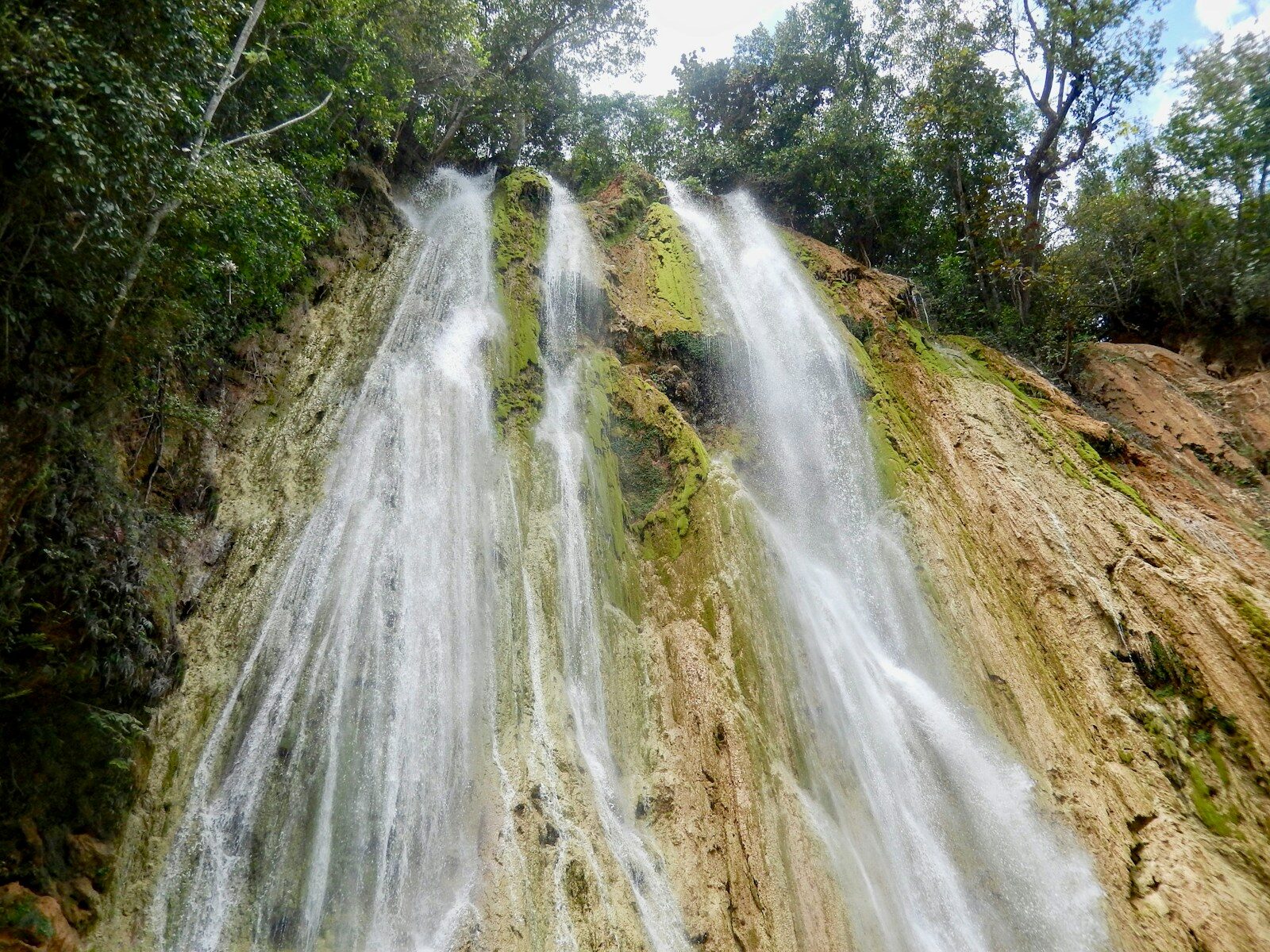
- 27 Waterfalls of Damajagua — Near Puerto Plata: hike the jungle, then jump, slide, and swim down limestone falls into turquoise pools. Most tours visit 7 falls (US$50–55 with lunch); the full 27 is a serious undertaking.
- Zona Colonial, Santo Domingo — The first European city in the Americas: cathedral, Alcázar, Calle Las Damas, Fortaleza Ozama. A UNESCO World Heritage Site and the best half-day of history in the Caribbean.
- Los Tres Ojos — A limestone cave system in Santo Domingo holding three (actually four) crystal-clear underground lakes, once used by the Taíno for rituals. A short boat ride crosses the hidden fourth lake.
- Altos de Chavón — A replica 16th-century Mediterranean village on a bluff above the Chavón River, built in the late 1970s — stone streets, an amphitheatre, and craft studios. Best at golden hour.
- Samaná Bay whale watching — Humpback whales breed in the bay from mid-January to the end of March; boat trips from Samaná town or Las Terrenas get you close to breaching whales.
- Los Haitises National Park — Mangrove maze and limestone karsts on Samaná Bay, with Taíno cave paintings and bird-filled islets. Best reached by boat from Samaná or Sabana de la Mar.
- Playa Bávaro (Punta Cana) — The long white-sand beach that built the resort industry: calm, shallow, swimmable, lined with palms. Go early, before the tour groups arrive.
- Cabarete — The north coast’s kiteboarding and windsurfing capital, with reliable trade winds, a laid-back beach town, and a proper travellers’ scene.
- Pico Duarte — The Caribbean’s highest peak (3,098 m). A 2–3 day guided hike from Jarabacoa through pine forest to a sunrise above the clouds.
- Lake Enriquillo — The Caribbean’s lowest point (~44 m below sea level), a salt lake in a desert valley where American crocodiles bask. A strange, wonderful detour from Barahona.
- Bahía de las Águilas — The far southwest’s empty turquoise bay, reachable only by boat from La Cueva. No resorts, no crowds — just sand and sea.
🎟️ Book experiences in the Dominican Republic
The three tours we’d actually book — Saona Island from Punta Cana, a Santo Domingo city day trip, and the Damajagua waterfalls from Puerto Plata. Free cancellation on most.
- Punta Cana: Catamaran Boat to Saona Island with Buffet Lunch — speedboat and catamaran to the island, a stop at the waist-deep natural pool, and a Dominican buffet lunch with open bar. From ~US$71.
- Punta Cana: All-Inclusive Santo Domingo Full-Day City Tour — Los Tres Ojos caves, the Zona Colonial’s cathedral, Alcázar and National Pantheon, lunch and hotel transfers included.
- Puerto Plata: All 7 Damajagua Waterfalls + Dominican Lunch — the full seven-fall route (most tours stop at 3 or 5), with helmet, life jacket, guides, and a Dominican buffet lunch. From ~US$50.
- Browse all Punta Cana tours & activities
Some links in this box are affiliate links — we may earn a commission at no extra cost to you. See our affiliate disclosure.
🎟️ More ways to book (Viator)
- Saona Island Day Trip from Punta Cana with Lunch and Open Bar — speedboat out, catamaran party back, natural-pool starfish stop, and a beach buffet lunch. From ~US$82.
- All-Inclusive Santo Domingo Day Trip from Punta Cana — the oldest city in the Americas in one long day: Los Tres Ojos, the Zona Colonial, the Faro a Colón lighthouse, and lunch included.
Some links in this box are affiliate links — we may earn a commission at no extra cost to you. See our affiliate disclosure.
When to Visit & Getting Around
The verdict — Punta Cana vs the North Coast: pick Punta Cana if you want a polished, easy all-inclusive holiday with calm beaches, the most direct flights, and the widest choice of resorts. Pick the north coast (Puerto Plata, Cabarete, Samaná) if you want lower prices, mountain scenery, local culture, and more to do beyond the resort — waterfalls, kiteboarding, whales, and real towns. Pick Samaná if you want the wildest, least-developed DR and can travel in whale season (mid-January to March). And if you have a week or more, do both coasts plus two days in Santo Domingo: fly into one coast and out of the other (Punta Cana in, Puerto Plata out, or the reverse) so you never backtrack.
Seasons: December–April is the dry high season — the best weather everywhere, the busiest beaches, and the highest prices (peak Christmas–New Year and February, when the whales arrive). May–June and November are the sweet spots: warm, quiet, and 25–40% cheaper, with only short afternoon showers. September–October is the cheapest and the riskiest — the wettest months and the peak of hurricane season. Watch for: Carnival in February (La Vega’s Sunday parades are the big one), Semana Santa (Easter week — the busiest domestic travel week of the year, when beaches fill with Dominican families), and whale season in Samaná (mid-January–March).
Getting around: the DR is a bus country, not a train country. Caribe Tours and Metro Tours run comfortable air-conditioned coaches between the big cities — Santo Domingo to Puerto Plata takes 3.5–4 hours, to Santiago 2.5–3 hours, to Samaná about 3 hours — for roughly RD$400–700 (~US$7–12) one way, paid in cash at the terminal. Expreso Bávaro is the dedicated Santo Domingo ↔ Punta Cana/Bávaro line: about 3 hours, RD$400 (~US$7) one way. Guaguas (shared minibuses) fill every gap the coaches miss: RD$35–40 in town, RD$100–300 (~US$2–5) between towns — flag one down roadside and pay the driver. In the cities, Uber works in Santo Domingo and Punta Cana (short trips ~US$5–10); elsewhere, taxis are unmetered, so agree the fare first. Motoconchos (motorbike taxis) cover the last few kilometres in small towns. A rental car suits confident drivers exploring the north coast and mountains; in Punta Cana’s resort zone you barely need one. Domestic flights (Santo Domingo–Samaná, Santo Domingo–Puerto Plata) exist but are a luxury, not a necessity — the buses are cheap and the distances are short.
Entry rules (2026): US, Canadian, UK, and EU citizens enter visa-free for tourism up to 30 days — just a valid passport, a return ticket, and the free e-ticket form (eticket.migracion.gob.do) completed online before each flight. The US$10 tourist card is already included in your airfare, and the departure contribution (raised to US$30 in 2026) is normally collected through the ticket too. Until 31 December 2026, US/Canadian/UK/EU passport holders only need a passport valid for the length of their stay, rather than six months beyond — check the rule if you travel after that date. Longer stays mean an overstay fee at the airport when you leave.
✈️ Find cheap flights to the Dominican Republic — compare fares across airlines and booking sites in one search. We may earn a commission if you book through this link, at no extra cost to you.
🚗 Rent a car in the Dominican Republic — best for the north coast, Samaná, and the mountains; skip it if you’re staying inside a Punta Cana resort. We may earn a commission if you book through this link, at no extra cost to you.
Budget
Prices in Dominican pesos (RD$) and US dollars (~RD$60 = US$1, Nov 2026). The DR is one of the Caribbean’s best-value destinations — outside the all-inclusive bubble, at least.
- Budget (US$35–55/day): hostel or guesthouse dorm/room (US$15–30), comedor and fonda lunches (US$3–6 for a full set lunch), guaguas and Caribe Tours buses (US$7–12 for long routes), free beaches and Zona Colonial wandering. Very doable on the north coast and in Santo Domingo; tight inside Punta Cana resorts.
- Mid-range (US$100–180/day): comfortable 3-star hotel or boutique guesthouse (US$60–110), restaurant meals (US$25–40 a day), one paid tour or activity a day (Saona US$64–95, Damajagua US$50–55), Uber and the occasional private transfer.
- Comfort (US$250–450+/day): all-inclusive resort in Punta Cana or Cap Cana (US$150–250+/night for two), private tours and speedboats (Saona private ~US$420/group), fine dining in Santo Domingo’s Zona Colonial, and a rental car.
Money-saving truths: the north coast is cheaper than Punta Cana across the board — same beach, lower prices. Eat where Dominicans eat: a fonda set lunch costs US$3–6 and beats most resort buffets. Travel in May–June or November for 25–40% off resort rates. The Zona Colonial, the beaches, and the Malecón are all free. And book Saona and Damajagua tours directly with local operators or through the links above — hotel-concierge markups are real.
Practical Tips
- Do the e-ticket before you fly. The free form at eticket.migracion.gob.do is mandatory for arrival AND departure. Do it as soon as you have flight details — airlines can deny boarding without it.
- Carry pesos and small bills. Cards work in resorts and big restaurants, but guaguas, colmados, market stalls, and small-town restaurants are cash-only — and nobody can break a RD$2,000 note. ATMs are common in cities and resort areas; withdraw in town, not at the airport.
- Emergency number is 911 — police, fire, and ambulance. Travel insurance is worth it: hurricane season runs June–November, and a boat trip (Saona, whale watching) can be cancelled for weather, so book flexible where you can.
- Power plugs are Type A/B, 110V — the same as the USA and Canada. No adapter needed for North American travellers; Europeans need one.
- Sun and water are the real risks. The UV is extreme year-round — reef-safe sunscreen, a hat, and water. Don’t drink the tap water; bottled water is cheap everywhere. And check the flag system on north-coast beaches: the Atlantic surf is stronger than Punta Cana’s calm Caribbean water.
- Book the big tours ahead in high season. Saona Island boats and Samaná whale trips fill up in February and over Christmas. Damajagua needs a guide and safety gear (helmet and life jacket are provided) — don’t try it unguided, and wear water shoes.
- Learn ten words of Spanish. Outside the resorts, English thins out fast — and a “¡Qué lo que!” and a smile will get you further than any guidebook. Download offline maps before leaving the resort: signal is good in cities and patchy in the mountains.
🛍️ Shop this guide
- Reef-safe sunscreen SPF 50 — the Caribbean UV is extreme year-round, and Saona’s reefs need the coral-safe kind.
- Quick-dry water shoes — essential for the Damajagua waterfalls: limestone is slippery and the riverbed is rocky.
- Waterproof dry bag (20L) — speedboats, waterfalls, and sudden tropical downpours soak unprotected bags.
- Waterproof phone pouch — Saona’s natural pool and the Damajagua slides are no place for an unprotected phone.
- Snorkel mask set — Sosúa’s reefs and Saona’s shallows are worth your own well-fitting mask.
Some links in this box are affiliate links — we may earn a commission at no extra cost to you. See our affiliate disclosure.
🧳 Plan your trip
- ✈️ Find cheap flights to the Dominican Republic — compare fares across airlines and booking sites in one search.
- 🏨 Book your stay on our Expedia Travel Shop — hand-picked hotels in Punta Cana, Santo Domingo, and Puerto Plata.
- 🎟️ Browse Punta Cana tours & activities — free cancellation on most.
- 🛳️ Caribbean cruises calling at Puerto Plata — Amber Cove and Taino Bay are the north coast’s cruise ports, with Damajagua waterfalls tours running straight from the dock.
Some links in this box are affiliate links — we may earn a commission at no extra cost to you. See our affiliate disclosure.
Closing
The Dominican Republic is the Caribbean with the volume turned up: the oldest city in the Americas and the newest resort on the beach, the highest mountain and the lowest lake, merengue on every corner and whales in the bay. Punta Cana will give you the easy holiday — white sand, calm water, no decisions. The north coast will give you the better stories — waterfalls you slide down, a kiteboarding town, whales breaching at dawn, and a real city at the foot of the mountains. Pick the coast that matches the trip you want, give Santo Domingo its two days, and let the island do what it has been doing since 1498: surprising everyone who arrives. The rhythm will follow you home.
🎬 Dominican Republic in 60 Seconds
FAQ
How many days do I need for the Dominican Republic?
Five to seven days is the sweet spot: two days in Santo Domingo, then three to five on one coast (Punta Cana or the north coast). Ten days covers both coasts plus Samaná. A long weekend works for a Punta Cana resort stay alone — fly in, beach, fly out.
Punta Cana or Puerto Plata — which should I choose?
Punta Cana for a polished, easy all-inclusive holiday: calmer beaches, more direct flights, more resorts. Puerto Plata for lower prices, mountains, local culture, and adventure — waterfalls, kiteboarding, and real towns. They are 5–6 hours apart by road, so pick one per trip unless you have ten days.
Do I need a visa to visit the Dominican Republic?
US, Canadian, UK, and EU citizens enter visa-free for up to 30 days — just a valid passport, a return ticket, and the free e-ticket form (eticket.migracion.gob.do) completed before your flight. The US$10 tourist card is included in your airfare.
When is the best time to visit the Dominican Republic?
December–April for the driest, sunniest weather (and the highest prices). May–June and November for the best balance of weather and value. Whale watching in Samaná runs mid-January to the end of March. Avoid September–October if you dislike storm risk — it is the peak of hurricane season.
How much does a Dominican Republic trip cost?
Budget US$35–55 a day backpacking (hostels, guaguas, local food), mid-range US$100–180 a day, comfort US$250–450+ a day at an all-inclusive resort. A Saona Island day trip runs US$64–95; the Damajagua waterfalls about US$50–55 with lunch.
Is the Dominican Republic safe?
The US advisory is Level 2 (“Exercise Increased Caution”) for crime, mostly petty theft and bag-snatching in cities and at resorts. The usual rules apply: watch your belongings, don’t walk alone late at night in unfamiliar areas, use hotel safes, and book boat tours with reputable operators.
Keep exploring
- Mexico travel guide: Mexico City in 4 days — tacos, temples & Frida Kahlo — the other great Spanish-speaking beach-and-culture trip, with ancient pyramids, colonial cities, and food that rivals the DR’s.
- Costa Rica travel guide: two coasts, cloud forests, and pura vida — the Americas’ wildlife capital, and the natural next stop if Samaná’s whales and Los Haitises left you wanting more nature.
- Panama travel guide: Panama City in 2 days — the canal, Casco Viejo & the causeway — the isthmus next door, with another colonial old town, Caribbean islands, and the same easy, visa-free entry.
- Colombia travel guide: Cartagena + Medellín in 7 days — Colombia’s two faces — Cartagena’s walled old town is the Caribbean colonial city most like Santo Domingo’s Zona Colonial, with the same music, heat, and colour.
- USA travel guide: New Orleans vs New York — which American city trip is worth it? — fly home via New Orleans, the city that shares the DR’s French-Caribbean soul, jazz on every corner, and a love of late nights.