 admin
Why South Korea Belongs on Your List
South Korea is the rare destination that delivers two trips in one. In Seoul, you get a hyper-modern megacity where 600-year-old palaces share the skyline with K-pop agencies, night markets steam until dawn, and delivery apps will bring fried chicken to your subway-adjacent park bench at 2 a.m. Then, a one-hour flight south, Jeju Island resets everything: volcanic craters, black-sand coastlines, tea fields, and a coastline worked by haenyeo — the grandmother free-divers who harvest the sea in their 70s and 80s.
This guide walks you through the best of both worlds in seven days: Seoul’s culture and cuisine first, then Jeju’s volcanic calm. Along the way you’ll find the geography and climate, the people and etiquette, a city-by-city breakdown, budget tiers in won and dollars, transport prices, and the practical answers travelers actually search for.
Geography & Climate
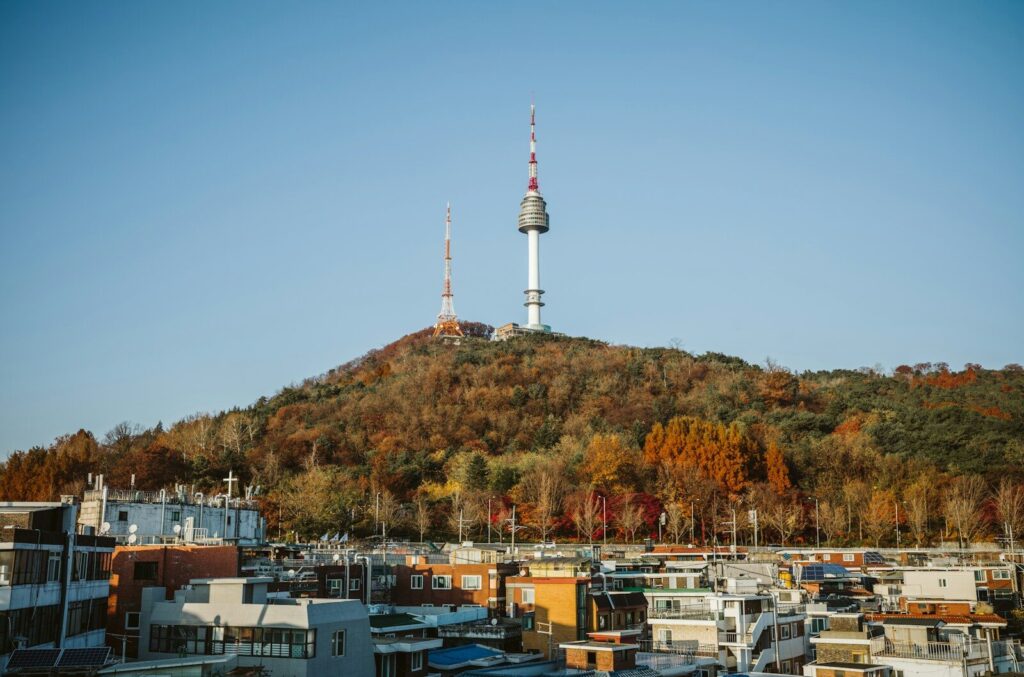
South Korea occupies the southern half of the Korean Peninsula in Northeast Asia, bordered by North Korea to the north and surrounded by the Yellow Sea, the Korea Strait, and the East Sea on the other three sides. It’s compact — about 100,000 square kilometers, roughly the size of Portugal or the state of Indiana — and about 70% of it is mountainous, which is why the cities feel so dense and the countryside so dramatic. Over 3,000 islands fringe the coast, with Jeju Island (about 90 minutes by air from Seoul) the largest and most famous.
The climate is sharply four-seasoned. Spring (April–May) is the sweet spot: cherry blossoms in early April, mild air, and festival season. Summer (June–August) brings the jangma monsoon — roughly 30–35 days of heavy rain — plus typhoons, usually one to three a year in July and August. Autumn (September–November) is arguably the best time to visit, with crisp air, brilliant foliage, and the Chuseok harvest holiday. Winter (December–February) is cold and dry; Seoul averages between −5 and −2.5°C in January, and ski resorts in Gangwon-do are excellent and far cheaper than Japan’s.
Natural hazards worth noting: summer typhoons (mostly August), fine yellow dust blowing in from China in spring, and occasional heat waves. Earthquakes are rare and usually mild.
People & Demographics
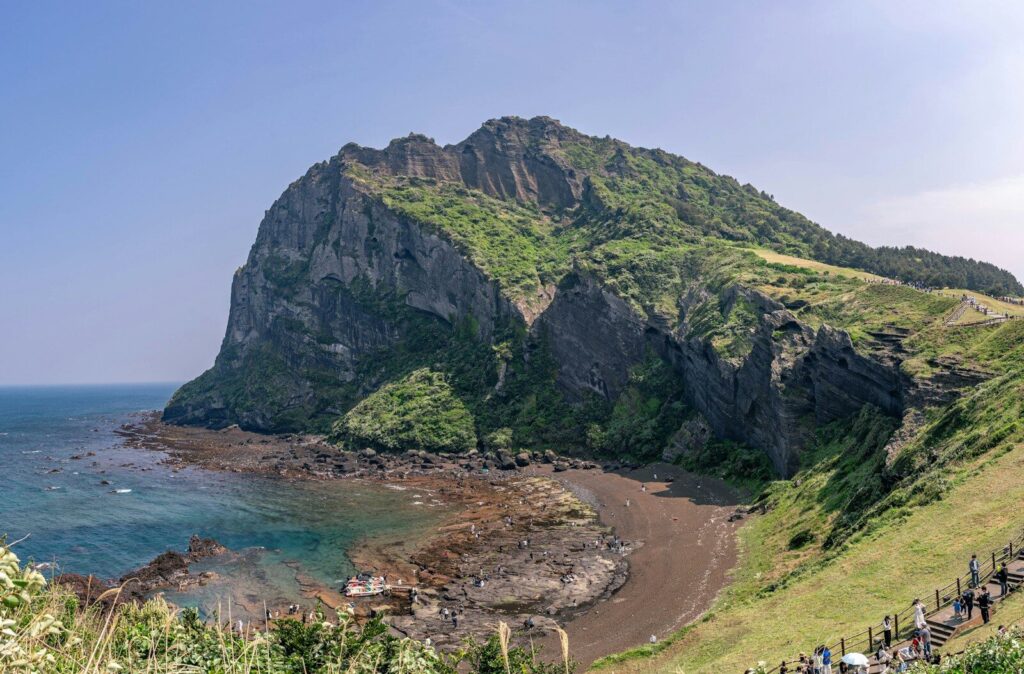
South Korea has about 51 million people — making it one of the most densely populated countries on Earth — and nearly half of them live in the Seoul Capital Area (Seoul, Incheon, and Gyeonggi Province). Seoul itself holds roughly 10 million residents. The population is famously homogeneous (over 95% ethnically Korean) and aging fast: one of the world’s lowest birth rates means you’ll notice a society visibly older, with deep respect for elders baked into daily life.
Religion is split: roughly half the population reports no religion, with Christianity (Protestant and Catholic) and Buddhism each claiming around 20–25%, plus Confucian values that shape behavior more than any faith does. The official language is Korean — English is widely read in tourist zones but spoken at a basic level outside Seoul’s main districts, so a translation app is essential.
Mini phrasebox: Hello — Annyeonghaseyo; Thank you — Kamsahamnida; Excuse me / sorry — Jwesonghamnida; Delicious — Mashisseoyo.
Culture, Etiquette & Daily Habits
Korean social life runs on Confucian-influenced hierarchy: age and rank decide who bows deepest, who pours the drinks, and who eats first. You don’t need to master it, but a few rules go a long way.
Do:
- Bow slightly when greeting; handshakes are fine, often with a supporting second hand under your forearm for elders.
- Receive and give everything — money, cards, gifts — with two hands (or one hand with the other hand supporting your wrist).
- Take your shoes off when entering homes, many guesthouses, and traditional restaurants with floor seating.
- Pour drinks for others, never yourself; accept a pour with both hands.
- Try everything offered at the table — refusing food can feel like refusing friendship.
Don’t:
- Stick chopsticks upright in rice (it mirrors funeral incense) or point with them.
- Blow your nose loudly at the table; step away if you must.
- Write someone’s name in red ink — it’s associated with death.
- Touch strangers casually or pat an elder’s head (or shoulder) — keep physical space.
- Tip at restaurants. Tipping is not customary in Korea and can confuse staff; good service is the standard.
Drinking culture is famously social: after-work hoesik dinners involve rounds of soju and beer (somaek), with strict etiquette around pouring for seniors. You can decline gracefully, but joining in even a little buys enormous goodwill. Also note the ppalli-ppalli (“hurry hurry”) pace — Seoul moves fast, queues are orderly, and everything is efficient.
Lifestyle: Food, Work & the Daily Rhythm
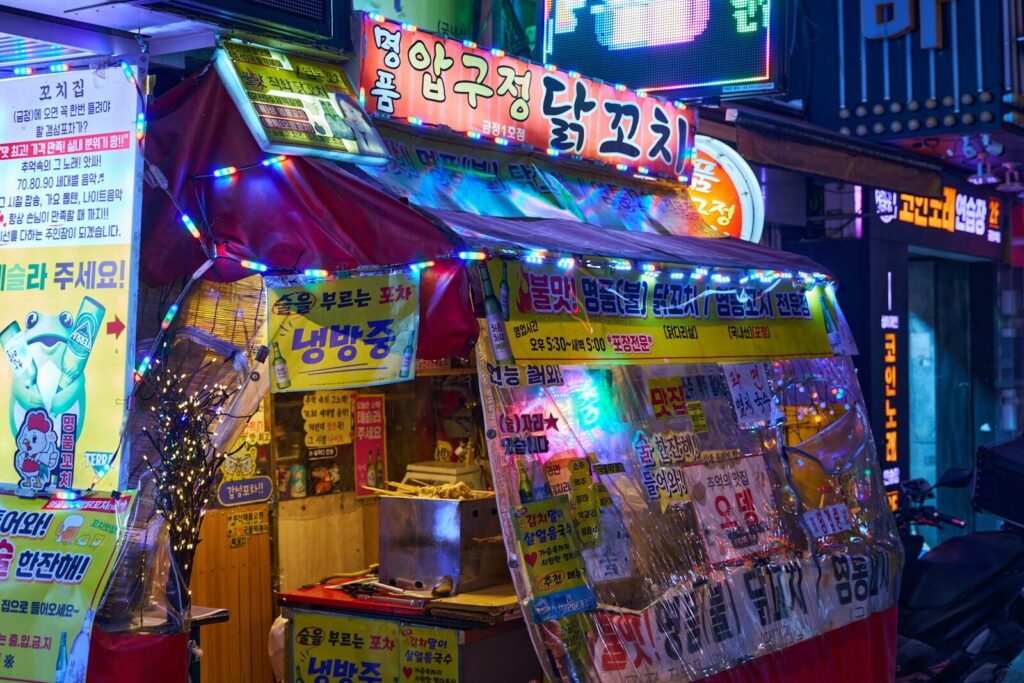
Korea’s food culture is a daily ritual, not an occasional indulgence. Kimchi — fermented cabbage and radish, made with garlic, ginger, and chili — appears at nearly every meal, and the country counts hundreds of regional varieties. Korean barbecue (gogigui) is the signature night out: you grill pork belly (samgyeopsal) and beef at the table and wrap it in lettuce with ssamjang paste. Tteokbokki (spicy rice cakes), bibimbap (mixed rice bowl), kimbap (seaweed rice rolls), and jjajangmyeon (black-bean noodles) are the everyday heroes. Street markets like Gwangjang in Seoul are temples of bindaetteok (mung-bean pancakes) and mayak kimbap (“drug kimbap” — addictive mini rolls). Coffee culture is intense — Seoul arguably has more cafés per capita than anywhere — and convenience-store meals (samgak kimbap and banana milk) are genuinely good budget fuel.
Work culture remains demanding, though younger generations are pushing back. The daily rhythm runs late: dinner at 8 p.m. is normal, cafés close at 11 p.m., and the famous jjimjilbang (24-hour sauna/bathhouses) give locals — and savvy travelers — a place to soak, sleep, and exfoliate for under $10.
Tech-vs-tradition is the country’s signature texture: you’ll order temple food from a robot, then watch an elder do sunrise calisthenics in the palace park. K-pop and K-drama are genuine travel motivators — HYBE Insight museum and K-Star Road in Seoul, drama filming sites in places like Nami Island — and they’re woven into the tourism infrastructure now.
Main Cities
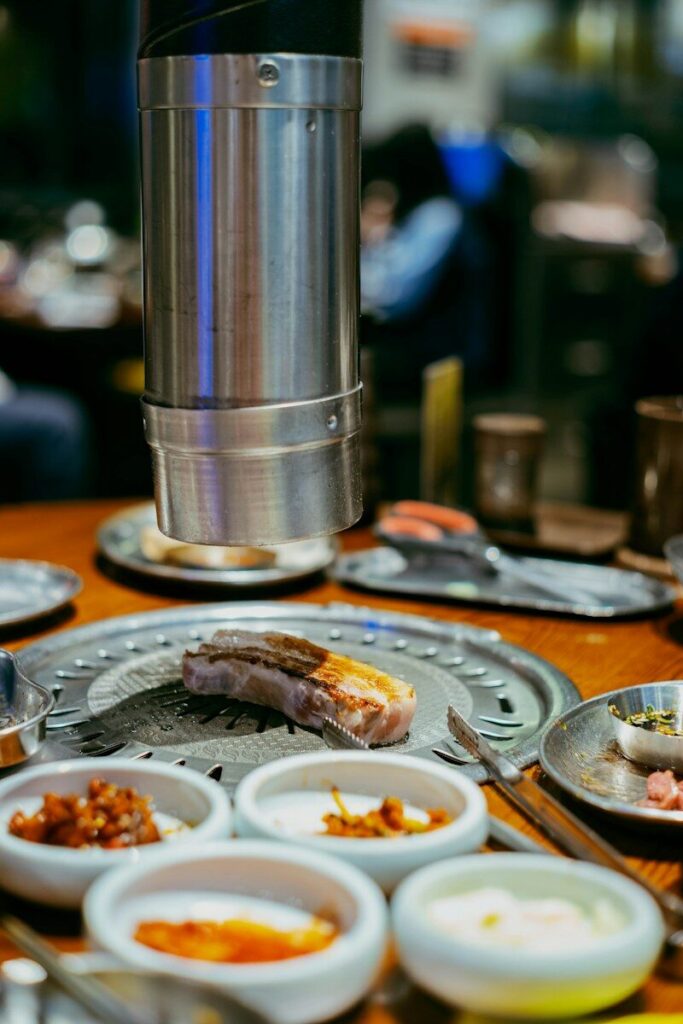
Seoul — The capital and the reason most people come. Palaces (Gyeongbokgung, Changdeokgung), the Bukchon Hanok Village of traditional wooden houses, the neon sprawl of Hongdae and Gangnam, the war memorial, and street-food corridors like Myeongdong. Seven days without Seoul is a mistake.
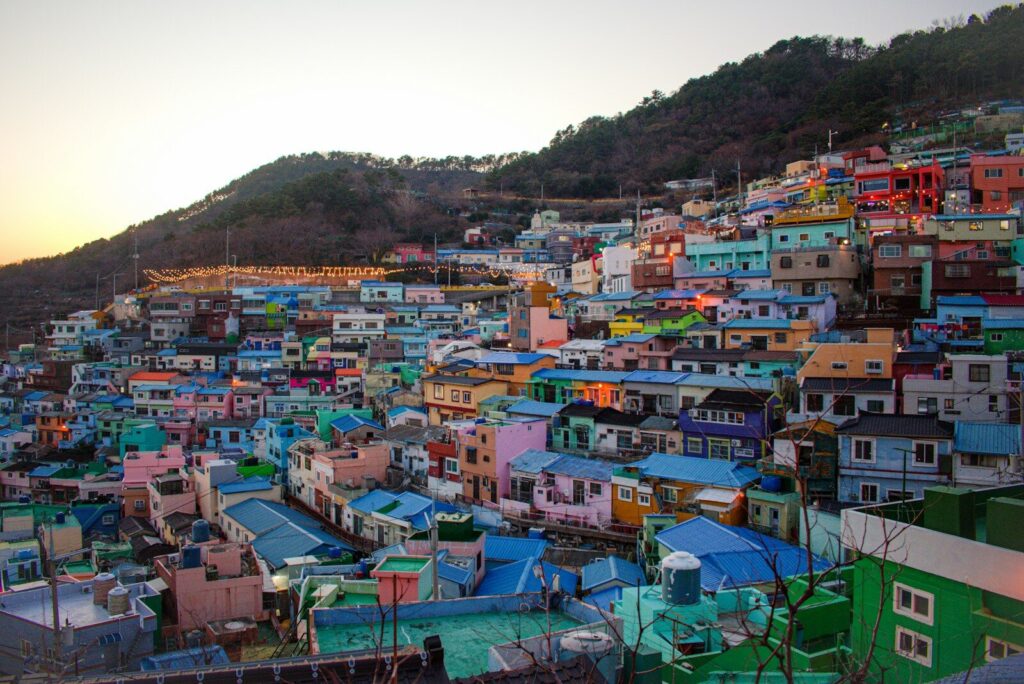
Busan — Korea’s second city and its maritime soul. Haedong Yonggungsa, the temple perched on seaside cliffs; the rainbow-terraced Gamcheon Culture Village; Jagalchi Fish Market; and Haeundae Beach. Two hours from Seoul by KTX.
Gyeongju — The “museum without walls.” Capital of the Silla kingdom for nearly a thousand years, it’s studded with royal burial mounds (tumuli), the Bulguksa Temple, and the Seokguram Grotto. Essential for history lovers.
Jeonju — The birthplace of bibimbap and home to Korea’s largest hanok village — 800 traditional houses, many of them guesthouses. The gentler, food-first face of the country.
Incheon — Seoul’s gateway and more than an airport: Chinatown (Korea’s only official one, birthplace of jjajangmyeon) and the fairy-tale Songwol-dong Fairy Tale Village.
Sokcho & Seoraksan — Mountain city and national park: jagged granite peaks, autumn foliage, and the gateway to some of Korea’s best hiking.
Daegu & Daejeon — Skippable for short trips, worthwhile for markets and hot springs on longer ones.
Top Places to Visit
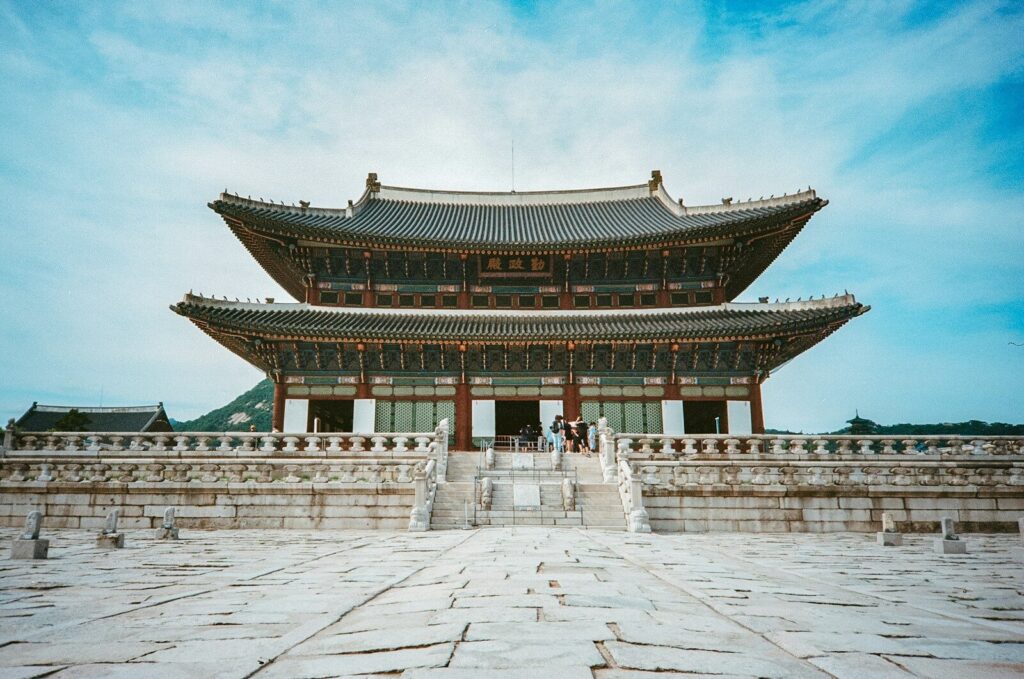
- Gyeongbokgung Palace, Seoul — The grandest Joseon palace; catch the guard-changing ceremony.
- Bukchon Hanok Village, Seoul — Traditional wooden-house lanes with city views.
- Hallasan, Jeju — South Korea’s highest peak (1,947 m), a shield volcano with a crater lake.
- Seongsan Ilchulbong, Jeju — The “Sunrise Peak” tuff cone rising from the sea.
- Haedong Yonggungsa, Busan — Buddhist temple on wave-washed cliffs.
- Bulguksa Temple & Seokguram Grotto, Gyeongju — UNESCO Silla masterpieces.
- DMZ (Demilitarized Zone) — Guided tours to the Joint Security Area; book days ahead, passports required.
- Jeonju Hanok Village — Sleep in a hanok, eat the original bibimbap.
- Seoraksan National Park — Granite peaks and Korea’s finest autumn color.
- Gwangjang Market, Seoul — The street-food hall of record.
- Nami Island — Tree-lined drama-filming island, a classic day trip.
- Boseong Green Tea Fields — Terraced tea plantations on the south coast.
🎟️ Book experiences in South Korea
Tours we’d actually book — free cancellation on most. We may earn a commission if you book through these links, at no extra cost to you. Our affiliate disclosure.
- Gyeongbokgung Palace history walk — the grandest Joseon palace with a guide who knows its hidden stories.
- Squid Game: The Experience in Seoul — step inside the show’s sets, K-culture at its most fun.
- Browse all Seoul tours & activities
🎟️ More ways to book (Viator)
Two more reader-favorite ways to see South Korea. We may earn a commission if you book through these links, at no extra cost to you. Our affiliate disclosure.
- DMZ & N Seoul Tower private tour — the 3rd tunnel, Dora Observatory, and the tower in one day.
- Gyeongbokgung Palace & Seoul highlights tour — palaces, hanok village, and temples with a local guide.
When to Visit & Getting Around
When to go: April–May (cherry blossoms, mild weather) and September–November (foliage, festivals) are the prime windows. October is the single most reliable month in Seoul — average highs around 20°C with little rain. Avoid the jangma monsoon (late June–mid July) and the Chuseok/Seollal holidays unless you’ve booked trains early: three-day national holidays when the whole country travels.
Festivals: Cherry blossom festivals (early April, nationwide), the Boryeong Mud Festival (July), Busan International Film Festival (October), and lantern festivals for Buddha’s Birthday (May).
Getting around: The KTX high-speed train is the backbone — Seoul to Busan takes about 2.5 hours and costs roughly KRW 59,800 (~$45) in standard class; the SRT is a slightly cheaper parallel service. Book via the Korail app or station machines. The KR Pass (foreigner-only rail pass, roughly KRW 130,000–190,000 for 2–3 days) pays off only with three or more long-distance legs — skip it for a simple Seoul–Busan round trip. Express buses are the cheapest long-distance option (Seoul–Busan around KRW 25,000–35,000, 4–5 hours). In cities, the T-money transit card works on subways, buses, and taxis nationwide — buy it at airport convenience stores for ~KRW 4,000 and reload as needed. A Seoul subway ride starts at KRW 1,550 with the card.
For Jeju, fly: Seoul Gimpo to Jeju is one of the world’s busiest air routes, with budget fares often under KRW 50,000 if booked early. On the island, rent a car (international driving permit required) or use the island’s decent bus network.
Note on maps: Google Maps still can’t offer full walking/driving directions in Korea due to map-data rules — install Naver Map or KakaoMap (both have English interfaces).
✈️ Find cheap flights to South Korea — compare fares across airlines and booking sites in one search. Affiliate link: we may earn a commission at no extra cost to you.
🚗 Rent a car in South Korea — compare rental prices across suppliers in one search. Affiliate link: we may earn a commission at no extra cost to you.
Budget: What a Week Costs
KRW 1,350 ≈ USD $1 (2026). Prices below are per person, per day, excluding flights in.
Budget — $50–60/day (KRW 65,000–80,000): Guesthouse dorms or jjimjilbang overnights, convenience-store breakfasts, street food and market meals, subways everywhere, free palaces-on-certain-days and hiking. Entirely doable.
Mid-range — $100–150/day (KRW 135,000–200,000): Business hotels or hanok guesthouses, restaurant meals including a Korean BBQ night, KTX between cities, café stops, one paid experience a day (DMZ tour, temple stay).
Comfort — $220+/day (KRW 300,000+): Four-star hotels in Myeongdong or Gangnam, fine dining and omakase-style Korean tables, private drivers on Jeju, first-class KTX, spa and shopping budgets.
Money-saving truths: Convenience-store food is genuinely good; lunch specials (jeongsik) are the cheapest restaurant meals; palaces are free on certain cultural days; hiking Korea’s national parks costs nothing; and the T-money card’s transfer discounts add up fast.
Practical Tips
- Entry paperwork: Visa-exempt nationalities (US, UK, EU, Japan, and many others) are exempt from the K-ETA through December 31, 2026 — instead, submit the free e-Arrival Card online within 3 days before arrival. Always re-check the Hi Korea portal before you fly; rules shift.
- Connectivity: Pick up a tourist SIM or eSIM at Incheon Airport — Korea’s 5G is blazing and public Wi-Fi is everywhere but spotty for logins.
- Cash vs card: Cards work nearly everywhere, including street stalls, but carry some won for traditional markets and rural Jeju. T-money covers transit and taxis.
- Power plugs: Type C/F (European-style round two-pin), 220V. Bring an adapter if you’re coming from North America or the UK.
- Language gap: Download Naver Map, KakaoMap, and Papago (Korea’s translator, better than Google for Korean). Screenshot your hotel address in Korean for taxi drivers.
- Luggage: Use the airport limousine bus or AREX train into Seoul — taxis from Incheon are expensive. Same-day luggage delivery services exist between hotels.
- Emergency numbers: 112 (police), 119 (fire/ambulance). The tourist helpline 1330 offers 24-hour English support — save it.
🛍️ Shop this guide: South Korea packing essentials
Gear we’d actually pack for this trip. As an Amazon Associate we earn from qualifying purchases — at no extra cost to you. Our affiliate disclosure.
- Universal travel adapter — South Korea uses Type C/F plugs at 220V; one adapter covers Seoul to Jeju.
- Comfortable walking shoes — palace grounds, Bukchon hills, and Jeju’s Olle trails add up to serious mileage.
- Portable charger (20,000mAh) — translation apps, subway maps, and KakaoMap navigation all day.
- Packable rain jacket — summer monsoon (jangma) arrives fast; Seoul’s downpours are legendary.
🧳 Plan your trip: South Korea
Flights, stays, tours, and cruises — booked in one place. We may earn a commission if you book through these links, at no extra cost to you. Our affiliate disclosure.
- ✈️ Find cheap flights to South Korea — compare fares across airlines and booking sites in one search.
- 🏨 Browse our Expedia Travel Shop — hand-picked stays and travel deals from our curated storefront.
- 🎟️ Browse Seoul tours & activities — free cancellation on most.
- 🛳️ Compare Asia cruises on CruiseDirect — sailings calling at Busan and Incheon.
The 7-Day Seoul + Jeju Plan
Days 1–3 — Seoul: Gyeongbokgung and Bukchon on day one; Myeongdong street food and N Seoul Tower on day two; Hongdae, the War Memorial, and a jjimjilbang night on day three. Days 4–5 — Busan or Gyeongju (optional swap): KTX down for the temple, the fish market, and Gamcheon. Days 6–7 — Jeju: Hallasan or the Olle coastal trails, Seongsan sunrise, haenyeo-watching on the east coast, and black pork BBQ to finish. Fly home from Jeju via Seoul.
Keep Exploring
- Japan’s capital is the classic pairing with Seoul — see our 7-day Japan itinerary from Tokyo to Kyoto.
- For another neon-and-street-food megacity done on a budget, read Thailand on $50 a day.
- Vietnam’s beautiful chaos is the backpacker counterpoint — Ha Long Bay vs Sapa.
- Singapore’s 48-hour stopover formula adapts perfectly to a Seoul layover — Singapore in 48 hours.
- And Bali shows the other side of Asian island life — temples and terraces instead of volcanoes: Bali beyond the beach.
FAQ
How many days do you need in South Korea? Five days covers Seoul well. Seven to eight days — Seoul plus Jeju, or Seoul plus Busan — is the sweet spot for a first trip. Two weeks lets you add Gyeongju and slow down.
Is South Korea expensive to visit? Mid-range by Asian standards. Budget travelers manage on $50–60/day; a comfortable mid-range trip runs $100–150/day. It’s cheaper than Japan, pricier than Thailand or Vietnam.
Do I need a visa for South Korea? Most Western nationalities are visa-exempt for up to 90 days. Through December 2026, visa-exempt visitors skip the K-ETA and file the free e-Arrival Card instead. Check the Hi Korea portal before departure.
When is the best time to visit South Korea? April–May for cherry blossoms and September–November for autumn foliage. October is the most reliable month weather-wise.
Is the KR Pass worth it? Only if you’re taking three or more long-distance train rides. For a simple Seoul–Busan round trip, individual KTX tickets are cheaper.
Is South Korea safe for tourists? Yes — one of the safest countries in Asia for travelers, with very low violent crime. Standard big-city awareness in Seoul’s nightlife districts is enough.
South Korea is a country that rewards curiosity — the palace and the K-pop stage, the mountain trail and the night market, are all the same trip. Seven days is just the beginning, but it’s enough to understand why Korea has the world hooked.
Photo credits: stock photos via Unsplash (Instant Images) at publish time.