
 admin
Most people land in Singapore by accident — a layover on the way to Sydney, a refuelling stop between Europe and Asia — and then the layover becomes the story. This is the city where the airport has a 40-metre indoor waterfall, where a five-dollar plate of chicken rice can hold a Michelin Bib Gourmand, and where a single subway line connects you from colonial shophouses to a futurist tree-grove in under 30 minutes. Singapore is tiny (you can cross it by train in about an hour), spotless to the point of parody, and dense with experiences that punch far above the island’s size. This guide is built for the 48-hour stopover: the exact day-by-day itinerary, the prices in Singapore dollars and US dollars, the visa rules for Canadians, and the local knowledge that keeps you moving fast through one of the world’s most efficient cities.
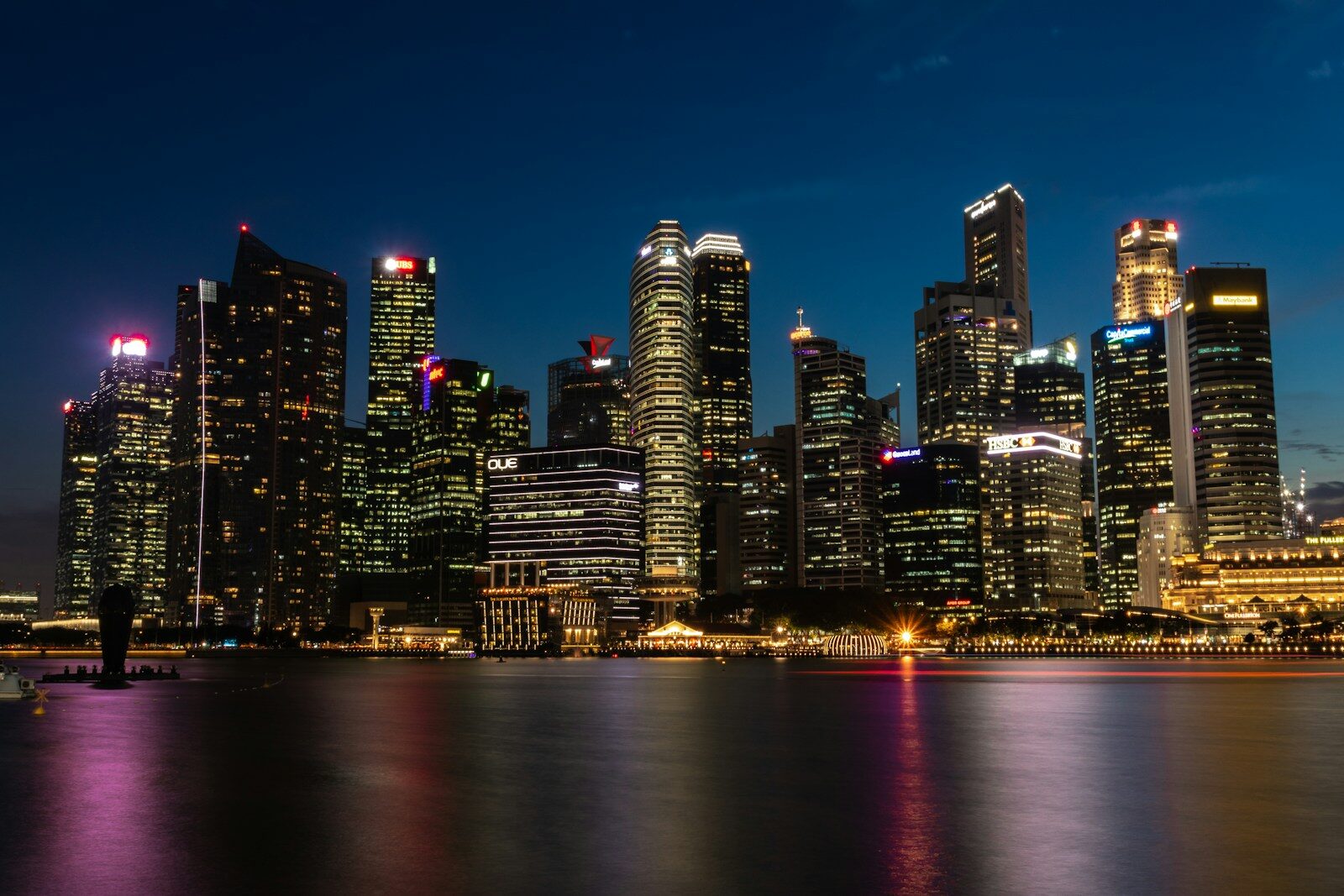
Watch: Singapore in 60 Seconds
Day 1 — Marina Bay to Chinatown: The Icons and the Food
Morning: arrive and head straight to the bay. Drop bags at your hotel (early check-in is common; budget hotels near the MRT are fine since the trains run to nearly midnight), and take the MRT to Bayfront. Walk the waterfront promenade to the Merlion — the half-lion, half-fish statue that has been Singapore’s mascot since 1972 — for the obligatory photo, then circle back along the bay to the Marina Bay Sands SkyPark. The observation deck sits 57 stories up on the famous “boat” spanning the three towers (about S$32–35 admission), with the best panorama in the city: the port, the skyscrapers, and the green Supertrees in the distance.
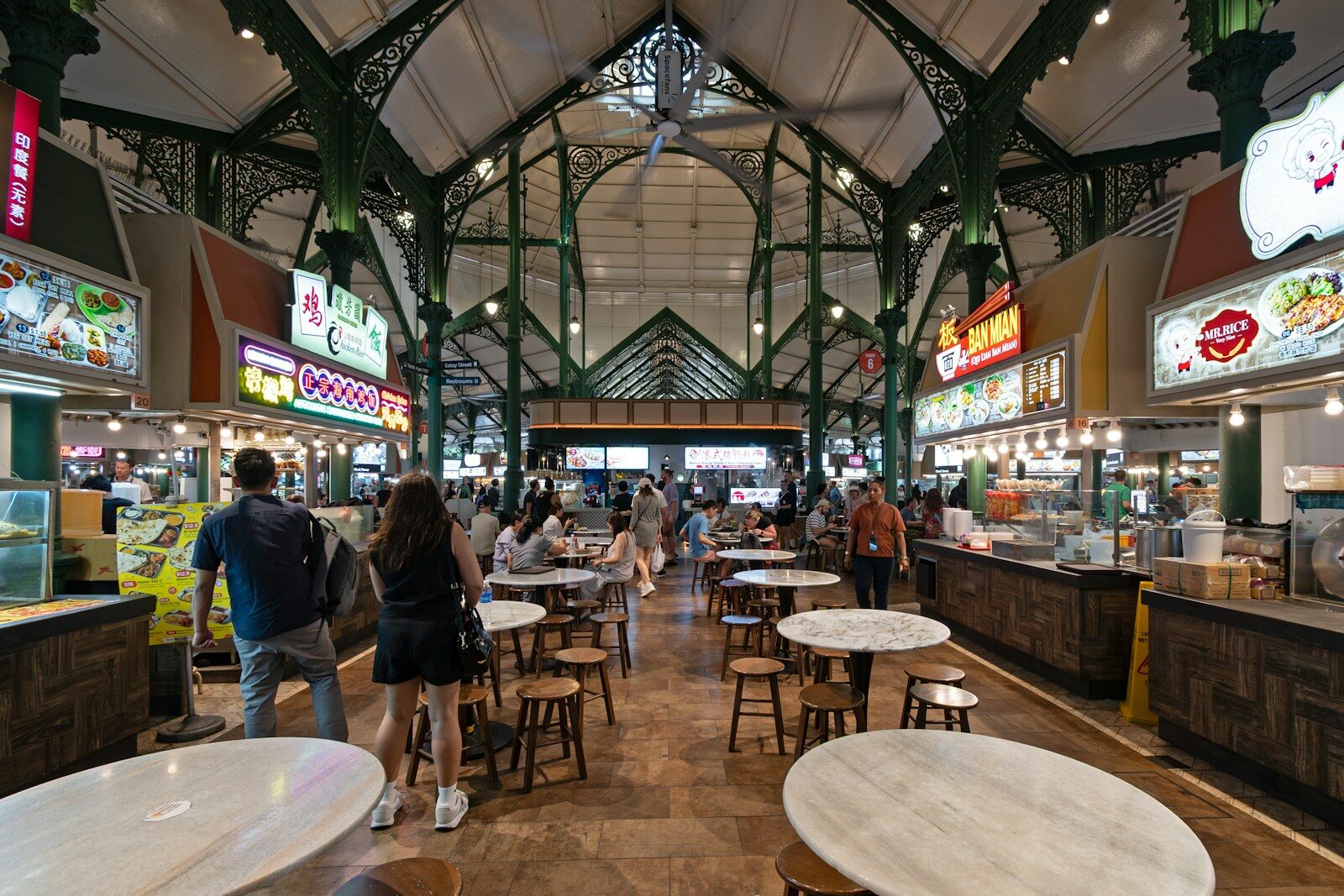
Lunch: your first hawker meal. Take the MRT two stops to Maxwell Food Centre in Chinatown. This is the heart of Singaporean eating: rows of stalls under one roof, prices at S$4–7 a plate, and queues that tell you where to order. Get the Hainanese chicken rice at the famous stall (a Michelin Bib Gourmand holder — around S$5), add a fresh lime juice (S$2–3), and eat standing or at the shared plastic tables like everyone else. This single lunch explains more about Singapore than any museum: Chinese, Malay, and Indian stalls side by side, all regulated and graded for hygiene by the National Environment Agency.
Afternoon: Chinatown’s temples. After lunch, walk through the Chinatown heritage precinct: the Buddha Tooth Relic Temple (a four-storey Tang-dynasty-style temple housing a revered relic), the Sri Mariamman Temple on South Bridge Road (Singapore’s oldest Hindu temple, built 1827), and the Jamae Mosque — three religions within a five-minute walk, which is basically Singapore’s founding story in physical form. Duck into the shophouses on Smith Street and Ann Siang Hill for heritage architecture and small boutiques.
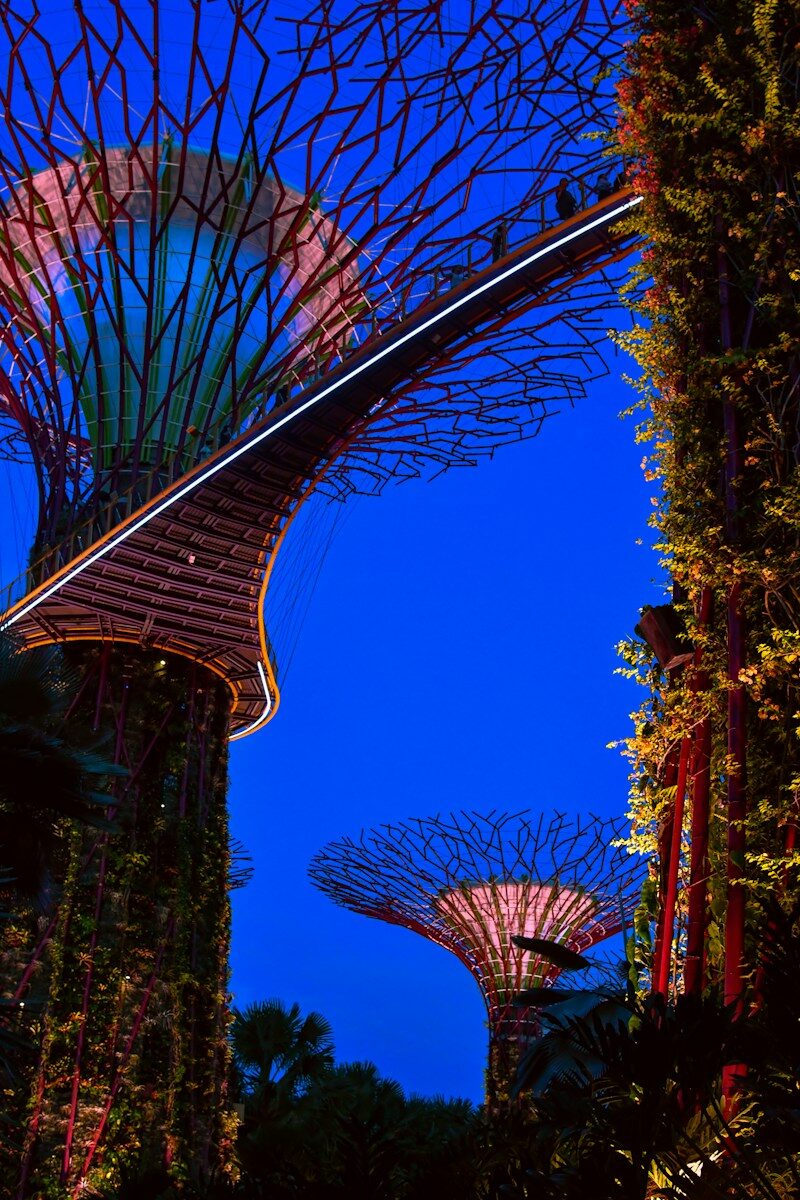
Evening: Gardens by the Bay. Be at Gardens by the Bay by 7 PM. Walk the OCBC Skyway between the Supertrees (S$14), explore the Flower Dome and Cloud Forest conservatories if you have time (S$59 for both, combined ticket), and stay for the Garden Rhapsody light-and-music show at 7:45 PM and 8:45 PM — it’s free, and it turns the 50-metre-tall Supertrees into glowing canopies above you. Dinner back at a hawker centre: try chilli crab at a seafood stall if your budget allows (roughly S$60–90 per person at a shared table), or keep it cheap with laksa (S$5–8) and char kway teow (S$5–7).
Day 1 transit: roughly S$8–12 on the MRT if you pay per ride with a contactless card.
Day 2 — Culture, Waterfall, and the Exit You Don’t Want
Morning: Little India and Kampong Glam. Start in Little India — the Tekka Centre market, garland shops, the colourful Tan Teng Niah house, and the Sri Veeramakaliamman Temple. Take the MRT to Bugis and walk to Kampong Glam: Haji Lane’s shophouse murals, the gold-domed Sultan Mosque (built 1824 for the Sultan of Singapore), and a kopi at a traditional coffee shop. Order like a local: “kopi O” is black coffee with sugar (about S$1.50–2.00 at a kopitiam — though prices have crept up in 2026, a basic kopi still runs under S$2 at neighbourhood coffee shops).
Midday choice: Sentosa or the Botanic Gardens. If you’re travelling with energy, take the Sentosa Express monorail (S$4) to Sentosa — Siloso Beach, the cable car views, and Universal Studios if you commit half a day. If you prefer calm, the Singapore Botanic Gardens (free entry, UNESCO World Heritage Site since 2015) and its National Orchid Garden (S$15) are a 20-minute ride from the city — tropical greenery and one of the finest orchid collections on Earth.
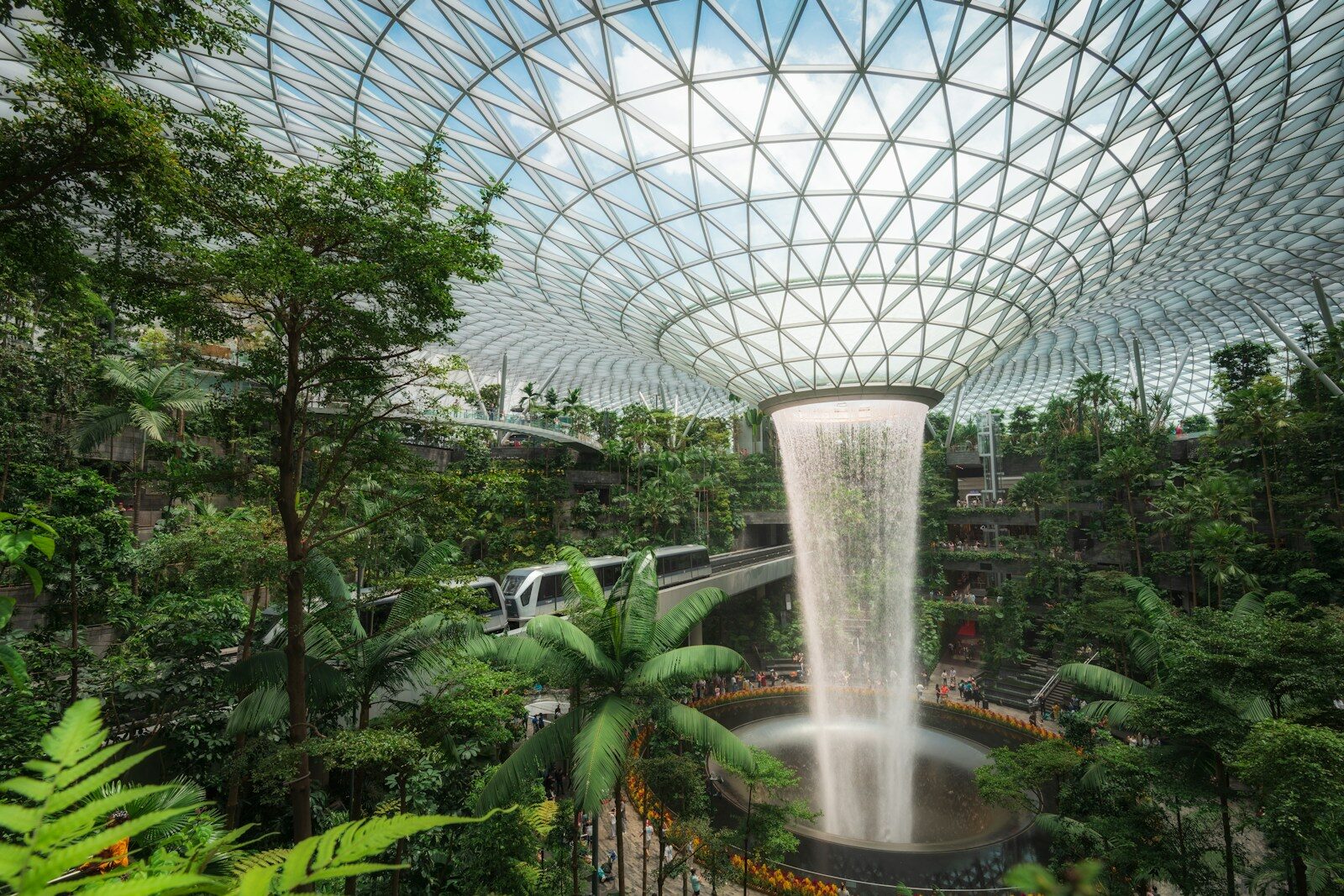
Afternoon: head to Changi early — on purpose. Leave for the airport 5–6 hours before your flight, not the usual two. That’s because of Jewel Changi: the glass-dome complex at the airport with the Rain Vortex — the world’s tallest indoor waterfall at 40 metres — surrounded by a four-storey indoor forest. The Vortex light-and-sound show runs at 8 PM and 9 PM (Mon–Thu) with an extra 10 PM show on weekends, entry to the Forest Valley viewing areas is free, and the Skytrain between Terminals 2 and 3 glides right past the waterfall. Transit passengers with layovers of 5.5+ hours can even join the free Singapore Tours (the airport runs guided city tours for transit passengers, booking at the transit-area booths) — worth knowing for your next trip.
If your flight is the next day: end the night at Clarke Quay — riverside bars and restaurants along the old godown warehouses — or take the Night Safari at the Mandai wildlife reserve (the world’s first nocturnal zoo, evening sessions from around S$55).
Geography & Climate: One Degree North of the Equator
Singapore is a single island city-state at the tip of the Malay Peninsula — about 733 km² (smaller than New York City), sitting one degree north of the equator. That latitude defines everything: temperatures hover at 27–32°C year-round, humidity is high, and rain arrives in short, intense tropical downpours rather than seasons. There is no winter wardrobe; there is only “indoor air-conditioning” weather and “outdoor” weather.
The wettest months are November to January (the northeast monsoon); the driest and generally best visiting window is February to April. Note that October — F1 race month — sits at the tail of the southwest monsoon, and occasional transboundary haze from regional fires can drift over the island in the dry season; check air quality before booking outdoor-heavy days. There are no natural disasters of note — no typhoons, no earthquakes — which is part of why the city feels so relentlessly controlled.
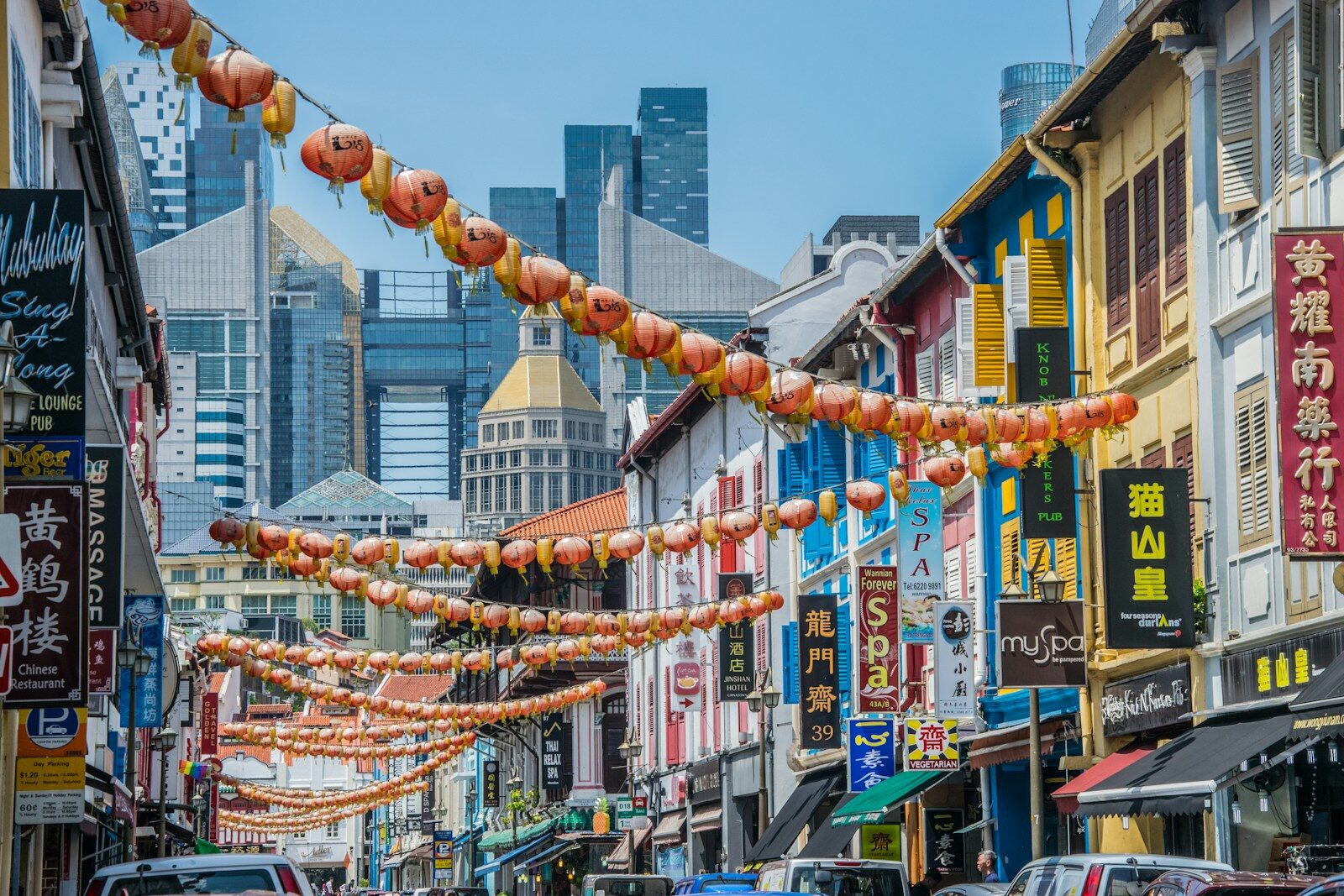
The city divides into planning areas rather than cities: Marina Bay (the waterfront icons), Chinatown (heritage + hawker food), Little India, Kampong Glam (Malay-Arab quarter), Orchard (shopping), Tiong Bahru (art-deco cafés), Katong/Joo Chiat (Peranakan shophouses and food), and Sentosa (beach resort island). The MRT connects all of them in under 40 minutes.
People & Demographics: Four Languages, One City
Singapore’s population hit a record 6.21 million in June 2026 (Reuters, September 2026) — a remarkable number on 733 km², making it one of the most densely populated places on Earth. About 1.98 million of those are foreign residents; the rest are citizens and permanent residents. The ethnic mix (roughly 74% Chinese, 14% Malay, 9% Indian, plus others) is no accident — it’s the product of two centuries of migration, and it’s why Singapore has four official languages: English, Mandarin, Malay, and Tamil.
English is the working language and you’ll get by everywhere with it, but locals speak Singlish — a fast, musical creole peppered with particles from Hokkien, Malay, and Tamil. A mini phrasebox for your 48 hours:
- “Lah” — the famous sentence-ender. Softens anything: “OK lah” (sure), “cannot lah” (sorry, no).
- “Makan” — to eat (from Malay). “Jom makan?” = let’s go eat.
- “Kopi O” — black coffee with sugar. “Kopi O kosong” — black coffee, no sugar. “Teh tarik” — pulled milk tea, the Indian-Muslim stall classic.
- “Chope” — to reserve a hawker-centre table by placing a packet of tissues on it. Sacred custom. Do not move the tissues.
- “Paiseh” — embarrassed / excuse me (Hokkien).
Religion mirrors the ethnic mix: Buddhism, Christianity, Islam, Taoism, and Hinduism all have major festivals as public holidays — which is why the calendar below looks like four countries sharing one island.
Culture, Etiquette & Daily Habits: The Fine City Is Literal
Singapore’s nickname — “the Fine City” — is a pun locals love: fine as in beautiful, and fine as in you will be fined. The rules are real and enforced, and knowing them keeps your 48 hours smooth.
Do:
- Return your tray at hawker centres and food courts — it’s been the law since 2021, with fines for not clearing your table.
- Give up priority seats on the MRT for elderly and pregnant passengers — a genuine local expectation.
- Chope your table with a tissue packet at busy hawker centres; it’s understood and respected.
- Remove shoes when entering mosques and temples (and many homes).
- Stand on the left of escalators; walk on the right.
Don’t:
- Eat or drink on the MRT or buses — the famous S$500 fine. The signs are everywhere; enforcement is real.
- Bring durian onto public transport — the king of fruits is banned from the MRT by those iconic pictogram signs. Love it or hate it, eat it outdoors.
- Buy, sell, or import chewing gum — the sale of chewing gum has been banned since 1992 (vandalism on the MRT was the trigger). Personal use of a pack in your bag is fine; just don’t sell it.
- Litter, spit, or jaywalk — all carry fines (jaywalking up to S$1,000).
- Smoke outside designated areas — smoking is banned in most public places, with yellow-box zones marking where it’s allowed.
Tipping: not expected and often not accepted. Restaurants add a 10% service charge and 9% GST automatically; hawker stalls show all-inclusive net prices. Rounding up a taxi fare is polite but optional.
Dress: casual and light — breathable fabrics, comfortable walking shoes, and a light layer for the arctic air-conditioning in malls and the MRT. Temples and mosques ask for covered shoulders and knees; the Sultan Mosque provides robes.
Lifestyle: Hawker Culture, Work Ethic, and the 9 PM City
Singaporeans work hard — it’s one of the world’s most competitive economies — but the national religion is arguably food. Hawker culture was inscribed on UNESCO’s Intangible Cultural Heritage list in 2020, and it’s easy to see why: the hawker centre is the great social equalizer, where a banker and a taxi driver queue at the same chicken-rice stall. Three hawker meals a day costs roughly S$15–25 (about US$12–20) — chicken rice S$4–7, laksa S$5–8, char kway teow S$5–7, kopi under S$2.
Daily rhythm: the city wakes early and the MRT is packed by 8 AM (travel before 7:45 AM on weekdays and fares are discounted — up to S$0.50 off). Malls open around 10–11 AM and close at 9–10 PM; hawker centres follow their own stall-by-stall rhythms, with breakfast stalls closing by early afternoon and dinner stalls firing up at 5 PM. Nightlife concentrates at Clarke Quay, Holland Village, and the rooftop bars of the CBD — and once a year, the whole Marina Bay area becomes a street circuit for the Formula 1 night race (October 9–11, 2026 — Singapore hosted F1’s first-ever night race back in 2008, and it’s still the only full night race on the calendar).
Tech texture: Singapore is aggressively digital. The SimplyGo system lets you tap any foreign Visa/Mastercard or phone directly on MRT and bus readers — no ticket needed, no app required (a small daily admin fee of up to S$0.60 applies to foreign cards). Free public Wi-Fi (“Wireless@SG”) covers malls and MRT stations. Cash still works everywhere, but you’ll rarely need it outside hawker stalls and wet markets.
Main Districts: Six Neighbourhoods, One Island
Singapore has no other cities — so think in districts. Six cover 90% of what a 48-hour visitor needs:
- Marina Bay — the postcard: the Sands, the Merlion, the ArtScience Museum (the lotus-shaped building), the Esplanade theatres (“the durians”). Everything walkable along the waterfront.
- Chinatown — heritage shophouses, the Buddha Tooth Relic Temple, Sri Mariamman Temple, and the best concentration of hawker centres (Maxwell, Chinatown Complex, Amoy Street).
- Little India — Tekka Centre, the flower-garland shops of Buffalo Road, and the finest fish-head curry and prata in the country.
- Kampong Glam — the old Malay-Arab quarter: the Sultan Mosque, Haji Lane’s street art and indie shops, and excellent Middle Eastern and Malay food.
- Tiong Bahru — Singapore’s oldest housing estate, now its coolest: art-deco blocks, specialty coffee, bookshops, and the Tiong Bahru Market hawker centre upstairs.
- Katong / Joo Chiat — Peranakan (Straits Chinese) heritage: pastel shophouses, laksa and kueh worth the 20-minute bus ride.
Beyond the city: Sentosa (beaches, Universal Studios, the cable car), Pulau Ubin (a throwback island with mangroves and the Chek Jawa wetlands — rent a bike, feel 1960s Singapore), and the Mandai wildlife reserves (Zoo, Night Safari, Bird Paradise, and the new Rainforest Wild Asia).
Top Places to Visit: Beyond the Itinerary
Eight sights worth bending the 48 hours for: 1. Gardens by the Bay’s conservatories (Flower Dome + Cloud Forest). 2. The National Museum of Singapore — the country’s oldest museum, excellent on the 1965 independence story. 3. The Singapore Botanic Gardens (UNESCO site, free). 4. Haw Par Villa — a bizarre, free, gloriously weird 1930s park of Chinese-mythology statues (the Ten Courts of Hell dioramas are unforgettable). 5. The MacRitchie Treetop Walk — a 250-metre suspension bridge through primary rainforest. 6. Sri Mariamman and Thian Hock Keng temples for architecture. 7. Orchard Road at Christmas — the shopping street’s light-up is a national event. 8. The Changi Chapel and Museum — a sombre, essential stop on the WWII occupation.
🎟️ Book experiences in Singapore
Tours we’d actually book — free cancellation on most. We may earn a commission if you book through these links, at no extra cost to you. Our affiliate disclosure.
- Singapore Zoo 1-day ticket with tram ride — the world’s best rainforest zoo, open-concept enclosures.
- Peranakan culture & city highlights tour — the heritage most visitors miss, with a local guide.
- Browse all Singapore tours & activities
🎟️ More ways to book (Viator)
Two more reader-favorite ways to see Singapore. We may earn a commission if you book through these links, at no extra cost to you. Our affiliate disclosure.
- Gardens by the Bay + Marina Bay Sands Skypark tickets — Cloud Forest, Flower Dome, and the Skypark deck in one bundle.
- Marina Bay night walking tour — light shows, Merlion Park, and the glittering skyline after dark.
When to Visit & Getting Around
Best months: February–April — driest, with the Lunar New Year festivities (February 17–18, 2026) turning Chinatown into a lantern-lit market. Wettest: November–January. Avoid-or-embrace: the F1 Grand Prix weekend (October 9–11, 2026) — electric atmosphere, but hotel prices triple and Marina Bay roads close. Festivals to catch: Hari Raya Puasa (March 21, 2026 — Geylang Serai lights up), National Day (August 9 — fireworks over the bay, rehearsals visible for weeks before), Deepavali (November 8, 2026 — Little India’s Serangoon Road in full glow), and Vesak Day (May 31, 2026).
Getting around: the MRT is the answer to everything. Six lines (the Thomson-East Coast Line completed its final stage and the Circle Line closed its loop in 2026), fares S$1.00–2.50 per ride by distance, and SimplyGo means your foreign contactless card or phone just works — tap in, tap out. A Singapore Tourist Pass (S$17 for 1 day, S$24 for 2 days, S$29 for 3 days) only pays off if you’re riding 6–8+ times a day; for a 48-hour stopover with 3–4 rides a day, pay-per-ride wins. EZ-Link cards (~S$10) are the local option if you prefer a stored-value card. Taxis and Grab are plentiful but pricey (a Changi-to-city ride runs S$25–40); the MRT from Changi to the city takes about 45–60 minutes and costs under S$2.50.
✈️ Find cheap flights to Singapore — compare fares across airlines and booking sites in one search. Affiliate link: we may earn a commission at no extra cost to you.
🚗 Rent a car in Singapore — compare rental prices across suppliers in one search. Affiliate link: we may earn a commission at no extra cost to you.
Budget: What 48 Hours Costs
Singapore is Southeast Asia’s priciest stop — but the stopover is cheaper than its reputation, because the two things you do most (ride trains, eat at hawker centres) are genuinely cheap. Rates below per person per day; S$1 ≈ US$0.78 (October 2026).
| Tier | Daily cost | What it looks like |
|---|---|---|
| Budget | S$80–130 (~US$62–100) | Hostel dorm (S$25–40), 3 hawker meals (S$15–25), MRT (S$8–12), free sights (Merlion, Gardens outdoor areas, temples, Botanic Gardens) |
| Mid-range | S$220–380 (~US$170–300) | 3-star hotel (S$120–220), hawker lunches + one nice dinner (S$40–60 food), SkyPark + conservatories (S$90ish), Grab when tired |
| Comfort | S$500+ (~US$390+) | Marina Bay Sands or equivalent (S$400+), chilli-crab dinner (S$80+), Night Safari, taxis everywhere |
Money-saving truths: tap water is safe to drink — carry a bottle and refill. The best food in the country costs S$5. Hawker centres, temples, the Botanic Gardens, the Merlion, and the Garden Rhapsody show are all free. The single biggest cost lever is the hotel — staying one MRT stop outside the centre (Lavender, Bugis, Tiong Bahru) cuts the nightly rate substantially.
48-hour mid-range total: roughly S$450–750 (~US$350–585) per person excluding flights — very doable for a stopover.
Practical Tips
- Entry for Canadians: no visa needed for short visits — but everyone must submit the free SG Arrival Card online within 3 days before arrival (including arrival day), via the official ICA e-Service or the MyICA app. After immigration you’ll get an electronic Visit Pass (e-Pass) by email, usually 30 or 90 days. Ignore third-party sites that charge for the arrival card — it’s free.
- Connectivity: buy a tourist SIM or eSIM at Changi on arrival (generous data, ~S$15–30) or enable roaming; free Wireless@SG Wi-Fi covers malls and MRT stations.
- Cash vs card: cards accepted almost everywhere; carry S$20–50 in small bills for hawker stalls and wet markets. ATMs are everywhere at Changi and in malls.
- Power plugs: Type G (British 3-pin), 230V — bring an adapter.
- Emergency numbers: 995 (ambulance/fire), 999 (police). Singapore is one of the world’s safest cities; the main risks are dehydration and overpaying at Orchard Road.
- The Changi rule: arrive 4–6 hours early and treat Jewel as a sight, not a terminal. Early check-in and baggage storage (Level 1) let you explore hands-free. Skytrain between T2 and T3 passes the waterfall — ride it even if your gate is elsewhere.
- Luggage for 48 hours: pack light enough to skip the hotel on day one — many hotels hold bags free, and every MRT station has lockers or nearby left-luggage options.
🛍️ Shop this guide: Singapore packing essentials
Gear we’d actually pack for this trip. As an Amazon Associate we earn from qualifying purchases — at no extra cost to you. Our affiliate disclosure.
- Compact travel umbrella — the “Fine City” rains on schedule; this lives in your daypack.
- Portable charger — Gardens by the Bay light shows and full MRT days.
- Universal travel adapter — Singapore uses Type G (UK-style) plugs at 230V.
- Packing cubes — three-day stopover? Pack once, live out of the cubes.
🧳 Plan your trip: Singapore
Flights, stays, tours, and cruises — booked in one place. We may earn a commission if you book through these links, at no extra cost to you. Our affiliate disclosure.
- ✈️ Find cheap flights to Singapore — compare fares across airlines and booking sites in one search.
- 🏨 Browse our Expedia Travel Shop — hand-picked stays and travel deals from our curated storefront.
- 🎟️ Browse Singapore tours & activities — free cancellation on most.
- 🛳️ Compare Asia cruises on CruiseDirect — Singapore is Southeast Asia’s cruise capital.
Closing: The Stopover That Steals the Trip
Forty-eight hours in Singapore rewires your expectations of what a city can be: a place where the subway fines you for eating but the street food costs less than a coffee back home; where four religions share one street and four languages share one announcement; where the airport is a destination and the “Fine City” pun turns out to be completely literal. You’ll leave with a camera roll of Supertrees and waterfalls, a new opinion about chicken rice, and — if you’re like most stopover travellers — a quiet plan to come back for longer. That’s the Singapore effect: it was supposed to be a layover.
Watch: Singapore in 60 Seconds
Keep exploring
- Japan mixes neon futurism with ancient temples the way Singapore mixes them — compare Tokyo’s organized chaos with the Lion City’s calm in our Japan travel guide.
- If Singapore’s hawker stalls awakened your appetite, Thailand’s street-food scene is the region’s other great temple of cheap eating — see our Thailand travel guide.
- Ha Long Bay’s limestone karsts are Southeast Asia’s other unmissable water-and-rock spectacle after Marina Bay — plan it with our Vietnam travel guide.
- Only a short flight south, Bali trades Singapore’s order for spiritual chaos — temples, volcanoes, and an island that goes silent for a day: our Bali travel guide.
FAQ
Is 2 days enough for Singapore?
Yes — and it’s the classic way to see it. The island is 733 km² with a world-class MRT, so Marina Bay, Chinatown, Little India, Gardens by the Bay, and Jewel Changi all fit comfortably in 48 hours. Add a third day only if you want Sentosa, the zoo, or a slower food crawl.
Is Singapore expensive?
It’s Southeast Asia’s priciest destination, but the daily experience is cheaper than the reputation. Hawker meals run S$4–8, MRT rides S$1–2.50, and the best sights (Merlion, Garden Rhapsody, temples, Botanic Gardens, Jewel’s waterfall viewing) are free. Budget S$80–130/day for a backpacker-style stopover, S$220–380/day mid-range.
Do Canadians need a visa for Singapore?
No visa is required for short tourist visits. However, all travellers — including Canadians — must complete the free SG Arrival Card within 3 days before arrival via the official ICA channels. You’ll receive an electronic Visit Pass (usually 30 or 90 days) by email after clearing immigration.
What’s the best time to visit Singapore?
February to April is the driest window and coincides with Lunar New Year festivities. November to January is the wettest. October brings the F1 night race — thrilling but expensive. Temperatures barely move year-round (27–32°C), so pick by rain and events, not temperature.
How do I get around Singapore?
The MRT. Tap your foreign Visa/Mastercard or phone directly on the gates with SimplyGo — fares run S$1.00–2.50 per ride. The 1-day Tourist Pass (S$17) only beats pay-per-ride if you’re taking 6+ rides a day. Avoid taxis except late at night; the Changi-to-city MRT is under S$2.50.
Is Singapore’s tap water safe to drink?
Yes — Singapore’s tap water meets WHO standards and is safe straight from the tap. Carry a refillable bottle; it saves money and plastic.
Cover alt text: Marina Bay skyline at night with Marina Bay Sands reflected in the water.
[…] into India usually routes through a Gulf or Southeast Asian hub — break the journey with our Singapore travel guide or the Thailand travel guide for the region’s best budget […]
[…] Gulf — break the journey with our India travel guide (Rajasthan vs Kerala, which first?) or the Singapore travel guide for the perfect […]
[…] the UAE’s futuristic side hooked you, Singapore is the other city-state that turned ambition into a skyline. For the luxury-resort half of the Gulf […]
[…] Singapore’s 48-hour stopover formula adapts perfectly to a Seoul layover — Singapore in 48 hours. […]