Thailand is the rare country that works for everyone: the honeymooner in a Koh Lipe overwater villa, the backpacker eating 50-cent noodles in Chiang Mai, the family at a Phuket beach club, the retiree in a Hua Hin condo. It’s affordable without feeling cheap, exotic without being difficult, and chaotic in a way that somehow always resolves into a smile. This guide covers the land, the people, how they live, where to go, and how to travel it well.
Geography & Climate: Two Coasts, One Kingdom
Thailand sits in the heart of Southeast Asia, roughly the size of France, shaped like an elephant’s head in profile. It has 76 provinces plus Bangkok, which is its own special administrative area. The geography splits neatly into regions:
- The North (Chiang Mai, Chiang Rai): misty mountains, the country’s highest peak Doi Inthanon (2,565 m), cool-season temperatures that can flirt with frost.
- The Northeast (Isan): a vast plateau bordering Laos, the country’s rice bowl, with Khmer-era temple ruins and Thailand’s most fiercely distinct regional culture.
- The Central Plains: the Chao Phraya river basin — flat, fertile, and home to Bangkok and the ancient capitals of Ayutthaya and Sukhothai.
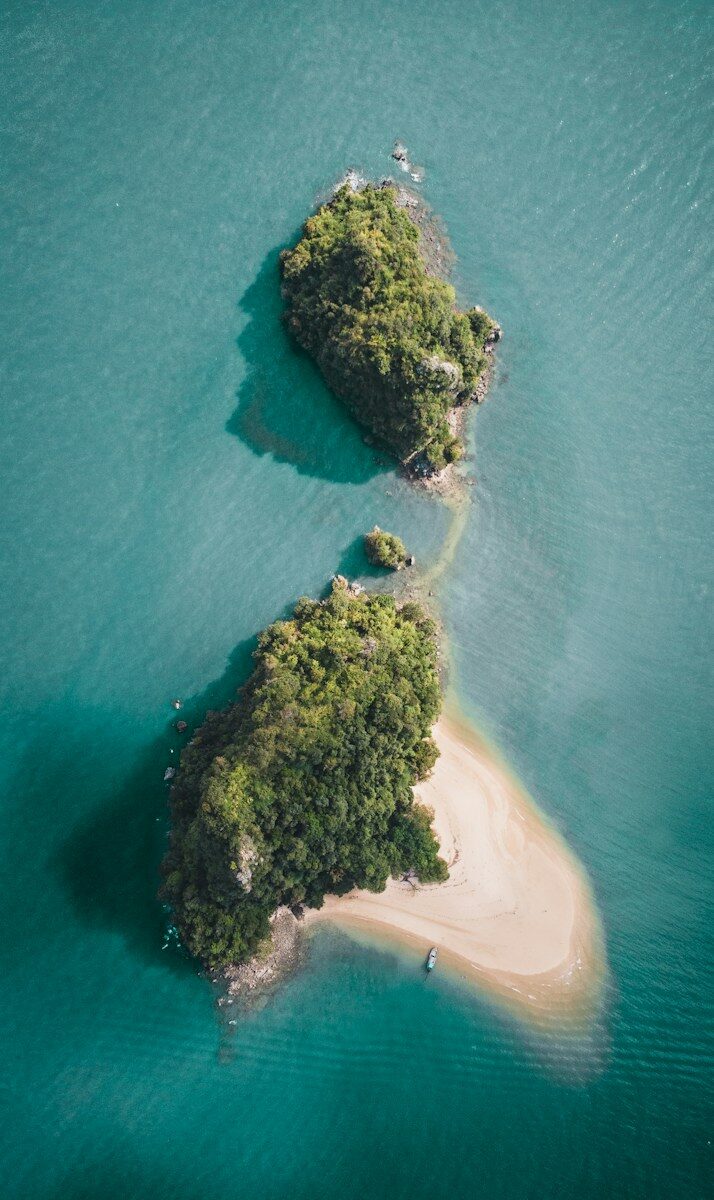
- The South: a narrow peninsula down to Malaysia, with two completely different coastlines. The west faces the Andaman Sea (Phuket, Krabi, Phi Phi, Similan — dramatic limestone karsts, world-class diving). The east faces the Gulf of Thailand (Koh Samui, Koh Phangan, Koh Tao — palm-fringed, calmer water).
Thailand has over 1,400 islands, though only a fraction are developed for tourism.
Climate is tropical with three seasons, but timing differs by coast — a crucial planning detail:
- Cool/dry (Nov–Feb): the best months almost everywhere. Bangkok averages ~26°C, the north gets genuinely cool evenings.
- Hot (Mar–May): temperatures push past 40°C inland. April is brutal — which is exactly why the Songkran water festival exists.
- Rainy (Jun–Oct): the southwest monsoon drenches the Andaman coast hardest. The Gulf islands (Samui, Phangan, Tao) have their own rainy peak, roughly October–December — so there’s almost always a dry-ish island somewhere.

People & Demographics: 72 Million Smiles (Mostly)
Thailand’s population is about 72 million — and like Japan, it’s aging fast, with births well below replacement. Bangkok’s metro area holds around 10 million people, a primate city that dominates the country’s economy, media and imagination the way no single city does in most countries.
Ethnically, roughly three-quarters are Central Thai, with large Isan (ethnic Lao) communities in the northeast, around 14% of Thai-Chinese descent (deeply integrated — many of the country’s business elite), and Malay Muslims concentrated in the deep south near Malaysia. Hill tribes (Karen, Hmong, Akha and others) live in the northern mountains.
Religion: about 95% practice Theravada Buddhism, and it permeates daily life — morning alms-giving to monks, spirit houses outside every building (even skyscrapers), saffron robes everywhere. The deep south is majority Muslim, and Bangkok has long-standing Christian, Hindu and Sikh communities.
The monarchy is central to Thai identity. King Maha Vajiralongkorn (Rama X) reigns since 2016, continuing the Chakri dynasty founded in 1782. Reverence for the monarchy is enforced by some of the world’s strictest lèse-majesté laws — visitors should know: never disrespect images of the king (including on currency — don’t step on a dropped coin to stop it rolling).
Language: Thai, a tonal language with five tones — which is why your attempt at “hello” might accidentally order something. Fortunately, tourist Thailand runs on English. Essentials: sawadee khrap/kha (hello — khrap for men, kha for women), khop khun khrap/kha (thank you), mai pen rai (never mind / no worries), aroi (delicious).

Culture, Etiquette & Daily Habits
Thai social life runs on three untranslatable words: sanuk (fun — everything should contain some), mai pen rai (never mind — let it go), and kreng jai (consideration — not imposing on others). The famous Thai smile has layers: it can mean joy, apology, embarrassment, or “please stop.” Read the eyes, not the mouth.
- The wai (palms pressed together, slight bow) is the all-purpose greeting, thank-you and apology. Return it — but don’t wai children or service staff first; they’d wai you.
- The head is sacred, feet are low. Never touch anyone’s head (even children’s), never point your feet at people or Buddha images, and step over thresholds, not on them.
- Temple dress code is enforced: cover shoulders and knees, remove shoes (and hats) before entering. Women may not touch monks.
- The monarchy rule (above) is the serious one — lèse-majesté carries real prison sentences. This includes social media posts made in Thailand.
- Don’t touch spirit houses or point at them casually — they’re homes for protective spirits, and every hotel, mall and office has one.
- Bargaining is expected at markets, not in malls or restaurants. Smile while you do it — aggression kills the deal and the mood.
- Tipping isn’t traditional but is now common in tourist areas: 10% at restaurants is generous, round up for taxis.
Festivals are the culture at full volume. Songkran (April 13–15, Thai New Year) turns the entire country into the world’s biggest water fight — you will get soaked in any city. Loy Krathong (November full moon) floats candle-lit baskets onto rivers nationwide, and in Chiang Mai it pairs with Yi Peng, when thousands of paper lanterns rise into the night sky.

Lifestyle: Street Food, Night Markets & Sanuk
Food is Thailand’s national sport. Bangkok alone has over 300,000 street food vendors (estimates vary, the point stands: food is everywhere). The holy trinity for newcomers: pad thai (the gateway), som tum (green papaya salad — specify your chili level honestly), tom yum goong (the prawn soup that ruins all other soups). Then go deeper: boat noodles (kuay teow reua), mango sticky rice (khao niao mamuang), massaman curry, and Isan’s gai yang (grilled chicken) with sticky rice eaten by hand.
Night markets are the evening living room of the nation — Chatuchak (weekends, Bangkok, 15,000 stalls), Chiang Mai’s Sunday Walking Street, Phuket’s weekend market. Eat, shop, people-watch; this is Thailand at its best.
Daily rhythms: days start early (markets at dawn, monks on alms rounds), afternoons slow in the heat, evenings explode. Muay thai (Thai boxing) is the national sport — catch a fight at Lumpinee or Rajadamnern stadium in Bangkok. Massage is everywhere and genuinely excellent: a proper Thai massage (fully clothed, involves being folded like laundry) costs a fraction of Western spa prices.
The tuk-tuk is half transport, half theater — always agree the price before getting in. Grab (Southeast Asia’s Uber) works in cities and ends most haggling pain.
Bangkok’s contradictions define modern Thailand: rooftop bars above 60 floors, ancient canals (khlongs) with stilt houses behind the skyscrapers, luxury malls next to 100-year-old shophouses. Upcountry life moves slower — and many Thais will tell you the “real” Thailand is anywhere but Bangkok.

Main Cities & Islands: Where to Go
Bangkok — Controlled chaos perfected. The Grand Palace and Wat Phra Kaew (Emerald Buddha), Wat Pho’s giant reclining Buddha, Wat Arun glowing across the river at sunset. Then: Chinatown (Yaowarat) for the best street food mile in Asia, Chatuchak weekend market, rooftop bars, canal tours, and the BTS/MRT trains that make it all navigable. Give it at least 3 days — it rewards those who don’t rush it.
Chiang Mai — The northern capital, 700+ years old, ringed by mountains. 300 temples inside the old city walls, Doi Suthep towering above it all, the Sunday Walking Street, Yi Peng lantern festival, and Thailand’s digital-nomad capital. Slower, cooler, friendlier than Bangkok.
Chiang Rai — Day-trip or overnight from Chiang Mai for the White Temple (Wat Rong Khun) — a surreal contemporary artwork of a temple — plus the Golden Triangle where Thailand, Laos and Myanmar meet.
Ayutthaya — The ruined former capital (1350–1767), an hour from Bangkok: Buddha heads in tree roots, prang towers, easily done by bike in a day.
Phuket — Thailand’s biggest island. Patong for nightlife, Kata/Karon for beaches, the old town for gorgeous Sino-Portuguese streets most visitors miss. Gateway to the Similan Islands (world-class diving, open Nov–May).
Krabi & Railay — Limestone karsts, hidden lagoons, rock climbing. Railay is reachable only by boat — no roads, no cars, just cliffs and longtail boats.
Phi Phi Islands — Maya Bay (of The Beach fame) has recovered beautifully under visitor caps. Go early morning by speedboat.
Koh Samui, Koh Phangan, Koh Tao — the Gulf trio. Samui: resorts and comfort. Phangan: the famous Full Moon Party plus a quiet wellness north. Tao: the cheapest world-class scuba diving on earth.
Koh Lipe — the “Maldives of Thailand” in the far south: powder sand, absurdly clear water, no cars.
Kanchanaburi — the River Kwai, Erawan Falls’ seven turquoise tiers, and sobering WWII history, 3 hours west of Bangkok.
Sukhothai — the first Thai capital’s ruins in a serene historical park — Ayutthaya’s quieter, more graceful sibling.

Top Places to Visit (The Shortlist)
- Grand Palace & Wat Phra Kaew, Bangkok — go at 8:30 a.m. opening to beat the crowds and heat.
- Wat Pho, Bangkok — the 46-meter reclining Buddha, and Thailand’s best traditional massage school.
- Doi Suthep, Chiang Mai — the mountain temple at golden hour.
- Maya Bay, Phi Phi Leh — arrive before 8 a.m.
- Railay Beach, Krabi — only by boat, worth every baht.
- Erawan Falls, Kanchanaburi — swim up through seven tiers.
- Sukhothai Historical Park — rent a bike at sunrise.
- Similan Islands — dive/snorkel trips, November–May only.
- Chatuchak Weekend Market, Bangkok — 15,000 stalls; bring cash and a plan.
- Yi Peng, Chiang Mai (November) — the lantern release. Book a year ahead.
When to Visit & Getting Around
Best months: November–February — cool, dry, clear seas. This is peak season: book islands and Chiang Mai well ahead, especially around Christmas–New Year and Chinese New Year.
Shoulder: March–June — hot but cheaper, and the Andaman Sea stays calm for diving through April. Low season: July–October — rain, but it usually falls in dramatic afternoon bursts, not all-day washouts. The Gulf islands (Samui/Phangan/Tao) are often fine when Phuket is soaked.
Getting around:
- Bangkok: BTS Skytrain + MRT subway cover the center; river ferries (Chao Phraya Express) are the scenic shortcut. Taxis must use the meter — insist (“meter khrap/kha”).
- Between cities: domestic flights are absurdly cheap (AirAsia, Nok Air, VietJet Thailand) — Bangkok to Phuket can cost less than $30. Sleeper trains (Bangkok–Chiang Mai) are a classic experience; book berths early.
- Islands: ferries and speedboats from Krabi, Phuket, Koh Samui and mainland piers. In rough monsoon months, some routes stop — check before you go.
- Everywhere: Grab for cars and motorbike taxis in cities; songthaews (shared pickup trucks) upcountry.
Budget: What Thailand Costs in 2026
Thailand remains one of the world’s great value destinations (roughly 35 baht ≈ $1 USD — check the current rate).
- Budget: 1,000–1,500 THB/day (~$30–45) — hostels, street food, local buses, free temples and beaches.
- Mid-range: 2,500–4,500 THB/day (~$70–130) — boutique hotels, restaurant meals, island ferries, a cooking class or day trip.
- Comfort: 6,000+ THB/day (~$170+) — beach resorts, private longtail boats, fine dining, spa days.
Money truths: street food is often better than restaurant food at a tenth the price; 7-Elevens (there are 15,000+ of them) sell everything including surprisingly good toasted sandwiches; and the most expensive mistake is booking island transfers through your hotel instead of at the pier.
Practical Tips
- Visa: many nationalities (US, UK, EU, Canada, Australia) get 60 days visa-free on arrival (extended from 30 in 2024) — confirm your country’s status before flying.
- Cash is king upcountry. Cards work in malls and hotels; markets, tuk-tuks and beach bars want baht. ATMs charge ~220 THB per foreign withdrawal — take out large amounts, fewer times.
- Don’t drink tap water. Bottled water is everywhere and cheap.
- Scams to know: the “Grand Palace is closed today” tuk-tuk redirect, jet-ski damage shakedowns (just don’t rent jet skis), and gem-shop commissions. A polite firm “no” ends all of them.
- SIM/eSIM: grab a tourist SIM at the airport or an eSIM before arrival — 5G is fast and cheap.
- Cannabis: decriminalized in 2022, shops everywhere — but regulations keep shifting and public smoking is restricted. Don’t assume what’s legal today stays legal; and never carry it across borders.
- Sun + sea: reef-safe sunscreen (some marine parks require it), and the sun between 11–3 is no joke — even on cloudy days.
Why Thailand Hooks You
Thailand’s trick is that it never asks you to be anyone but a guest — and treats guests like honored ones. It’s the beach that was better than the photo, the night-market meal you still dream about, the stranger who walked you three blocks to your hotel because pointing wasn’t enough. Mai pen rai isn’t just a phrase; after two weeks, it starts to feel like a philosophy.
Watch: Thailand in 60 Seconds — our 60-second video guide is coming soon on the One Minute World YouTube channel.
Thailand Travel FAQ
How many days do I need in Thailand?
10–14 days is the sweet spot: 3 days Bangkok, 3–4 Chiang Mai/north, 4–5 islands. A week forces hard choices — pick Bangkok + one region.
When is the best time to visit Thailand?
November–February for the best weather nationwide. For diving the Andaman coast, November–April; note the Gulf islands stay drier through summer.
Is Thailand safe for tourists?
Very, for a country this touristed. Violent crime against visitors is rare. The real risks are road accidents (wear the helmet on scooters — or better, don’t ride one), water safety, and scams, all manageable with basic awareness.
How much does Thailand cost per day in 2026?
Budget travelers manage on $30–45/day, mid-range comfort runs $70–130/day, and $170+/day buys genuine luxury.
Which Thai island should I visit first?
First-timers: Krabi/Railay (scenery) or Koh Samui (ease). Divers: Koh Tao or the Similans. Party: Koh Phangan. Quiet luxury: Koh Lipe.