
 admin
Everyone thinks the Maldives is a honeymoon money-pit — a private water villa, a seaplane transfer, and a bill that could buy a used car. That’s one version of the Maldives. But since 2009, a quiet revolution has opened the same turquoise water to the rest of us: local islands with family-run guesthouses, where you can sleep steps from the beach for the price of a Toronto hotel night, snorkel with whale sharks for a day-trip fee, and still sneak into a five-star resort for lunch on a day pass. This guide is the complete playbook for the Maldives without the $1,000/night resort — which islands to pick, what everything actually costs in 2026 (taxes included), and how to dodge the classic first-timer mistakes.
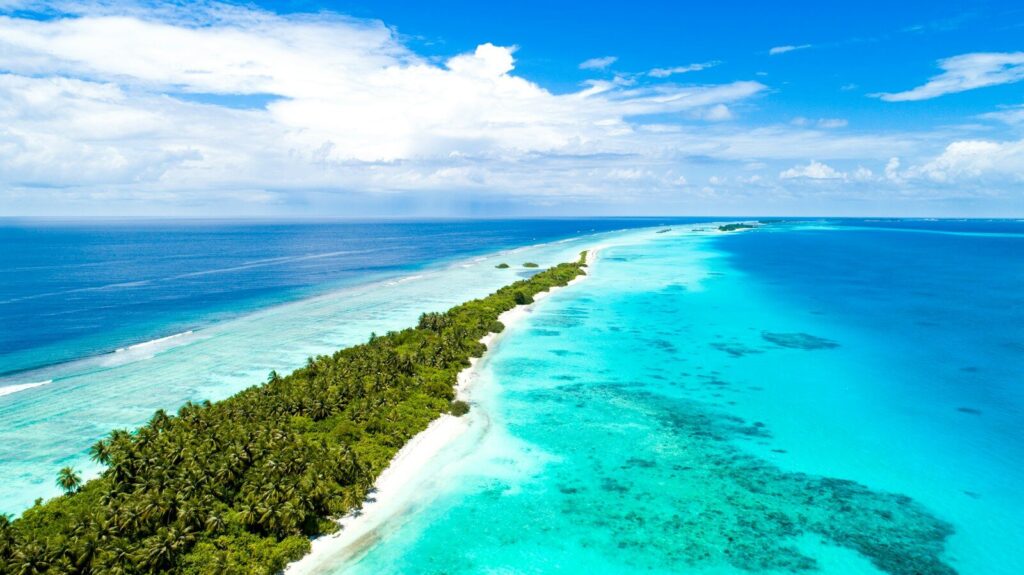
Geography & Climate: 1,190 Islands, 1.5 Meters Above the Sea
The Republic of Maldives is an archipelago of roughly 1,190 coral islands grouped into 26 atolls, strung across the Indian Ocean southwest of Sri Lanka. It’s the smallest country in Asia by both land area and population — barely 500,000 residents. And it’s the flattest country on Earth: the average elevation is just 1.5 meters above sea level, which makes climate change the defining existential issue of the nation (in 2009 the president literally held a cabinet meeting underwater, four meters down, to make the point).
There are no rivers in the Maldives at all — freshwater comes from rain and desalination. The land is so low that the highest natural point in the country is a beach dune you could climb in flip-flops.
Seasons. The Maldives has two monsoon-driven seasons, and there’s genuinely no bad month — the water stays 28–30°C and the air 26–31°C all year:
- Dry season / northeast monsoon (November–April): the premium window. Calm seas, glassy visibility for snorkeling and diving, postcard weather. December–March is peak season — book guesthouses and excursions early, because the good rooms sell out.
- Wet season / southwest monsoon (May–October): short tropical downpours, rougher seas, and more wind — but lush green islands, better surf on the east-facing breaks (Thulusdhoo is a surf town for a reason), fewer crowds, and sharply lower prices. Surf season runs roughly April–October.
The budget traveler’s sweet spot is the shoulder months — April/May and September/October — when guesthouse rates drop but the weather is still mostly cooperative. One caveat for shoulder season: group excursions sometimes don’t fill minimum numbers, so confirm your snorkeling and diving trips in advance.
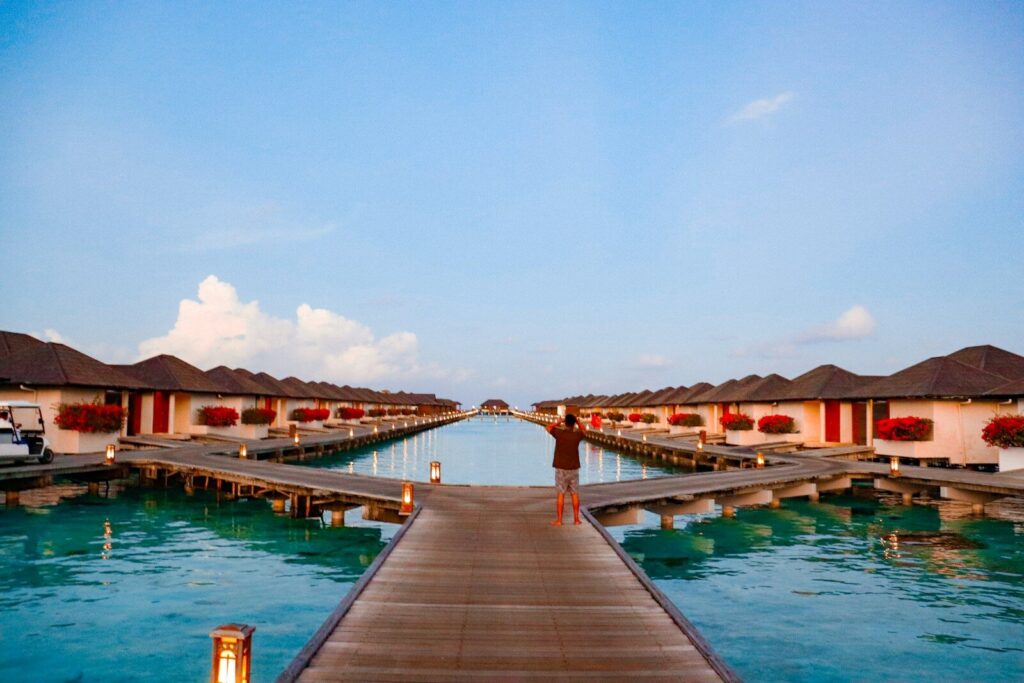
People & Demographics: 500,000 Islanders, One Faith
About 500,000 people live in the Maldives — one of the smallest populations on Earth for a sovereign nation — and roughly a third of them are packed into Malé, the capital, one of the world’s most densely populated cities. This is a nation of islanders: fishing, boat-building, and now tourism are the economic lifeblood.
The Maldives is 100% Muslim (Sunni Islam is the state religion, and the constitution requires Maldivian citizens to be Muslim). This matters for your trip more than almost any other fact in this section, because local islands — unlike resort islands — are real Muslim communities with real rules: modest dress outside the beach, no alcohol, and a midday pause on Fridays for prayers.
Language. Dhivehi is the national language, but English is widely spoken everywhere in tourism — guesthouse staff, dive instructors, and transfer crews will handle your questions comfortably.
Mini phrasebox:
- Assalamu alaikum (ass-ah-LAH-moo ah-LAY-koom) — Peace be upon you (hello)
- Shukuriyaa (shoo-koo-ree-YAH) — Thank you
- Hadhafahu (hah-dah-FAH-hoo) — Please
- Karunai (kah-roo-NY) — Excuse me / sorry
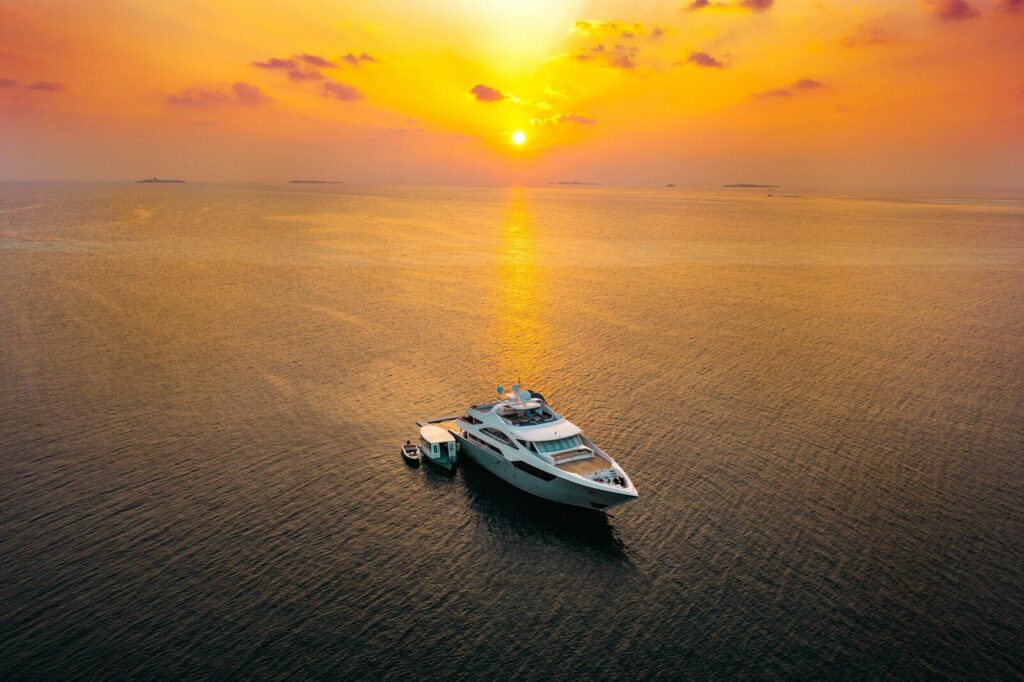
Culture, Etiquette & Daily Habits: The Local-Island Rulebook
This is the section that makes or breaks a budget Maldives trip, because the rules on local islands are completely different from the anything-goes bubble of a resort. Learn them before you land and the islands will welcome you warmly; ignore them and you’ll offend people who are doing you the favor of opening their home.
Do:
- Wear modest clothing in town. Swimwear belongs ONLY on designated “bikini beaches” — every local island has one, and they’re clearly marked. Walking through a village in swimwear is disrespectful and will draw stares.
- Cover shoulders and knees when exploring towns, markets, and mosques. Women should carry a light scarf.
- Ask before photographing locals, especially women and children. A smile and a gesture goes a long way.
- Remove your shoes before entering mosques (and most homes).
- Respect prayer times. On Fridays, midday services pause much of island life for an hour or two — plan your day around it, don’t complain about it.
- Bargain politely at Malé’s markets. Haggling is expected but keep it light and friendly.
Don’t:
- Don’t bring or expect alcohol on local islands. It’s prohibited outside resorts, safari vessels, and liveaboards. Your guesthouse cannot serve it and cannot look the other way.
- Don’t do public displays of affection beyond hand-holding. Keep it discreet.
- Don’t drink the tap water. Bottled water is available everywhere.
- Don’t touch coral or stand on it while snorkeling — fines exist and reefs are fragile.
- Don’t leave for a boat trip without confirming the schedule — the last speedboats often stop at sunset, and being stranded is expensive.
Tipping. Not obligatory, but appreciated: a small tip for dive guides and boat crews (a few dollars per day) is the norm.
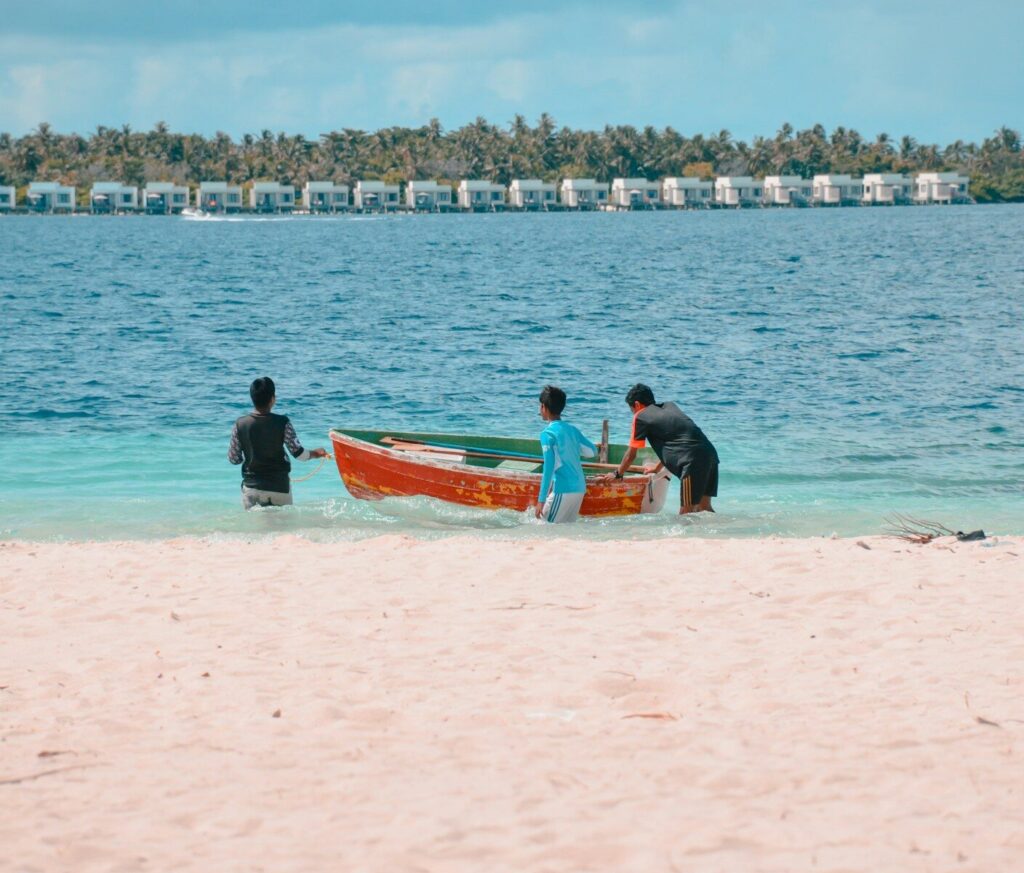
Lifestyle: Tuna for Breakfast, Dhoni Boats at Dusk
Maldivian daily life revolves around the sea. Tuna is everything — the breakfast of the nation is mas huni (shredded smoked tuna mixed with coconut, onion, and chili, scooped up with warm flatbread called roshi), and the dinner of the nation is often garudhiya, a clear fragrant fish soup served with rice, lime, and chili. Between meals: hedhikaa, the savory deep-fried snacks sold in cafés, and some of the best tropical fruit you’ll eat anywhere — mango, papaya, coconut straight from the tree.
Transport is by water and it always has been. The traditional dhoni — hand-built wooden boats with their distinctive curved prows — still ferry people, fish, and freight between islands, and your sunset dolphin cruise will likely be on one. In the evenings, some local islands host bodu beru performances: big-drum drumming and dancing, the Maldives’ most famous traditional art form. Ask your guesthouse if there’s a performance during your stay — they’re communal, welcoming, and free or cheap.
Work culture on local islands runs on “island time” — unhurried, tide-driven, with a long midday lull and activity picking up again in the cooler evening hours. Nightlife is quiet: beach bonfires, stargazing, night-fishing trips. If you want DJs and cocktails, that’s what the resort day pass is for (more below).
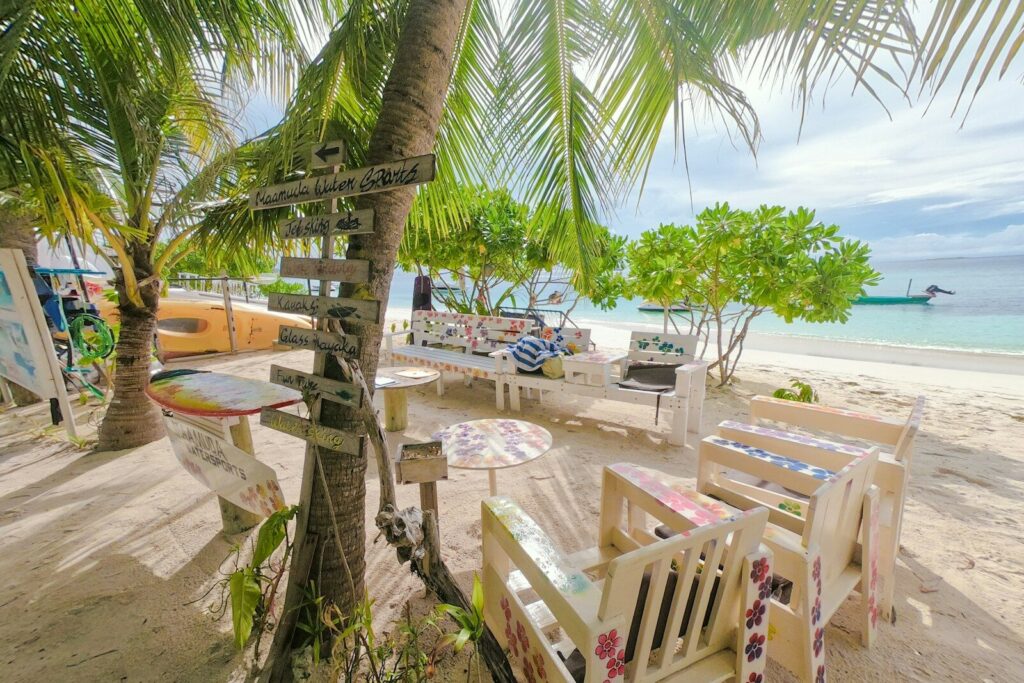
Main Cities & Islands: Where to Base Yourself
The Maldives doesn’t have “cities” in the conventional sense — it has islands. For the budget traveler, the question is which local island to call home. Here are the best picks:
- Maafushi (Kaafu Atoll) — the biggest local-island hub and the default first-timer base, ~45 minutes by speedboat from Malé airport. Dozens of guesthouses, the liveliest bikini beach, the widest excursion menu (sandbanks, resort day trips, night fishing), and the easiest logistics. It gets busy — but everything works.
- Dhigurah (Alif Dhaal Atoll) — the long-beach island: a stunning narrow sandbank curls off one end, and it’s famous for whale shark encounters year-round at the South Ari marine protected area. Quieter and more romantic than Maafushi.
- Thulusdhoo (Kaafu Atoll) — the surf island, home to the famous Cokes and Chickens breaks. Guesthouses here are surf-camp casual, the vibe is boardshorts-and-espresso, and it’s a short boat ride from Malé.
- Guraidhoo (Kaafu Atoll) — smaller and sleepier than Maafushi, a genuine local community feel with good diving access and lower prices.
- Fulidhoo (Vaavu Atoll) — the postcard pick: a tiny island with one of the prettiest lagoons in the country, great for a two-night add-on if you’re passing through the Vaavu atoll route.
- Malé — the capital itself: one of the world’s most densely populated cities, worth half a day for the fish market, the Grand Friday Mosque, and Sultan Park. Stay a night only if your flight timing forces it.
- Hulhumalé — the planned “new city” island next to the airport, linked by bridge. Practical, modern, and the cheapest place to crash before an early domestic flight or seaplane.
The golden rule: your guesthouse arranges your transfers. Confirm the type (speedboat vs. domestic flight vs. seaplane), the price, and the schedule before you book the room — last speedboats often stop at sunset, and an airport-night surprise is nobody’s idea of paradise.
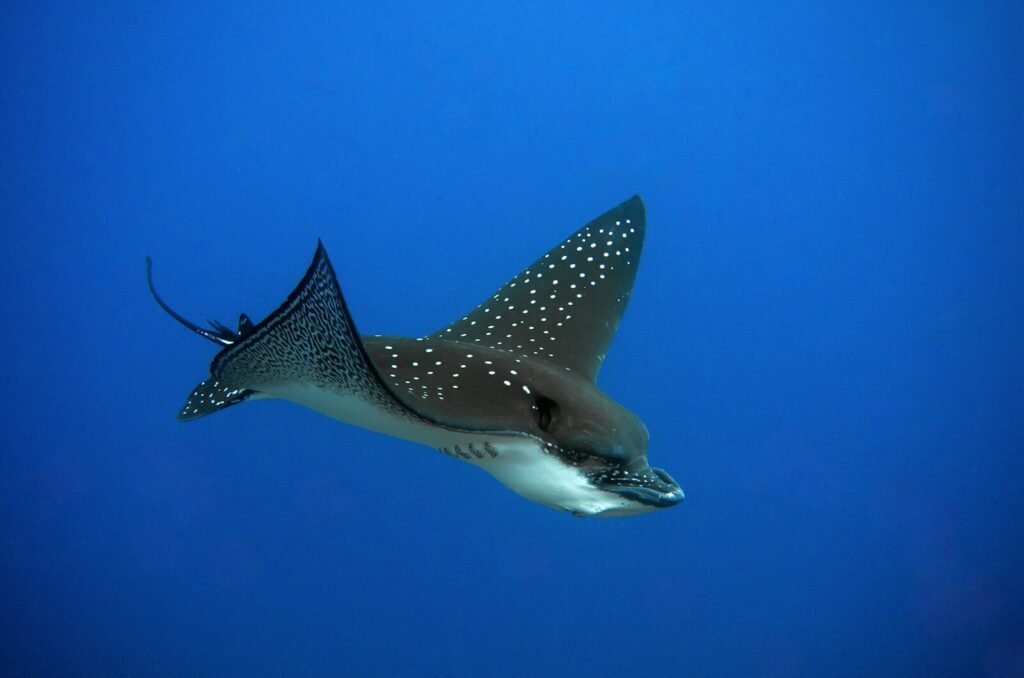
Top Places to Visit: Beyond Your Base
These are the day-trip and excursion hits that make the Maldives more than a beach nap:
- Hanifaru Bay (Baa Atoll) — the famous manta ray cleaning station inside a UNESCO biosphere reserve; seasonal (roughly May–November) and genuinely one of the world’s great wildlife spectacles.
- South Ari Atoll — year-round whale shark sightings; book a responsible operator that keeps distance rules.
- A sandbank picnic — a sliver of white sand in the middle of nowhere, a grilled-fish lunch, then the tide takes it back. The definitive Maldives photo.
- A resort island day pass — the hack: many resorts sell day passes ($100–200 including transfers and lunch) for the infinity pool, the spa, and the buffet without the villa bill.
- Sunset dolphin cruise — spinner dolphins ride the bow wake at golden hour; a classic dhoni-boat evening.
- Night fishing — traditional handline fishing under the stars; some guesthouses cook your catch for dinner.
- Banana Reef (Kaafu Atoll) — one of the world’s classic dive sites, a short boat ride from the Malé atolls.
- Local island hopping — ferries and guesthouse boats link nearby islands; each has its own rhythm.
- Malé’s fish market — the afternoon tuna auction is pure theatre and costs nothing to watch.
- A safari/liveaboard — 7-night dive safaris (~$1,000–1,500+ per person) for serious divers who want the far atolls.
🎟️ Book experiences in the Maldives
Tours we’d actually book — free cancellation on most. We may earn a commission if you book through these links, at no extra cost to you. Our affiliate disclosure.
- Snorkeling with nurse sharks, coral reef & sandbank — the exact day trip this guide’s budget math is built on.
- Browse all Maldives snorkeling tours — mantas, turtles, and whale sharks.
- Browse all Maldives tours & activities
🎟️ More ways to book (Viator)
Two more reader-favorite ways to see the Maldives. We may earn a commission if you book through these links, at no extra cost to you. Our affiliate disclosure.
- Sandbank snorkeling & sunset dolphin cruise — two reef sites, turtles and reef sharks, rated 5.0.
- Nurse shark, coral reef & sandbank 3-in-1 — swim with nurse sharks plus reef and sandbank stops.
When to Visit & Getting Around
Seasons recap: November–April is the dry northeast monsoon — best weather, calmest seas, highest prices, book ahead. May–October is the wet southwest monsoon — short downpours, rougher seas, better surf, fewer crowds, lower prices. Shoulder months (April/May, September/October) are the budget sweet spot; just confirm group excursions in advance, since minimum numbers sometimes don’t fill.
Getting in. The gateway is Velana International Airport (MLE) on Hulhulé island, linked by bridge to Malé and Hulhumalé. Canadians get a free 30-day tourist visa on arrival — no advance application. You’ll need a passport valid 6+ months, an onward/return ticket, proof of accommodation or funds, and the free IMUGA Traveller Declaration (imuga.immigration.gov.mv) completed within 96 hours before arrival — it generates a QR code checked at immigration. Don’t skip it.
Getting around. Speedboats fan out from Malé to the near atolls ($25–50 per person one-way for the close ones); domestic flights plus connecting boats reach the far atolls; seaplanes ($200–400+ per person one-way) serve the distant resorts and are the single biggest line item in many trips — scenic, but confirm whether your guesthouse or resort includes the transfer before you celebrate the room rate. Within Malé, everything is walkable; public ferries connect Malé–Hulhumalé–Vilimalé cheaply.
✈️ Find cheap flights to the Maldives — compare fares across airlines and booking sites in one search. Affiliate link: we may earn a commission at no extra cost to you.
Budget: What the Maldives Actually Costs in 2026
Forget the 2019 blog posts — prices changed materially in 2025–2026. Here’s the honest math, per person per day, in-country and excluding international flights:
- Local-island budget: $60–120 CAD/day. Guesthouse room $60–120/night for two, local meals $10–20, the bikini beach free, group snorkeling day trips $50–80. A 5-day local-island trip runs roughly $800–1,200 CAD per person in-country. This is the article’s whole promise — paradise, no villa required.
- Mid-range: $150–350 CAD/day. A nicer beachfront guesthouse or small hotel, two excursions, and speedboat or domestic-flight transfers.
- Resort: $400–1,000+/night per villa — water villa, half/full-board add-ons, and no real upper limit.
The two line items that ambush first-timers:
- Transfers. Speedboat, domestic flight, seaplane — always ask what’s included in your room quote and what isn’t.
- Taxes. The Green Tax is USD 12 per person per night at resorts and larger establishments, and USD 6 per person per night at guesthouses on local islands with 50 or fewer rooms (kids under 2 exempt) — it doubled on Jan 1, 2025, so any article quoting $3–6 is stale. On top of that, the TGST (Tourism Goods and Services Tax) is 17% since July 2025, applied to accommodation, meals, spa, diving, and transfers — and resorts typically add a mandatory ~10% service charge on top, the famous “++” pricing. Always confirm whether a quoted rate is “++” or tax-inclusive before you compare prices.
Money-saving truths: stay on a local island and eat where the staff eat; do group excursions, not private charters; take the resort day pass instead of the resort room; travel in the shoulder season; and book the excursions through your guesthouse — their boats run anyway and the per-seat price beats anything you’ll negotiate on the beach.
Practical Tips
- Money. USD is accepted almost everywhere in tourism — carry small bills. ATMs in Malé dispense rufiyaa (MVR); the rate is effectively pegged around 15.42 MVR per USD. Credit cards work at resorts; guesthouses often prefer cash or bank transfer.
- Connectivity. Buy a tourist SIM or eSIM at the airport (Dhiraagu or Ooredoo) — coverage reaches most atolls, and you’ll want it for boat pickups and excursion confirmations.
- Sun. The equator is brutal: reef-safe sunscreen is mandatory (only coral-safe options at marine parks), plus a rash guard for long snorkel days and polarized sunglasses.
- Health. Travel insurance is essential. The nearest recompression/decompression facilities for divers are in Malé — choose licensed dive operators and never push depth limits.
- Water. Do not drink tap water. Bottled water is everywhere.
- Power. UK-style Type G plugs, 230V — bring an adapter.
- The IMUGA form. Complete it within 96 hours before arrival and screenshot the QR code. Immigration checks it.
- Friday midday. Services pause for prayers — don’t schedule your one must-do excursion for Friday noon.
🛍️ Shop this guide: Maldives packing essentials
Gear we’d actually pack for this trip. As an Amazon Associate we earn from qualifying purchases — at no extra cost to you. Our affiliate disclosure.
- Reef-safe sunscreen — only coral-safe options are allowed at marine parks like Hanifaru Bay.
- Long-sleeve rash guard — the equatorial sun is brutal on long snorkel days.
- Waterproof phone pouch — dhoni boats, sandbanks, and dolphin cruises.
- Snorkel mask set — your own fit beats the tenth-hand guesthouse set.
- Dry bag — speedboat transfers soak unprotected bags.
🧳 Plan your trip: the Maldives
Flights, stays, tours, and cruises — booked in one place. We may earn a commission if you book through these links, at no extra cost to you. Our affiliate disclosure.
- ✈️ Find cheap flights to the Maldives — compare fares across airlines and booking sites in one search.
- 🏨 Browse our Expedia Travel Shop — hand-picked stays and travel deals from our curated storefront.
- 🎟️ Browse Maldives tours & activities — free cancellation on most.
- 🛳️ Compare Indian Ocean cruises on CruiseDirect — sailings via Malé and the atolls.
Keep exploring
- The Maldives’ local-island playbook has a cousin in Sri Lanka — same Indian Ocean, guesthouse culture, and surf-and-safari days, but with 2,500 years of inland history — see our Sri Lanka travel guide.
- If overwater living hooked you, Bali trades atolls for volcanoes and temples — same tropical rhythm, a whole island that goes silent for Nyepi: our Bali travel guide.
- Island-hopping the Maldives usually routes through the Gulf — break the journey with our India travel guide (Rajasthan vs Kerala, which first?) or the Singapore travel guide for the perfect stopover.
- For the “budget version of an expensive place” genre, see our Thailand travel guide — Thailand on $50/day is the same philosophy applied to Southeast Asia.
- And for the region’s other great ocean story, Vietnam’s Ha Long Bay cruise versus Sapa’s rice terraces: our Vietnam travel guide.
Closing
The Maldives was never really about the villa — it was always about the water. The same lagoon laps the stilt of a $1,000 suite and the jetty of a $70 guesthouse. Go in the shoulder season, base yourself on Maafushi or Dhigurah, snorkel with something bigger than you, and spend the money you saved on the sandbank picnic instead of the minibar. Paradise on stilts, yes — but the stilts are optional.
🎬 Watch: Maldives in 60 Seconds
FAQ
Is the Maldives only for honeymooners?
No — that’s the resort marketing talking. Since guesthouses opened on local islands in 2009, the Maldives has become a backpacker, diver, surfer, and family destination too. Maafushi on a weekend feels more like a beach town than a honeymoon aisle.
How many days do I need?
Four to seven. Split it between a local-island base (Maafushi or Dhigurah) and one splurge: a resort day pass or a couple of liveaboard nights. Less than four days and you’ll spend half the trip in transfers.
Do Canadians need a visa?
No advance visa — Canadians get a free 30-day tourist visa on arrival. You do need the free IMUGA Traveller Declaration completed within 96 hours before arrival, plus a passport valid 6+ months and an onward ticket.
When is the cheapest time to go?
May–October (the wet monsoon) brings the lowest guesthouse rates and the fewest crowds. The absolute sweet spot is the shoulder — April/May or September/October — when prices drop but the weather is still mostly fine. Just confirm group excursions in advance in shoulder months.
Is it safe?
Very low crime — the real risks are sun, currents, and boat safety. Wear reef-safe sunscreen, don’t snorkel alone in rough water, and book excursions with licensed operators (your guesthouse’s recommendations are the reliable filter).
What’s the deal with alcohol?
Prohibited on local islands — available only on resort islands and liveaboard/safari vessels. If a beach bar matters to you, book a resort day pass rather than expecting your guesthouse to bend the rules. It won’t.
[…] the trip with an island-hopping escape in our Maldives travel guide — Colombo connects to Malé in under two […]
[…] turned ambition into a skyline. For the luxury-resort half of the Gulf fantasy at lower prices, our Maldives travel guide covers the day-trip math. India is a cheap two-to-four-hour hop from Dubai, and Sri Lanka is the […]