
 admin
India is too big for one trip and too big for one idea. This is a country with the land area of the western third of Europe and the population of every other country on Earth except China — 1.43 billion people, 28 states, 22 official languages, and food cultures so different from state to state that “Indian food” is a phrase only outsiders use. Most first-timers face the same fork in the road: Rajasthan, the royal desert land of palaces and tiger reserves, or Kerala, the slow green coastline of houseboats and Ayurveda. Both are magnificent. Both are, honestly, completely different countries in spirit. This guide compares them head-on — costs, seasons, crowds, the exact routes — and gives you a day-by-day plan for each, plus the verdict on how to stitch them together if you’ve got two weeks.
Geography & Climate: A Subcontinent in One Border
India spans roughly 3.29 million km² — the world’s seventh-largest country — from Himalayan glaciers in the north to tropical beaches in the south, from the Thar Desert in the west to rainforest in the northeast. That range is why the “when to visit” answer changes completely depending on where you’re standing.
Rajasthan sits in India’s northwest, largely arid: the Thar Desert occupies the west, the Aravalli hills run through the middle, and cities like Jaipur and Udaipur perch on rocky plains. October to March is the golden window — cool, dry desert days (20–28°C) with cold nights (December–January can drop to ~5°C around Jaisalmer; pack a jacket for rooftop dinners). April to June is punishing, with temperatures pushing 40–45°C — sightseeing becomes an endurance sport. The monsoon (June–September) turns the desert dramatically green, but fog and dust storms can complicate desert safaris.
Kerala runs along the southwest coast, sandwiched between the Arabian Sea and the cool Western Ghats mountains. It’s tropical year-round (25–33°C), with the southwest monsoon hitting hard June–September — torrential, romantic, and exactly why Ayurveda retreats price their best deals then. October to February is peak season for the backwaters and beaches: warm, dry, perfect. March to May is hot and humid but cheaper.
The two states barely overlap in climate — which means the November-to-February peak window works for both at once. If you can only travel then, you don’t have to choose on weather alone.
People & Demographics: The World’s Largest Crowd
India passed China in 2023 to become the world’s most populous country — roughly 1.43 billion people. It’s also the world’s largest democracy: about a billion people were eligible to vote in the 2024 election. That scale shows up everywhere — in the trains, the markets, the festivals, the sheer human theatre of a railway platform at rush hour.
The demographics of the two states differ sharply. Rajasthan (~80 million people) is overwhelmingly Hindu with a strong Rajput heritage — the warrior-king clans whose forts and palaces define the state’s skyline. Hindi and Rajasthani dialects dominate, and you’ll meet more English speakers in the tourism belt (Jaipur, Udaipur, Jodhpur) than anywhere else in the state.
Kerala (~36 million) is famously different: India’s most literate state, with a near-even mix of Hindus, Muslims, and Christians — a legacy of two millennia of spice trade that brought Arab, Portuguese, and Dutch merchants to these shores. Malayalam is the local language, and English is widely understood. The phrasebox you need: Namaste (hello, with folded hands — works everywhere), Dhanyavaad (thank you, Hindi), Nanni (thank you, Malayalam), Kitna hai? (how much?, Hindi).
Culture, Etiquette & Daily Habits
India rewards travellers who read the room. The rules are simple and non-negotiable.
- Greetings: Namaste with folded hands is universally safe. Handshakes are fine in business settings; wait for a woman to extend her hand first.
- Temples and mosques: remove shoes before entering, cover shoulders and knees, and women should carry a scarf. Photography is often forbidden inside the sanctum — look for the signs.
- The right hand rule: eat, give, and receive with your right hand. The left is considered unclean.
- Cows are sacred: never touch, shoo, or feed them roughly. They have absolute right of way in traffic — and traffic in India is already a contact sport.
- Haggling: expected in markets and with auto-rickshaws (start at 50–60% of the asking price, settle with a smile). Fixed prices in malls and most restaurants.
- Photos: always ask before photographing people — especially sadhus (holy men) and women. A tip is customary for posed sadhu photos.
- Eating: many Indians eat vegetarian (and much of Rajasthan is proudly veg); beef is taboo for Hindus and pork for Muslims. Street food is the soul of the country — eat where the crowd is, avoid ice at street stalls, and never drink tap water (bottled water is everywhere and cheap).
Kerala adds its own layer: it’s more relaxed about dress codes on the beaches (Varkala, Kovalam) but modest dress is still expected in towns and temples. Rajasthan’s desert towns are conservative — cover up in villages and at religious sites.
Lifestyle: Thali vs Appam, Palaces vs Houseboats
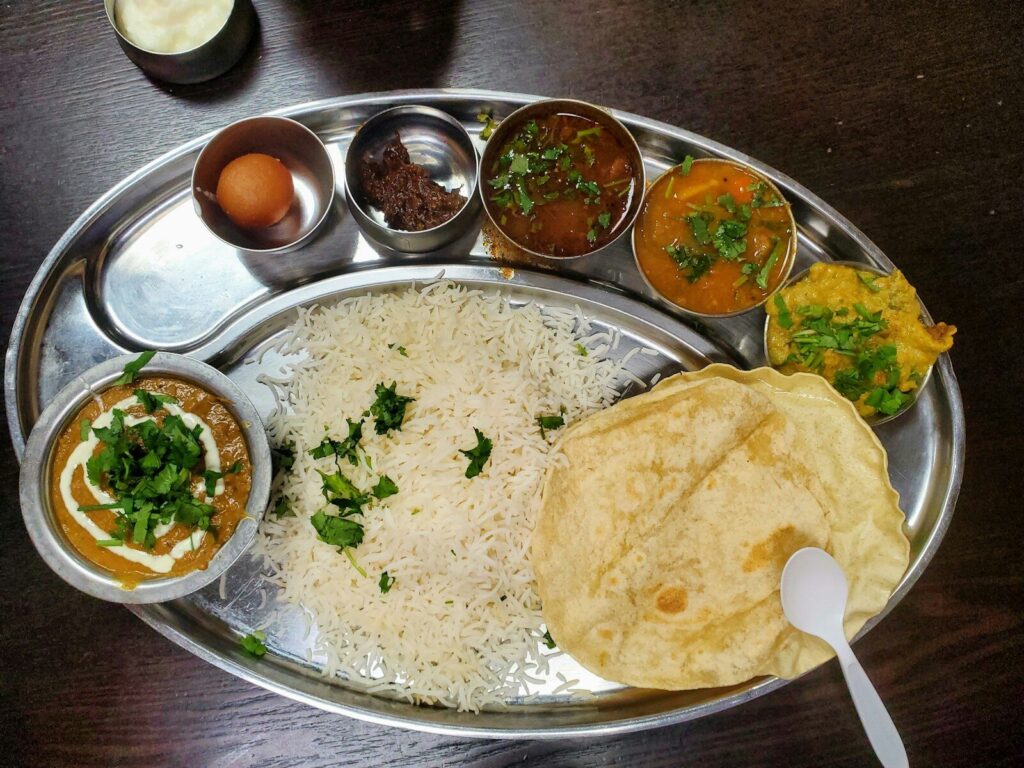
Food is the fastest way to understand the two Indias. Rajasthan eats like a desert kingdom: the Rajasthani thali — dal baati churma (lentils, hard wheat rolls, sweet crumbled wheat), gatte ki sabzi (gram-flour dumplings in spicy gravy) — built for a land where water is precious and meals are fuel. Jaipur’s bazaars run on kachori, mirchi vada, and milky masala chai (₹20–50 a cup).
Kerala eats like a tropical coast: fish curry with coconut, appam (lacy rice pancakes) with stew, puttu, and some of India’s best beef fry (Kerala is the exception to the beef taboo). Kochi’s Fort Kochi cafés and the toddy shops (palm-wine taverns serving fiery local food) are a whole culinary subculture. And Kerala is the home of Ayurveda — the 5,000-year-old wellness system — which means massage shacks and retreat centres everywhere from Kovalam to the backwaters. A legitimate one-hour Ayurvedic massage runs roughly ₹1,500–3,000 ($22–45 CAD).
Daily rhythms differ too. Rajasthan’s cities wake early, shut down for the afternoon heat, and come alive at night — rooftop restaurants, bazaars lit up, folk music in the forts. Kerala moves slower: fishing nets hauled at dawn in Kochi, backwater villages that run on the boat’s schedule, beach towns that peak at sunset. Nightlife is thin in Kerala (it’s a “dry-ish” state with strict alcohol rules) and richer in Jaipur and Udaipur’s hotel bars.
Main Cities: Where to Base Yourself
Rajasthan:
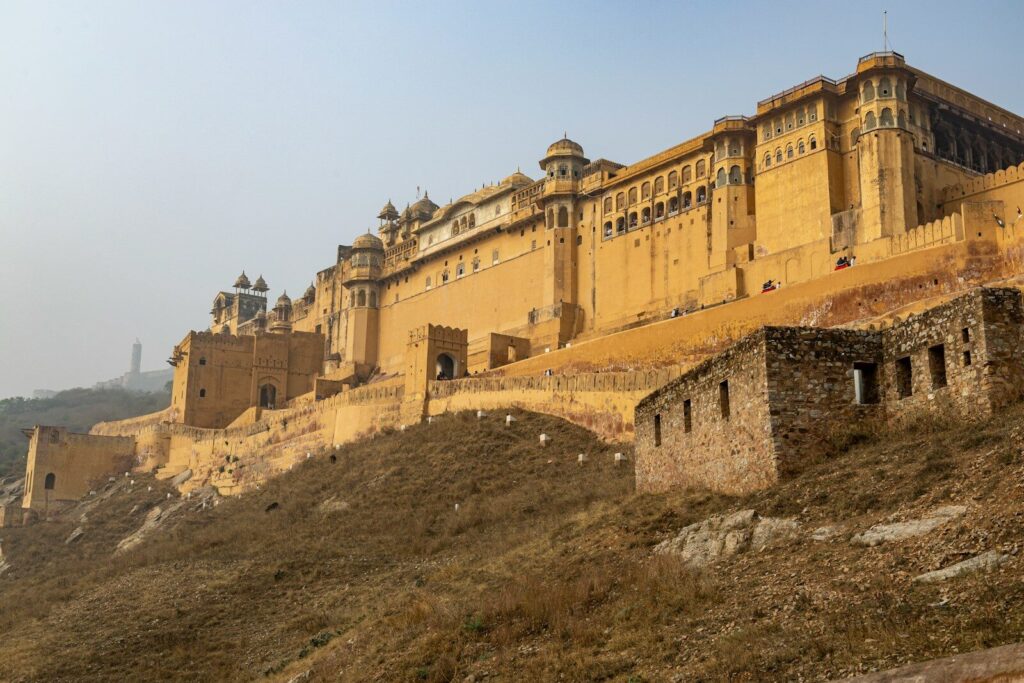
- Jaipur (the Pink City): the classic entry point — Amber Fort on its hilltop, the honeycomb Hawa Mahal (Palace of Winds, 1799), the City Palace, and the Jantar Mantar stone observatory (UNESCO). Two full days minimum.
- Udaipur (City of Lakes): the romantic stop — Lake Pichola, the sprawling City Palace, boat rides at sunset. The prettiest city in Rajasthan.
- Jodhpur (the Blue City): Mehrangarh Fort looming over a blue-washed old town; zip-line over the ramparts for the adrenaline version.
- Jaisalmer (the Golden City): a living sandstone fort — one of the world’s last inhabited forts — plus Thar Desert camel safaris and dune nights under absurd stars.
- Pushkar: the sacred lake town; time your visit for the Pushkar Camel Fair (usually November) — livestock trading, folk music, desert carnival.
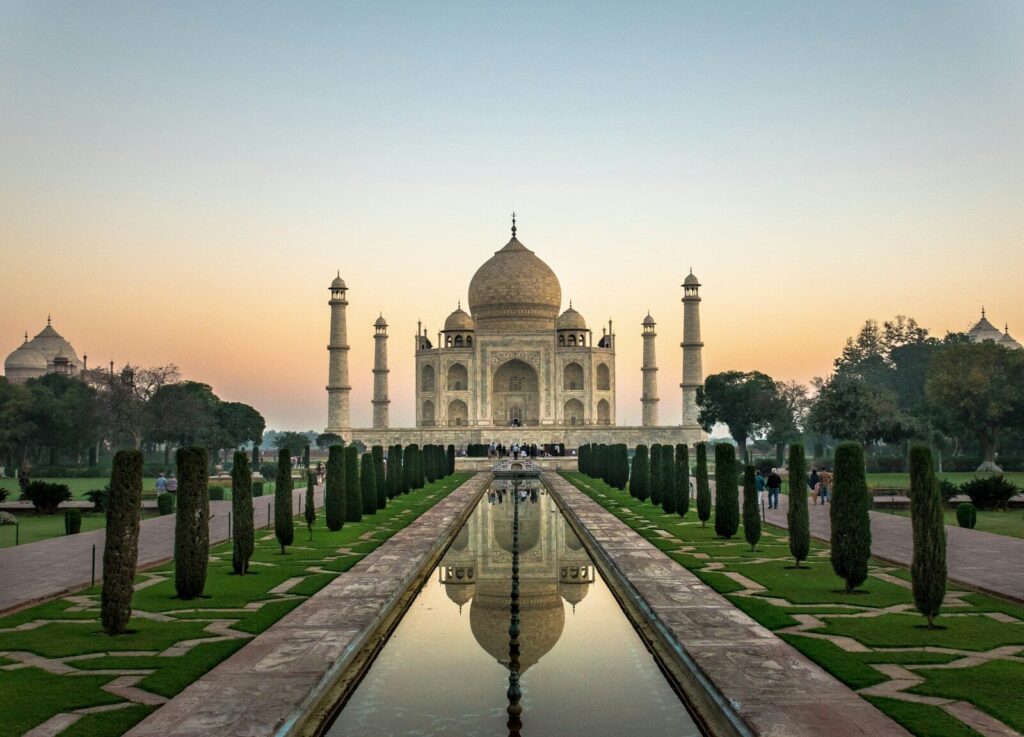
- Agra: technically Uttar Pradesh, but every Rajasthan loop includes it via the Golden Triangle (Delhi–Agra–Jaipur) — the Taj Mahal at sunrise is non-negotiable.
Kerala:
- Kochi (Cochin): Fort Kochi’s Chinese fishing nets, colonial lanes, spice warehouses, and Kathakali dance performances. The cultural capital.
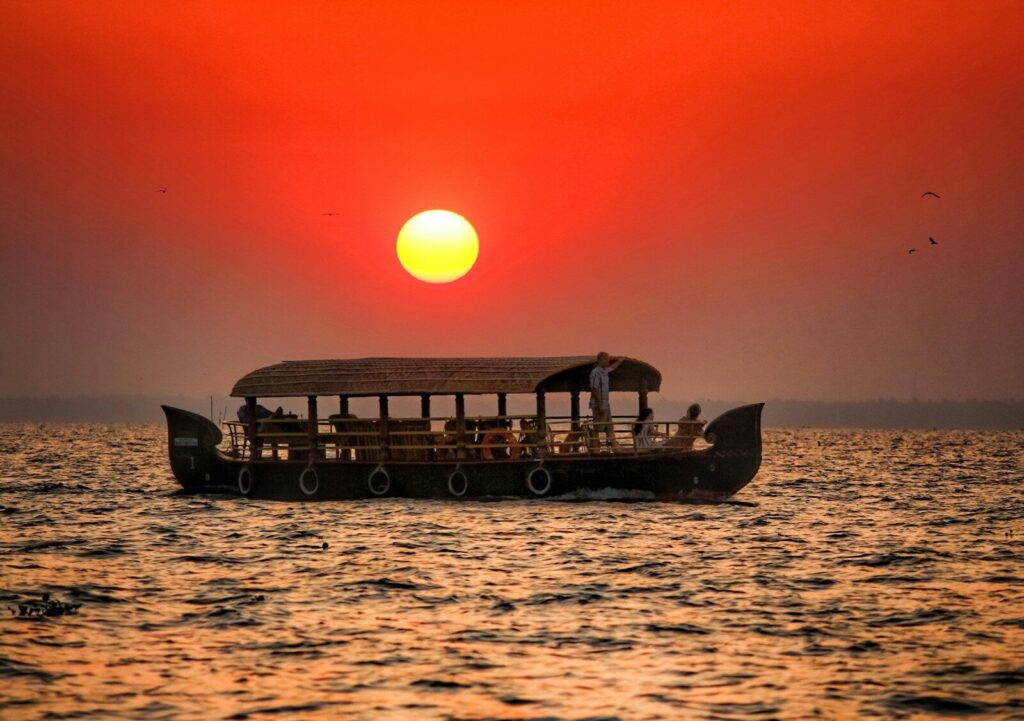
- Alleppey (Alappuzha): the backwater hub — board your kettuvallam houseboat here for the overnight drift through palm-fringed canals.
- Munnar: tea country in the Western Ghats — rolling plantations, cool air at altitude, some of the world’s best tea.
- Thekkady (Periyar): the wildlife stop — boat safaris on Periyar Lake, bamboo rafting, spice plantations.
- Thiruvananthapuram (Trivandrum): the capital, gateway to Kovalam and Varkala — cliff-backed beaches with the Ayurvedic shack scene.
- Thrissur: home of Thrissur Pooram (usually April/May) — the spectacular temple-elephant festival (verify dates yearly; they shift).
Top Places to Visit (Beyond the Cities)
- Taj Mahal, Agra — the marble icon; go at sunrise, gates open 30 minutes before. (Foreign-entry ticketed; verify current price before you go.)
- Amber Fort, Jaipur — walk or jeep up the hill; skip the elephant rides.
- Mehrangarh Fort, Jodhpur — one of India’s great fortresses, with the best museum in Rajasthan.
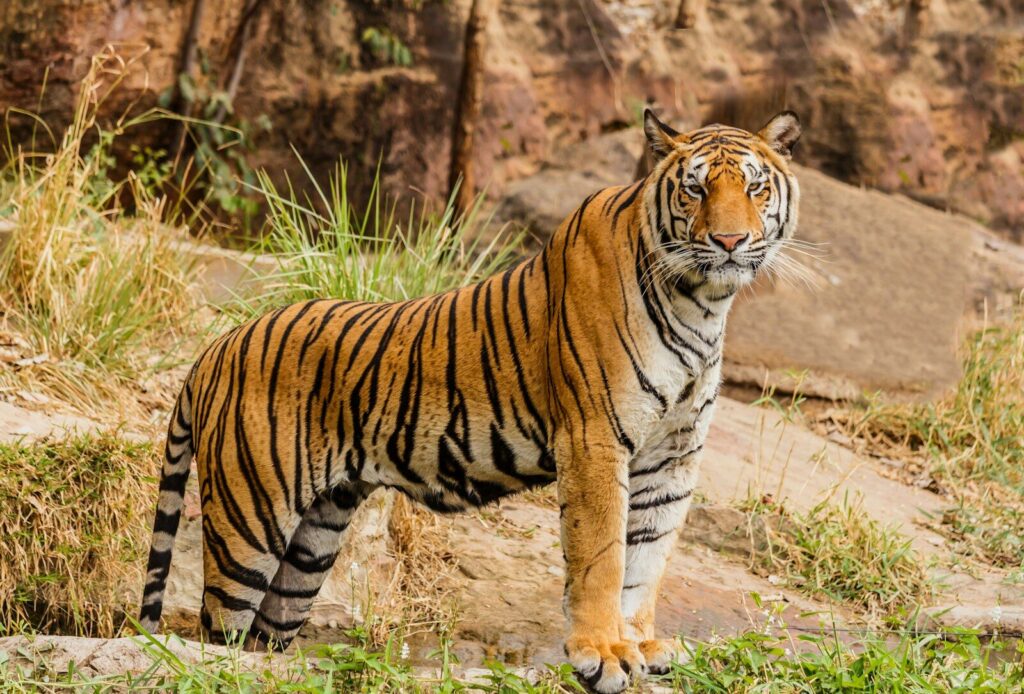
- Ranthambore National Park — wild Bengal tigers roaming a forest of ruined palaces; book safari slots well ahead, the popular zones sell out in peak season.
- Jaisalmer Fort — the living golden fort; stay inside the walls for one night.
- Kerala backwaters (Alleppey–Kumarakom) — the overnight houseboat, non-negotiable.
- Munnar tea estates — walk the plantations at dawn when the mist lifts.
- Fort Kochi — the fishing nets at sunset, then a Kathakali performance.
- Varkala Cliff — red cliffs, natural springs, and the backpacker-beach scene.
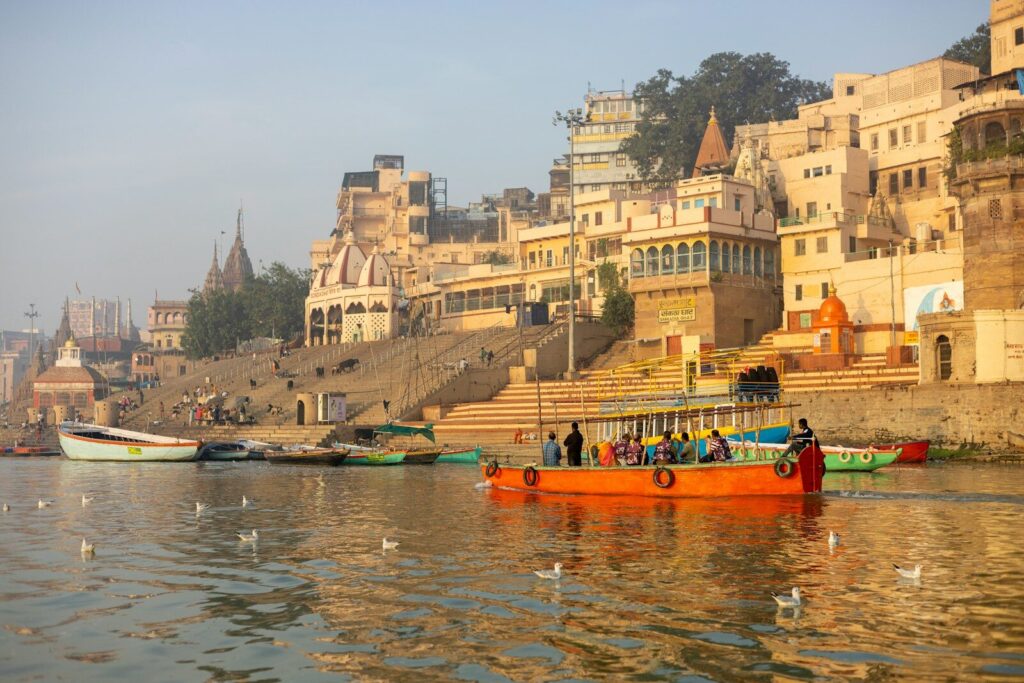
- Varanasi ghats (add-on if routing via the north) — the ancient stone steps on the Ganges at dawn; India’s spiritual heart.
- Hampi (if you have extra days) — the boulder-strewn Vijayanagara ruins in Karnataka.
🎟️ Book experiences in India
Tours we’d actually book — free cancellation on most. We may earn a commission if you book through these links, at no extra cost to you. Our affiliate disclosure.
- Old & New Delhi private guided day trip — Jama Masjid, Humayun’s Tomb, and India Gate in one day.
- Old & New Delhi private sightseeing tour — rickshaw ride through Chandni Chowk included.
- Browse all New Delhi tours & activities
🎟️ More ways to book (Viator)
Two more reader-favorite ways to see India. We may earn a commission if you book through these links, at no extra cost to you. Our affiliate disclosure.
- Private Taj Mahal & Agra Fort day trip from Delhi — skip-the-line entry, private guide, hotel pickup.
- Taj Mahal & Agra day trip from Delhi by train — fast train, buffet lunch, and a private Agra guide.
When to Visit & Getting Around
The decision window: November to February is peak for both — Rajasthan’s desert is cool and dry, Kerala’s backwaters are warm and perfect. December–January brings desert nights near 5°C (Jaisalmer) and Delhi/Agra fog that can delay trains and flights — build in buffer days. April–June: Rajasthan hits 40–45°C (avoid unless you love suffering); Kerala is hot and humid but cheaper. Monsoon (June–September): Kerala is torrential (Ayurveda season, lush and cheap); Rajasthan looks dramatic. Shoulder months (September–October, February–March) balance weather and prices.
Festivals to catch: Diwali (lights, usually Oct/Nov), Holi (colours, usually Feb/Mar), Pushkar Camel Fair (Nov), Thrissur Pooram (Apr/May), Onam (Kerala’s harvest festival, Aug/Sep).
Trains are the great way to travel India: book AC 2-tier/3-tier berths via IRCTC well ahead for popular routes (Delhi–Agra–Jaipur, overnight Delhi–Jaisalmer, Kochi–Alleppey). The Tatkal last-minute quota exists but is painful. Domestic flights are cheap and fast for long hops — Delhi to Kochi is the stitch that lets you do both states in one trip. Private drivers are the standard mid-range move for Rajasthan loops (~₹2,500–4,000/day for car + driver). In cities: metros (Delhi, Jaipur, Kochi) are modern and cheap; auto-rickshaws and Uber/Ola for short hops (negotiate or meter first).
✈️ Find cheap flights to India — compare fares across airlines and booking sites in one search. Affiliate link: we may earn a commission at no extra cost to you.
🚗 Rent a car in India — compare rental prices across suppliers in one search. Affiliate link: we may earn a commission at no extra cost to you.
Budget: What It Actually Costs
Prices below are per person per day, in-country, excluding international flights. Exchange rate (Oct 2026): roughly ₹67 = $1 CAD — treat as approximate; banks and ATMs take a margin.
Budget/backpacker: $30–60 CAD/day. Hostel dorms and guesthouses (₹800–2,000/night), thali meals (₹150–350), trains and metros, free temples and walking tours. Street reality: chai ₹20–50, auto-rickshaw short ride ₹50–150 (negotiate first).
Mid-range: $70–150 CAD/day. Good 3-star and boutique hotels (₹2,500–6,000/night), restaurants plus street food (₹1,000–2,000/day on food), AC train berths, private driver days (₹2,500–4,000). A 10-day mid-range trip through one region runs roughly $900–1,400 CAD per person excluding flights.
Luxury: $250+ CAD/day. Heritage palace hotels from ₹10,000/night with no real upper limit — the Taj Lake Palace in Udaipur and its cousins run far higher.
Money-saving truths: internal flights booked 6–8 weeks out are often cheaper than AC first-class trains on long routes; the houseboat is the one Kerala splurge worth paying for (private overnight boats beat the crowded day-cruisers); in Rajasthan, the multi-attraction composite tickets in Jaipur and Udaipur beat buying single entries.
The Verdict: Rajasthan or Kerala First?
Choose Rajasthan if palaces, desert romance, tiger safaris, festivals, and architecture photography are your thing. This is the first-timer’s classic India — the one that looks like the postcards.
Choose Kerala if you want slow travel, drifting houseboats, cool tea country, cliff beaches, and Ayurvedic reset. This is “soft landing” India — gentler, greener, easier.
Do both if you have 12–14+ days: fly Delhi to Kochi (internal flights are cheap) and stitch the Golden Triangle plus Rajasthan loop into Kerala’s coast. That’s the trip that finally shows you the continent inside the country.
Practical Tips
- Visa (Canadians): you need one, in advance. India has no visa-on-arrival for Canadians — apply online for the e-Tourist Visa at indianvisaonline.gov.in/evisa (beware copycat fee sites). Options: 30-day (US$25 Jul–Mar, US$10 Apr–Jun), 1-year (US$40), 5-year (US$200). Processing is typically 24–72 hours; apply at least a week ahead. Passport must be valid 6+ months with 2 blank pages, and carry a printed copy of the e-Visa approval.
- Cash + cards: ATMs are everywhere; carry cash for markets, rickshaws, and small towns. Decline “conversion” offers at ATMs. Credit cards work at hotels and malls.
- Connectivity: grab a tourist SIM or eSIM on arrival (~₹300–500 with generous data). Your phone is your map, translator, and ticket machine.
- Scams to know: overpriced “guides” at the Taj and forts (use official ASI counters), gem and carpet shop commissions, the “your hotel is closed/full” taxi con, fake tourist offices. Politely decline and verify independently.
- Health: travel insurance plus a basic med kit — “Delhi belly” strikes most first-timers. Bottled water only; eat where it’s busy.
- Power: types C, D, and M plugs, 230V — bring a universal adapter.
- Safety: violent crime against tourists is low; the real hazards are road traffic and petty scams. Women travellers should prefer registered taxis and hotels at night and dress modestly.
🛍️ Shop this guide: India packing essentials
Gear we’d actually pack for this trip. As an Amazon Associate we earn from qualifying purchases — at no extra cost to you. Our affiliate disclosure.
- Water purifier bottle — the single highest-ROI item for India travel; skip the plastic mountain.
- Universal travel adapter — India mixes Type C, D, and M sockets; one adapter ends the guessing.
- Mosquito repellent — dusk in Delhi and the Kerala backwaters both demand it.
- Travel first-aid kit — for the day Delhi belly finds you anyway.
🧳 Plan your trip: India
Flights, stays, tours, and cruises — booked in one place. We may earn a commission if you book through these links, at no extra cost to you. Our affiliate disclosure.
- ✈️ Find cheap flights to India — compare fares across airlines and booking sites in one search.
- 🏨 Browse our Expedia Travel Shop — hand-picked stays and travel deals from our curated storefront.
- 🎟️ Browse New Delhi tours & activities — free cancellation on most.
- 🛳️ Compare Asia cruises on CruiseDirect — sailings calling at Mumbai, Kochi, and Goa.
Closing
Rajasthan will hand you a thousand years of kings in a single week; Kerala will slow your pulse to the speed of a houseboat. Whichever you choose first, the other will be waiting — India always rewards the return trip. Pick your India, book the e-Visa, and go see the continent inside the country.
Watch: India in 60 Seconds
Keep exploring
- Japan is the other great study in contrasts — ancient temples against neon futurism — compare it with India’s old-versus-new in our Japan travel guide.
- If Rajasthan’s desert romance hooked you, Morocco’s Marrakech and Sahara trips scratch the same itch — and Egypt’s 5,000 years of wonders are the other ancient civilization on the list (both coming soon in the series).
- Kerala’s backwaters have a cousin in Vietnam’s Mekong Delta — river life, floating markets, and slow boats: our Vietnam travel guide.
- For the beach-and-wellness half of Kerala, Bali trades backwaters for volcanoes and temples — see our Bali travel guide.
- Flying into India usually routes through a Gulf or Southeast Asian hub — break the journey with our Singapore travel guide or the Thailand travel guide for the region’s best budget stopover.
FAQ
How many days do I need for India?
Ten to fourteen days for one region done properly (Rajasthan loop or Kerala circuit). Fourteen-plus days if you want to stitch Rajasthan and Kerala together via a cheap Delhi–Kochi flight. Less than 10 days and you’ll spend the trip in transit.
Do Canadians need a visa for India?
Yes — and you must get it before you fly. There’s no visa on arrival for Canadians. Apply for the e-Tourist Visa online (30-day from US$10–25, 1-year US$40, 5-year US$200), allow 24–72 hours processing, and carry a printed copy of the approval.
Is India safe for tourists?
Yes, with normal big-destination awareness. Violent crime against tourists is low; the genuine hazards are chaotic road traffic, petty scams (fake guides, taxi cons), and stomach bugs. Dress modestly, use registered transport at night, and keep valuables close in crowds.
What’s the best time to visit Rajasthan and Kerala?
November to February is the sweet spot for both: Rajasthan’s desert is cool and dry, Kerala’s backwaters are warm and perfect. Avoid April–June in Rajasthan (40–45°C) and expect heavy monsoon rain in Kerala June–September.
How much does a 10-day trip to India cost?
Roughly $900–1,400 CAD per person mid-range, excluding international flights (about ₹4,500–9,000/day on the ground). Backpackers manage $30–60 CAD/day; palace-hotel luxury starts at $250+ CAD/day with no ceiling.
What’s the exchange rate?
About ₹67 to $1 CAD as of October 2026 (mid-market; check live rates before you go). ATMs are widespread and give fair rates — just decline the ATM’s “conversion” offer.
Cover alt text: Taj Mahal at sunrise reflected in the long pool, soft gold light on the white marble.

[…] the Maldives usually routes through the Gulf — break the journey with our India travel guide (Rajasthan vs Kerala, which first?) or the Singapore travel guide for the perfect […]
[…] the ancient Ramayana trail across the strait in our India travel guide — Sri Lanka’s epics and Tamil culture are two halves of one […]
[…] half of the Gulf fantasy at lower prices, our Maldives travel guide covers the day-trip math. India is a cheap two-to-four-hour hop from Dubai, and Sri Lanka is the perfect nearby budget beach […]