
 admin
🎬 [Malta in 60 Seconds — video link]
Introduction
Malta is the Mediterranean in miniature — and that is not a figure of speech. The whole country covers just 316 square kilometres, smaller than many cities, yet it packs seven thousand years of history into three inhabited islands: Malta, Gozo, and tiny Comino. Stone temples older than the pyramids, a fortress capital built by crusading knights, a silent medieval city where cars all but vanish, and a lagoon so blue it looks edited — all within an hour’s drive, or a twenty-five-minute ferry ride, of each other.
This guide is built around the classic first trip: four days covering Valletta, Mdina, Gozo, and Comino’s Blue Lagoon, with the fishing village of Marsaxlokk and the Three Cities in between. Below you will find the geography that explains the islands, the cities worth your days, the sights that justify the flight, the seasons that change everything, and the practical costs — including the honest truth that Malta in August is crowded and hot, and how to enjoy it anyway.
Geography & Climate
Malta sits in the middle of the Mediterranean, about 80 kilometres south of Sicily and roughly 300 kilometres north of Libya — a stepping stone between Europe and North Africa, which is exactly how its history reads. The main island, Malta, holds the capital, the airport, and most of the population. Gozo, the greener, sleepier second island, lies to the north-west. Comino, between them, is barely inhabited: a couple of residents, one hotel, and the famous Blue Lagoon.
The landscape is low limestone, not mountainous: flat-topped hills, terraced fields divided by rubble walls, deep inlets called creeks, and cliffs that drop sheer into startlingly clear water. There are almost no rivers and very few sandy beaches — most of the coast is rock platforms and small coves, which is why the water is so clear. The climate is classic Mediterranean: hot, dry summers (July and August average 30–32°C, with sea temperatures in the mid-20s) and mild, wetter winters (January averages around 12–13°C). Rain falls mostly from November to February, and the north-westerly wind can make ferry crossings choppy in winter — check before you travel to Gozo.

People & Demographics
Malta has about 588,000 residents (National Statistics Office, end-2025), and the number has grown fast in recent years, driven by immigration — roughly three in ten residents are foreign nationals. The population is dense: one of the densest countries on Earth, and you feel it in the traffic around Valletta and St Julian’s at rush hour. Around nine in ten residents identify as Roman Catholic, which shapes everything from the village feast calendar to Sunday rhythms.
The two official languages are Maltese and English — Maltese is a Semitic language written in the Latin alphabet, full of Arabic roots with Italian, French, and English layered on top. English is genuinely, widely spoken, a legacy of 160 years of British rule, which makes Malta one of the easiest Mediterranean countries for English-speaking travellers. A few Maltese words go a long way: bonġu (good morning), grazzi (thank you), jekk jogħġbok (please), and saħħa (cheers / to your health). Locals appreciate the effort, and in Gozo’s villages a greeting in Maltese is often the difference between a polite transaction and a real conversation.
Culture, Etiquette & Daily Habits
Maltese daily life runs on village time. The festa — the village saint’s feast, with brass bands, fireworks, street decorations, and processions — is the social event of the summer, and there is one somewhere almost every weekend from June to September. If you are invited to a festa, go: it is the most Maltese experience on offer. Lunch is the main meal, dinner rarely starts before 8 pm in summer, and coffee culture is Italian in style — an espresso standing at the bar, or a long sit in a village square.
A few practical norms: dress modestly when entering churches (shoulders covered, no beachwear) — St John’s Co-Cathedral in Valletta enforces this. Do not swim in the Blue Lagoon’s roped-off areas or ignore the Comino access rules; the caps exist because the lagoon was being loved to death. Greet shopkeepers when you enter a small shop. Malta drives on the left, a British legacy that surprises visitors at roundabouts — look the right way before crossing.
Do: try a pastizz from a village bakery (ricotta or pea, about a euro, eaten warm from a paper bag), eat rabbit stew if you eat meat, and swim at the rock platforms the locals use — they are cleaner and quieter than the crowded sand. Don’t: eat every meal on Valletta’s Republic Street or the Sliema waterfront at peak prices — one street back, the same grilled fish costs far less. Don’t assume you can just turn up at the Blue Lagoon in August and walk ashore: since 2025, going ashore needs a free timed pass, booked in advance.

Lifestyle
Food is the fastest way into Maltese life. The diet is Mediterranean with a North African accent: stuffat tal-fenek (rabbit stew, the national dish), ftira (a ring-shaped bread, often filled with tuna, capers, and olives), lampuki pie in autumn when the mahi-mahi run, ġbejniet (small goat cheeses, fresh or peppered), and pastizzi at all hours. Wash it down with Kinnie, the bitter-orange soft drink Maltese people are fiercely loyal to, or a Cisk lager. Breakfast is small — coffee and a pastry — and the big social meal is lunch, often long and loud.
Work culture mixes Mediterranean rhythm with British administration: mornings are productive, summer afternoons slow down, and August empties offices as Maltese families head to Gozo or the beach themselves. Sport is a national conversation — football first, then water polo, which Malta takes very seriously — and a village feast in a square is a full-contact social event. Tech and tradition sit side by side: you will pay by card almost everywhere, but the fisherman painting his luzzu boat’s eyes in Marsaxlokk and the woman making lace in Gozo are not performances; they are Tuesday.

Main Cities
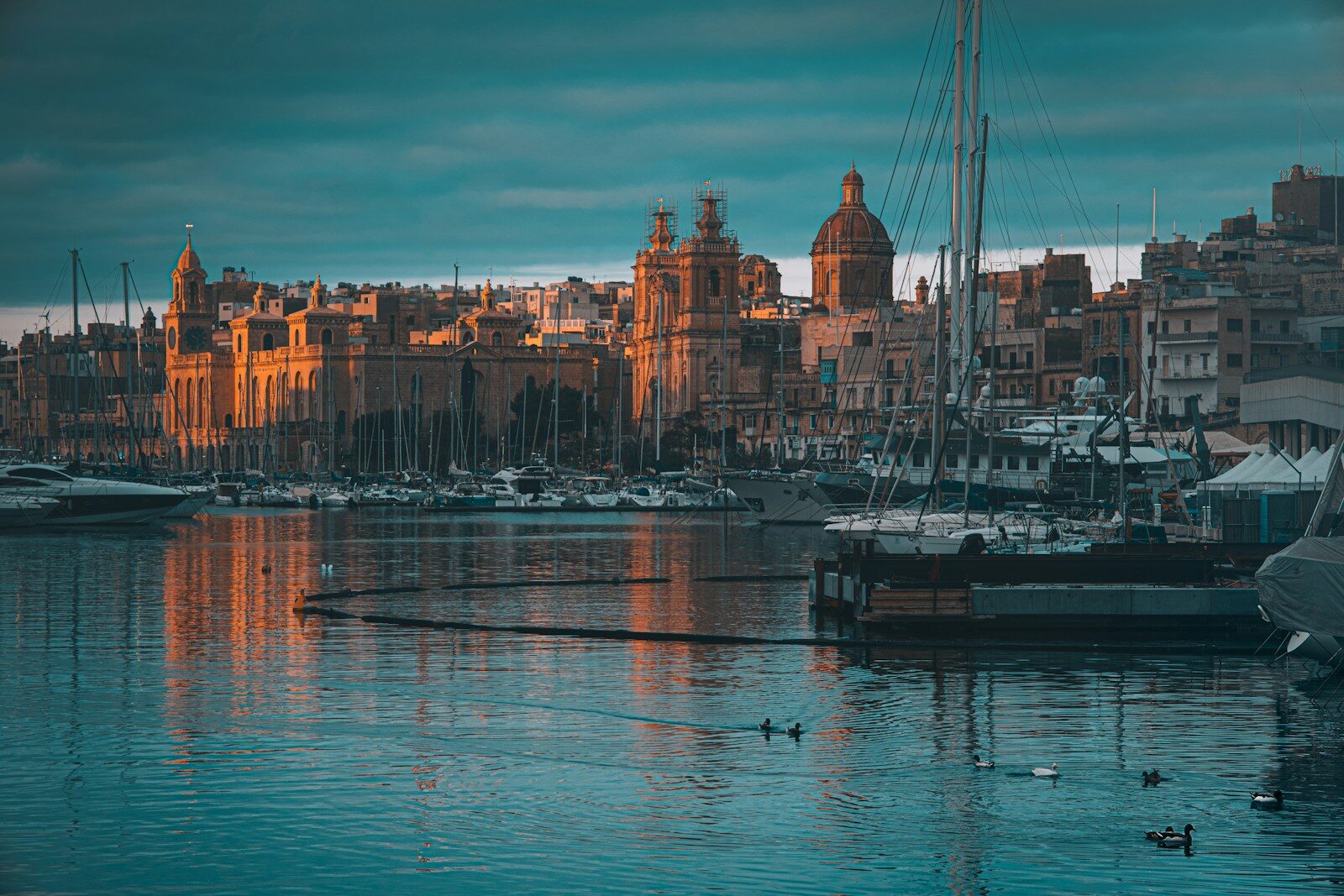
Valletta — the capital, and the trip’s showpiece. A fortress city built by the Knights of St John after the Great Siege of 1565, its grid of honey-coloured streets fits between two harbours, its bastions hold gardens with the best views in the Mediterranean, and its Co-Cathedral hides one of the great Baroque interiors in Europe. Walk the Upper Barrakka Gardens at noon for the Saluting Battery cannons, see Caravaggio’s Beheading of St John in the Co-Cathedral, and take the harbour ferry to the Three Cities at sunset. It is also the smallest capital in the EU — you can walk across it in twenty minutes.
Mdina — the Silent City, Malta’s old capital. A walled hilltop town of golden limestone lanes where cars are restricted to residents, Mdina is quiet in a way modern Europe rarely is. Walk the walls at dusk, eat cake in a bastion café, and visit neighbouring Rabat for the catacombs and St Paul’s Grotto. Come in the evening, after the day-trippers leave, when the lanes are almost empty.
Victoria (Rabat), Gozo — Gozo’s capital, crowned by the Citadel, a fortified hilltop with 360-degree views over the island. The Citadel’s narrow lanes, small museums, and cathedral are the island’s historic heart; the market square below is where Gozo does its daily business. Use Victoria as the base for a Gozo day.
Sliema & St Julian’s — the modern, busy strip across Marsamxett Harbour from Valletta: hotels, promenades, restaurants, and nightlife. Sliema is the practical base for many visitors, with the ferry to Valletta in ten minutes; St Julian’s is the going-out town, with Paceville’s bars and clubs. Stay here for convenience, not for old-town charm.
Marsaxlokk — the fishing village of the postcards. Colourful luzzu boats with painted eyes bob in the harbour, the Sunday fish market is a full morning out, and the waterfront restaurants serve the catch of the day. It is touristy at lunch, but the harbour at dawn, when the fishermen are working, is the real thing.
Birgu (Vittoriosa), the Three Cities — across the Grand Harbour from Valletta, the Three Cities (Birgu, Senglea, and Cospicua) are older than the capital itself and quieter. Birgu’s waterfront, Fort St Angelo, and the Inquisitor’s Palace reward a half day, and the ferry from Valletta is the prettiest ten minutes in Malta.

Top Places to Visit
- St John’s Co-Cathedral, Valletta — a plain exterior hiding Malta’s greatest Baroque interior, plus Caravaggio’s largest painting. Book ahead in peak season.
- Upper Barrakka Gardens & the Saluting Battery — the classic Grand Harbour view, with cannon fire at noon and 4 pm.
- Ġgantija Temples, Gozo — standing stones from around 3600 BC, older than the pyramids; the on-site museum explains what the builders left behind.
- Blue Lagoon, Comino — the famous turquoise bay; go early or late, and book the free shore-access pass in advance in summer.
- Ħaġar Qim & Mnajdra Temples — clifftop megalithic temples near the Blue Grotto, older than Stonehenge, with a good visitor centre.
- The Citadel, Victoria, Gozo — fortified hilltop town with island-wide views, museums, and the cathedral.
- Popeye Village, Anchor Bay — the 1980 film set, still standing: a whole wooden village on a bay, now a family attraction with boat rides.
- Blue Grotto, Wied iż-Żurrieq — sea caves reached by small boat (weather permitting, mornings are best), where the light turns the water electric blue.
- Dingli Cliffs — Malta’s highest point, a long cliff walk above the sea, best at sunset.
- Ramla Bay, Gozo — the red-sand beach below Calypso’s Cave, Malta’s most distinctive stretch of sand.
- Fort St Angelo, Birgu — the Knights’ great harbour fortress, restored and open, with Grand Harbour views from the battlements.
- Mosta Dome (Rotunda of Santa Marija Assunta) — one of the world’s largest unsupported domes, famous for the unexploded WWII bomb that pierced it during Mass in 1942 and did not detonate.
🎟️ Book experiences in Malta
Tours we’d actually book — free cancellation on most. We may earn a commission if you book through these links, at no extra cost to you. Our affiliate disclosure.
- Valletta guided walking tour with optional Co-Cathedral visit — the capital’s streets, gardens, and harbour views with a licensed guide, plus St John’s Co-Cathedral if you choose it.
- Cruise around Malta’s harbours & creeks from Sliema — 90 minutes around the Grand Harbour, Marsamxett, and the Three Cities’ creeks, the best first-day orientation.
- Blue Lagoon, beaches & bays catamaran trip — swim stops at the Blue Lagoon and Crystal Lagoon, with an optional barbecue and a Popeye’s Village view from the water.
- Browse all Valletta tours & activities
🎟️ More ways to book (Viator)
Two more reader-favorite ways to see Malta and Gozo. We may earn a commission if you book through these links, at no extra cost to you. Our affiliate disclosure.
- Full-Day Gozo Island Tour from Valletta — Ġgantija temples, Dwejra’s Inland Sea, Victoria, and a Gozitan lunch, with hotel pickup and round-trip transport.
- Discover Malta and Gozo 5-Day Excursions Package — Valletta, Mdina, the temples, and Gozo across five guided days, with transfers and key admissions included.
When to Visit & Getting Around
May, June, September, and early October are the sweet spot: warm enough to swim (the sea is warmest in August and September), cool enough to walk Valletta’s steep streets without melting, and free of the July–August crush. July and August bring peak prices, peak crowds, and a Blue Lagoon that fills by mid-morning — if you must go then, book the shore pass and any tours days ahead, and do the temples and Mdina early. November to March is quiet, cheap, and lovely for Valletta, Mdina, and the temples, but some boat lines stop, the sea is too cold for most swimmers, and a winter storm can cancel the Gozo ferry for hours.
Getting there: fly into Malta International Airport (MLA) at Luqa, a short bus or taxi ride from Valletta and Sliema. Getting around: the Tallinja bus network covers the whole island and Gozo — a single costs €2.00 in winter and €2.50 in summer, valid two hours with transfers, and visitor Explore cards bundle unlimited travel. The Gozo Channel ferry from Ċirkewwa to Mġarr takes about 25 minutes, runs around the clock, and costs €4.65 return for foot passengers (you pay on the way back from Gozo); the fast ferry from Valletta takes about 45 minutes from around €7.50 one way. The Valletta–Sliema ferry is the prettiest shortcut in the country: about ten minutes for roughly €1.50–2. Renting a car gives you Gozo, the temples, and the cliff walks at your own pace — but remember Malta drives on the left, parking in Valletta is scarce, and buses are cheap enough that many visitors skip the car entirely.
✈️ Find cheap flights to Malta — compare fares across airlines and booking sites in one search. We may earn a commission if you book through this link, at no extra cost to you.
🚗 Rent a car in Malta — compare rental prices for a Malta and Gozo road trip. We may earn a commission if you book through this link, at no extra cost to you.
Budget
Malta is mid-tier Europe: cheaper than Italy or France on paper, but Valletta and St Julian’s in August are not cheap anywhere. A typical day runs €45–75 budget, €90–160 mid-range, and €220+ comfort in peak season, and noticeably less off-season. Accommodation is the swing factor: a hostel bed or guesthouse room runs €35–60 in shoulder season, a decent mid-range hotel €100–180 in summer in Sliema or St Julian’s (less in Gozo or off-season), and a seafront apartment €150–250.
Food can be your friend: a pastizz breakfast is about €1–2, a bakery lunch or a ftira €6–10, a village restaurant dinner with local wine €25–40 per person. The big-ticket sights are modest — the Co-Cathedral, the temples, and Fort St Angelo are each in the €10–15 range — and the ferries and buses are cheap. Money-saving truths: stay in Gozo or one street back from the waterfront; eat where the menus are in Maltese first; travel in May or September; and drink the tap water only if you like the taste — it is desalinated and safe, but most visitors buy bottled for a euro or so.
Practical Tips
- Book the Blue Lagoon shore pass early. Since 2025, stepping ashore at Comino in peak season needs a free timed pass — boats can anchor offshore without one, but the beach itself is capped. Book before you go.
- Do Valletta on foot, and wear good shoes. The capital is steep, stepped, and entirely walkable — but the limestone streets are slippery when wet and punishing in sandals.
- Cash is useful, cards are king. Cards work almost everywhere, but village bakeries, market stalls, and small boat operators may be cash-only. ATMs are plentiful — always decline the machine’s currency conversion and pay in euros.
- Power and connectivity: Type G plugs (UK three-pin) at 230V. EU roaming applies for EU visitors; everyone else should grab a local SIM or eSIM at the airport — coverage is good, even on Gozo.
- Emergency numbers: 112 for all emergencies. Pharmacies are marked with a green cross and keep long hours in towns.
- Sun and sea safety: the Maltese sun is fierce and the water deceptively clear — reef-safe sunscreen, a hat, and water on every walk. Swim shoes help on the rock platforms, and watch for jellyfish warnings in summer.
- One local quirk: Malta’s buses were once famously chaotic yellow antiques, and older Maltese still tell stories about them. Today’s Tallinja fleet is modern and air-conditioned — but the habit of flagging the bus down, rather than waiting at a formal stop, survives in Gozo’s villages.
🛍️ Shop this guide: Malta packing essentials
Gear we’d actually pack for this trip. As an Amazon Associate we earn from qualifying purchases — at no extra cost to you. Our affiliate disclosure.
- Reef-safe sunscreen SPF 50 — the Maltese sun is fierce, and the lagoon deserves the reef-safe kind.
- Snorkel set (mask + snorkel) — the Blue Lagoon and Gozo’s coves are made for it; bring your own rather than renting a tired one.
- Waterproof dry bag (10L) — for boat days to Comino, ferry crossings, and beach swims with your phone and wallet aboard.
- Comfortable walking shoes — Valletta’s steps and Mdina’s lanes are no place for flimsy sandals.
- Type G travel adapter — Malta uses UK-style three-pin sockets at 230V.
🧳 Plan your trip: Malta
Flights, stays, tours, and cruises — booked in one place. We may earn a commission if you book through these links, at no extra cost to you. Our affiliate disclosure.
- ✈️ Find cheap flights to Malta — compare fares across airlines and booking sites in one search.
- 🏨 Browse our Expedia Travel Shop — hand-picked stays and travel deals from our curated storefront.
- 🎟️ Browse Valletta tours & activities — free cancellation on most.
- 🛳️ Compare Mediterranean cruises on CruiseDirect — Malta and Gozo sailings from Valletta’s Grand Harbour.
Closing
Malta rewards the traveller who slows down. Walk Valletta’s bastions at dawn, before the cruise groups arrive. Take the slow ferry to Gozo instead of rushing, and watch the limestone cliffs slide past. Eat the fish the fishermen brought in this morning, in a Marsaxlokk restaurant with no view and no English menu, and you will eat better than anyone on the waterfront. Come for the bluest water in Europe if you must — everyone does — but stay for the rest: temples older than the pyramids, a silent city of gold, and a sunset over the Grand Harbour that makes even the crowds worth it.
🎬 [Malta in 60 Seconds — video link]
Keep exploring
- Dubrovnik to Split: The 7-Day Dalmatian Coast Itinerary
- Santorini Alternatives: Naxos & Paros, the Islands Greeks Visit
- Rome → Amalfi → Cinque Terre: The Classic 10-Day Italy Route
- Lisbon in 3 Days + Day Trips to Sintra & Porto
- Barcelona vs Madrid: Which City Should You Visit First?
FAQ
How many days do you need in Malta? — Four days covers the classic trip: Valletta, Mdina, Gozo, and Comino’s Blue Lagoon. A full week adds the Three Cities, the south coast, and slow beach days without rushing.
Is Malta expensive? — Mid-range Europe. Budget €45–75 a day, mid-range €90–160 in peak summer, and noticeably less off-season. Sliema and St Julian’s are the priciest bases; Gozo and village guesthouses are cheaper.
When is the best time to visit Malta? — May, June, September, and early October: warm seas, walkable cities, and thinner crowds. July and August are hottest, priciest, and most crowded — book the Blue Lagoon shore pass early.
Do I need a visa for Malta? — Malta is in Schengen. US, Canadian, UK, and Australian visitors are visa-free for up to 90 days in any 180-day period; check your own nationality’s rules before booking.
Do I need a car in Malta? — No — buses cover the main island and Gozo cheaply, and ferries link the islands. A car helps for Gozo’s back roads and the cliff walks, but parking in Valletta is scarce and the island drives on the left.
Can you visit the Blue Lagoon without a tour? — Yes — take the bus to Ċirkewwa and a small boat to Comino, or the ferry to Gozo and a boat from Mġarr. In peak season, book the free shore-access pass in advance; boats anchor offshore either way.
[…] Malta travel guide — Valletta, Gozo, and the Blue Lagoon in 4 days. […]