
 admin
Introduction
The Netherlands is the country that should not exist — and that is exactly why you should go. A quarter of it lies below sea level, its airport sits about four metres under the surface of the sea, and its capital is built on marshland, on wooden piles, in a river delta. The Dutch response, over eight centuries, was not to retreat but to engineer: dikes, windmills, pumps, polders, and the vast Delta Works that now guard the coast. The result is a small, dense, supremely civilised country where you can cycle from a 17th-century canal house to a tulip field to a windmill before lunch, and where the most dangerous thing on the road is not a car but a bicycle you did not see coming.
Most visitors stop at Amsterdam, and Amsterdam deserves its fame — but the Netherlands is bigger than one city, and this guide goes beyond it. Below you will find the geography that explains the country, the cities worth your days, the sights that justify the trip, the seasons that change everything, and the practical costs — including the honest truth that Amsterdam is no longer a cheap city, and how to enjoy it anyway.
Geography & Climate
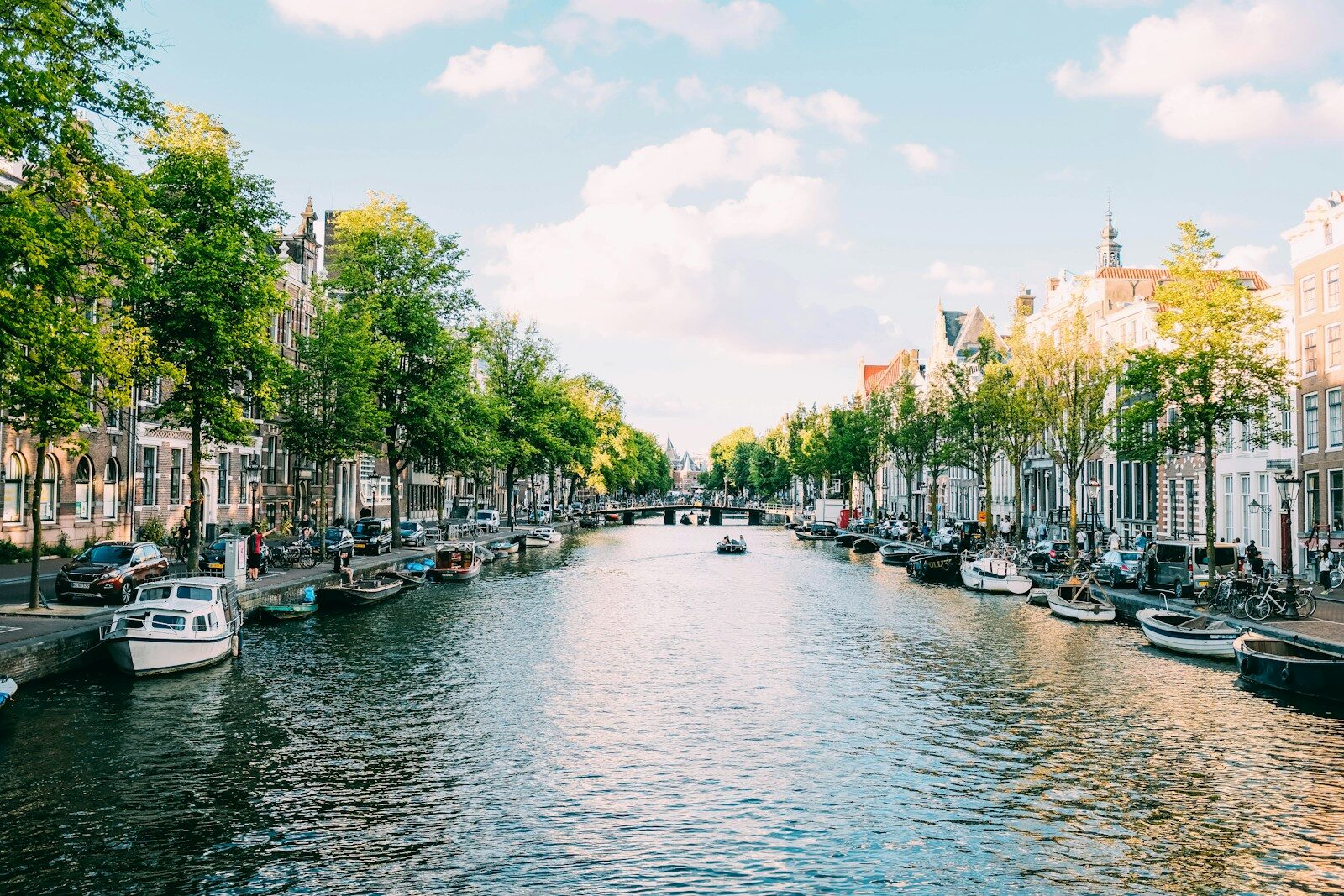
The Netherlands sits in north-western Europe, bordered by Germany to the east, Belgium to the south, and the North Sea to the north and west. It covers 41,850 square kilometres in total, of which only about 33,500 is land — the rest is water, and water is the whole story here. Three great European rivers, the Rhine, the Meuse and the Scheldt, reach the sea through the Dutch delta, and the country they built is flat to a degree that surprises even visitors who expect flat: the highest point in the European Netherlands, the Vaalserberg in Limburg, is just 322.7 metres, and you can stand on it and look into three countries at once.
About 26 percent of the country lies below sea level, and roughly 59 percent is vulnerable to flooding in a severe storm. The lowest point, the Zuidplaspolder near Nieuwerkerk aan den IJssel, sits about 6.76 metres below the Amsterdam Ordnance Datum (NAP), the sea-level reference the whole country measures itself against. Amsterdam itself is roughly one to two metres below sea level, and Schiphol Airport about four metres below it — kept dry by a ring canal, pumping stations, and constant vigilance. The Dutch did not win this land once; they win it every day, with water boards (waterschappen) that are among the oldest democratic institutions in the world, some dating to the 13th century.
The climate is temperate maritime: mild summers, cool winters, and rain possible in any month. Summer temperatures typically run 20–25°C, winter 2–7°C, and the wind off the North Sea makes it feel colder than the thermometer says. The famous Dutch light — low, golden, beloved by painters — comes from the same flat, wet landscape. Pack for changeability in every season: a sunny morning, a sharp shower, and a bright evening are a normal Dutch day, and locals simply carry on cycling through all three.
People & Demographics
The Netherlands had about 18.2 million people at the end of September 2026, according to Statistics Netherlands (CBS), making it one of the most densely populated countries in the world at 539 people per square kilometre of land. More than 40 percent of the population lives in the Randstad, the crescent of cities in the west — Amsterdam, Rotterdam, The Hague and Utrecht — which functions almost as one sprawling, polycentric metropolis connected by trains that run every few minutes.
The population is diverse: roughly a quarter of residents have a migration background, with large communities of Indonesian, Turkish, Moroccan, Surinamese and Antillean heritage, and Amsterdam alone counts more than 180 nationalities. Dutch is the official language, but English is spoken to a level that embarrasses most English-speaking visitors — in Amsterdam, you can live for years without learning Dutch, though a few words earn real goodwill. Frisian is an official language in the northern province of Friesland, and the Caribbean islands of Aruba, Curaçao and Sint Maarten are constituent countries of the Kingdom of the Netherlands, which is why the “Netherlands” and “Holland” are not quite the same thing (Holland is just two provinces, North and South Holland).
The Dutch are famously direct — “Dutch directness” is a real cultural trait, not a stereotype invented for tourists — and famously tolerant, with a live-and-let-live tradition that runs from the 17th-century refuge for religious dissenters to the present day. They are also, on average, the tallest people on earth, which is a useful fact when you find yourself cycling a bike frame built for someone considerably longer-legged than you.
Mini phrasebox: Hello — Hallo (HAH-loh). Thank you — Dank je wel (DAHNK yeh vel). Goodbye — Tot ziens (tot ZEENS). Please — Alstublieft (AHL-stoo-BLEEFT). Cheers — Proost (PROHST). One coffee, please — Een koffie, alstublieft. The bill, please — De rekening, alstublieft. Do you speak English? — Spreekt u Engels?
Culture, Etiquette & Daily Habits
Dutch social life is egalitarian, informal, and organised around the bicycle. People dress practically, arrive on time (the Dutch are punctual, and the trains mostly are too), and treat appointments as real commitments — dropping by unannounced is rare, and dinner invitations usually come with a specific time, not a vague evening. The famous Dutch gezelligheid — cosiness, warmth, conviviality, roughly — is the national value: candlelit brown cafés (bruine cafés), living rooms with the curtains open, and long evenings with friends are the point of life, not a break from it.
Do:
- Cycle, or at least respect the cycle lanes. The red-paved lanes are for bikes, not pedestrians, and a cyclist will ring, swerve, and mutter — in that order.
- Lock your bike twice (frame + wheel) if you rent one. Bike theft in Amsterdam is an industry.
- Greet shopkeepers with a “hallo” and say “dank je wel” on leaving — small courtesies matter.
- Split the bill. “Going Dutch” is not a joke here; it is how friends eat together, and nobody is embarrassed by it.
- Take your shoes off in someone’s home if they do — and bring something small for the host.
- Queue politely and wait your turn. The Dutch queue like they mean it.
Don’t:
- Walk in the bike lane, stand in it taking photos, or step off the pavement without looking both ways for bikes first. This is the single most common tourist injury in Amsterdam.
- Photograph people in the Red Light District’s windows. It is forbidden, enforced, and disrespectful.
- Assume “coffee shop” means coffee. In the Netherlands, a coffeeshop sells cannabis; a café sells coffee. Mixing them up is the classic first-day mistake.
- Be loud on trains in the silence carriages (stiltecoupé) — they are marked, and they are taken seriously.
- Tip extravagantly — service is included, so rounding up or leaving a euro or two is plenty, and nobody expects 20 percent.
Food culture is unpretentious and excellent. The Dutch eat early (dinner around 6–7pm), love their fries with mayonnaise, eat raw herring standing up at market stalls (hold it by the tail, tilt your head back), and warm to stroopwafels — thin waffles glued together with caramel syrup, best eaten balanced on a hot coffee so the syrup melts. The colonial legacy gives the Netherlands one of Europe’s great fusion cuisines: the Indonesian rijsttafel, a table groaning with small dishes, is a Dutch invention, and Amsterdam’s food scene runs from Surinamese roti shops to Michelin stars.
Lifestyle
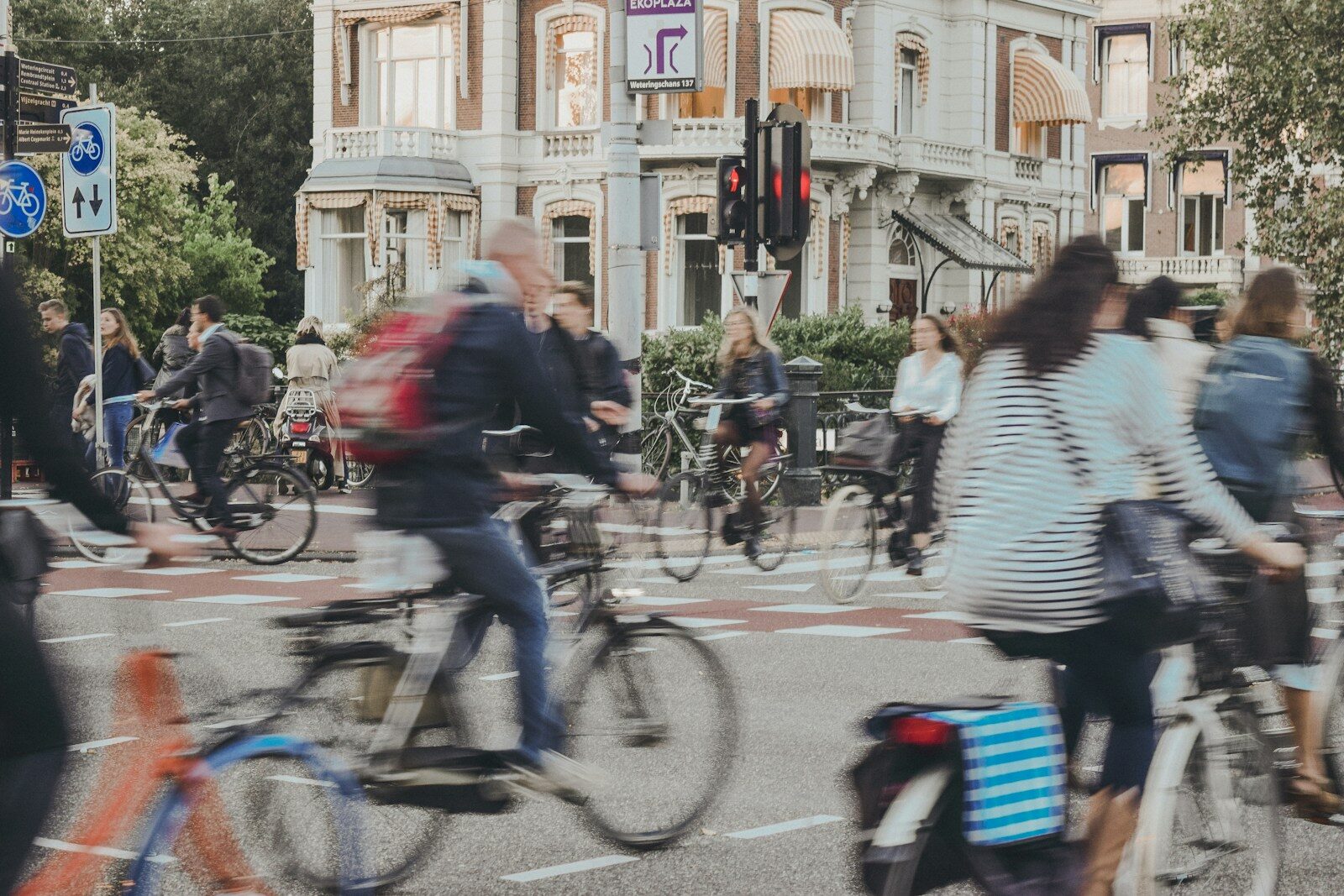
Daily life in the Netherlands runs on two wheels and a timetable. The working week is typically 36–40 hours, part-time work is normal and respected (especially for parents), and evenings and weekends are fiercely protected. The Dutch cycle everywhere — to work, to school, to the supermarket, in rain, in suits, with children in bakfietsen (cargo bikes) — on 35,000 kilometres of dedicated cycle paths. There are more bicycles than people: over 22 million bikes for about 18 million residents, and Amsterdam’s canals are dredged of thousands of abandoned bikes every year.
Work culture is flat and consensus-driven. The poldermodel — the habit of talking until everyone agrees, named for the cooperative water management that built the country — means meetings are long, hierarchies are shallow, and the boss’s opinion counts for about as much as anyone else’s. Lunch is often a sandwich at the desk (the Dutch lunch is famously modest), but the after-work borrel — drinks and bitterballen (deep-fried meatballs) with colleagues — is sacred.
Sport is woven into weekends: football is the national obsession (Ajax, PSV, Feyenoord), speed skating is a winter religion (the Dutch dominate the sport internationally), and when the canals freeze — rarer now than it used to be — the whole country dreams of the Elfstedentocht, the 200-kilometre eleven-city skating race in Friesland, last held in 1997. Tech and tradition sit side by side: the Netherlands is one of the world’s great trading and tech nations (ASML, Philips, the Port of Rotterdam), and the same country still holds cheese markets in Alkmaar and Gouda where farmers in traditional dress weigh wheels of cheese on ancient scales.
Main Cities
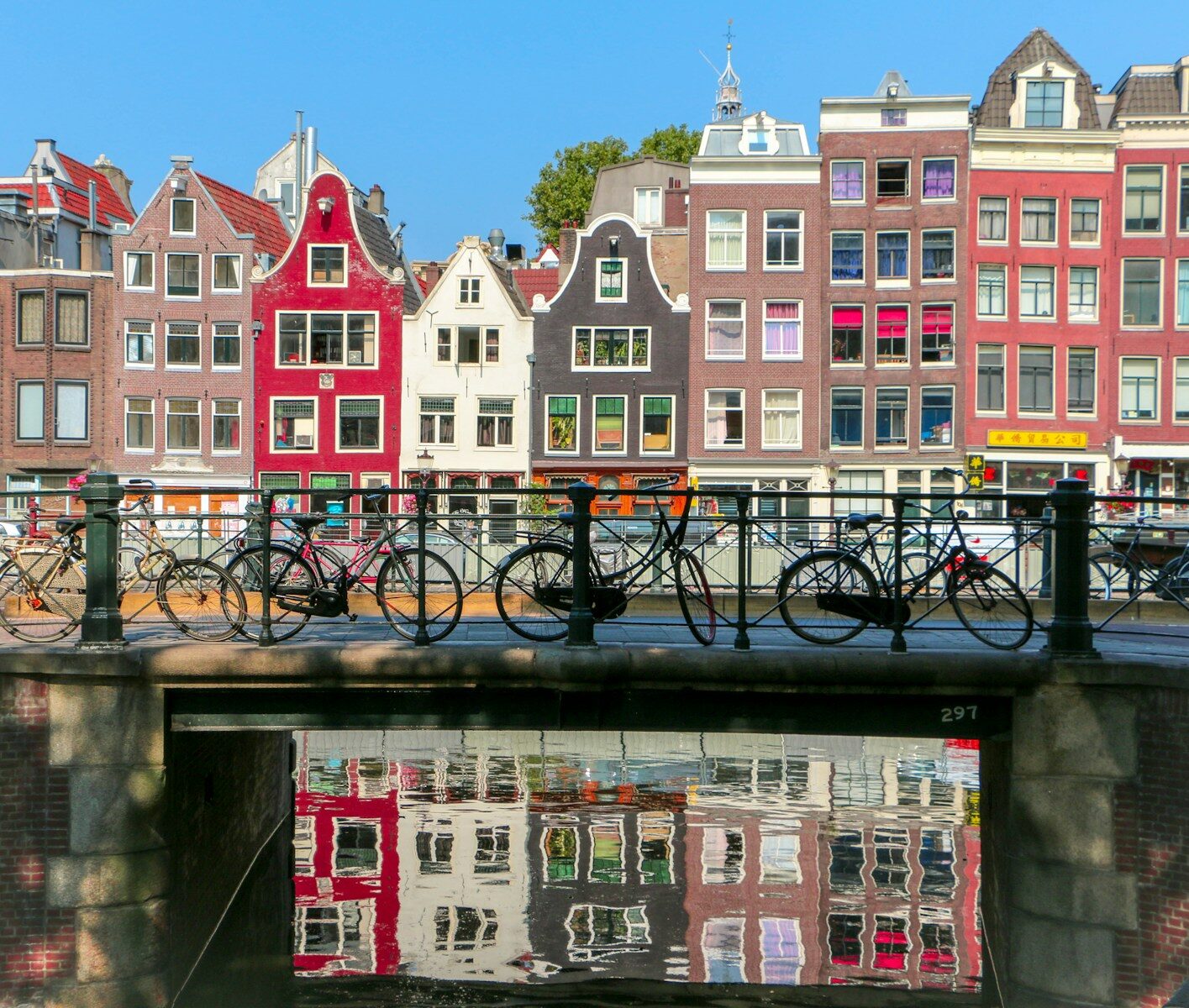
Amsterdam — The capital, and the city most visitors mean when they say “the Netherlands.” The 17th-century canal ring (Grachtengordel) is UNESCO-listed: concentric canals lined with tall, narrow, gabled houses, many leaning at angles because they were built on wooden piles in marshland. The Jordaan is the prettiest neighbourhood — quiet canals, brown cafés, the Noordermarkt on Saturdays. Museumplein holds the Rijksmuseum, the Van Gogh Museum, and the Stedelijk; the Anne Frank House on Prinsengracht needs booking six weeks ahead. Beyond the centre, Amsterdam Noord, across the IJ ferry (free), is the city’s creative frontier — former shipyards turned studios, breweries, and street art.
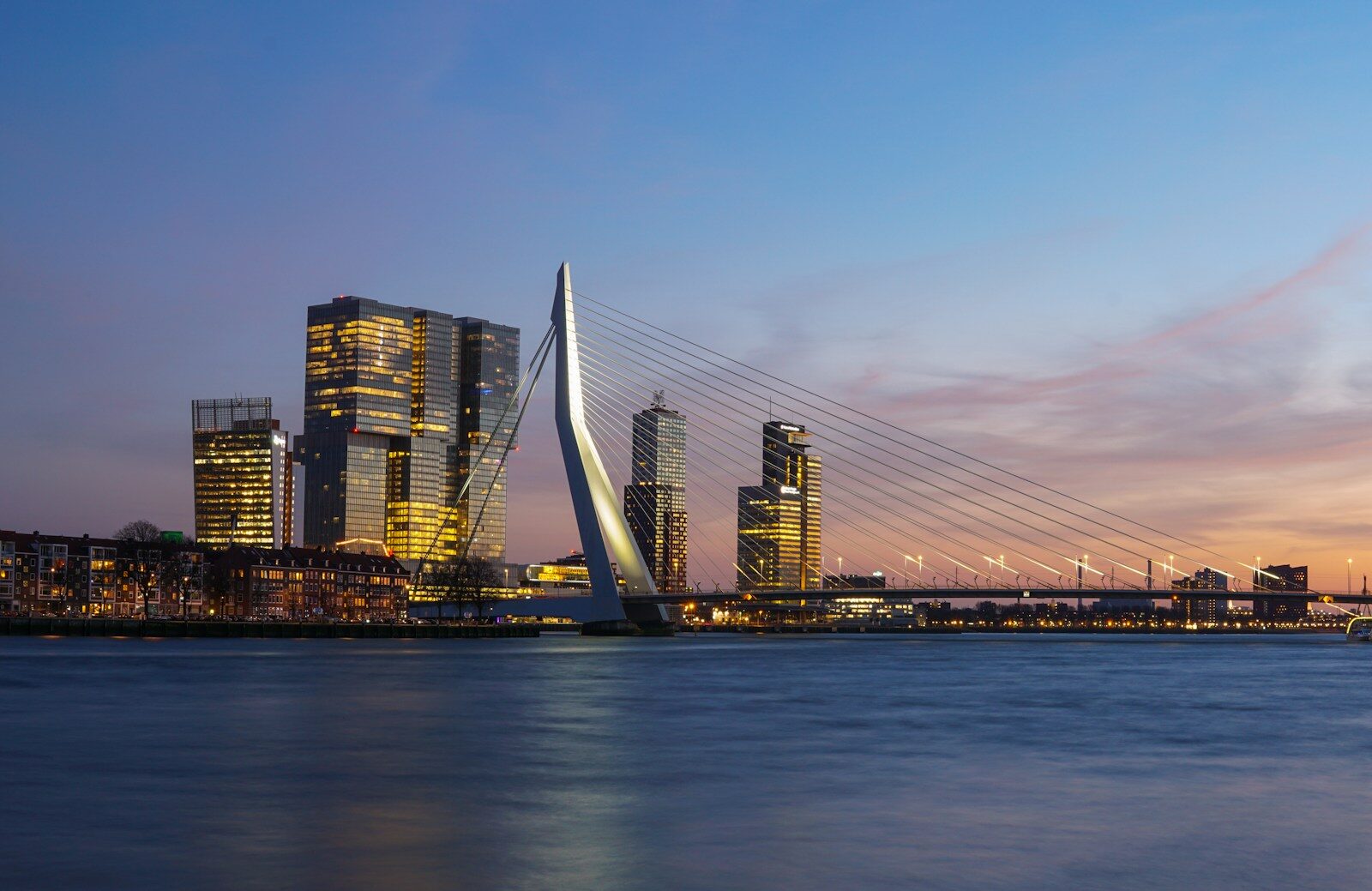
Rotterdam — Europe’s largest port, rebuilt from scratch after the May 1940 bombing flattened its centre, and proud of it. Rotterdam is the Netherlands’ modern city: the Erasmus Bridge (1996, nicknamed “the Swan”), the Cube Houses, the Markthal’s arched food hall (2014), and a skyline that actually looks like a skyline. It is less pretty than Amsterdam and more interesting for it — come for the architecture, the harbour tours, and a city that never stops reinventing itself.
The Hague (Den Haag) — The seat of government, the royal family’s working city, and home to the International Court of Justice at the Peace Palace. The Hague is stately rather than showy: the Binnenhof parliament complex on its lake, the Mauritshuis (Vermeer’s Girl with a Pearl Earring), and Scheveningen beach ten minutes away by tram, where the North Sea does its grey, bracing thing.
Utrecht — The Netherlands’ prettiest secret, and the locals’ favourite city. Utrecht’s canals are different: they have wharf cellars at water level, now bars and restaurants, so you sit beside the water rather than above it. The Dom Tower (112 metres, climbable, 465 steps) dominates a compact, bike-friendly centre, and the city is half an hour from Amsterdam by train — the easiest day trip in the country.
Groningen, Maastricht, Haarlem, Leiden, Delft — Groningen is the young, northern university city; Maastricht, in the far south, feels almost Mediterranean, with a Burgundian food culture and the three-country point at Vaalserberg nearby; Haarlem, 15 minutes from Amsterdam, is a miniature Amsterdam without the crowds, with the Frans Hals Museum and a lovely Grote Markt; Leiden is the canal city of Rembrandt’s birth and the country’s oldest university; Delft is Vermeer’s city, all canals, and the home of Delft Blue pottery.
Top Places to Visit
- The Amsterdam canal ring — Cruise it at dusk, when the bridges light up, or walk the Herengracht’s “Golden Bend,” where the richest merchants built the grandest houses.
- Rijksmuseum — Rembrandt’s Night Watch, Vermeer’s Milkmaid, and 800 years of Dutch art in a building that is itself a masterpiece. Book a timed slot.
- Van Gogh Museum — The world’s largest Van Gogh collection, including Sunflowers and the Bedroom, in chronological order — you can watch his genius and his unraveling side by side.
- Anne Frank House — The secret annex on Prinsengracht, preserved as it was. Book online only, released Tuesdays at 10:00 for six weeks ahead; there are no door sales.
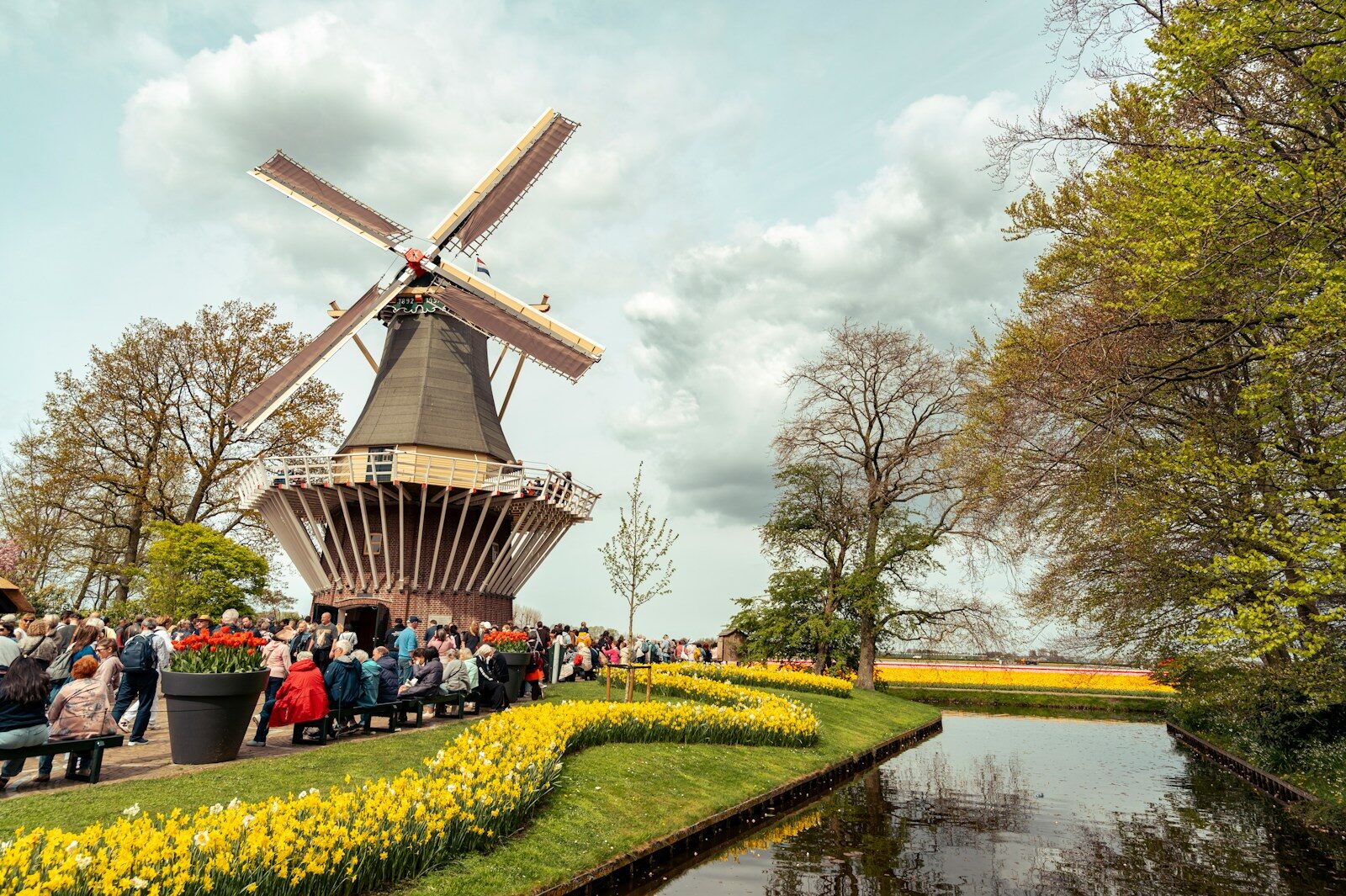
- Keukenhof — The world’s largest flower garden, 32 hectares and about seven million bulbs, open roughly eight weeks each spring (mid-March to mid-May). Mid-April is peak bloom.
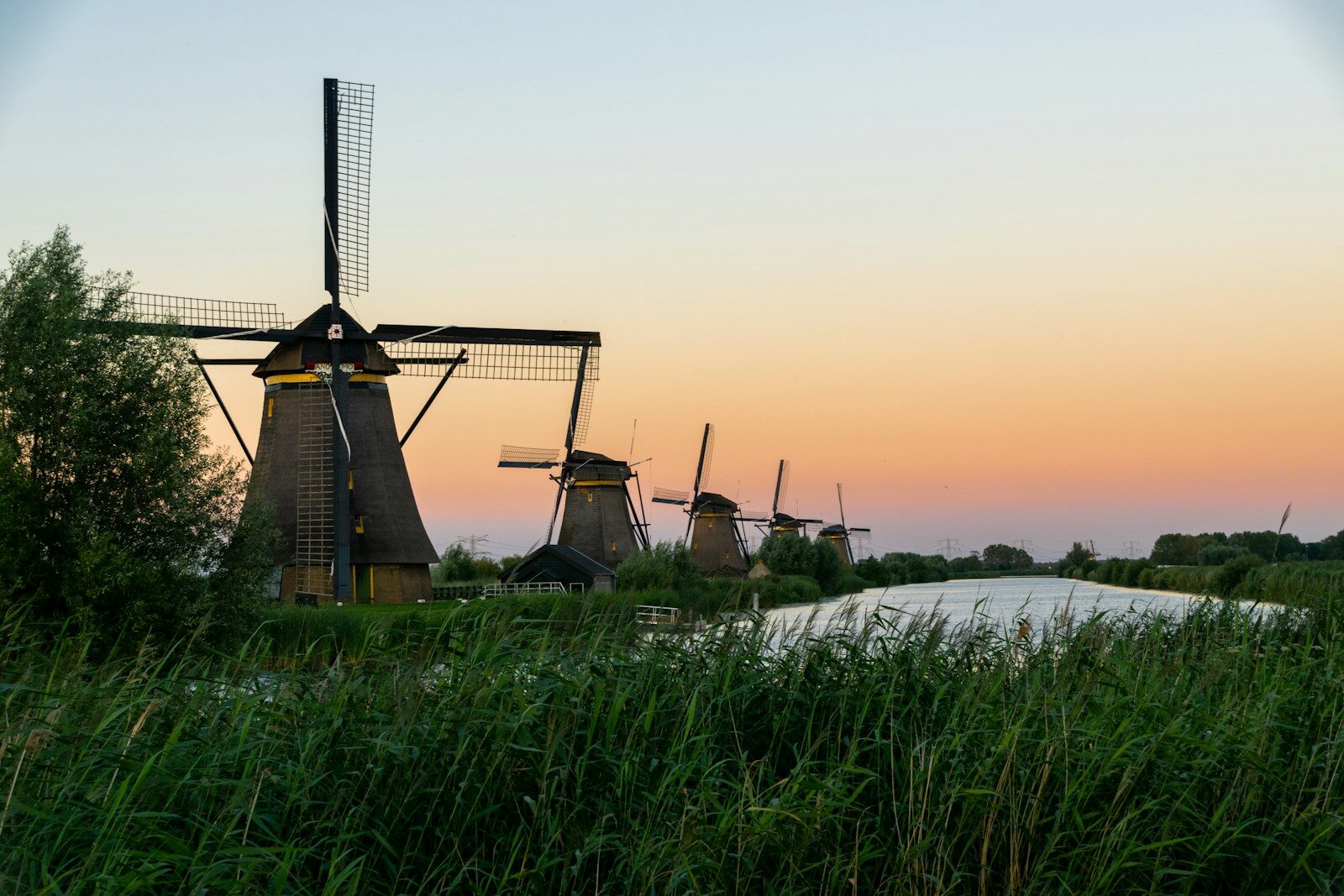
- Kinderdijk — Nineteen windmills from 1738–1740, built to drain the polder, UNESCO-listed, and best seen by bike or boat at golden hour.
- Zaanse Schans — Working windmills, wooden houses, and cheese and clog workshops, 20 minutes from Amsterdam — touristy, but the windmills genuinely work.
- Giethoorn — The car-free village in Overijssel where canals replace roads and you get around by whisper boat (electric, silent). Go early to beat the day-trippers.
- The Delta Works — The storm surge barriers of Zeeland, especially the Oosterscheldekering, are the largest flood defence system in the world — and you can walk and cycle across them.
- Hoge Veluwe National Park & Kröller-Müller Museum — White bikes free to borrow, heathland and forest, and a Van Gogh collection second only to Amsterdam’s, in the middle of nowhere.
- Texel & the Wadden Islands — The largest Wadden island, reachable by a 20-minute ferry, with beaches, seals, and the UNESCO-listed Wadden Sea mudflats.
- Muiderslot & Dutch castles — The medieval Muiderslot castle at the mouth of the Vecht, an easy cycle from Amsterdam, and Doornenburg in the east for the real castle nerds.
🎟️ Book experiences in the Netherlands
Tours we’d actually book — free cancellation on most. We may earn a commission if you book through these links, at no extra cost to you. Our affiliate disclosure.
- Amsterdam: Canal Cruise from Anne Frank, Rijksmuseum or Central Station — the classic 1-hour cruise through the UNESCO-listed canal ring, with an audio guide in 19 languages.
- Amsterdam: 90-minute Small-Group Canal Cruise with Local Guide — an intimate electric open boat (max 24 guests) with stories from a local captain and optional Dutch snacks and drinks.
- Browse all Amsterdam tours & activities
🎟️ More ways to book (Viator)
Two more reader-favorite ways to see Amsterdam. We may earn a commission if you book through these links, at no extra cost to you. Our affiliate disclosure.
- Amsterdam Canal Cruise with Local Guide and Small Group — a 1-hour small-group cruise from Central Station, past the Dancing Houses and the Skinny Bridge, with a local skipper.
- Amsterdam Electric Canal Cruise with Bar and Live Guide — a quiet electric boat with a live host, an onboard bar, and an open boat in summer or a warm saloon boat in cooler weather.
When to Visit & Getting Around
Spring (mid-March to mid-May) is the Netherlands at its most famous: Keukenhof open for about eight weeks, tulip fields in the Bollenstreek in full colour from mid-April, and mild weather. It is also the busiest season in Amsterdam, and King’s Day (27 April) turns the whole country orange — Amsterdam’s canals fill with boats, the streets fill with vrijmarkt (free-market) stalls, and hotel prices peak. Book early for late April.
Summer (June–August) is warm, long-dayed, and festival-filled, but Amsterdam is crowded and accommodation is at its priciest. The beaches of Scheveningen and Texel come into their own, and the summer evenings on a canal terrace are the country’s great pleasure. Autumn (September–November) is the connoisseur’s season: fewer crowds, golden light, and still-mild weather into October. Winter (December–February) is quiet, atmospheric, and cheap — Amsterdam’s canals at Christmas, the Light Festival’s artworks on the water, and cosy brown cafés — but cold, wet, and dark by 5pm. If a hard freeze ever comes, the whole country holds its breath for the Elfstedentocht.
Getting there: Schiphol Airport (AMS) is the main gateway, about 15–20 minutes by train from Amsterdam Centraal, with trains running day and night. Eindhoven (EIN) serves budget airlines, and Rotterdam The Hague Airport (RTM) is a smaller alternative. The Netherlands is in Schengen, so most visitors enter visa-free for up to 90 days — check your nationality’s rules before travel.
Getting around is where the Netherlands shines. Inside Amsterdam, the GVB runs trams, buses, metros and free IJ ferries. In 2026, a GVB 1-day (24-hour) ticket costs €10.00, a 2-day €16, and a 3-day €21.50; a single 1-hour ticket is €3.40. The simplest option for most visitors is OVpay: tap in and out with a contactless bank card or phone, one card per traveller, with GVB daytime travel capped at €10.50 per day. Always tap out, even on trams — forgetting costs you the maximum fare. For day trips beyond Amsterdam (Zaanse Schans, Keukenhof buses, Haarlem), the Amsterdam & Region Travel Ticket (about €23/day) covers regional buses and NS trains in the region; the standard GVB day pass does not.
Between cities, NS trains are superb: Amsterdam–Utrecht in under 30 minutes, Amsterdam–Rotterdam in about 40, Amsterdam–The Hague in about 30. Buy tickets in the NS app or tap in and out with OVpay at the station gates. And then there is the bicycle: renting one (about €12–18/day from a reputable shop, never from a street tout) is the best way to see Amsterdam, the tulip fields, and Kinderdijk. Use the dedicated lanes, lock twice, and never, ever walk in the bike lane.
Festivals worth timing: King’s Day (27 April), Liberation Day (5 May, free festivals nationwide), the Amsterdam Light Festival (December–January), the Alkmaar cheese market (Fridays, April–September), and tulip season itself (mid-April peak). Note that Keukenhof’s exact 2026 dates shifted by a few days between sources (about 19–21 March to 10–12 May) — check keukenhof.nl before booking, and book timed tickets ahead in April.
✈️ Find cheap flights to the Netherlands — Affiliate link: we may earn a commission at no extra cost to you.
🚗 Rent a car in the Netherlands — Affiliate link: we may earn a commission at no extra cost to you.
Budget
Amsterdam is no longer a cheap city, and the budget below is honest about it. Prices are per person per day in euros, based on October 2026 research, and drift with the season.
Budget (€70–110/day): Hostel dorm (€40–60 in Amsterdam, less outside it), supermarket and market food (a herring stand lunch, a stroopwafel, and a supermarket picnic run about €12–18), a GVB day ticket or OVpay capped at €10.50, and free sights — canals, parks, markets, and the free IJ ferry to Amsterdam Noord cost nothing.
Mid-range (€150–250/day): Three-star hotel or guesthouse (€120–180 in Amsterdam, less in Utrecht or Haarlem), restaurant meals (€20–35 per person for a main course), and one paid attraction a day (Rijksmuseum ~€25–27, Van Gogh Museum ~€25, Anne Frank House €16.50).
Comfort (€350+/day): Canal-house hotels, fine dining, private canal cruises, and day trips by private guide.
Money-saving truths: stay in Haarlem or Utrecht and commute in — both are under 30 minutes from Amsterdam Centraal and noticeably cheaper. Cook some meals: Dutch supermarkets (Albert Heijn, Jumbo) are excellent. Fill up on free sights — the canals, the parks, the markets, and the ferry are the best of Amsterdam anyway. Book Anne Frank House the moment your six-week window opens, or you simply will not get in. And pick your museums: the I amsterdam City Card (24h ~€67) pays off only if you visit several museums a day — and note it does not cover the Van Gogh Museum or the Anne Frank House.
Practical Tips
- Connectivity: Buy an eSIM before arrival or a local SIM at Schiphol. Coverage is excellent nationwide. Download offline maps — Amsterdam’s canal streets all look alike at night.
- Cash: Cards are accepted almost everywhere, and many places are card-only. Carry a little cash for markets and small stalls.
- Luggage: Pack a rain jacket and layers in every season, and shoes you can cycle in. Leave the wheeled suitcase at the hotel for canal days — cobbles and bridges are not kind to it.
- Power: The Netherlands uses Type C/F plugs at 230V. UK and North American visitors need an adapter.
- Emergency numbers: 112 (European emergency) for police, fire, and ambulance.
- Bike safety: If you rent a bike, ride on the right, signal with your hand, and stop at red lights — cyclists get fined too. Never cycle after drinking; the police enforce it.
- Museum booking: Rijksmuseum, Van Gogh Museum, and Anne Frank House all need timed tickets booked ahead. Anne Frank House tickets go on sale Tuesdays at 10:00 Amsterdam time, six weeks ahead, and sell out fast.
🛍️ Shop this guide: Netherlands packing essentials
Gear we’d actually pack for this trip. As an Amazon Associate we earn from qualifying purchases — at no extra cost to you. Our affiliate disclosure.
- Heavy-duty bike lock — Amsterdam bike theft is an industry; if you rent, bring your own lock or double-lock with the shop’s.
- Packable rain jacket — Dutch weather changes hourly in every season; a jacket that fits in a daypack is non-negotiable.
- Lightweight 20L daypack — for canal days, museum days, and bike rides, with room for layers and a market picnic.
- Type C/F travel adapter — the Netherlands uses continental two-pin sockets at 230V.
- Portable charger (20,000mAh) — OVpay taps, maps, and a full day of canal photos drain batteries fast.
🧳 Plan your trip: Netherlands
Flights, stays, tours, and cruises — booked in one place. We may earn a commission if you book through these links, at no extra cost to you. Our affiliate disclosure.
- ✈️ Find cheap flights to the Netherlands — compare fares across airlines and booking sites in one search.
- 🏨 Browse our Expedia Travel Shop — hand-picked stays and travel deals from our curated storefront.
- 🎟️ Browse Amsterdam tours & activities — free cancellation on most.
- 🛳️ Compare Rhine and Dutch waterways cruises on CruiseDirect — Amsterdam-departure river sailings.
Closing
The Netherlands will not overwhelm you with mountains or drama — it has none, and that is the point. It will win you over quietly: a morning cycle along a canal in the rain, a herring eaten standing up, a windmill turning against a flat sky, a brown café at dusk with the candles lit and the whole room talking at once. This is a country that made itself, literally, out of the sea, and then made a good life on top of it — tolerant, direct, cycling, and gezellig.
Come for the tulips. Stay for the canals. And leave room in the plan for one unplanned bike ride — the Netherlands rewards the traveller who pedals past the itinerary.
FAQ
How many days do you need in the Netherlands? — Four to five days covers Amsterdam properly plus one or two day trips (Haarlem, Zaanse Schans, or Keukenhof in season). A week lets you add Utrecht, Rotterdam, The Hague, and Kinderdijk at a relaxed pace.
Is Amsterdam expensive? — Yes — budget €70–110/day travelling lean, €150–250 mid-range, €350+ in comfort. Hostels, supermarket meals, free sights, and staying in Haarlem or Utrecht are the levers that bring costs down.
When is the best time to visit the Netherlands? — Mid-April to mid-May for tulips and Keukenhof, June–August for warm weather and festivals, and September–October for fewer crowds and golden light. Winter is quiet and atmospheric but cold and dark early.
Do I need a car in the Netherlands? — No — trains, trams, and bicycles cover the country superbly. A car only helps for remote Friesland or Zeeland villages, and gives you parking costs in return. In Amsterdam, a car is a liability.
Is the Netherlands safe? — The Netherlands is very safe for crime by international standards. The risks are practical: bike theft, pickpockets in crowded Amsterdam areas, and stepping into a bike lane without looking.
How do I get around Amsterdam? — Tram, metro, bus, and ferry on GVB, or by bike. Tap in and out with OVpay (contactless card/phone, capped at €10.50/day on GVB) or buy a GVB day ticket (€10.00 for 24 hours). Always tap out.

[…] Amsterdam Beyond the Red Light: Canals, Cheese & Tulip Season […]
[…] Netherlands travel guide […]