 admin
Introduction
The United States is the hardest country in this series to write about, because it is not really one trip — it is fifty of them. One country holds the skyscrapers of Manhattan and the geysers of Yellowstone, the jazz clubs of New Orleans and the surf of Hawaii, the neon of Las Vegas and the silence of the Utah desert. You cannot “do America” in a week. You can, however, do one great American city properly — and that is where most first trips start.
So this guide is built around the question every first-timer asks: New York or New Orleans? New York is the biggest, fastest, most famous city on Earth — the skyline, the museums, the food from every country on the planet. New Orleans is the opposite: slower, smaller, warmer, and the most un-American city in America — French, Spanish, African, and Caribbean all at once, with live music on every corner and a streetcar that costs a dollar twenty-five. This guide compares them head to head, then covers the rest of the country: the national parks, the road trips, the seasons, the 2026 visa and park-fee changes, and what it all costs.
Geography & Climate
The United States covers 9.83 million square kilometres — the third-largest country on Earth, behind Russia and Canada — stretching from the Arctic coast of Alaska to the tropical beaches of Hawaii, and from the Atlantic to the Pacific across six time zones (four in the contiguous states). It is a continent disguised as a country: the Rocky Mountains run down its spine, the Mississippi River drains the middle, the Great Lakes hold a fifth of the world’s fresh surface water, and the deserts of the Southwest look like another planet.
The country divides into rough regions, and each one travels differently. The Northeast (New York, Boston, Washington, D.C.) is dense, historic, and best on foot and by train. The South (New Orleans, Charleston, Nashville, Miami) is warm, musical, and slow — humidity included. The Midwest (Chicago, the Great Lakes) is friendly, flat, and underrated. The Mountain West (Denver, Yellowstone, the Grand Canyon, Utah’s red-rock parks) is the great outdoors — the reason most visitors rent a car. The West Coast (San Francisco, Los Angeles, Seattle, Hawaii) is coastline, tech, and wine country. Alaska is wilderness on a scale nothing else in the country matches; Hawaii is the only state made entirely of islands.
Climate is everything, everywhere, all at once. New York in January is freezing and windy; Miami in January is 24°C. The desert Southwest hits 45°C in July; the Rockies are still snowed in until June. There is no single best month for the whole country — there is a best month for the trip you want. Spring (April–May) and fall (September–October) are the sweet spots for the cities and the East Coast. Summer is national-park season — and crowd season. Winter is for Florida, Hawaii, the desert, and skiing in Colorado and Utah. Hurricane season runs June–November along the Gulf and Atlantic coasts; wildfire smoke can affect the West from July to September.
People & Demographics
About 343 million people live in the United States — the third most populous country on Earth — and four out of five of them live in cities or suburbs. The population is one of the most diverse on the planet: roughly 58% white (non-Hispanic), 19% Hispanic or Latino, 13% Black, 6% Asian, and the rest Native American, Pacific Islander, or mixed — and those numbers shift every year. One in seven residents was born abroad. New York City alone is home to more than 800 languages, the most linguistically diverse city in the world; walk three blocks in Queens and you can hear a dozen of them.
English is the de facto language, but here is the strange fact that anchors this whole guide: the United States has no official language at the federal level. Spanish is the second language (spoken by around 42 million people at home), and in Miami, Los Angeles, and much of the Southwest, Spanish is as useful as English. The country is also young by rich-world standards — median age around 39 — and famously regional: a Texan, a New Yorker, and a Hawaiian will argue cheerfully about whose state is the real America, and all three have a case.
Mini phrasebox: Hi / Hey (hello) · How’s it going? (how are you?) · Thanks / Thank you · You’re welcome · Excuse me (getting attention, or apologising) · Check, please (the bill, please) · To go (takeaway) · Restroom (toilet) · Awesome (great — used constantly) · Y’all (you all — the South).
Culture, Etiquette & Daily Habits
American culture is loud, friendly, and informal — and the rules change by region. In New York, friendliness is efficient: a nod, a quick “how’s it going,” and everyone moves on. In the South, friendliness is a conversation: strangers will ask where you’re from and mean it. In New Orleans, a stranger might invite you to join their table. The common thread is openness: Americans are generally happy to chat, happy to help, and happy to be asked.
Food is regional, and the regions take it seriously. New York has the bagels, the pizza slices, and every cuisine on Earth within a few subway stops. New Orleans has gumbo, jambalaya, po’boys, and beignets at Café du Monde (open since 1862). Texas has barbecue; the Pacific Northwest has coffee culture; California has farm-to-table everything. Portions are large — a “small” coffee is often 350 ml — and free refills on soft drinks and filter coffee are normal. Breakfast is big (eggs, bacon, pancakes), lunch is fast, and dinner is the main social meal, usually 6–8 pm.
Tipping is not optional in the United States — it is how service workers are paid, and getting it wrong is the single most common visitor mistake. Restaurants: 18–20% of the bill before tax (15% is the low end, 25% for exceptional service). Bars: $1–2 per drink. Taxis and rideshares: 10–15%. Hotel housekeeping: $3–5 a night, left on the pillow. Tour guides: $5–10 a day. And prices on shelves and menus do NOT include sales tax — it is added at the till, and the rate varies from 0% (Oregon, Montana, Delaware, New Hampshire, Alaska) to over 10% in some cities. A $10 item in New York City costs $10.89 at the till.
Do: tip 18–20% in restaurants; say “excuse me” before asking a stranger anything; carry ID if you look under 30 and want to drink (the drinking age is 21, strictly enforced); stand on the right on escalators in New York (walk on the left); greet people — “how’s it going” is a greeting, not a question.
Don’t: assume the price on the tag is the price you pay; smoke indoors anywhere (banned almost everywhere); jaywalk in front of police in New York (rarely enforced, but frowned upon); photograph people without asking in small-town America; tip in fast-food places (not expected).
Lifestyle
Daily life in the United States runs on cars, coffee, and convenience — and on a work culture that is famously intense. The working day starts early (8–9 am), lunch is often eaten at the desk, and the two-week annual holiday is normal, which is why Americans travel hard when they do travel. But the leisure culture is just as intense: tailgate parties before football games, road trips as a rite of passage (Route 66 is still the dream, 2,448 miles from Chicago to Santa Monica), national parks as a national religion, and live music everywhere — Nashville for country, New Orleans for jazz, Austin for everything.
Sport is a way of life: American football (the NFL, with the Super Bowl as the biggest TV event of the year), baseball (the summer game, best experienced in a small ballpark with a hot dog), basketball, and ice hockey in the north. The country is also deeply tech-savvy — free Wi-Fi is everywhere, rideshares and food delivery are instant, and contactless payment is the norm — but cash still works everywhere and is still the smart backup in small towns.
Main Cities
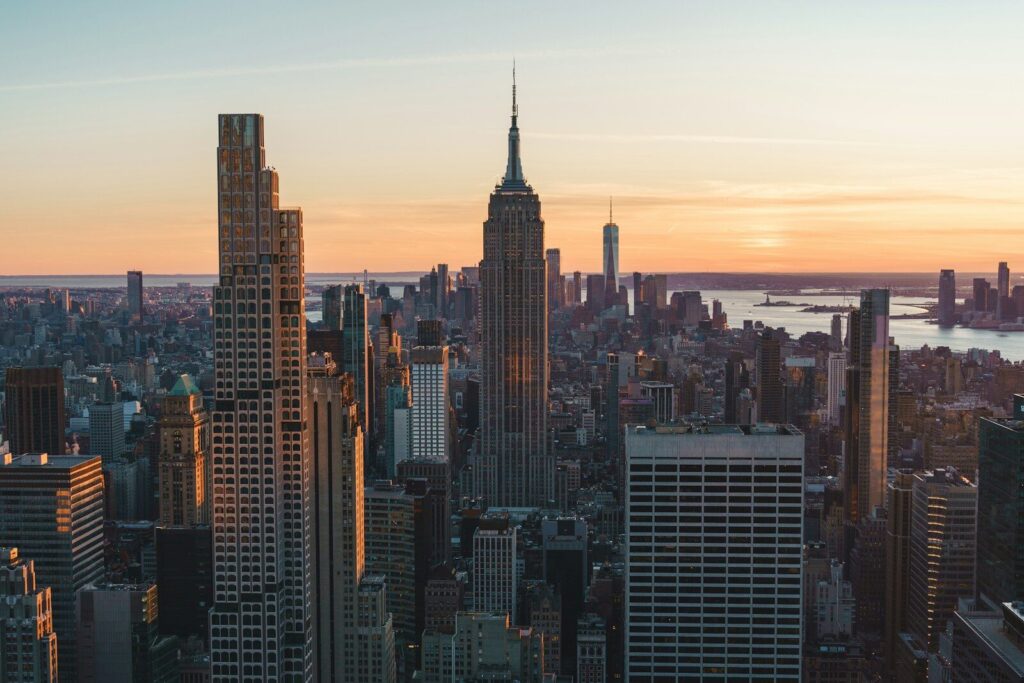
New York City — The biggest, fastest city in the country, and the one most visitors see first. Manhattan’s skyline, Central Park, the Metropolitan Museum, Broadway, the food of a hundred countries — New York is a week of sightseeing compressed into five boroughs. It is also the most expensive city in this guide and the most tiring: you will walk 20,000 steps a day and love it. Best for: first-timers, culture, food, energy, and anyone who wants the iconic America. Budget note: a mid-range hotel runs $180–300 a night, and the subway is your best friend.
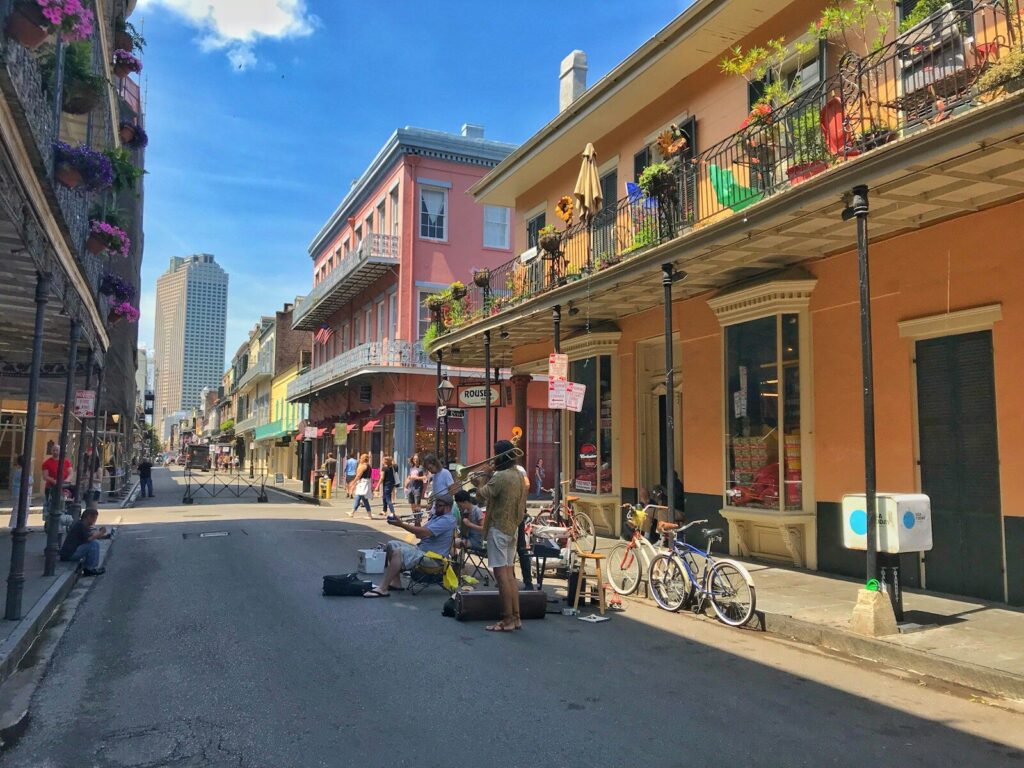
New Orleans — The most un-American city in America, and the best value in this guide. The French Quarter’s wrought-iron balconies, the jazz on Frenchmen Street, the food (gumbo, po’boys, beignets), the St. Charles streetcar — the oldest continuously operating streetcar line in the world, $1.25 a ride. New Orleans is slower, cheaper, and warmer than New York in every sense: a mid-range hotel runs $120–200 a night, and a great meal costs half what it does in Manhattan. Best for: music, food, atmosphere, and travellers who want America with a French-Caribbean soul. Mardi Gras (Fat Tuesday, February 9, 2027) is the biggest party in the country — book a year ahead, or come the week after for the same city at half the price.
The verdict — New York vs New Orleans: if you have one trip and want the famous America, pick New York. If you want the surprising America — the food, the music, the warmth, and the best value — pick New Orleans. If you can do both, fly between them (about 3 hours, often under $150 return) and you will understand the country better than either city alone can teach you.
Washington, D.C. — The capital, and the best free sightseeing in the country: the Smithsonian’s 19 museums and the National Zoo are all free, the monuments on the National Mall are open around the clock, and the city is compact and walkable. Two days here is the perfect add-on to a New York trip (the train is under 3.5 hours).
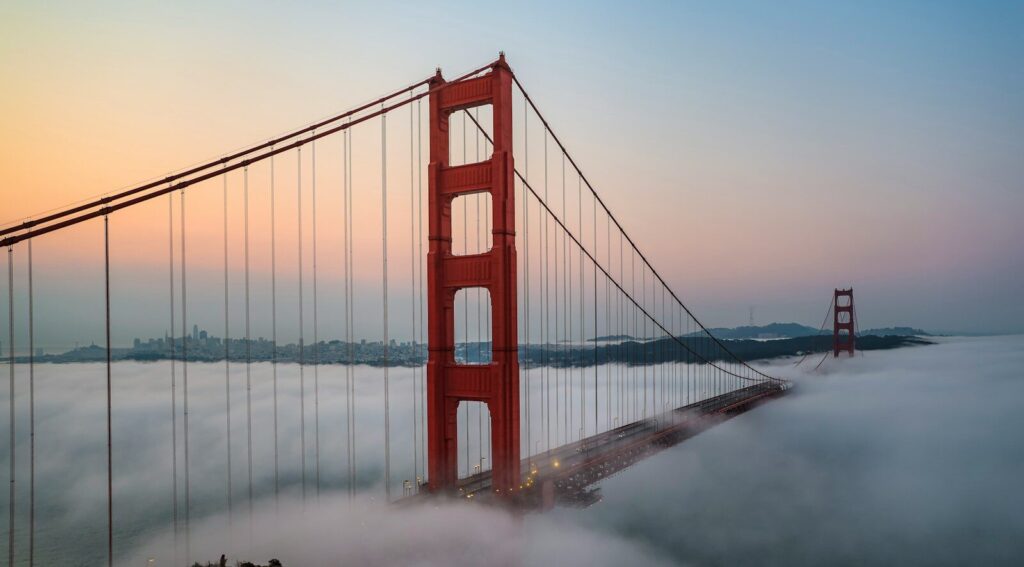
San Francisco — The Golden Gate Bridge, the hills, the fog, the food scene, and Alcatraz. The most European-feeling big city in America, and the gateway to California wine country and the coastal Highway 1 drive. Cable cars are $8 a ride — walk the hills instead, and save the cable car for one ride down to Fisherman’s Wharf.
Los Angeles — Sprawl, sunshine, beaches, and Hollywood. LA rewards drivers, not walkers: rent a car, do the studios and the Getty, eat tacos in East LA, and watch the sunset at Santa Monica. The traffic is real — allow double the time Google Maps suggests.
Chicago — The friendliest big city in America, with the best architecture (take the river cruise), deep-dish pizza, blues clubs, and a lakefront that feels like a seaside resort in summer. The “L” train is cheap and easy, and the city is noticeably cheaper than New York or San Francisco.
Las Vegas — The Strip is 4.2 miles of neon, shows, and casinos, and it is worth one night even if you never gamble: the fountains at the Bellagio are free, and the desert is an hour away. Stay mid-Strip, and remember the resort fees ($40–55 a night) are added on top of the room rate.
Miami — Art Deco South Beach, Cuban food in Little Havana, and the gateway to the Everglades and the Florida Keys. The most Latin city in the country — Spanish is the first language in much of it — and the warmest winter escape on the mainland.
Top Places to Visit
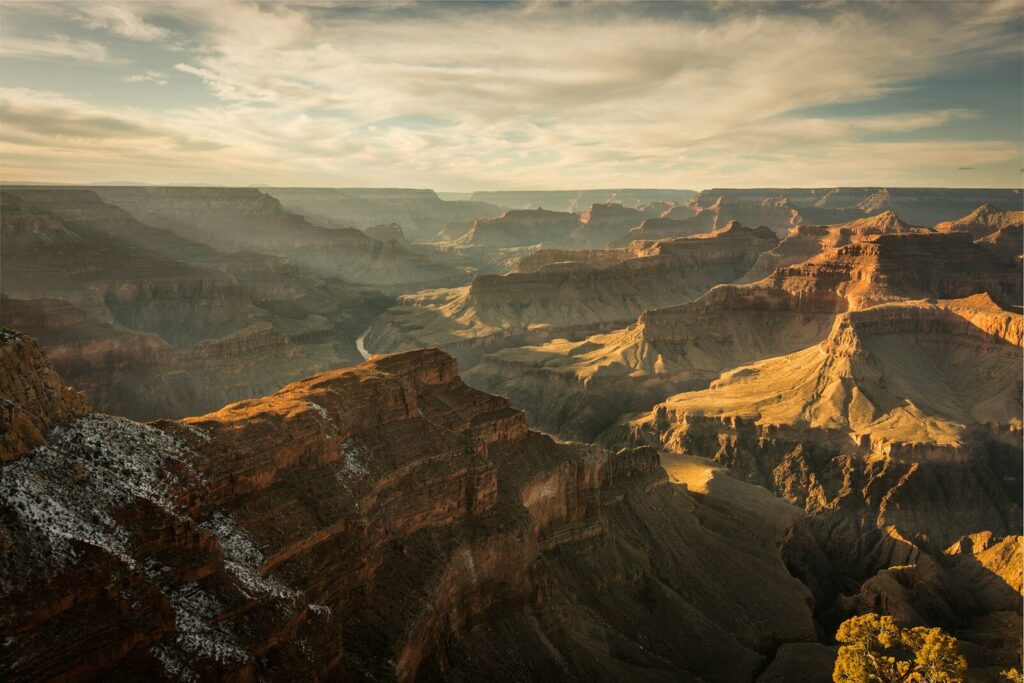
- Grand Canyon (Arizona) — 277 miles long, up to 18 miles wide, a mile deep. The South Rim is open year-round; sunrise at Mather Point is the single most rewarding hour in American travel.
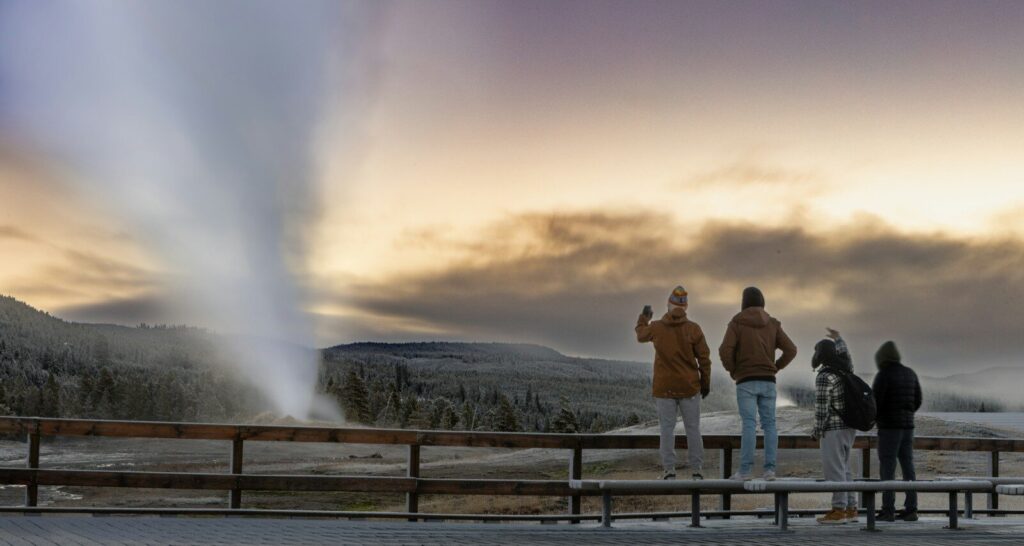
- Yellowstone National Park (Wyoming/Montana/Idaho) — The world’s first national park (1872), holding about half of all the geysers on Earth. Old Faithful erupts roughly every 90 minutes; Grand Prismatic Spring is the largest hot spring in the country.
- Yosemite National Park (California) — Granite cliffs, giant sequoias, and waterfalls that make every other valley look small. Book the timed-entry reservation in peak season.
- Route 66 — 2,448 miles of Americana from Chicago to Santa Monica. Drive a section (Oklahoma–Arizona is the best-preserved) rather than the whole thing.
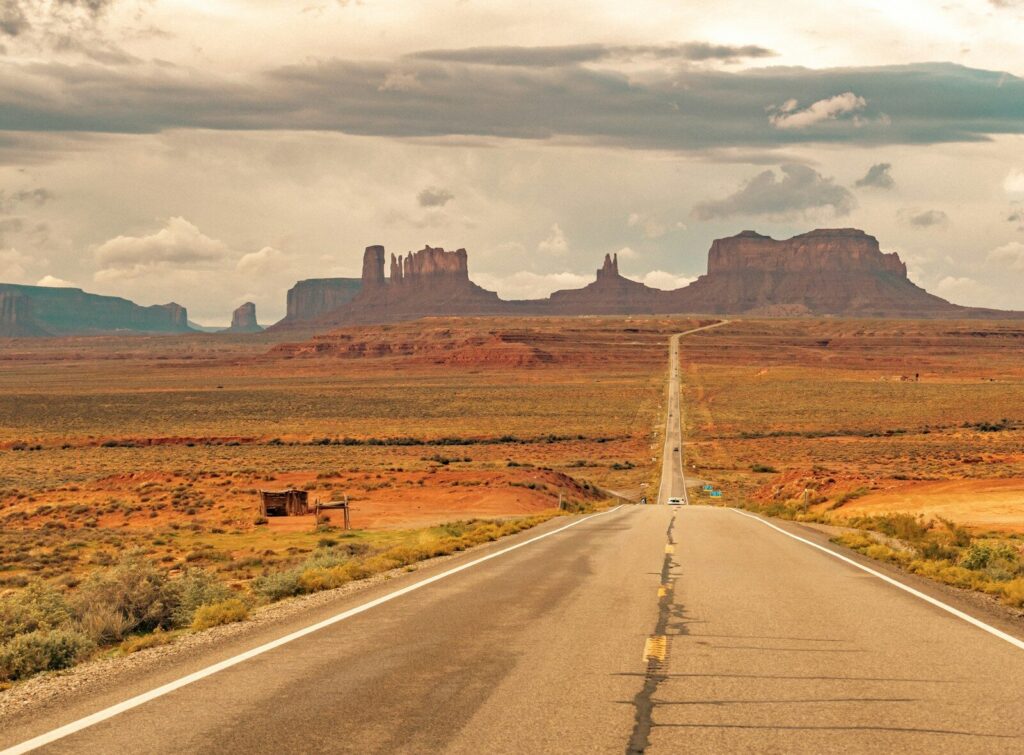
- Monument Valley (Utah/Arizona) — The red sandstone buttes of a hundred Westerns. Best at sunrise, from the Navajo Tribal Park loop road.
- Hawaii (Big Island & Maui) — Volcanoes National Park on the Big Island, the Road to Hana on Maui, and the only state where you can surf and see snow on the same day (Mauna Kea).
- The Everglades (Florida) — A slow river of grass, alligators, and airboat rides, 45 minutes from Miami.
- Antelope Canyon (Arizona) — The slot canyon of a thousand photographs. Book a Navajo-guided tour weeks ahead — it sells out.
- The Smithsonian (Washington, D.C.) — Free, world-class, and a full day minimum. The National Air and Space Museum is the pick if you only have time for one.
- Alcatraz (San Francisco) — The island prison tour sells out weeks ahead; book the first boat of the day for the quietest visit.
- Niagara Falls (New York) — The American side is the quieter view; cross to the Canadian side for the panorama (bring your passport).
- Glacier National Park (Montana) — The Going-to-the-Sun Road is one of the great drives on Earth; it usually opens fully in late June.
🎟️ Book experiences in New York
The best way to see the big sights is to book the headline tickets before you arrive — the Empire State Building and the Statue of Liberty both sell out on busy weekends.
- NY: Empire State, Circle Line Cruise, & Hop-on Hop-off Tour — the 86th-floor observatory, a Hudson River cruise past the Statue of Liberty, and a 48-hour open-top bus, in one ticket. From ~US$99.
- NYC Statue City Cruises: Official Statue of Liberty Tickets — the only official ferry to Liberty Island and Ellis Island, with audio guides for both museums. From ~US$32.50.
- NYC: SUMMIT One Vanderbilt Tickets — the mirrored observation deck 93 floors up, with glass ledges 1,063 feet over Madison Avenue. From ~US$47.91.
- Browse all New York City tours & activities
Some links in this box are affiliate links — we may earn a commission at no extra cost to you. See our affiliate disclosure.
🎟️ More ways to book (Viator)
- NYC Bundle: Bus Tour, Empire State Building, Statue of Liberty — 48-hour hop-on hop-off bus, Empire State observation deck, and round-trip Statue of Liberty ferry in one pass. From ~US$135.
- New York CityPASS® With Empire State Building — five top attractions including the Empire State Building and the American Museum of Natural History, saving up to 51%. From ~US$149.
Some links in this box are affiliate links — we may earn a commission at no extra cost to you. See our affiliate disclosure.
When to Visit & Getting Around
Seasons: spring (April–May) and fall (September–October) are the best all-round months — mild weather in the cities, fewer crowds in the parks, and the best light for photography. Summer (June–August) is peak season everywhere: the national parks are at their best and their busiest, and the South is hot and humid. Winter (December–February) is ski season in the Rockies, beach season in Florida and Hawaii, and the cheapest time to visit New York (except Christmas week). Watch for: Mardi Gras in New Orleans (Fat Tuesday, February 9, 2027 — book a year ahead), Jazz Fest (late April–early May), the Albuquerque Balloon Fiesta (early October), and the fall colours in New England (late September–mid-October).
Getting around: the United States is a driving country outside the big eastern cities. New York, Washington, D.C., Boston, Chicago, and San Francisco are all easy without a car — New York’s subway is the key example: a single ride is $3.00 on OMNY tap-to-pay (the MetroCard was retired at the end of 2025), and the weekly fare cap means you never pay more than $35 in any seven days. New Orleans runs on its streetcars ($1.25 a ride, or a $3-a-day Jazzy Pass). Between cities, domestic flights are cheap and frequent (New York–New Orleans is about 3 hours, often under $150 return), Amtrak runs the scenic Northeast Corridor (New York–Washington, D.C. in under 3.5 hours), and long-distance trains are slow but beautiful. For the national parks and the West, a rental car is not optional — it is the trip. Book rental cars early in summer, and check the insurance: US rental desks push expensive cover, and many credit cards already include it.
Entry rules (2026): citizens of around 42 countries (including the UK, EU, Japan, South Korea, Australia, New Zealand, and Singapore) enter visa-free for up to 90 days with an ESTA — which now costs $40 per person (up from $21 on September 30, 2025), valid for two years. Apply only on the official site, esta.cbp.dhs.gov — third-party sites charge a markup for the same form. Everyone else needs a B-1/B-2 visitor visa ($185 application fee). There is no digital-nomad visa, and working remotely while on an ESTA or tourist visa is not permitted.
National park fees (2026 — changed January 1, 2026): the America the Beautiful annual pass now costs $80 for US residents and $250 for nonresidents, and nonresidents aged 16+ pay an extra $100 per person at the 11 busiest parks (including Yellowstone, the Grand Canyon, Yosemite, and Zion) unless they hold an annual pass. Visiting three or more parks? The $250 nonresident pass pays for itself fast.
✈️ Find cheap flights to the USA — compare fares across airlines and booking sites in one search. We may earn a commission if you book through this link, at no extra cost to you.
🚗 Rent a car in the USA — essential for the national parks, Route 66, and the West; skip it in Manhattan, where parking costs more than the car. We may earn a commission if you book through this link, at no extra cost to you.
Budget
Prices are in US dollars. New York is one of the most expensive cities in the world; New Orleans is one of the best-value cities in the country — the gap below is mostly the New York premium.
- Budget ($80–130/day): hostel dorm or budget motel ($40–70), street food and diners ($25–35 a day), subway and walking, free museums and parks (the Smithsonian, Central Park, the National Mall). Possible in New Orleans and smaller cities; tight in New York.
- Mid-range ($180–280/day): 3-star hotel or good Airbnb ($120–200 in New Orleans, $180–300 in New York), restaurant meals ($50–70 a day), subway/OMNY cap or a rental car split between two, one paid attraction a day ($30–50).
- Comfort ($350–600/day): 4-star hotel ($250–400 in New York), fine dining ($100+ a day), Broadway show or a guided tour ($100–200), rental car or private transfers, and the good seats everywhere.
Money-saving truths: the Smithsonian museums in Washington, D.C. are free. Many New York museums have pay-what-you-wish hours. The $250 nonresident national parks pass beats paying per park from the third park onward. Book domestic flights 6–8 weeks ahead — Tuesday and Wednesday departures are usually cheapest. Eat lunch out and cook or snack for dinner: lunch menus are often half the price of dinner for the same food. And in New Orleans, the best meal in the city is often a $12 po’boy, not a $60 tasting menu.
Practical Tips
- Get your ESTA early. Apply at least 72 hours before flying, on esta.cbp.dhs.gov only. It costs $40, lasts two years, and a rejected application still costs $10 — apply before you book anything non-refundable.
- Budget for tax and tips. Add roughly 20% to every restaurant bill (tip) and 8–10% to every price tag (sales tax, added at the till). A $100 dinner is really $130.
- Emergency number is 911 — police, fire, and ambulance, from any phone. Travel insurance is not optional: a single US hospital visit can cost thousands of dollars without it.
- Power plugs are Type A/B, 120V. Bring an adapter if your plugs are different, and a power strip — US hotel rooms famously have too few outlets.
- Download offline maps. Cell coverage is excellent in cities and patchy in the national parks and deserts. Download Google Maps offline areas before a road trip, and keep a paper backup for the parks.
- Book the big tickets ahead. Alcatraz, Antelope Canyon, the Statue of Liberty crown, and Yosemite timed entry all sell out — weeks ahead in summer. The Empire State Building and SUMMIT One Vanderbilt are bookable the same week, but timed slots go first.
- Carry ID and a card. The drinking age is 21 and bars check ID strictly (passport is safest). Cards are accepted nearly everywhere, but keep $50–100 in cash for small towns, food trucks, and tips.
🛍️ Shop this guide
- USA road trip atlas — paper backup for the deserts and parks where the signal dies; the Rand McNally atlas still earns its glovebox space.
- National parks passport book — collect the cancellation stamps at every park visitor centre; the classic souvenir for a parks road trip.
- 20,000mAh portable charger — long park days, lots of photos, and no outlets on a Grand Canyon rim trail.
- Packing cubes set — live out of a suitcase across three cities and a rental car without losing your mind.
- Insulated water bottle 32oz — the desert Southwest and the Florida heat both demand one; refill stations are everywhere in the parks.
Some links in this box are affiliate links — we may earn a commission at no extra cost to you. See our affiliate disclosure.
🧳 Plan your trip
- ✈️ Find cheap flights to the USA — compare fares across airlines and booking sites in one search.
- 🏨 Book your stay on our Expedia Travel Shop — hand-picked hotels in New York, New Orleans, San Francisco, and Las Vegas.
- 🎟️ Browse New York City tours & activities — free cancellation on most.
- 🛳️ Alaska cruises from Seattle — the easiest way to see the Last Frontier, glaciers included.
Some links in this box are affiliate links — we may earn a commission at no extra cost to you. See our affiliate disclosure.
Closing
The United States will not fit in one trip, and that is the point. New York gives you the skyline and the speed; New Orleans gives you the music and the soul; the parks give you the silence and the scale. Pick one city, do it properly, and let the rest of the country wait — it has been waiting for 250 years, and it is not going anywhere. Start with the question this guide asked: the famous America, or the surprising one? Whichever you choose, you will leave planning the next one.
FAQ
How many days do I need for a first USA trip?
Seven days is the minimum for one region done well — New York plus Washington, D.C., or New Orleans plus a Gulf Coast drive. Ten to fourteen days covers two regions (for example, New York and New Orleans, or California and the Grand Canyon). A full coast-to-coast trip needs three weeks or more.
Do I need a visa to visit the USA?
Citizens of about 42 countries (including the UK, EU, Japan, South Korea, Australia, and New Zealand) travel visa-free for up to 90 days with an ESTA, which costs $40 and is valid for two years. Everyone else needs a B-1/B-2 visitor visa ($185). Apply for the ESTA at esta.cbp.dhs.gov at least 72 hours before flying.
When is the best time to visit the USA?
April–May and September–October for the cities and the East Coast; June–August for the national parks (book early); December–February for Florida, Hawaii, and the desert Southwest, and for skiing in the Rockies.
How much does a USA trip cost?
Budget $80–130 a day, mid-range $180–280, comfort $350–600 — New York is the most expensive city in the guide, New Orleans one of the cheapest. Add the $250 nonresident national parks pass if you are visiting three or more parks.
New York or New Orleans — which first?
New York if you want the iconic America: the skyline, the museums, the food of every country on Earth. New Orleans if you want the surprising America: live jazz, Creole food, and the best value in the country. Both are worth it; the flight between them is about three hours and often under $150 return.
Is tipping really mandatory in the USA?
Effectively, yes. Service staff are paid on the assumption of tips: 18–20% in restaurants, $1–2 per drink at bars, 10–15% for taxis. And remember that sales tax is added at the till, on top of the price you see.
Keep exploring
- Canada travel guide: Banff in 5 days — lakes, hikes & how to beat the crowds — the neighbour to the north, with the same scale of wilderness and a fraction of the crowds.
- Mexico travel guide: Mexico City in 4 days — tacos, temples & Frida Kahlo — the neighbour to the south, with ancient pyramids, colonial cities, and food that rivals New Orleans.
- Costa Rica travel guide: two coasts, cloud forests, and pura vida — the Americas’ wildlife capital, and the natural next stop after the US national parks.
- Brazil travel guide: Rio in 3 days, Christ the Redeemer to Iguazu Falls — South America’s giant, with Rio’s beaches, Carnival, and the world’s biggest waterfall system.
- Peru travel guide: Machu Picchu, the Inca Trail, and the Sacred Valley — the Andes next door, with Inca stone, high-altitude trails, and a lost city in the clouds.