
 admin
Introduction
Mexico is the country that keeps outdoing its own postcards. It holds the largest pyramid on Earth by volume — and most visitors walk past it thinking it’s a hill. Its capital is one of the biggest cities in the world, built on the ruins of an Aztec island city, and it is slowly sinking into the lake it was built on. It invented chocolate, tomatoes, vanilla, and the taco — then spent five centuries layering Maya, Aztec, and Spanish cultures into something no other country on Earth can copy.
This guide does the classic first trip properly: four days in Mexico City, done at walking pace, with the pyramids at dawn, Frida Kahlo’s blue house, the floating gardens of Xochimilco, and the tacos that will ruin every other taco you ever eat. Along the way you’ll get the practical numbers that matter in 2026 — the 5-peso metro, the 210-peso pyramid ticket, the two-price rule at museums, and the one festival (Day of the Dead) worth planning your whole year around.
Geography & Climate
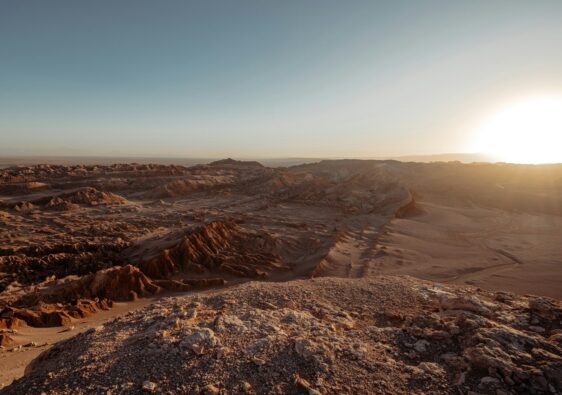
Mexico sits in southern North America, a vast country of about 1.97 million square kilometres — the 13th-largest in the world, roughly three times the size of Texas — bordered by the United States to the north, Guatemala and Belize to the southeast, and the Pacific and the Gulf of Mexico on either side. The country is a geographic patchwork: high central plateau (the Altiplano, where Mexico City sits at 2,240 metres), two great mountain ranges running north–south, tropical lowlands on both coasts, and the dry deserts of the north.
That variety means there is no single Mexican climate. Mexico City is spring-like most of the year (days around 22–26°C, cool nights), but at 2,240 metres the sun is fierce and the altitude is real — take day one easy. The Yucatán and the Riviera Maya are hot and humid year-round, with a hurricane season from June to November. The north is desert-dry and scorching in summer. The rainy season runs roughly May to October: in the capital that means a dramatic afternoon thunderstorm, then clear skies; on the coasts it means humidity and the occasional washed-out beach day.
Best time: November to April is the dry season and the sweet spot for almost everywhere — warm days, cool highland nights, and the year’s great festival, Day of the Dead (November 1–2), right at the start of it. Christmas, New Year, and Holy Week are peak domestic travel — book ahead. The worst timing surprise is arriving in the Yucatán in September or October, the peak of hurricane season, and finding the sea closed and the sky grey.
People & Demographics
Mexico has about 133 million people, making it the 10th- or 11th-most populous country in the world — and the country with the most Spanish-speakers on the planet. Roughly 9.2 million live in Mexico City proper, with about 22 million in the metropolitan area, one of the largest urban agglomerations on Earth. Guadalajara (5 million metro) and Monterrey (5 million) are the other giants; beyond them, a string of colonial cities — Puebla, Mérida, Oaxaca, Guanajuato — hold the country’s historic heart.
Mexico is a mestizo nation: most Mexicans trace ancestry to both Indigenous peoples and Spanish colonisers, and 68 Indigenous languages are officially recognised alongside Spanish, with Nahuatl the most widely spoken. About 78% of the population is Roman Catholic, and the faith is woven into daily life — the Basilica of Guadalupe, in northern Mexico City, is one of the most visited Catholic shrines in the world, drawing millions of pilgrims a year.
Mexicans are famously warm and formal at once: greetings matter (“Buenos días” before any request), strangers say “provecho” (enjoy your meal) when passing a table, and hospitality is a point of national pride. The median age is around 30, the cities are young and loud and creative, and the country runs on a rhythm all its own — long lunches, late dinners (8–10pm is normal), and a nightlife that starts when most of Europe is going to bed. English is spoken in hotels and tourist areas; in markets, small towns, and with taxi drivers, a little Spanish goes a very long way.
Culture, Etiquette & Daily Habits
Mexican culture is a layer cake: pre-Hispanic roots, Spanish colonial formality, and a modern, proudly Mexican identity that celebrates all of it at once. Family is the centre of gravity — multi-generational households are normal, Sunday family lunches are sacred, and godparents (padrinos) are a real social institution. Religion, especially Catholicism and the Virgin of Guadalupe, shapes festivals, street life, and the calendar.
- Do:
- Greet everyone: “Buenos días / buenas tardes” before asking anything, even in a shop.
- Say “provecho” when walking past people eating, and “con permiso” when squeezing past someone.
- Haggle politely in markets — a smile and a counter-offer are expected; a hard bargain in a fixed-price shop is not.
- Tip 10–15% in restaurants (service is usually not included — check the bill).
- Try the street food. The taco stand with the longest line of locals is the right one.
- Remove hats in churches and speak quietly inside; the Basilica of Guadalupe is an active place of worship, not just a sight.
- Don’t:
- Drink the tap water — stick to bottled or purified water, and be careful with ice in small rural places (in cities, reputable restaurants use purified ice).
- Flush toilet paper — bins are provided in most bathrooms, and the plumbing will thank you.
- Photograph people without asking, especially in Indigenous communities.
- Assume the “free Sunday” applies to you — free entry to federal museums and archaeological sites on Sundays is for Mexican nationals and residents only; foreign visitors pay the full price.
- Flash valuables or walk around with your phone in your hand in quiet streets at night — normal big-city caution applies.
- Expect dinner before 8pm. Restaurants fill late; a 7pm booking will find you eating alone.
Phrasebox: Hola (hello) · Gracias (thank you) · Por favor (please) · ¿Cuánto cuesta? (how much?) · La cuenta, por favor (the bill, please) · ¿Dónde está el baño? (where is the bathroom?) · No pica (it’s not spicy — a genuinely useful phrase) · ¡Salud! (cheers) · Hasta luego (see you later) · Buenos días (good morning).
Lifestyle
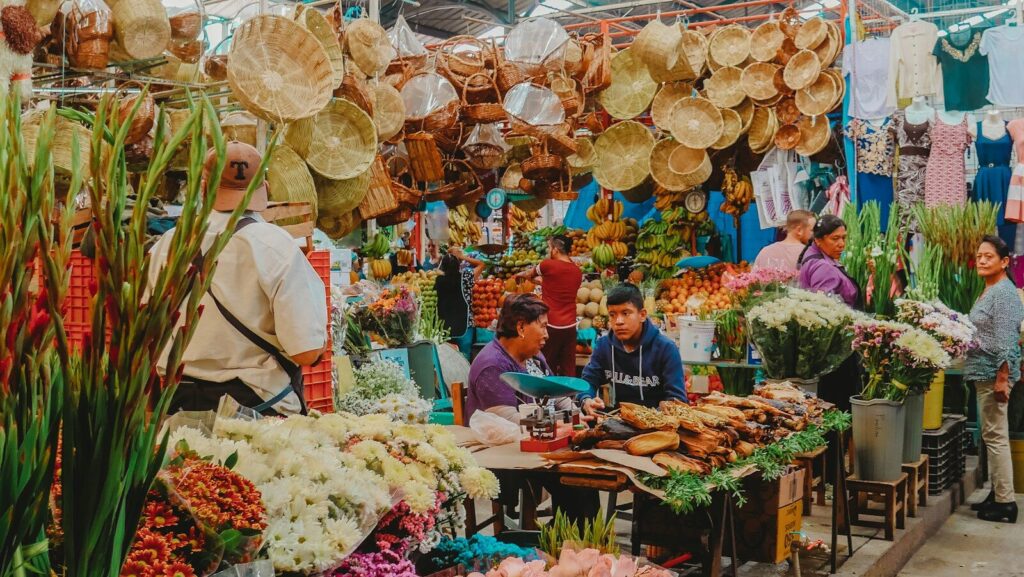
Mexico City runs on food, and food is the fastest way into the culture. Breakfast is tacos de canasta from a bicycle vendor or chilaquiles in a market; lunch is the main meal, often a comida corrida (a set three-course lunch) for MXN 80–150; dinner is tacos al pastor at 10pm, eaten standing up, with the trompo (vertical spit) spinning in front of you. The taco al pastor itself is a migration story: Lebanese immigrants brought shawarma in the 20th century, Mexicans swapped lamb for pork and added pineapple, and the result is the city’s signature dish.
Coffee culture is strong (Mexico grows excellent coffee in Chiapas and Veracruz), mezcal is the connoisseur’s drink — smoky, artisanal, sipped neat, never shot — and beer is the everyday one (a cold Victoria or Modelo with lime at a beach or a cantina). Cantinas, the old-school bars with free botanas (snacks) and mariachi drifting through, are a social institution worth one evening. Work culture is formal and hierarchical in offices but warm; the working day often runs 9 to 6 with a long lunch, and the street fills with vendors at every hour — Mexico City is a city that never really closes.
Music is everywhere: mariachi in Plaza Garibaldi, banda in the north, son jarocho in Veracruz, and a huge contemporary scene in the capital. Sport means football (soccer) above all — a Clásico at the Estadio Azteca is a bucket-list night — and lucha libre, the masked wrestling that is equal parts sport, theatre, and religion. And once a year the whole country stops for Día de Muertos: November 1–2, when families build ofrendas (altars) with marigolds, photos, and the dead’s favourite foods, and the cemeteries fill with music and candles. It is joyful, not morbid — a celebration, not a mourning — and Oaxaca and Michoacán do it best.
Main Cities
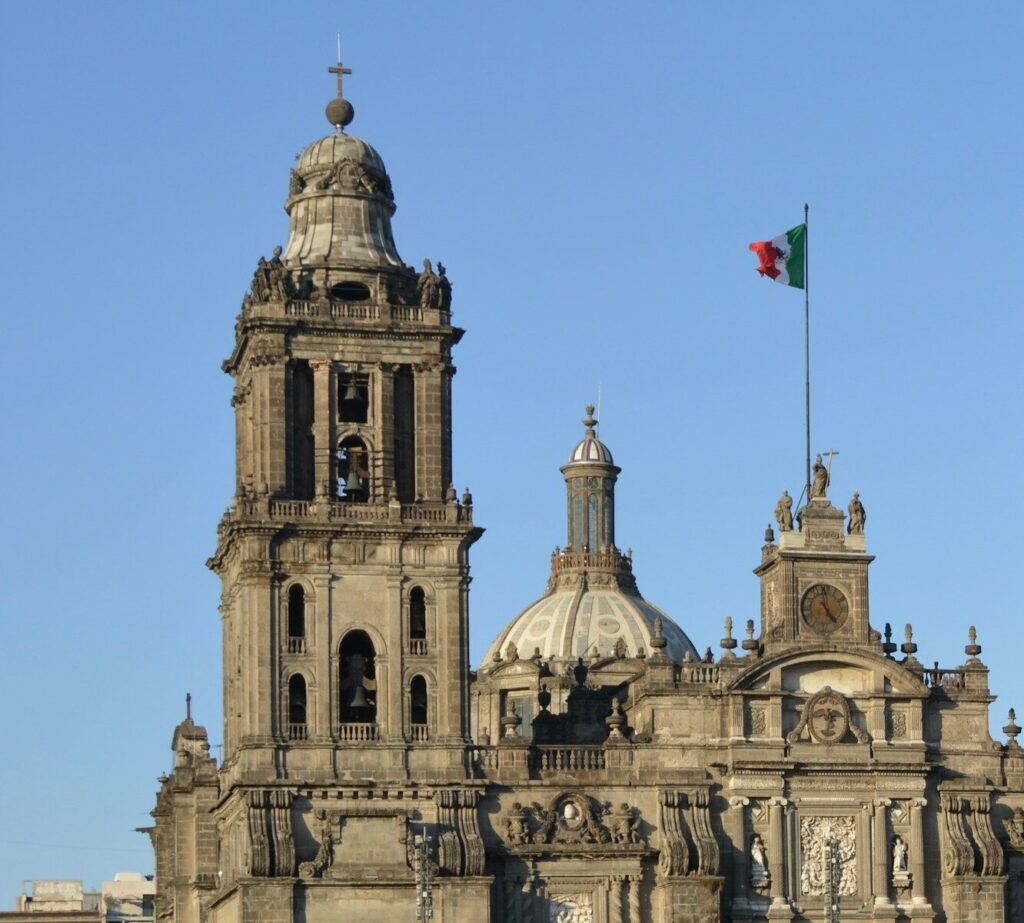
Mexico City (CDMX) — the capital and the heart of this guide: the Zócalo (one of the world’s largest squares), the Templo Mayor ruins beneath the cathedral, Chapultepec Park (bigger than Central Park), the Roma and Condesa neighbourhoods with their art-deco streets and cafés, and Coyoacán, the colonial village-within-a-city where Frida Kahlo lived. Four days here barely scratches it.
Guadalajara — Mexico’s second city and the birthplace of tequila and mariachi. Colonial centre, great food, and the tequila town of the same name an hour away. The most “Mexican” big city, locals will tell you.
Monterrey — the northern industrial powerhouse, ringed by dramatic mountains. Modern, wealthy, business-like, with superb food (cabrito — roast kid goat — is the local speciality) and hiking in the canyons nearby.
Puebla — the colonial jewel two hours from the capital: Talavera tiles, baroque churches, mole poblano (invented here, legend says, by nuns), and the Great Pyramid of Cholula next door.
Mérida — the Yucatán capital, the safest-feeling big city in Mexico, with a gorgeous colonial centre, and the perfect base for Chichén Itzá, Uxmal, and the cenotes.
Oaxaca — the food capital. Seven moles, mezcal, markets, and the Day of the Dead at its most spectacular. Monte Albán, the Zapotec mountaintop city, sits just outside town.
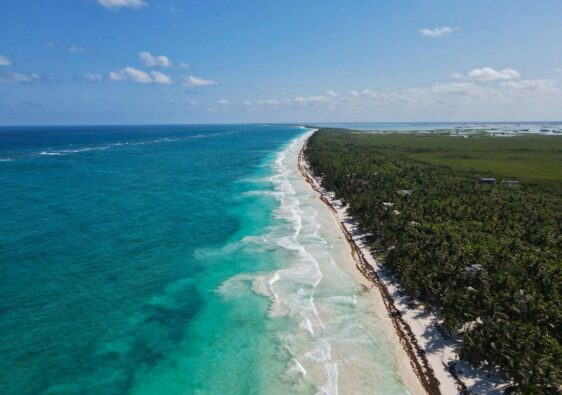
Cancún & the Riviera Maya — the beach machine: turquoise water, cenotes, Tulum’s clifftop ruins, and the ferry to Cozumel and Isla Mujeres. The most resort-heavy part of Mexico — come for the sea, stay for the ruins.
San Miguel de Allende — a colonial art town in the highlands, all pink stone and bougainvillea, popular with artists and retirees, and a UNESCO site.
Guanajuato — a colourful hillside mining city of tunnels, alleys, and staircases, a UNESCO site, and the birthplace of Mexican independence heroics (and of Diego Rivera).
Tijuana & Baja California — the border city with a booming food scene, and the Valle de Guadalupe wine country an hour south, producing some of Latin America’s best wines.
Top Places to Visit
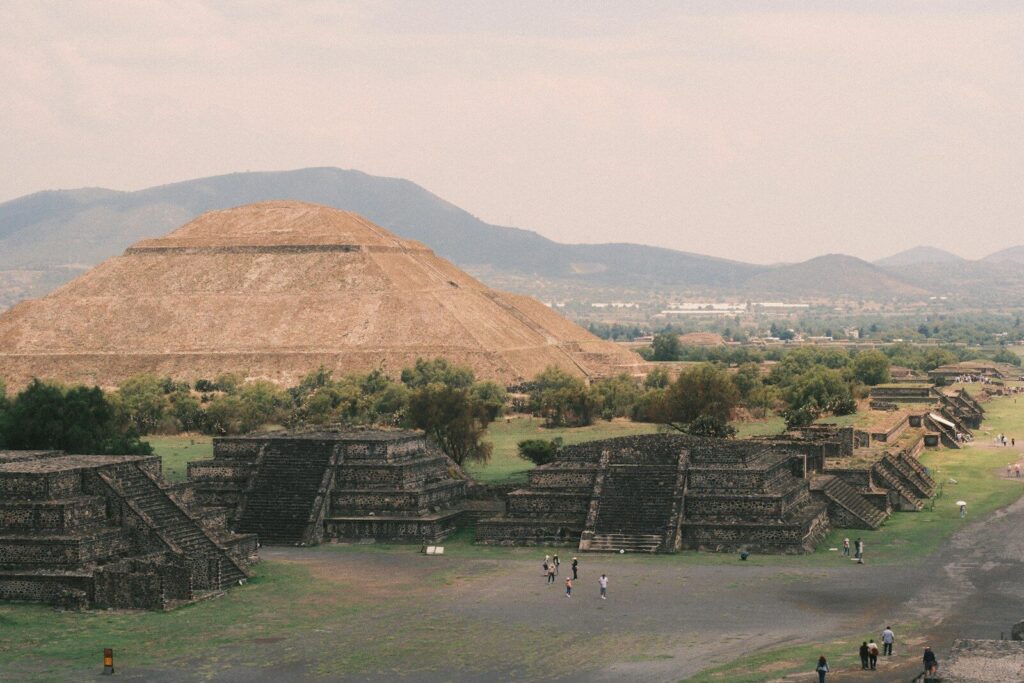
- Teotihuacán — the City of the Gods, 50 km from the capital: Pyramid of the Sun, Pyramid of the Moon, and the Avenue of the Dead. Go at opening (8am) to beat the heat and the crowds.
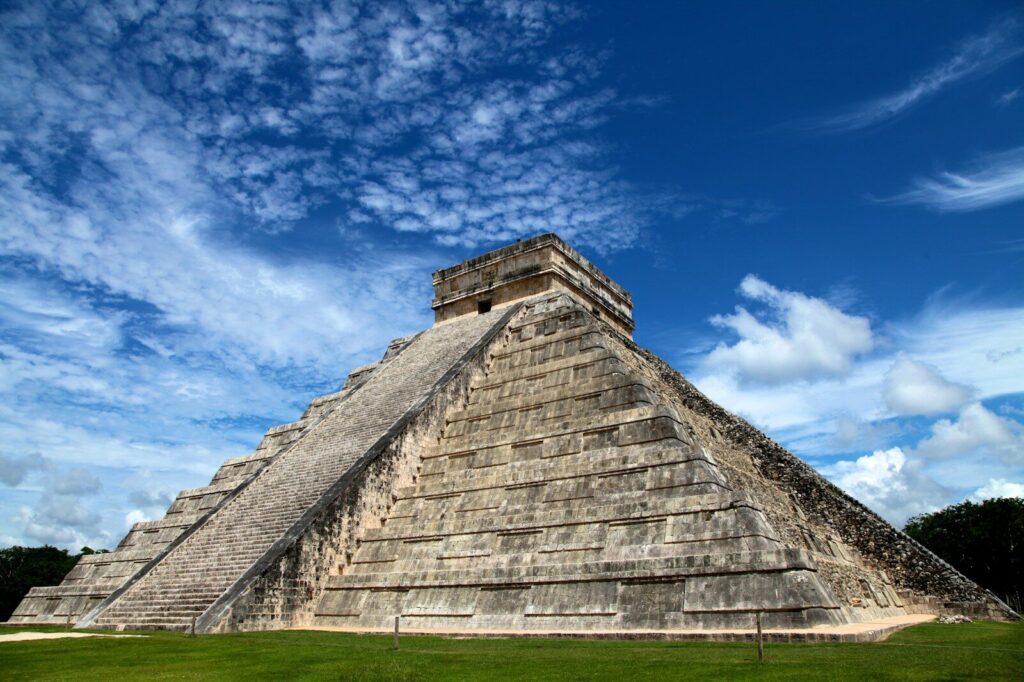
- Chichén Itzá — the Maya wonder: El Castillo, where the equinox sun paints a serpent down the staircase (March 20–21, September 22–23).
- Templo Mayor & the Zócalo — the Aztec sacred precinct, excavated beneath the cathedral in the heart of Mexico City.
- Museo Nacional de Antropología — one of the world’s great museums; the Aztec Sun Stone and the Maya halls alone justify the visit.
- Museo Frida Kahlo (Casa Azul) — the cobalt-blue house in Coyoacán where Frida lived, painted, and died. Book online days ahead — there is no box office.
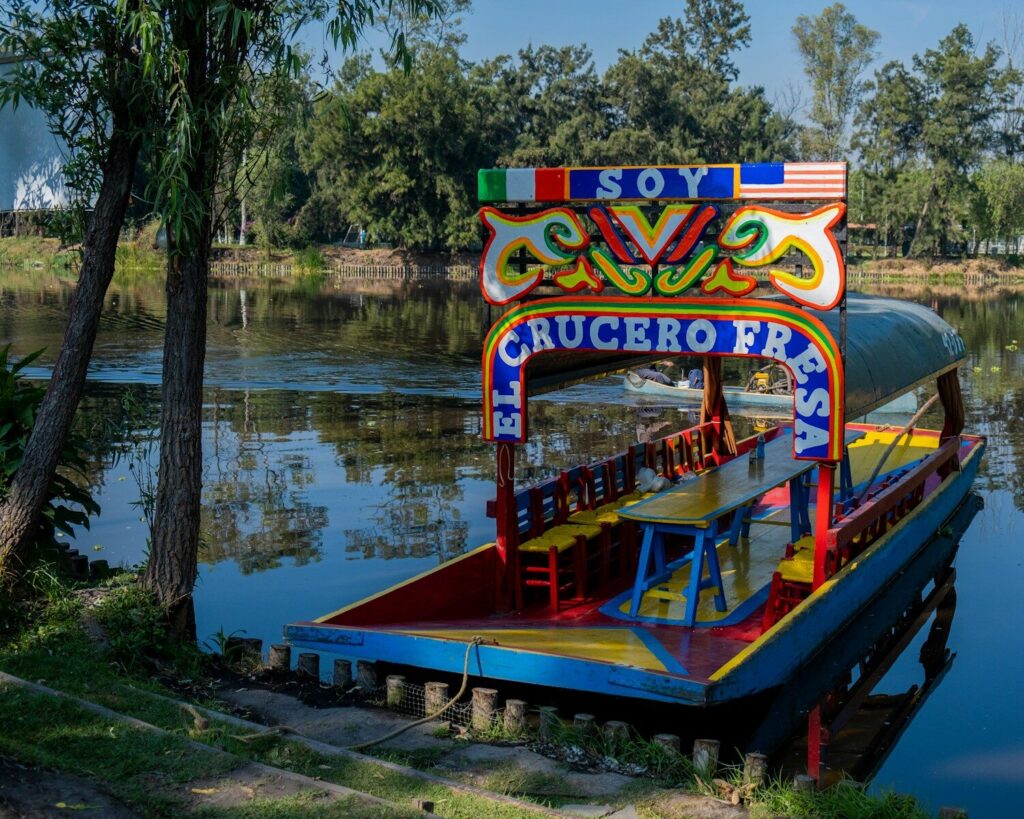
- Xochimilco — the floating gardens: hire a trajinera (flat-bottomed boat) and drift the Aztec-era canals with mariachi boats alongside.
- Chapultepec Castle & Park — the castle on the hill, the park’s lakes and museums, and the best sunset viewpoint in the city.
- Great Pyramid of Cholula — the largest pyramid on Earth by volume, hiding under a grassy hill with a church on top.
- Monte Albán — the Zapotec mountaintop city above Oaxaca, with 360-degree valley views.
- Tulum — the Maya port city on a cliff above a turquoise beach, plus the cenotes of the Riviera Maya nearby.
- Palacio de Bellas Artes — the marble opera house with Diego Rivera murals inside and the best architecture in the historic centre.
- Basilica of Guadalupe — the shrine of the Virgin of Guadalupe, one of the most visited Catholic pilgrimage sites in the world.
🎟️ Book experiences in Mexico
Tours we’d actually book — free cancellation on most. We may earn a commission if you book through these links, at no extra cost to you. Our affiliate disclosure.
- Mexico City: Teotihuacan & Guadalupe Shrine Tour with Lunch — the classic full day: Tlatelolco, the Basilica of Guadalupe, and the Pyramids of Teotihuacán with a guide and lunch, from $62.
- Mexico City: Frida Kahlo Museum or Casa Kahlo Entry Ticket — skip the sold-out queue: entry to the Blue House (or the new Red House) with a digital guide, from $29.
- CDMX: Teotihuacan Balloon Flight with Optional Pyramids Tour — sunrise over the Pyramid of the Sun from a hot-air balloon, with sparkling-wine toast and optional guided visit, from $148.
- Browse all Mexico City tours & activities
🎟️ More ways to book (Viator)
More Mexico tours with free cancellation on most. We may earn a commission if you book through these links, at no extra cost to you. Our affiliate disclosure.
- Teotihuacan, Guadalupe, Xochimilco, Coyoacán & Frida Kahlo — 2-day combo — six of the capital’s top sights in two guided days, with Teotihuacán and Frida Kahlo tickets included, from $196.
- Private Tour: Xochimilco, Coyoacán and Frida Kahlo Museum — a private day on the canals and in Frida’s neighbourhood, with hotel pickup and museum tickets included.
When to Visit & Getting Around
Best time: November to April — the dry season. Warm days, cool highland evenings, and Day of the Dead (November 1–2) right at the start. May to October brings afternoon thunderstorms in the capital and humidity on the coasts; June to November is hurricane season on both coasts. Christmas, New Year, and Holy Week are peak domestic travel — book hotels and Frida Kahlo tickets well ahead.
Getting there: Mexico City’s Benito Juárez International Airport (MEX) is the main gateway, with direct flights from across North America and Europe. US, Canadian, UK, EU, Australian, and Japanese citizens enter visa-free for up to 180 days (the officer stamps the number of days — typically 90–180; ask for 180 on a long stay), with a passport valid for at least six months. The paper tourist card (FMM) was abolished in 2022 — entry is digital now. Cancún (CUN) is the gateway for the Yucatán and the Riviera Maya; Guadalajara and Monterrey have good international connections too.
Getting around Mexico City: the Metro is one of the cheapest in the world — MXN 5 per ride, flat fare, any distance, across 12 lines and 195 stations. The Metrobús costs MXN 6, the Cablebús MXN 7, and all of them run on the rechargeable Tarjeta de Movilidad Integrada (MI card, about MXN 15–16 at station machines). From the airport, Metrobús Line 4 runs to the Centro for MXN 30; an authorised airport taxi (buy the ticket at the booth inside arrivals) costs about MXN 300–440 to Roma or Condesa; Uber or DiDi runs about MXN 180–300. Uber is cheap and the safest way to travel at night. Altitude warning: the city sits at 2,240 metres — take day one easy, drink water, and go gentle on the mezcal.
Day trips & long distances: Teotihuacán is an easy DIY trip — bus from Terminal del Norte (Sala 8, ask for “Pirámides”) for about MXN 55–68 each way, roughly an hour. For longer hauls, ADO first-class coaches are comfortable and cheap (Cancún–Tulum about MXN 300–450), and domestic flights run about MXN 900–2,500 before bags. In the Yucatán, rent a car — the cenotes and ruins are spread out and buses are thin.
✈️ Find cheap flights to Mexico — compare fares across airlines and booking sites in one search. We may earn a commission if you book through this link, at no extra cost to you.
🚗 Rent a car in Mexico — compare rental prices for a Yucatán cenote road trip or a Baja wine-country drive. We may earn a commission if you book through this link, at no extra cost to you.
Budget
Prices in Mexican pesos (MXN), with US dollars at roughly 18 MXN to the dollar (November 2026). Mexico is one of the best-value countries in the Americas — a proper meal and a beer cost less than a sandwich in most of Europe.
- Budget ($40–70 per day): hostel dorm or budget hotel ($15–30), market meals and street tacos ($5–10 food), the 5-peso Metro, and free sights — the Zócalo, Chapultepec Park, and the cathedral cost nothing.
- Mid-range ($115–235 per day): boutique hotel in Roma or Condesa ($55–110), restaurant dinners with mezcal ($20–40 food), the Teotihuacán and Frida Kahlo tickets, and a guided day trip.
- Comfort ($290+ per day): 4–5-star hotel in Polanco ($150+), private guides, a balloon flight over Teotihuacán, fine dining in Oaxaca, and a rental car for the Yucatán.
Money-saving truths: Street food is the best food and the cheapest — a taco costs MXN 15–35 and a market lunch MXN 80–150. The Metro’s flat 5-peso fare makes the whole city nearly free to cross. The expensive mistakes are paying in US dollars at tourist rates (always pay in pesos), exchanging money at the airport, and eating on the Zócalo itself — walk two streets in any direction and the same meal costs half as much. And remember the two-price rule: foreign visitors pay double at federal museums and archaeological sites (MXN 210 vs 105 at Teotihuacán), so budget for the foreign price, not the resident one.
Practical Tips
- Pay in pesos, carry cash. Cards work in cities, but markets, street stalls, colectivos, and small towns are cash-only. Withdraw MXN 3,000–5,000 per ATM visit to spread the MXN 50–90 fee, and always choose to be charged in pesos.
- Book Frida Kahlo online, days ahead. The Museo Frida Kahlo has no box office at all — tickets are MXN 320 for foreign visitors, sold online only, and weekends sell out days ahead. No ticket, no entry.
- Most museums are closed on Mondays. Plan museum days for Tuesday–Sunday; Teotihuacán is the exception — it’s open every day, which makes Monday the perfect pyramid day.
- You can’t climb the Pyramid of the Sun. Climbing has been banned since the pandemic to protect the structure. The Pyramid of the Moon reopened to climbers in May 2025, but only to the first section.
- Don’t drink the tap water. Bottled water everywhere; be careful with ice in small rural places (city restaurants use purified ice). And don’t flush toilet paper — use the bins provided.
- Use Uber at night. It’s cheap (MXN 80–200 across town), tracked, and the safest option after dark. Avoid hailing unmarked street taxis.
- Emergencies: 911 works nationwide. Plugs are US-style type A/B at 127V. Mexico abolished daylight saving in 2022 (except near the US border), so the time difference with the US shifts by season.
🛍️ Shop this guide
Gear we’d pack for Mexico. We may earn a commission if you book through these links, at no extra cost to you. Our affiliate disclosure.
- Packable UPF 50 sun hat — Mexico City sits at 2,240 m and the sun is fierce, even on cloudy days.
- Reef-safe sunscreen SPF 50 — required at many cenotes and beaches, and the tropical sun burns fast.
- Comfortable walking sandals — cobblestones in Coyoacán, ruins at Teotihuacán, and beach days in Tulum.
- Insulated water bottle — altitude plus heat means drinking far more water than you think.
- Hidden money belt — for cash, cards, and passport on crowded metros and in markets.
🧳 Plan your trip
One box, everything booked. We may earn a commission if you book through these links, at no extra cost to you. Our affiliate disclosure.
- ✈️ Find cheap flights to Mexico — compare fares across airlines and booking sites in one search.
- 🏨 Browse our Expedia Travel Shop — hand-picked stays and travel deals from our curated storefront.
- 🎟️ Browse Mexico City tours & activities — free cancellation on most.
- 🛳️ Compare Mexico cruises on CruiseDirect — Riviera Maya and Baja sailings that pair with a Mexico City stay.
Closing
Mexico doesn’t do small. It builds the biggest pyramid on Earth and hides it under a hill. It puts a city of 22 million people on a drained lake and lets it sink, gracefully, into its own history. It turns lunch into a three-course ritual and a taco into an art form. Four days in Mexico City is a beginning, not a trip — you’ll leave with marigolds in your memory, mole on your shirt, and the certain knowledge that you’ll be back: for Oaxaca, for the Yucatán, for the Day of the Dead. Come hungry, come curious, and come ready to look twice — the best things here are hiding in plain sight.
Keep exploring
- Spain travel guide — Barcelona vs Madrid, and the country Mexico’s language and colonial cities came from.
- Portugal travel guide — Lisbon, Sintra, and Porto on the Iberian side of the story.
- Italy travel guide — Rome, Amalfi, and Cinque Terre on the classic 10-day route.
- Greece travel guide — Santorini alternatives: Naxos and Paros, the islands Greeks visit.
- Turkey travel guide — Istanbul in 3 days plus the Cappadocia balloon guide.
FAQ
How many days do you need in Mexico City?
Four days covers the essentials: the historic centre, Teotihuacán, Coyoacán and Frida Kahlo, and Xochimilco. Add two or three more for a Yucatán or Oaxaca extension — a week to ten days total is the classic first Mexico trip.
Is Mexico expensive?
One of the best-value countries in the Americas. Budget travellers manage on $40–70 a day; mid-range on $115–235. A street taco costs MXN 15–35 and a Metro ride is MXN 5 — the city is nearly free to cross.
Do I need a visa for Mexico?
US, Canadian, UK, EU, Australian, and Japanese citizens enter visa-free for up to 180 days (the officer decides the exact number — typically 90–180). You need a passport valid for at least six months. Check the official guidance for your passport before flying.
What is the best month to visit Mexico?
November to April — the dry season, with warm days and cool highland nights. November 1–2 is Day of the Dead, the year’s great festival. Avoid September–October in the Yucatán (peak hurricane season).
Is Mexico City safe for tourists?
The tourist areas (Centro, Roma, Condesa, Coyoacán, Polanco) are generally safe with normal big-city caution: use Uber at night, keep valuables out of sight, and avoid quiet streets after dark. The US State Department rates Mexico City Level 2 (Exercise Increased Caution); some states are Level 3–4, so check the advisory for any region you plan to visit.
Can you climb the pyramids at Teotihuacán?
Not the Pyramid of the Sun — climbing has been banned since the pandemic. The Pyramid of the Moon reopened in May 2025, but only to the first section. The Avenue of the Dead and the site museum are the real experience now.
[…] Mexico Travel Guide: Mexico City in 4 Days — Tacos, Temples & Frida Kahlo […]
[…] Mexico travel guide: Mexico City in 4 days […]
[…] Mexico travel guide: Mexico City, tacos, temples, and Frida Kahlo […]
[…] Mexico travel guide: Mexico City, tacos, temples, and Frida Kahlo — another giant of Latin America, with the same mix of ancient ruins and modern cities. […]