
 admin
Introduction
Ireland is the rare destination that lives up to every postcard and then quietly outdoes them. Yes, the fields really are that green — forty shades of it, the locals will tell you, and after a week driving the west coast you will stop arguing. But the postcards miss the point. Ireland’s magic is not just the Cliffs of Moher at sunset or a pint of Guinness in a pub older than your country. It is the fact that five thousand years ago, farmers on this island built a stone tomb that still catches the winter solstice sun — five hundred years before the pyramids existed — and that the same island invented Halloween, turned storytelling into a national sport, and still runs on conversation, music, and the sacred pub round.
This guide is built around the Wild Atlantic Way, the 2,500-kilometre coastal route that runs from Donegal in the north to Kinsale in the south and is the longest defined coastal touring route in the world. Seven days will not cover all of it — nobody does the whole thing in one trip — but seven days will give you Dublin, the Cliffs of Moher, Galway, the Burren, Dingle, and the Ring of Kerry, which is the Ireland most travellers dream about. It covers what the trip costs in 2026, how the trains and the Leap Card actually work, where to stay, and the etiquette that will make the Irish adopt you as one of their own.
Geography & Climate
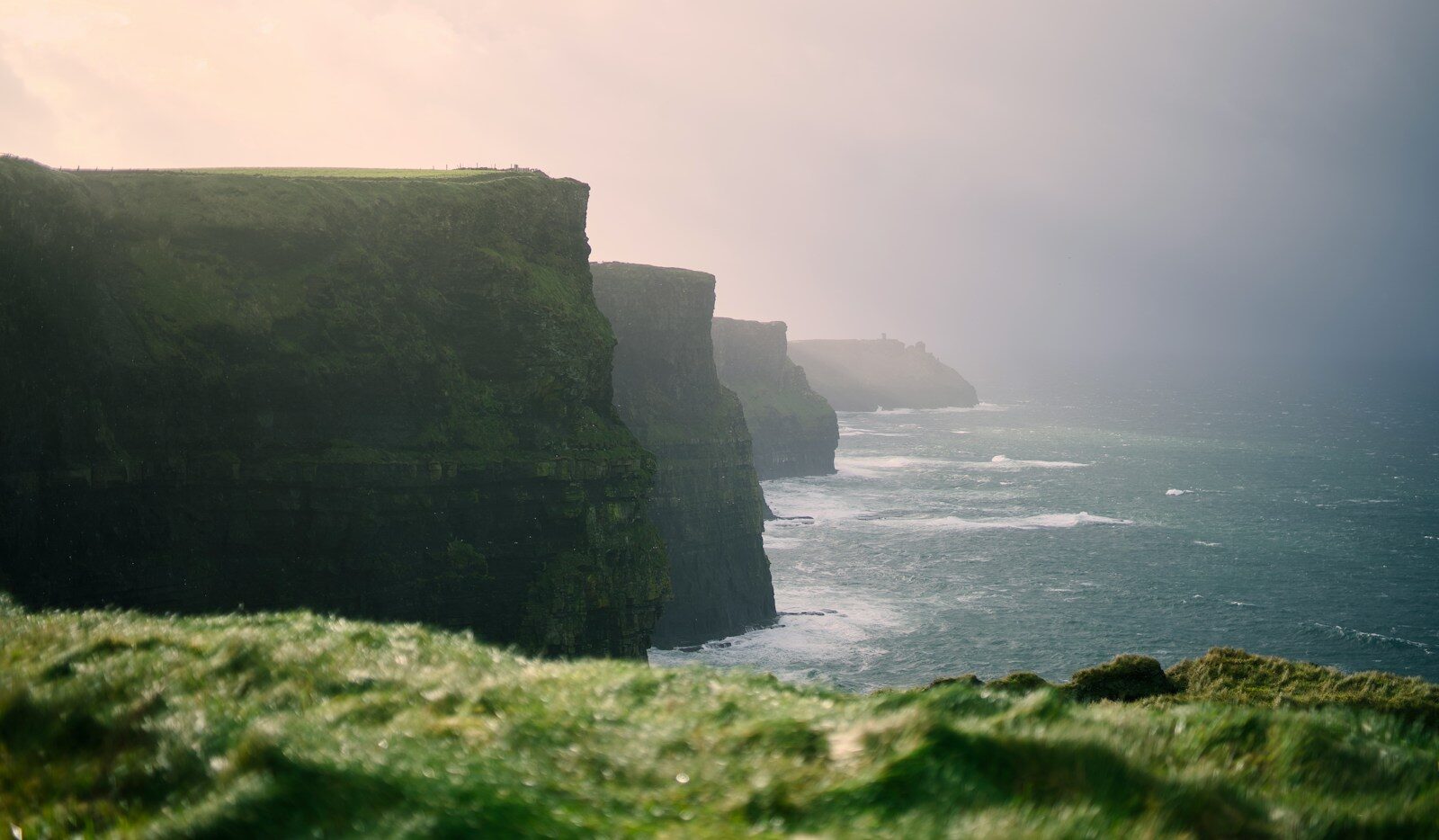
Ireland is an island of about 70,000 square kilometres off the north-west coast of Europe — roughly the size of South Carolina — divided between the Republic of Ireland (about five-sixths of the island, ~5.4 million people) and Northern Ireland, which is part of the United Kingdom (~1.9 million people). The Republic’s capital is Dublin, on the east coast; the west coast, facing the full force of the Atlantic, is where the drama lives: the cliffs, the peninsulas, the islands, and the weather.
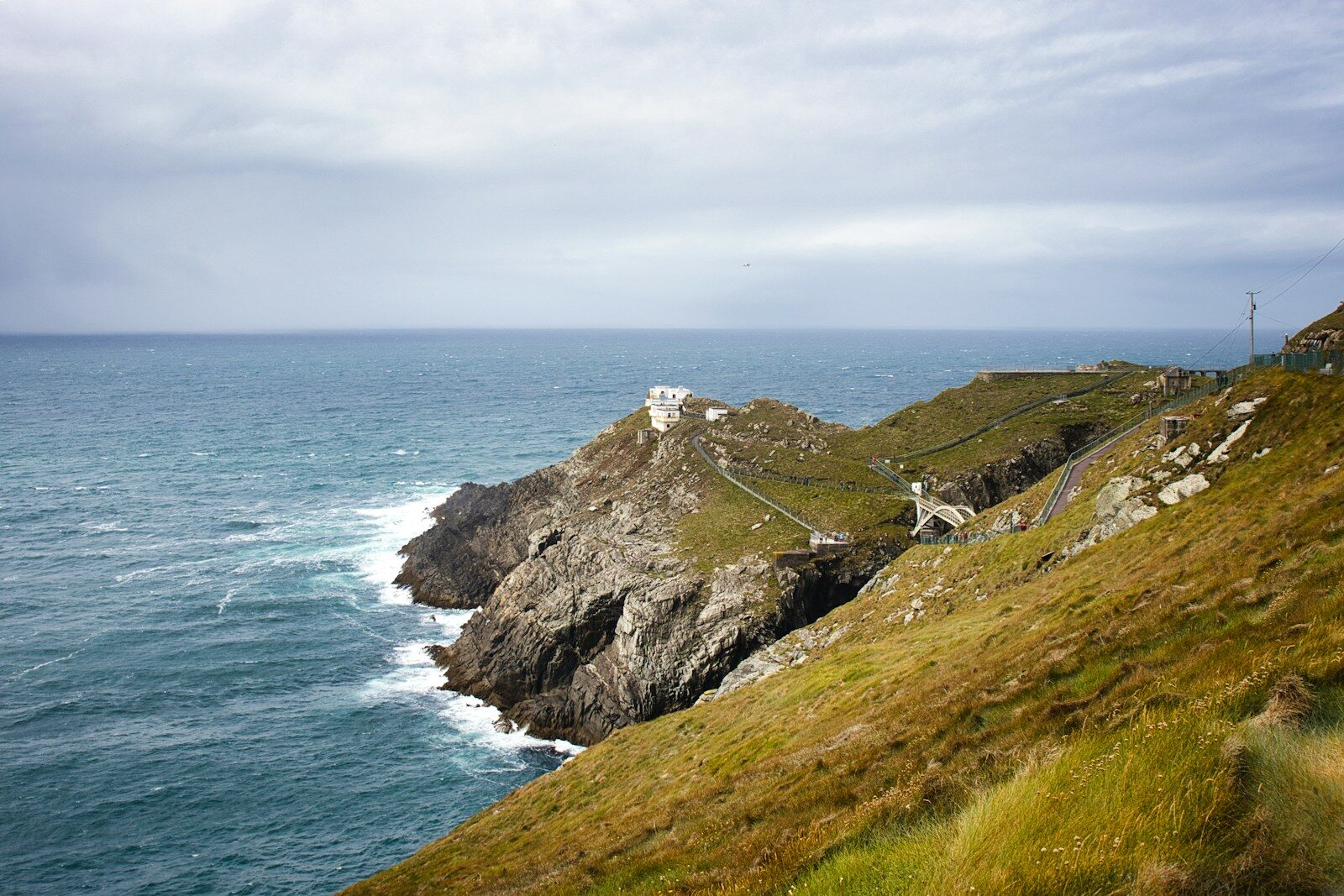
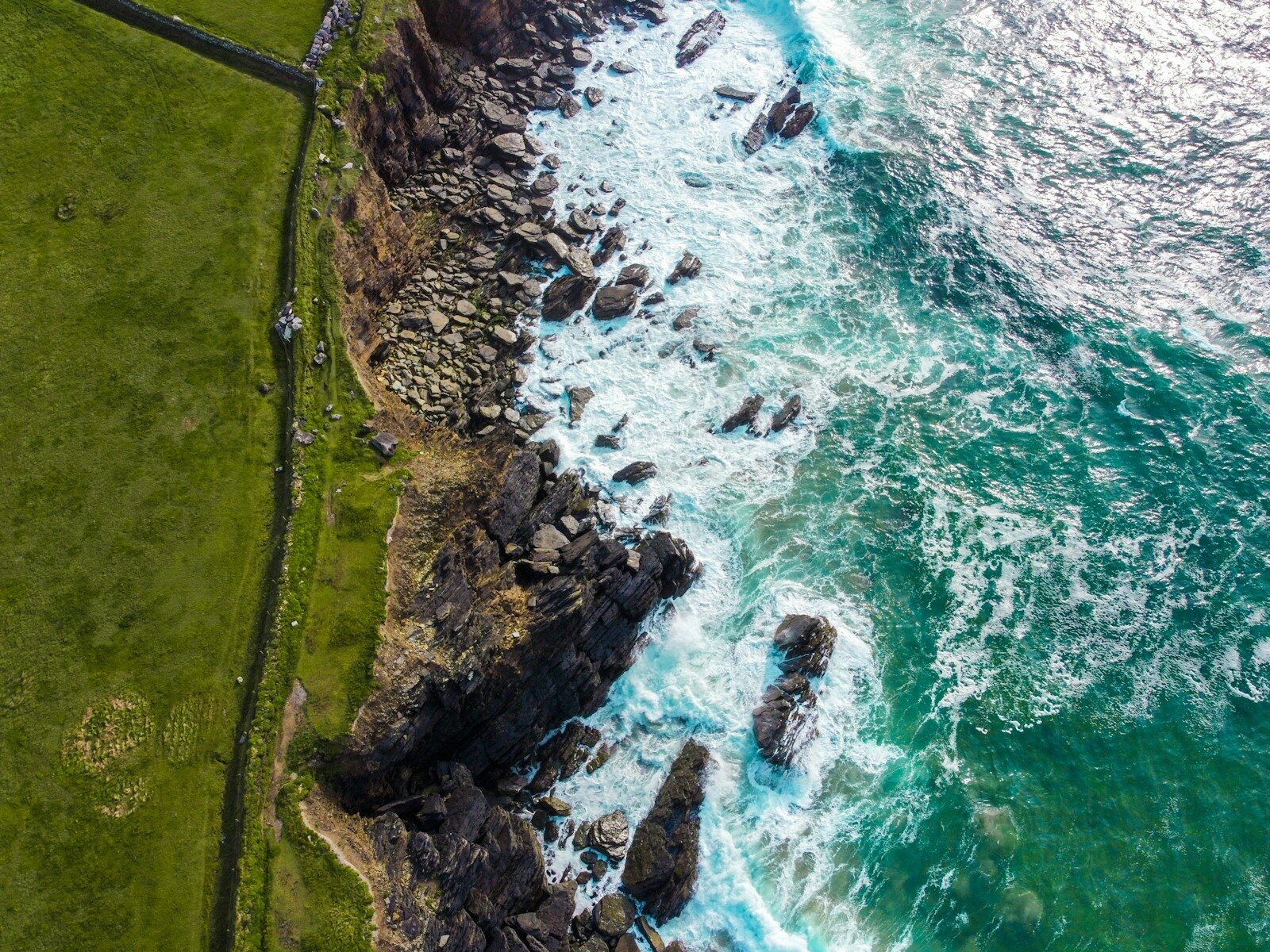
The geography is compact but varied. The centre is a low, flat plain of bogs and farmland, ringed by low mountains — the Wicklow Mountains south of Dublin, the MacGillycuddy’s Reeks in Kerry (Carrauntoohil, at 1,038 metres, is the island’s highest peak), the Twelve Bens in Connemara, and the Mourne Mountains in the north. The coastline is the star: 3,000 kilometres of it, much of it cliffs, with the Wild Atlantic Way tracing the western edge from Malin Head, the island’s most northerly point, to Kinsale on the south coast. The Burren in County Clare is a strange lunar landscape of limestone pavement where Arctic, Alpine, and Mediterranean plants grow side by side — the only place on Earth where that happens.
The climate is famously mild and famously changeable. The Gulf Stream keeps winters soft and summers cool: Dublin averages about 5°C (41°F) in January and 19°C (66°F) in July, and the west coast is a few degrees cooler and much wetter. Rain is possible on any day of any month — the west coast sees 150 to 200 rainy days a year — but it is usually drizzle, not downpour, and the locals’ favourite saying is that there is no bad weather, only the wrong jacket. The rule for packing is simple: layers, a waterproof jacket (not an umbrella — the Atlantic wind kills umbrellas), and shoes that can handle wet stone. Four seasons in one day is normal, especially on the west coast, and the light after a shower — low sun on wet green fields — is the most beautiful light in Europe.
The best months to visit are May and June, and September: long daylight (up to 17–18 hours in June), mild weather, wildflowers on the Burren, and the crowds at manageable levels. July and August are the warmest but also the busiest and priciest — book accommodation months ahead. Winter is dark by 4:30pm, but December brings Christmas markets and Dublin lit up like a film set, and January and February are the cheapest months to fly in.
People & Demographics
The Republic of Ireland has about 5.4 million people (2024 census: 5.38 million), and the island as a whole about 7.2 million including Northern Ireland. Dublin, at roughly 1.5 million in the metro area, holds nearly a third of the Republic’s population; the rest is spread across small cities — Cork (~220,000), Galway (~85,000), Limerick (~100,000) — and a countryside of villages, farms, and market towns where everybody seems to know everybody. The median age is around 39, and the country is young by European standards, partly because of a baby boom that followed the Celtic Tiger years and partly because Ireland’s tech sector — Google, Apple, Meta, and dozens more have their European headquarters in Dublin — keeps drawing young workers in.
English is the language of daily life, but Irish (Gaeilge) is the first official language, and about 40% of people claim some Irish. You will hear it daily in the Gaeltacht areas — the Irish-speaking regions on the west coast, in Donegal, Galway, and Kerry — and see it on every road sign, which is bilingual outside the Gaeltacht and Irish-only inside it. The accents are a journey in themselves: the quick Dublin lilt, the soft Cork brogue, the musical Galway accent, the Donegal burr that sounds almost Scottish. The good news: everyone will slow down if you ask, and most people will happily talk to you for twenty minutes about the weather, the match, or where you are from.
Ireland’s defining demographic fact is its diaspora: about 70 million people worldwide claim Irish ancestry — more than ten times the island’s population. That is why St Patrick’s Day is celebrated in every city on Earth, and why an Irish pub in Toronto or Sydney feels like a genuine embassy. The country is a parliamentary republic, an EU member since 1973, and famously neutral — not a NATO member, not a Schengen member (it shares the Common Travel Area with the UK instead). Religion is a background presence rather than a daily force: the country is historically Catholic, but church attendance has fallen sharply, and the Ireland of 2026 is one of the most socially liberal countries in Europe — it voted for same-sex marriage by referendum in 2015, the first country in the world to do so.
Mini phrasebook: Craic (fun / a good time — “What’s the craic?” means “What’s happening?”), Sláinte (cheers — pronounced “slawn-cha”), Grand (fine / OK — “It’s grand”), Feck (a mild swear word, made famous by Father Ted), The jacks (the toilet), Banjaxed (broken), Eejit (a fool, usually affectionate), “Sure, look it” (resigned acceptance of whatever just happened), “Thanks a million” (thank you very much). And the two words that will save your trip: “please” and “thank you” — used constantly, in every transaction, with everyone.
Culture, Etiquette & Daily Habits
Irish life runs on a set of unwritten rules, and visitors who learn them are rewarded with the warmest version of the country. The first and most sacred is the pub round. The pub is not a bar — it is the village living room, the office after work, the community centre, and the concert hall. You order at the bar, you pay at the bar, you do not tip at the bar, and if someone buys you a drink, you buy the next round. That last rule is the social contract of the pub, and breaking it is noticed. A Guinness is poured in two parts and takes about two minutes — do not order one and expect it instantly, and do not complain about the wait; the wait is the point.
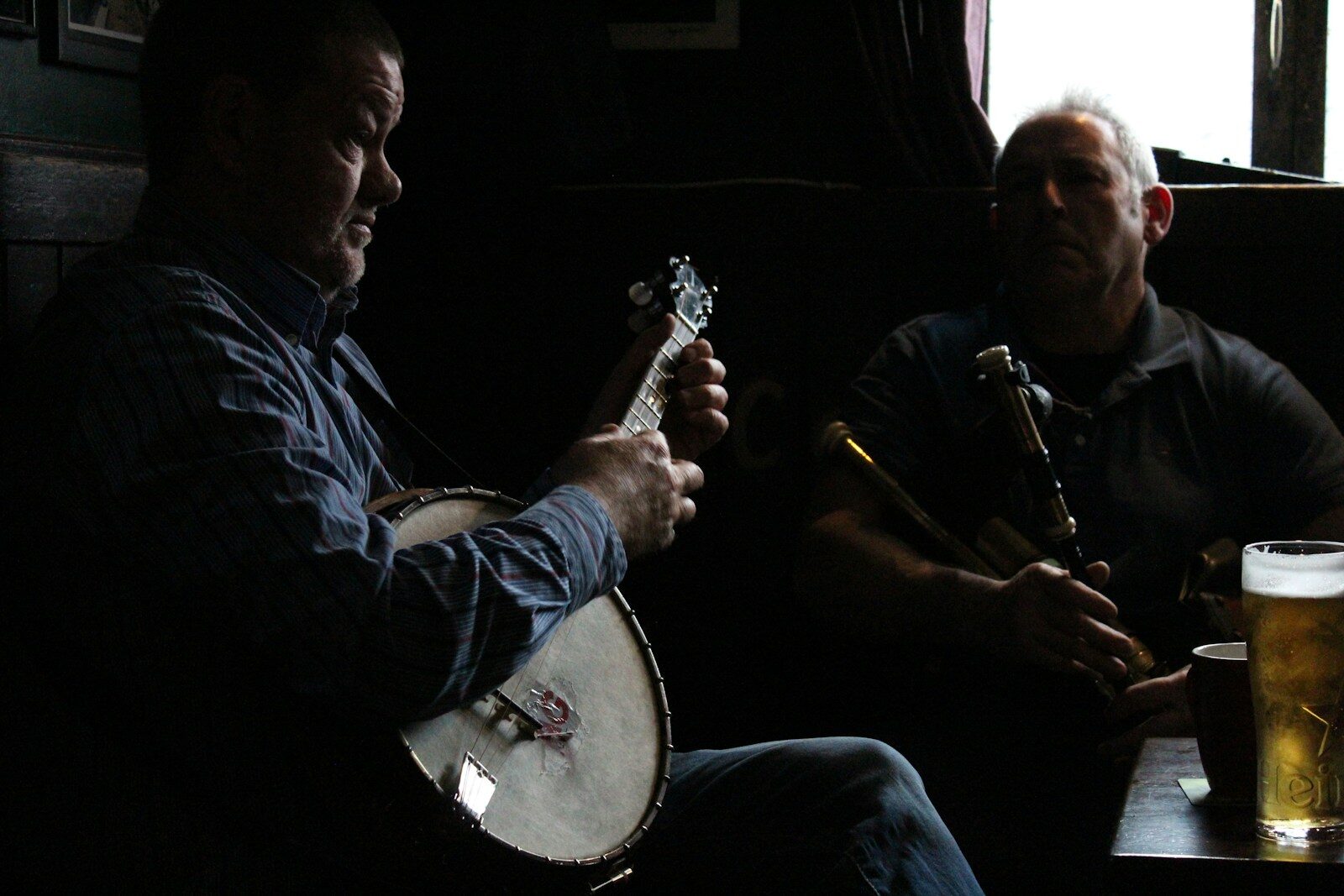
The second rule is conversation. The Irish talk — to strangers, to shopkeepers, to the bus driver, to you, at length, about anything. A question about directions can turn into a twenty-minute conversation about your life, their cousin in Boston, and the best pub in the parish. This is not small talk; it is the national art form, and the correct response is to stay, listen, and ask a question back. The third rule is music. Traditional music sessions — “trad sessions” — happen nightly in pubs across the west, especially in Galway, Doolin, and Dingle. A fiddle, a bodhrán drum, a tin whistle, and a room full of people who know the words. You do not need to know the songs. You need to be there.
Do: buy your round; say please and thank you to everyone, including bus drivers; try the house stout in a pub; learn a few Irish words — even “sláinte” earns a smile; dress for the weather, not the forecast; book the Book of Kells and the Cliffs of Moher online in advance.
Don’t: skip your round, ever; call the Republic “part of the UK” — it is not, and Northern Ireland is a different jurisdiction; order a Guinness and demand it immediately; assume the bill includes a tip — check, because a service charge is sometimes added, and if it is, you do not tip on top; or drive the Wild Atlantic Way in a storm without checking the forecast — check it daily, not weekly.
Two cultural notes worth knowing before you go. First, Halloween was invented here. The festival comes from Samhain, the ancient Celtic New Year on October 31 — the night the boundary between the living and the dead thinned. The modern Halloween, with its costumes and carved turnips (pumpkins came later, in America), traces directly to Irish emigrants. Second, the storytelling tradition is real and alive. Ireland has produced four Nobel laureates in literature — Yeats, Shaw, Beckett, and Heaney — and the country still treats a well-told story as a form of currency. In a pub in Dingle, the person next to you may well be a better storyteller than anyone you have ever met.
Lifestyle
Food is where Ireland surprises first-time visitors most. The old jokes about Irish cooking are a decade out of date: Dublin and Cork are serious food cities, Kinsale calls itself the gourmet capital of Ireland, and Galway’s oysters are famous across Europe. But the classics are still the point. Irish stew (€15–18: lamb, potatoes, carrots, and parsley) is the national dish. Boxty (a potato pancake, €10–14) is the west’s comfort food. Soda bread, baked daily in every bakery, is the bread that goes with everything. Fish and chips (€10–14) is a Friday institution. Seafood chowder (€9–12), thick with cream and Atlantic fish, is the dish to order in any coastal pub. And a full Irish breakfast (€10–14: eggs, bacon, sausage, black and white pudding, beans, mushrooms, toast) is a weekend ritual that will keep you going until dinner. Wash it down with a pint of Guinness (€5.50–6.50 in Dublin, ~€5 outside — a five-euro pint is hard to find in Dublin these days) and finish with an Irish coffee, invented at Foynes in 1943 for freezing transatlantic passengers.
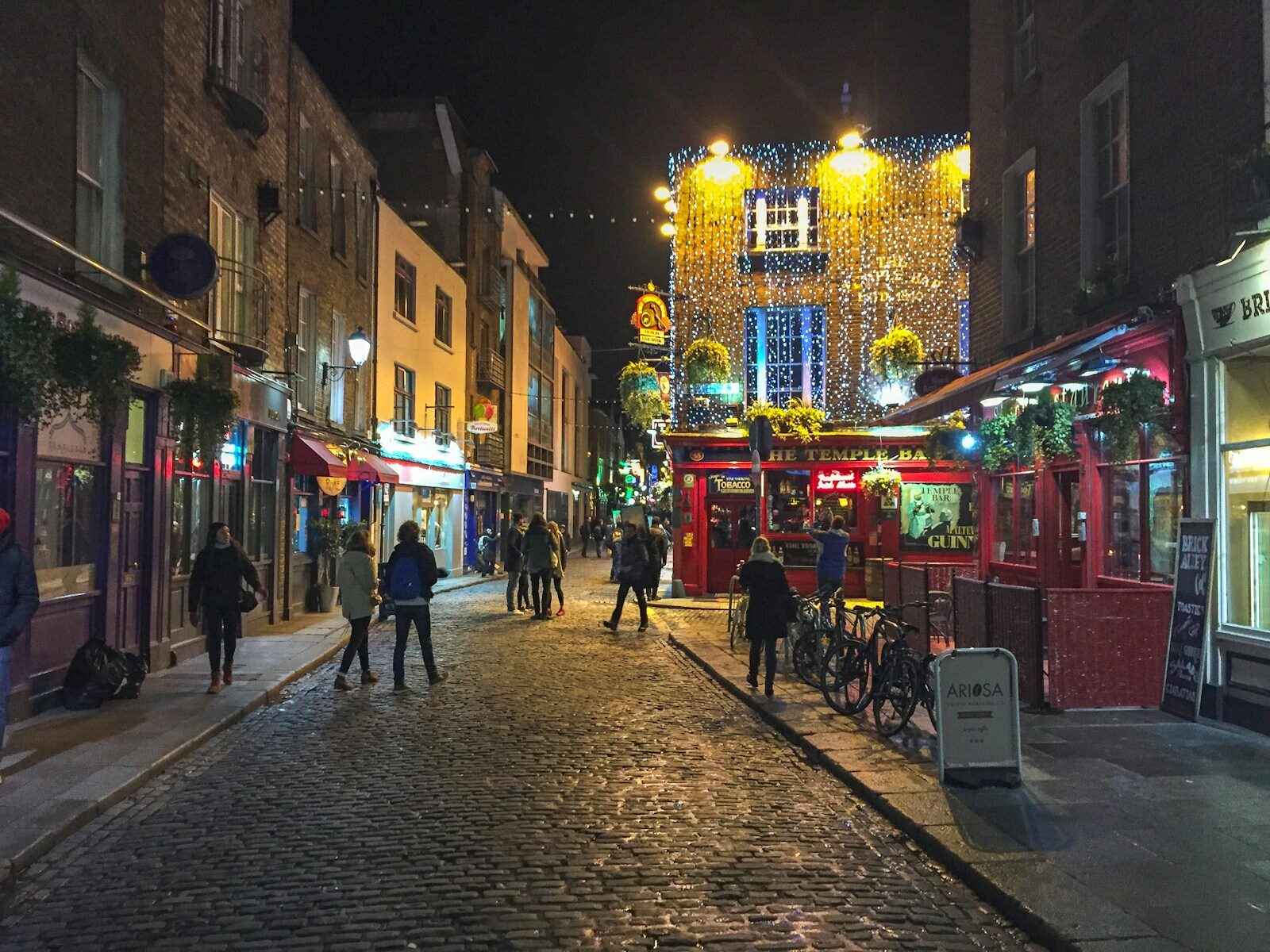
Work culture is office-first in Dublin’s tech corridor, but the working day ends at the pub: “after-work drinks” are a real institution, and a Friday evening in a Temple Bar pub is the best free show in the city. Nightlife runs from the theatres of Dublin (the Abbey, the Gate) to the clubs of Temple Bar, the trad sessions of Galway, and the late-night chippers that feed the post-pub crowd. Sport is a second religion: Gaelic football and hurling — the fastest field sport in the world, played with a stick and a ball at terrifying speed — fill Croke Park with 82,000 people, and a matchday in a pub is a cultural experience even if you do not follow the sport. Rugby is the other national obsession, and the Six Nations in February and March turns every pub in the country into a stadium.
Technology and tradition sit side by side: you can tap a bank card on the bus, the Luas tram, and the corner shop, yet the village post office still sells stamps, the red post box still stands, and the thatched cottage with a turf fire is still a real home, not a museum piece. The countryside is a way of life: the Sunday walk, the village pub, the GAA match, and the cream tea are not tourist attractions — they are Tuesday.
Main Cities
Dublin — the capital, and the only real city on the island at scale. Trinity College and the Book of Kells, the Guinness Storehouse at St James’s Gate, Temple Bar’s cobbled lanes, Grafton Street’s buskers, and the Liberties’ working-class heart. Two days minimum; three is better. The city is walkable, the pubs are the best in the country, and the free sights — St Stephen’s Green, the National Gallery, the National Museum — are genuinely excellent.
Cork — Ireland’s second city and its food capital, built on the River Lee with the English Market at its heart. Smaller, friendlier, and more rebellious than Dublin — Cork people will tell you, with a straight face, that theirs is the real capital. Use it as the base for Kinsale and the Wild Atlantic Way’s southern end.
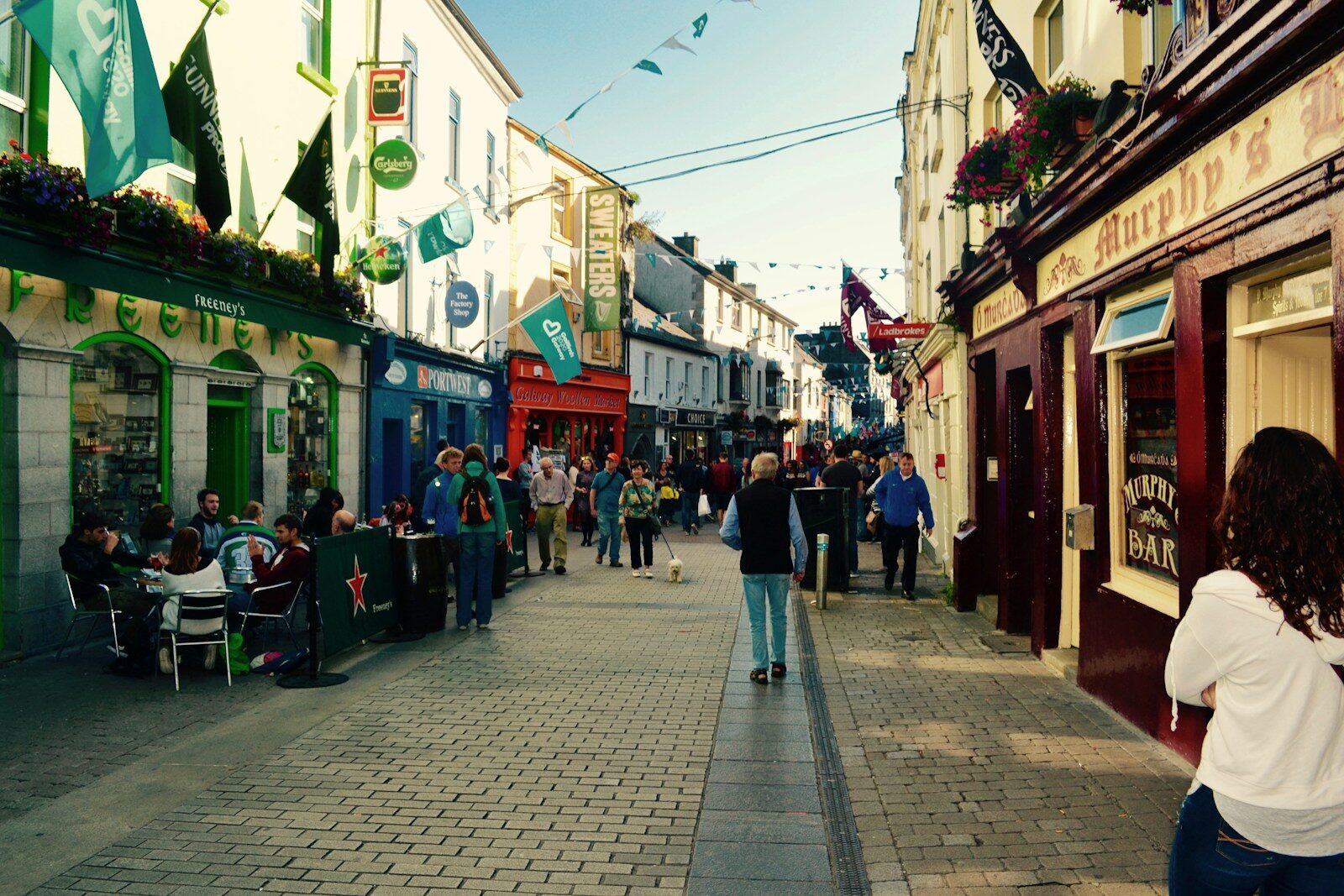
Galway — the cultural capital, a small city with an outsized soul: the Latin Quarter, the Spanish Arch, Eyre Square, and more trad sessions per square metre than anywhere else in Ireland. The gateway to Connemara and the Aran Islands, and the best base for the Cliffs of Moher.
Limerick — often skipped, which is a mistake. King John’s Castle (€16.50) on the Shannon, St Mary’s Cathedral (€5), and a riverside old town that rewards a slow afternoon. The cheapest intercity train in the country runs here from Galway (€7.50).
Kilkenny — the “Marble City”, a medieval gem of narrow lanes, Kilkenny Castle, and craft shops. The best overnight stop between Dublin and the south-west, and the prettiest small city in Ireland.
Belfast — across the border in Northern Ireland, two hours by train from Dublin. The Titanic Quarter, the Cathedral Quarter’s pubs, and the black cab tours of the city’s history. A different jurisdiction, a different currency (pounds), and a city that has reinvented itself completely.
Dingle (Daingean Uí Chúis) — a tiny fishing town on the Dingle Peninsula that punches far above its weight: the best trad pubs in Kerry, Fungi the dolphin’s old harbour, and the Slea Head Drive, one of the most beautiful coastal roads in Europe.
Killarney — the gateway to the Ring of Kerry and Killarney National Park: Muckross House, Torc Waterfall, the Lakes of Killarney, and the Gap of Dunloe. Tourist central in summer — book early — but the park itself is genuinely spectacular.
Top Places to Visit
- Cliffs of Moher (Co. Clare) — 214 metres high, 8 kilometres long, ~1.5 million visitors a year. Book online off-peak (€8 vs €15 at the gate); puffins nest late March to mid-July.
- Newgrange (Co. Meath) — the 5,200-year-old passage tomb, older than the pyramids, that catches the winter solstice sun. Book via the visitor centre only.
- The Burren (Co. Clare) — a lunar limestone landscape where Arctic, Alpine, and Mediterranean plants grow together; Poulnabrone dolmen is ~5,000 years old.
- Skellig Michael (Co. Kerry) — the UNESCO-listed monastery island from Star Wars; boat trips in summer, weather-dependent, book months ahead.
- Ring of Kerry (179 km) — Ireland’s classic scenic drive: Killarney, Waterville, Sneem, and the Skelligs viewpoint.
- Dingle Peninsula & Slea Head Drive — the most beautiful coastal road in Ireland, with beehive huts and views to the Blasket Islands.
- Aran Islands (Inis Mór) — Dún Aonghasa, a 3,000-year-old stone fort on a cliff edge; reached by ferry from Doolin or Galway.
- Connemara & Kylemore Abbey — wild bogs, the Twelve Bens, and a neo-Gothic abbey on a lake.
- Glendalough (Co. Wicklow) — a 6th-century monastic city in a mountain valley, an easy day trip from Dublin.
- Giant’s Causeway (Northern Ireland) — 40,000 interlocking basalt columns, a UNESCO site, ~2.5 hours from Dublin.
- Kinsale (Co. Cork) — the food capital, colourful harbour town, and the southern end of the Wild Atlantic Way.
- The Rock of Cashel (Co. Tipperary) — a medieval fortress on a limestone outcrop, the seat of the kings of Munster.
🎟️ Book experiences in Ireland
Tours we’d actually book — free cancellation on most. We may earn a commission if you book through these links, at no extra cost to you. Our affiliate disclosure.
- Cliffs of Moher, Burren & Galway City day tour from Dublin — the classic: two hours at the cliffs, the Burren’s lunar landscape, and free time in Galway (4.8★, 28,000+ reviews).
- Cliffs of Moher, Burren & Galway with entry — fast-track entry included, pub lunch in Fanore village, and a driver-guide who sings.
- Browse all Dublin tours & activities
🎟️ More ways to book (Viator)
Two more reader-favorite ways to see Ireland. We may earn a commission if you book through these links, at no extra cost to you. Our affiliate disclosure.
- Cliffs of Moher guided day trip with boat cruise & Aillwee Caves — see the cliffs from land and from the water, plus Ireland’s largest cave system.
- Cliffs of Moher day tour from Dublin, including the Wild Atlantic Way — the Burren, Doolin village, and the cliffs with entry included.
When to Visit & Getting Around
The 7-day Wild Atlantic Way shape: Days 1–2 Dublin (Trinity, Guinness, Temple Bar, Howth half-day). Day 3: train or bus to Galway, afternoon in the Latin Quarter. Day 4: Cliffs of Moher + the Burren (bus route 350 from Galway, or a day tour). Day 5: Connemara or the Aran Islands. Day 6: Dingle Peninsula and the Slea Head Drive. Day 7: Ring of Kerry, ending in Killarney or Kinsale. If you have a car, the whole route is yours; without one, base yourself in Dublin and Galway and use day tours for the cliffs and the peninsulas — it works, and it is cheaper than most people expect.
Seasons: May–June and September are the sweet spot — long daylight, mild weather, and manageable crowds. July–August is warmest (18–20°C) but busiest and priciest; book months ahead. Winter is dark by 4:30pm and wet, but December’s Christmas markets are lovely and January–February is the cheapest time to fly in. Festivals to catch: St Patrick’s Day (March 17, nationwide — Dublin’s festival runs several days), the Galway International Arts Festival (July), Bloomsday (June 16, Joyce’s Ulysses, Dublin), the Fleadh Cheoil traditional music festival (August, moves towns yearly), and the Lisdoonvarna Matchmaking Festival (September). To avoid: the August bank-holiday weekend if you hate crowds, and school mid-term weeks, when the attractions are packed.
Getting around Dublin: the Leap Card is the cheapest way around the city — the adult Zone 1 daily cap is €6, the weekly cap €24 (2026), covering buses, the Luas tram, and the DART coastal train. You do not need a car in Dublin; you will regret having one. Dublin Airport to the city centre is ~30 minutes by bus (€7–8) or taxi (€25–30).
Intercity trains (Irish Rail): Dublin–Galway ~2h 20m, Dublin–Cork ~2h 35m, Dublin–Belfast (Enterprise) ~2h 15m. Book advance fares at irishrail.ie — walk-up fares are much higher, and advance singles start around €20–30. All intercity routes radiate from Dublin; cross-country trains are rare, though Limerick–Galway runs direct in ~2 hours for ~€7.50. Buses: Bus Éireann’s Expressway network connects the towns the trains don’t reach; Galway to the Cliffs of Moher is route 350, ~2 hours each way, ~€10 each way, and the Leap Card works.
Driving: a car is the real way to do the Wild Atlantic Way. Economy rentals run ~€35–50 a day in summer — book early. Ireland drives on the LEFT, rural roads are narrow with stone walls, and single-track lanes have passing places. Fuel is ~€1.70 a litre. Most tolls are barrier-free and electronic; the M50 Dublin ring road is tolled by camera — pay online within 24 hours or face a fine. Watch for sheep on rural roads: they have right of way in practice, if not in law.
✈️ Find cheap flights to Ireland — compare fares across airlines and booking sites in one search. Affiliate link: we may earn a commission at no extra cost to you.
🚗 Rent a car in Ireland — compare rental prices across suppliers in one search. Affiliate link: we may earn a commission at no extra cost to you.
Budget
Ireland is not a cheap destination — Dublin is one of Europe’s pricier capitals — but it is very manageable with the right shape. Prices below are per person per day, in euros, with US dollar equivalents at €1 ≈ $1.11 (October 2026).
Budget: €75–110 (~$83–122) per day. Hostel dorm €30–50, supermarket and picnic lunches, free sights (the parks, the cathedral grounds, the coastal walks from Doolin, the Burren, Connemara), and Leap-capped Dublin transport at €6 a day. The best of Ireland — the cliffs, the coast roads, the trad sessions — costs nothing.
Mid-range: €160–240 (~$178–267) per day. A 3-star hotel or good B&B (€120–180 a night for a Dublin double), pub meals plus one restaurant dinner, the Guinness Storehouse (~€22–25) and the Book of Kells (~€21.50–26) plus one paid sight a day, and a Cliffs of Moher day tour from Dublin (~€57–65).
Comfort: €320+ (~$356+) per day. A boutique hotel, a rental car for the Wild Atlantic Way, private tours, and fine dining in Kinsale or Dublin. The Wild Atlantic Way by car, staying in country-house hotels, is one of Europe’s great road trips at this tier.
Money-saving truths: book Cliffs of Moher tickets online off-peak (€8 vs €15 at the gate); book trains 8–12 weeks ahead for the cheapest advance fares; eat the pub lunch, not the hotel breakfast; the Leap Card cap is the cheapest way around Dublin; and many of Ireland’s best sights — the cliff walks, the Burren, Connemara, the beaches — are free. The single biggest saving is travelling in May, June, or September instead of July and August: the same hotel can cost 30–40% less.
Practical Tips
- Connectivity: EU roaming applies for EU visitors; UK visitors should check their carrier (most UK plans still include Ireland). Everyone else: buy a local SIM at Dublin Airport or use an eSIM. Free Wi-Fi is everywhere — pubs, cafés, hotels, and most buses.
- Cash: cards (Visa/Mastercard) are accepted almost everywhere, including most rural pubs and petrol stations. American Express is less widely accepted. Carry some cash for small cafés, market stalls, and rural car parks. ATMs are plentiful in towns; scarce in the deep countryside.
- Power: Type G (three square pins), 230V — the same as the UK. North American visitors need an adapter; EU visitors need one too (Ireland uses UK-style plugs, not Europlugs).
- Crossing into Northern Ireland: the border is invisible — no checkpoints, no passport control — but the currency changes to pounds sterling and the speed limits change to miles per hour. Your phone may roam onto a UK network; check your plan.
- The weather rule: layers plus a waterproof jacket, always. Check the forecast daily, not weekly, and never plan a Wild Atlantic Way driving day around a single weather app — the west coast makes its own weather.
- Book ahead: the Book of Kells (timed entry, sells out in summer), the Cliffs of Moher (online tickets are cheaper), Skellig Michael boat trips (book months ahead), and any hotel in July and August. Ireland’s best experiences are capacity-limited.
- Emergency: 112 or 999 for police, ambulance, and fire. Pharmacies (“chemists”) can help with minor issues; the Irish health system treats EU visitors with an EHIC/GHIC card.
🛍️ Shop this guide: Ireland packing essentials
Gear we’d actually pack for this trip. As an Amazon Associate we earn from qualifying purchases — at no extra cost to you. Our affiliate disclosure.
- Packable rain jacket — the single most important item for Ireland: the west coast makes its own weather, and an umbrella won’t survive the wind.
- Waterproof hiking boots — for the Burren’s limestone, the Cliffs of Moher paths, and Connemara’s bogs.
- Universal travel adapter (Type G) — Ireland uses UK-style three-pin plugs at 230V; one adapter covers the whole trip.
- Portable charger (20,000mAh) — long days of maps, photos, and Wild Atlantic Way navigation drain batteries fast.
🧳 Plan your trip: Ireland
Flights, stays, tours, and cruises — booked in one place. We may earn a commission if you book through these links, at no extra cost to you. Our affiliate disclosure.
- ✈️ Find cheap flights to Ireland — compare fares across airlines and booking sites in one search.
- 🏨 Browse our Expedia Travel Shop — hand-picked stays and travel deals from our curated storefront.
- 🎟️ Browse Dublin tours & activities — free cancellation on most.
- 🛳️ Compare British Isles cruises on CruiseDirect — sailings calling at Dublin, Cork, and Belfast.
Closing
Ireland does something no other country in this series has done: it makes you feel like you belong there within about forty-eight hours. It is the pub landlord who remembers your order on the second night, the bus driver who waits while you run, the farmer who stops his tractor to give you directions and then asks where you are from and whether you have eaten. The cliffs and the castles are the reason you book the flight. The people are the reason you start planning the return before you have left.
Seven days on the Wild Atlantic Way will give you the shape of the country — Dublin’s streets, the Cliffs of Moher at sunset, a trad session in Galway, the Burren’s strange stones, and the long green road to Dingle. But the honest truth is that seven days is only the beginning: the route is 2,500 kilometres long, and every local you meet will tell you about the stretch you missed. Listen to them. Then go back.
FAQ
How many days do you need in Ireland?
Seven days is the sweet spot for a first trip: two days in Dublin, two in Galway and the Cliffs of Moher, and three driving the south-west (Dingle, Ring of Kerry, Kinsale). Ten days lets you add Donegal and the north. The full Wild Atlantic Way is 2,500 km — nobody does it in one trip.
Is Ireland expensive?
Dublin is one of Europe’s pricier capitals, but the country is manageable: budget travellers can do €75–110 a day, mid-range €160–240. The biggest savings are travelling in May, June, or September, booking trains early, and eating pub lunches.
Do I need a visa for Ireland?
EU/EEA/UK citizens need none. US, Canadian, Australian, New Zealand, Japanese, and South Korean nationals get visa-free short stays (normally up to 90 days). Ireland is NOT in Schengen — a Schengen visa does not cover Ireland. Check irishimmigration.ie for your nationality.
What is the best time to visit Ireland?
May–June and September: long daylight, mild weather, fewer crowds. July–August is warmest but busiest and priciest. Winter is dark and wet but cheapest, with Christmas markets in December.
Can I drive the Wild Atlantic Way without a car?
Yes, with a base in Dublin and Galway plus day tours for the Cliffs of Moher and the peninsulas — but a rental car (~€35–50/day in summer) is the real way to do it. Ireland drives on the left; rural roads are narrow with stone walls.
Is Ireland safe for tourists?
One of the safest countries in Europe. The main risks are pickpockets in crowded Dublin spots (Temple Bar, Grafton Street) and rural road driving. Emergency number: 112 or 999.
Keep exploring
- London in 4 Days: The Free-Attractions Master Plan — cross the Irish Sea for the free museums, the Tower, and Edinburgh, the city the Irish built their ferry routes to.
- Lisbon in 3 Days + Day Trips to Sintra & Porto — another Atlantic edge, another fado-soaked capital — Portugal’s melancholy songs are Ireland’s closest cousins.
- Barcelona vs Madrid: Which City Should You Visit First? — from the Wild Atlantic Way to the Mediterranean: Spain’s two great cities, compared honestly.
- Paris Like a Local: 3 Days Beyond the Eiffel Tower — the ferry from Ireland lands in France, and Paris is the natural next stop.
- Santorini Alternatives: Naxos & Paros, the Islands Greeks Visit — if Ireland’s islands hooked you, Greece’s quieter Cyclades are the next chapter.
[…] The Wild Atlantic Way in 7 Days: Ireland’s Greatest Road Trip […]
[…] The Wild Atlantic Way in 7 Days: Ireland’s Greatest Road Trip […]
[…] The Wild Atlantic Way in 7 Days: Ireland’s Greatest Road Trip […]