
 admin
Everyone arrives in Bali expecting the beach. They post the infinity pool, the Bintang at sunset, the scooter selfie — and then something unexpected happens: they wake at dawn to gamelan drifting over a temple courtyard, step around a flower offering on the sidewalk, and realize the beach was never the point. Bali is Indonesia’s only Hindu-majority province, an island that runs on ritual as much as on tourism, where a 210-day spiritual calendar decides when the streets go quiet and when they parade demons. This guide takes you past the beach clubs into the Bali that makes travelers stay longer than planned: Ubud’s temples and terraces, the sacred mountain, and the strangest New Year on Earth — Nyepi, the Day of Silence.
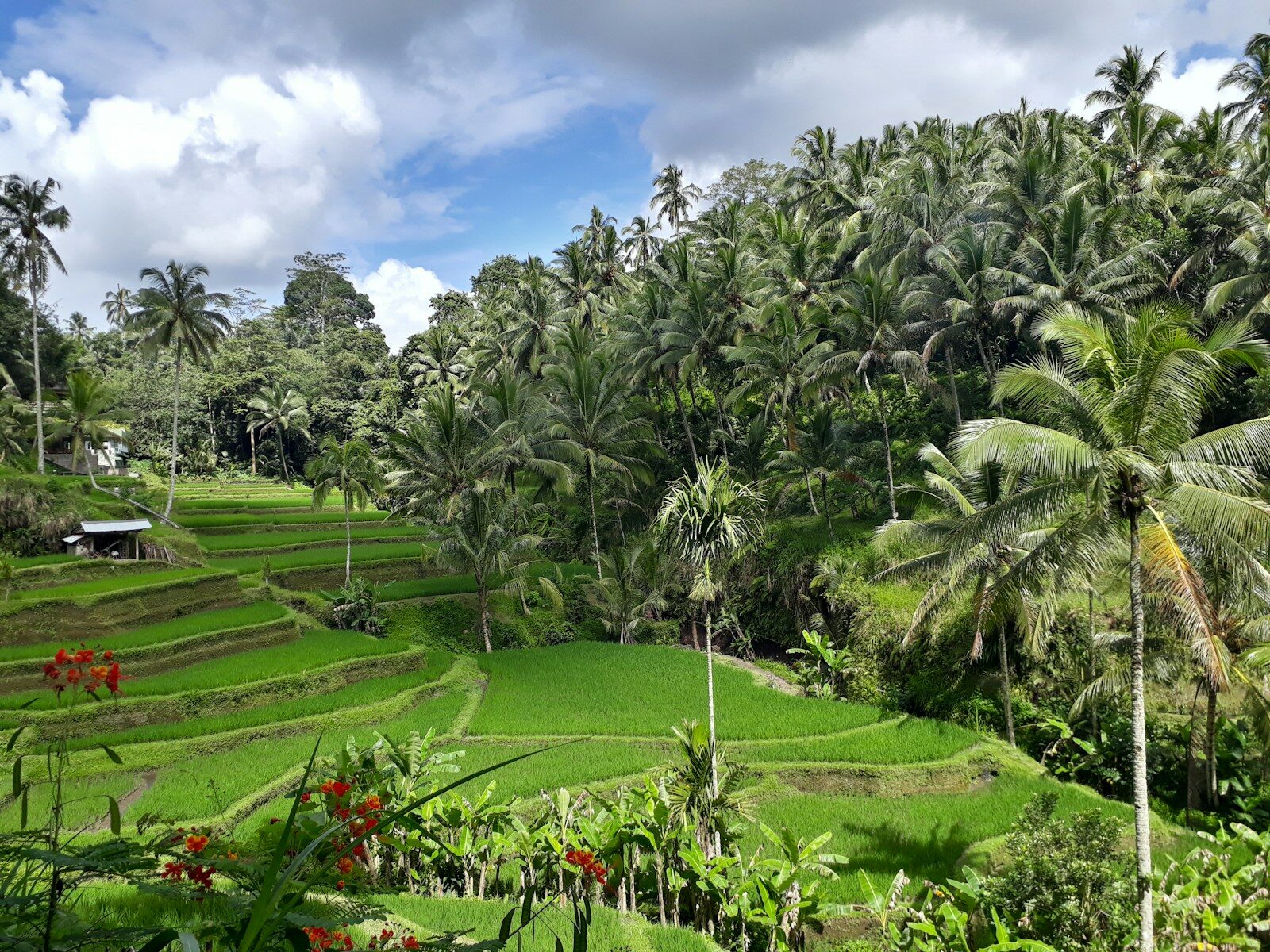
Geography & Climate: A Small Island With Big Vertical Range
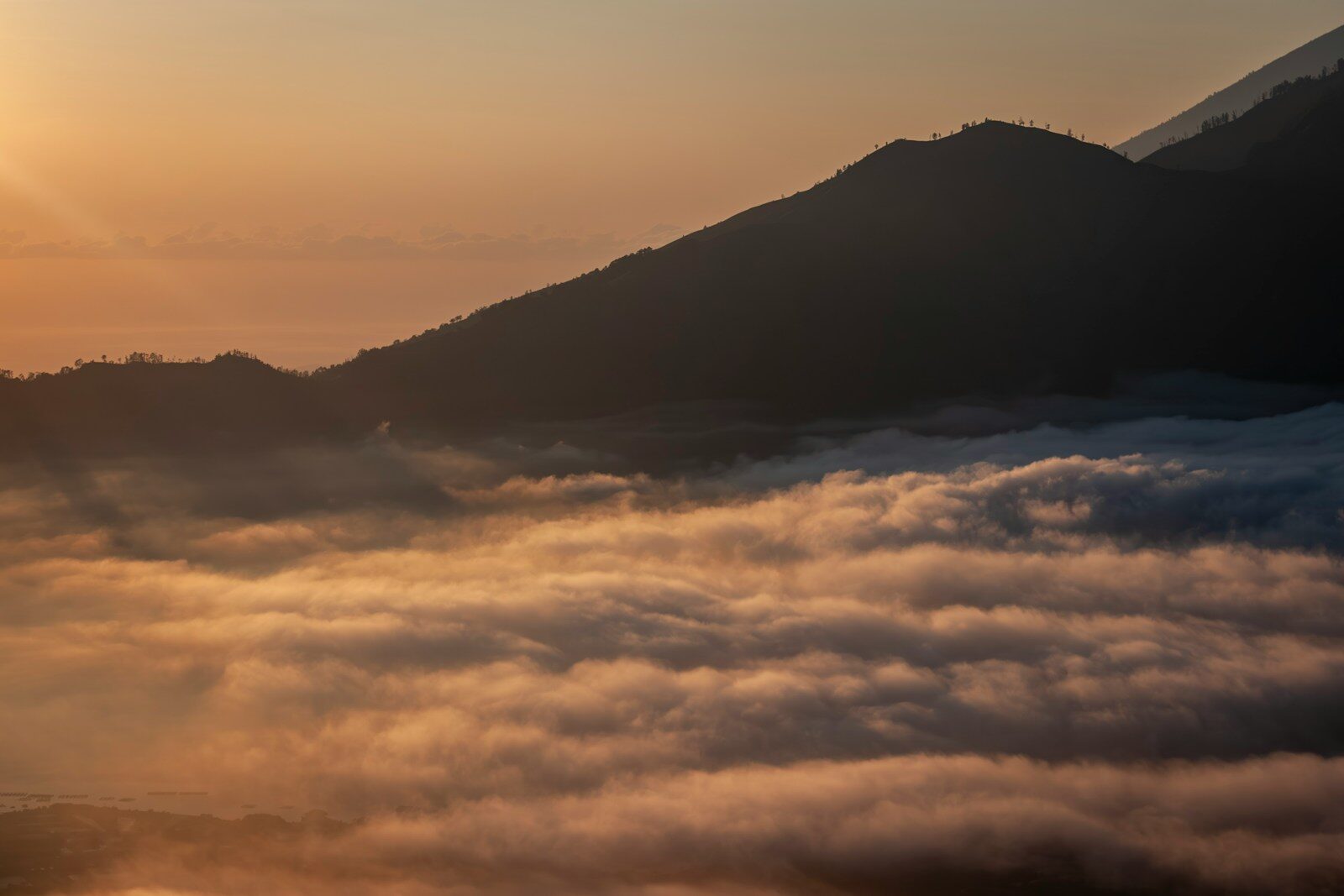
Bali is the westernmost of Indonesia’s Lesser Sunda Islands, between Java to the west and Lombok to the east. It’s small — about 5,580 km², roughly half the size of Jamaica — yet it packs real vertical drama: the volcanic spine of Mount Agung (3,031 m) and Mount Batur (1,717 m) rises above terraced highlands, jungle valleys, and beaches that shift from black volcanic sand in the north to white coral sand in the south. The province also includes three offshore islands — Nusa Penida, Nusa Lembongan, and Nusa Ceningan — famous for cliffs and dive sites.
The island divides naturally into regions travelers plan around: the central highlands (Ubud and the rice-belt villages, cooler and spiritual), the south (Seminyak, Canggu, Kuta — surf, dining, nightlife), the Bukit Peninsula (Uluwatu’s dramatic cliffs and temple), the east coast (Sanur and the fast boats to the Nusa islands), the north (quieter black-sand beaches and diving), and the volcanic interior (Mount Batur and the sacred Besakih complex on Agung’s slopes).
Climate is tropical year-round — daytime highs around 28–32°C in the lowlands, cooler in the highlands. The seasons that matter are rain, not temperature:
- Dry season (April–October): the best visiting window — sunny, lower humidity, calm seas for boats and diving. Peak months are July–August and Christmas/New Year: book accommodation early, expect the highest prices.
- Wet season (November–March): short, intense tropical downpours, usually in the afternoons — the island turns impossibly green, crowds thin, and prices drop. This is also when Nyepi falls — a genuine reason to consider a March trip despite the rain (more on that below).
- Shoulder seasons (April–June, September–October): the sweet spot — good weather, saner prices, fewer crowds.
Natural hazards: Bali sits on the Pacific Ring of Fire. Mount Agung erupted as recently as 2017–2019, and ash clouds can disrupt flights. Get travel insurance that covers natural-disaster disruption
People & Demographics: 4.46 Million, One Hindu Island
Bali’s population is about 4.46 million (mid-2025 estimate) — and what defines it is religion. Bali is the only Hindu-majority province in Indonesia (the world’s largest Muslim-majority nation): roughly 86% of Balinese practice Balinese Hinduism, a distinct tradition blending Hinduism with animist and ancestor-worship roots. The island’s nicknames — “Island of the Gods” and “Island of a Thousand Temples” — are earned: an estimated 10,000+ temples dot the island, from grand complexes like Besakih to tiny family shrines in every compound.
The capital is Denpasar; Ubud is the cultural center. Tourism is roughly 80% of the island’s economy — which explains both the polished visitor infrastructure and the fierce protection of the culture that draws people here. TripAdvisor named Bali the world’s top destination in its 2026 Travelers’ Choice awards.
Languages: Indonesian is official; Balinese is spoken daily; English works in tourist areas. Mini phrasebox: selamat pagi (good morning), terima kasih (thank you), berapa? (how much?). One cultural note: Balinese Hindus traditionally take one of four names by birth order — Wayan, Made, Nyoman, Ketut — then it repeats. Meet a Wayan and a Ketut and you know who’s older.
Currency: the Indonesian rupiah (IDR/Rp). As of October 2026, 1 CAD ≈ 12,650–12,800 IDR (approximate). Prices come in thousands — IDR 150k is about five dollars.
Culture, Etiquette & Daily Habits
A few norms that matter for visitors:
- Canang sari (daily offerings): every morning, Balinese families place small palm-leaf baskets of flowers, rice, and incense on doorsteps, shrines, and sidewalks. They are offerings to the gods. Never step on one — step around, always.
- Temple dress code: a sarong and sash are required at temples (rentable at entrances, often included in the entry fee). Cover shoulders and knees. Traditionally, menstruating women are asked not to enter temples — respect the sign rather than debating it.
- The head is sacred: never touch anyone’s head, including children’s. Don’t hand things over with your left hand (considered impure) — use your right or both hands.
- Ceremonies first, cameras second: you’ll stumble into processions, cremations, and temple festivals constantly. Ask before photographing ceremonies, keep a respectful distance, and never walk in front of a procession.
- Bargaining: expected at markets and with street vendors — start around 50–60% of the asking price, settle in the middle, and keep it friendly. Fixed prices apply in shops with marked tags, restaurants, and malls.
- Shoes: remove them before entering temples’ inner sanctums and always before entering someone’s home.
Tipping isn’t traditional, but a 5–10% service charge is common at tourist-area restaurants — check the bill. Rounding up for drivers and guides is appreciated.
The most profound event to plan around is Nyepi, the Balinese Hindu New Year and Day of Silence. For exactly 24 hours (6 AM to 6 AM), the entire island stops: the airport closes, streets empty, shops shutter, no lights are visible, mobile data is restricted, and even tourists must stay inside their hotels while traditional pecalang guards patrol. It is the opposite of every other New Year on Earth — and the night before, villages parade giant ogoh-ogoh demon effigies through the streets before burning them. The next Nyepi falls on Monday, March 8, 2027 (2026’s was March 19). Book a hotel with a pool and a good book, because you will not be leaving it.
Lifestyle: Offerings at Dawn, Gamelan at Dusk
Food is the everyday adventure. The essential order is nasi campur (mixed rice with small portions of meat, vegetables, peanuts, and sambal), available at humble warungs for about IDR 35k (~$2). Don’t miss babi guling (spit-roasted suckling pig), bebek betutu (slow-cooked duck in banana leaf), lawar, and sate lilit (minced satay on lemongrass stalks). Coffee culture runs deep — try a highland plantation tasting, where kopi luwak (civet coffee) is the famous, divisive specialty. The island’s beer is Bintang, served ice-cold at every sunset viewpoint.
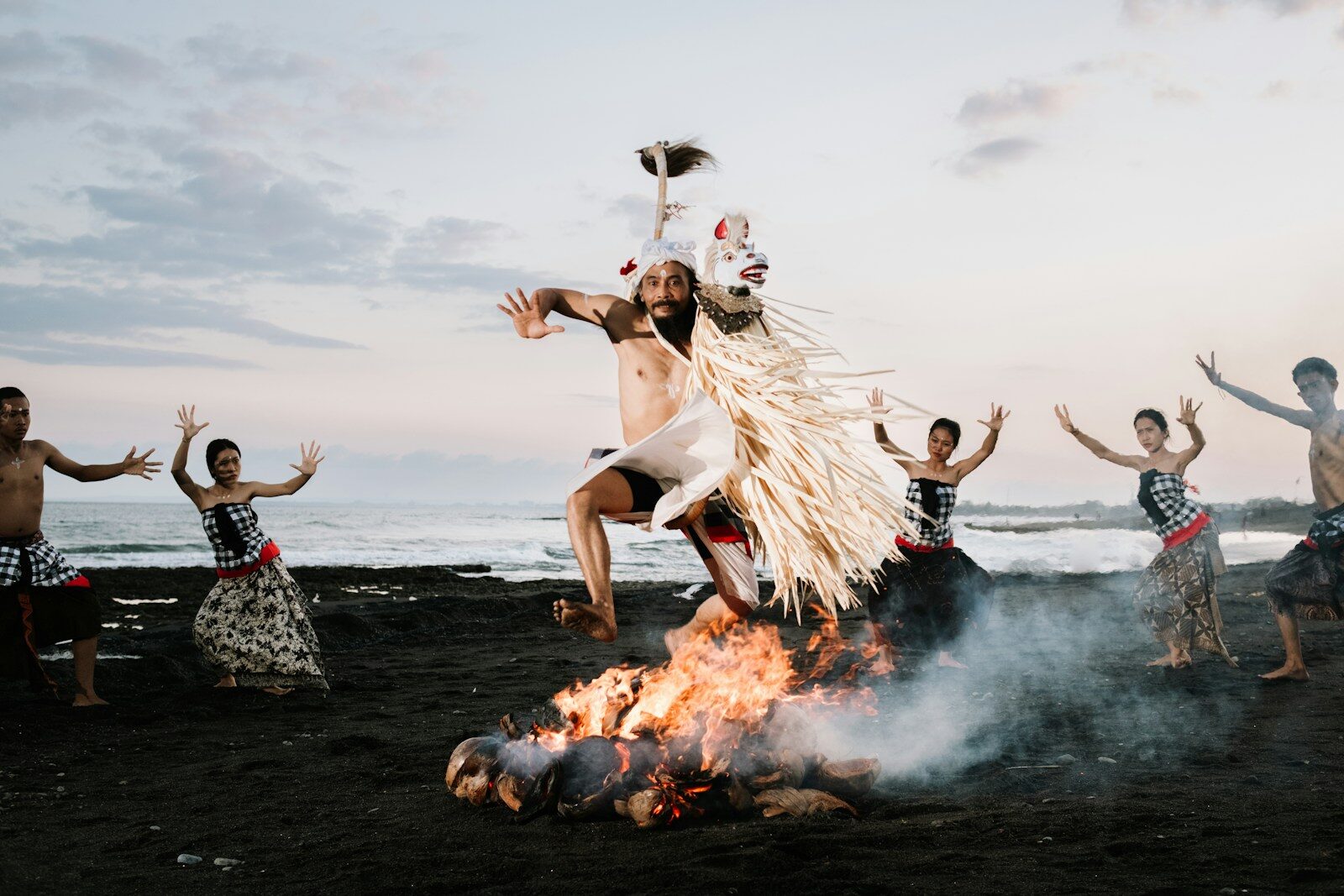
Daily rhythms follow the ritual calendar as much as the clock. Mornings belong to offerings and market runs; afternoons slow in the heat; evenings belong to gamelan orchestras and dance — the hypnotic kecak fire dance (a chanting circle telling the Ramayana at sunset), the graceful legong, and the dramatic barong lion dance, performed nightly at Ubud Palace and the Saraswati Temple lotus pond. Bali also runs a 210-day ritual calendar (Pawukon) alongside the Gregorian one — there is always a ceremony somewhere, which is why the island feels permanently mid-festival.
The digital-nomad layer: Canggu and Ubud host one of the world’s densest remote-worker scenes — coworking spaces and café culture that you’ll happily benefit from.
Main Cities: Where to Go
Ubud — The cultural heart of Bali and the anchor of this guide. Set in the cool highlands among rice paddies and river gorges: temples, art markets, yoga studios, jungle villas. Base here for the island’s spiritual side — the Sacred Monkey Forest, Ubud Palace, evening dance performances, and day trips to every major temple and terrace. 3–4 days minimum.
Denpasar — The capital: busy, local, largely untouristy. The Bali Museum and local markets offer half a day of everyday-island life between airport runs.
Canggu — Surf town turned digital-nomad capital: black-sand beaches, beach clubs, coworking cafés, and excellent casual dining. Ideal for surf mornings and laptop afternoons.
Seminyak — The polished south: high-end restaurants, designer boutiques, beach clubs, and fine dining ($30+ per person at the top tables) — where Bali does luxury-by-the-beach.
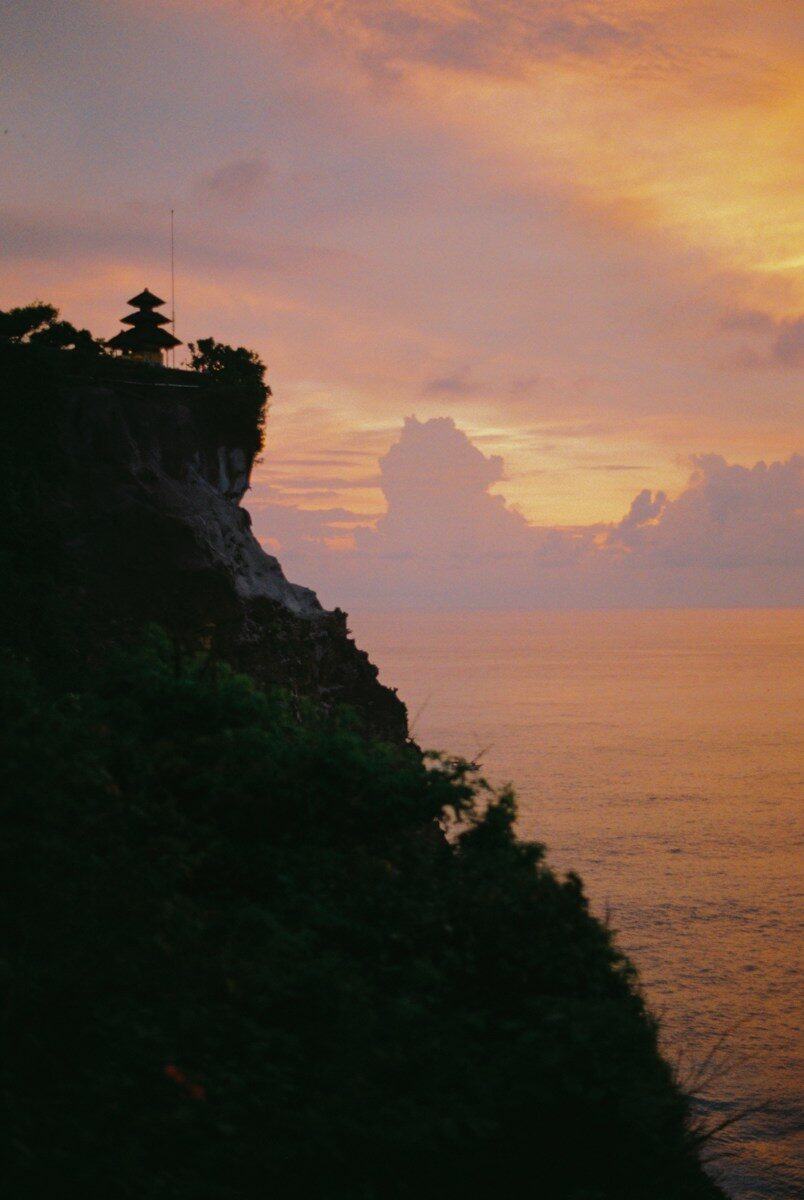
Uluwatu — The Bukit Peninsula’s cliff country: limestone cliffs, world-class surf breaks, clifftop infinity pools, and the Uluwatu Temple with its sunset kecak performances. Rugged and spread out — rent transport.
Nusa Dua — The gated resort enclave: manicured, calm, family-friendly white-sand beaches and big international hotels. The least “Balinese” feeling base, and the most relaxing.
Sanur — The mellow east coast: a long beachfront promenade, calm shallow water, and the main departure point for fast boats to Nusa Penida and Nusa Lembongan (30–45 minutes).
Top Places to Visit: Beyond the Cities
- Tegalalang Rice Terrace — The sculpted emerald paddies ~20 minutes north of Ubud, part of the UNESCO-listed subak irrigation system (World Heritage, 2012 — “Cultural Landscape of Bali Province”). Go at sunrise before the swings and cafés fill.
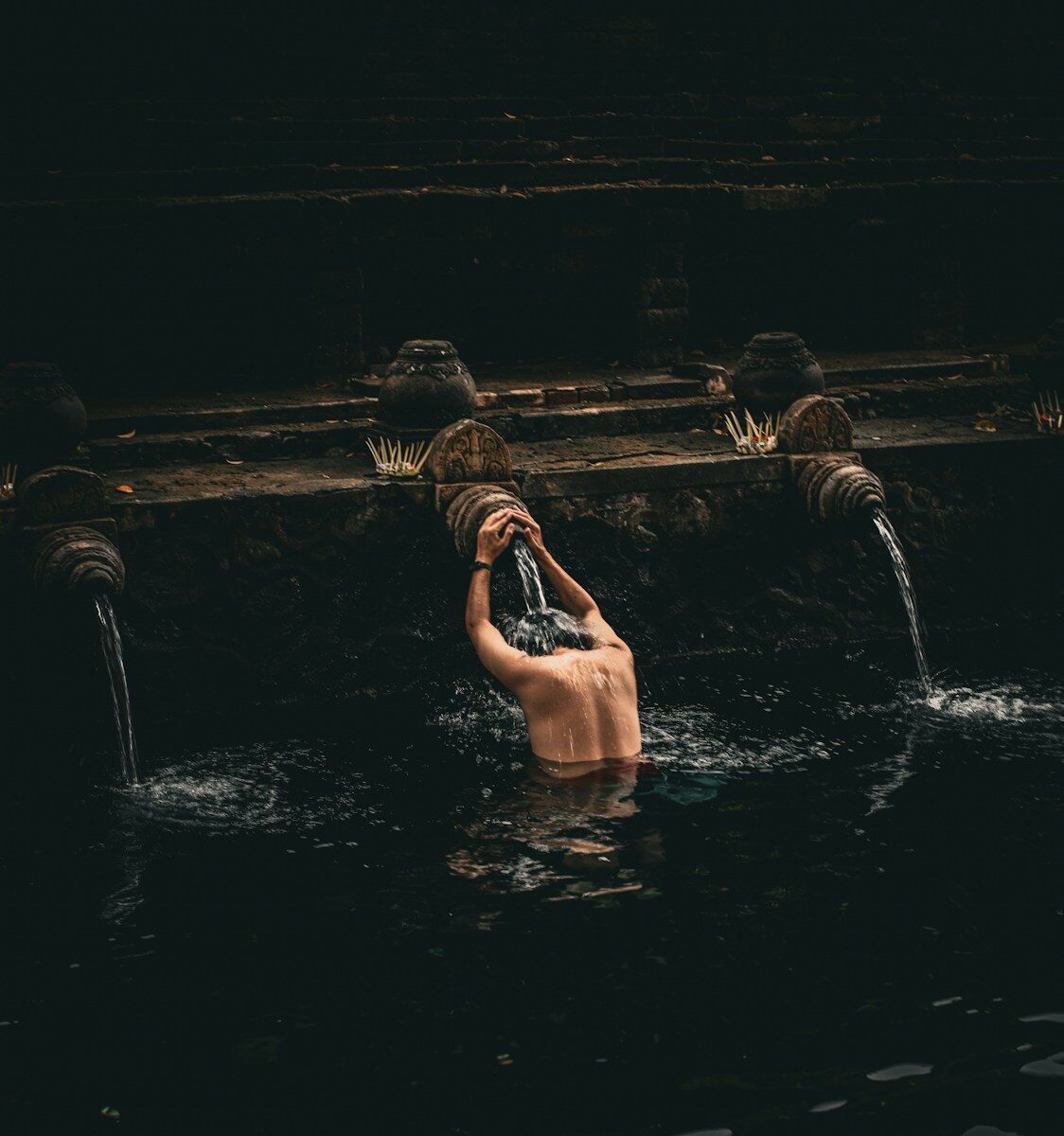
- Tirta Empul Temple — The holy spring water temple near Tampaksiring: join the purification ritual under the fountains (rent a sarong, follow the prescribed order of the spouts). One of Bali’s most moving experiences.
- Goa Gajah (Elephant Cave) — An 11th-century sanctuary entered through a demon-mouth carved into rock, with bathing pools and jungle paths beyond.
- Sacred Monkey Forest (Ubud) — ~700 long-tailed macaques in a mossy temple forest. Secure sunglasses, food, and anything shiny.
- Uluwatu Temple (Pura Luhur Uluwatu) — Cliff-top sea temple; stay for the sunset kecak fire dance in the clifftop amphitheater.
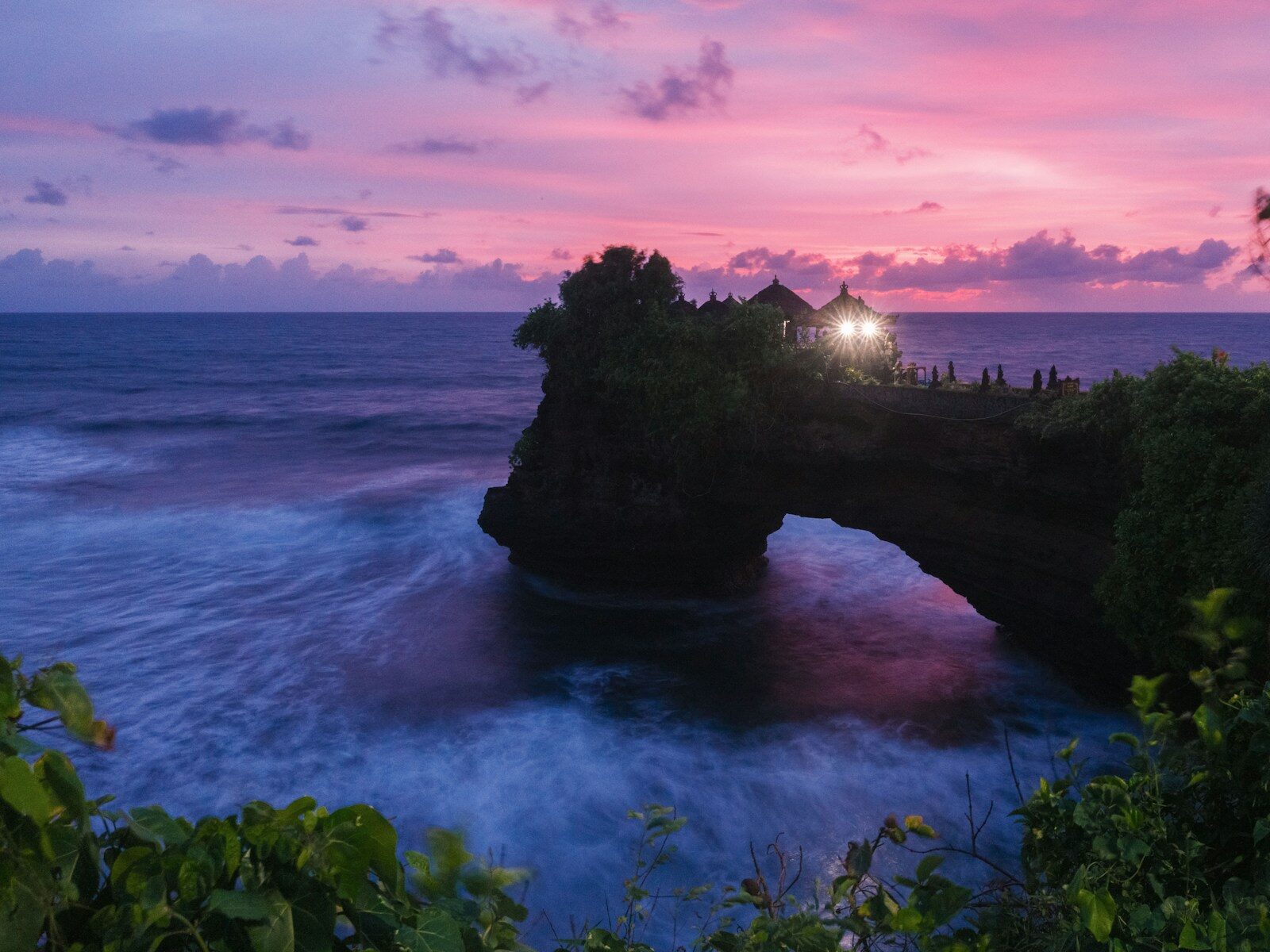
- Tanah Lot — The offshore rock temple silhouetted at sunset — Bali’s most photographed sea temple. Visit at low tide to walk closer.
- Besakih (Mother Temple) — Bali’s holiest complex, 23 temples climbing Mount Agung’s slopes. Hire an official guide at the counter — the complex is vast and the etiquette matters.
- Nusa Penida — The offshore island of cliffs: Kelingking Beach (the T-Rex headland), Angel’s Billabong, manta-ray snorkeling. Fast boat from Sanur; better as an overnight than a rushed day trip.
- Mount Batur — The 1,717 m volcano: the classic sunrise trek starts at 2–4 AM. Book with a licensed trekking company.
- Tegenungan Waterfall — The accessible jungle waterfall near Ubud: a short descent to a swimmable pool. Go in the morning before the crowds.
🎟️ Book experiences in Bali
Tours we’d actually book — free cancellation on most. We may earn a commission if you book through these links, at no extra cost to you. Our affiliate disclosure.
- Sunrise Mount Batur hike with breakfast — above the clouds by dawn, back down for lunch.
- Taman Beji Griya waterfall purification ritual — Bali’s spiritual side: a traditional blessing at a waterfall temple.
- Browse all Bali tours & activities
🎟️ More ways to book (Viator)
Two more reader-favorite ways to see Bali. We may earn a commission if you book through these links, at no extra cost to you. Our affiliate disclosure.
- Mount Batur sunrise trekking — breakfast at the summit, recommended by 99% of travelers.
- Mount Batur sunrise trek + white-water rafting combo — two bucket-list days in one.
When to Visit & Getting Around
Seasons: dry season (April–October) is the best visiting window; April–June and September–October balance weather, prices, and crowds. July–August and Christmas/New Year are peak — book early. Wet season (November–March) brings afternoon downpours, greener landscapes, and lower prices — and Nyepi (March 8, 2027) sits at its tail, a legitimate reason to consider March.
Bali has no real public transit, so plan your transport:
- Scooter rental (~IDR 150k/day, ~$5–7): the local default — but experienced riders only. Traffic is chaotic, they drive on the left, helmets are legally required, and scooter accidents are the #1 tourist injury. Get travel insurance that explicitly covers motorbikes (many policies exclude them).
- Grab/Gojek: ride-hailing for cars and motorbike taxis, cheap and everywhere — prices fixed in the app.
- Private driver (~IDR 500k/day, ~$30–35): the best value for day trips — Ubud temple circuits, Mount Batur transfers, the Bukit. Book via your hotel or a reputable operator.
- Airport (Ngurah Rai/DPS) transfers: Ubud is ~1–1.5 hours by car depending on traffic; Seminyak/Canggu ~30–60 minutes.
- Fast boats to the Nusa islands depart from Sanur harbour (~30–45 minutes). Book a reputable operator; check sea conditions in wet season.
✈️ Find cheap flights to Bali — compare fares across airlines and booking sites in one search. Affiliate link: we may earn a commission at no extra cost to you.
🚗 Rent a car in Bali — compare rental prices across suppliers in one search. Affiliate link: we may earn a commission at no extra cost to you.
Budget: What Bali Costs (per person/day, in-country, excluding international flights)
- Backpacker: $25–55 — Hostel dorms ($10–20), warung meals at $2–5, a rented scooter, free beaches and waterfalls.
- Mid-range: $70–150 — Boutique hotel with pool ($30–55/night), warungs plus cafés ($15–25/day food), Grab/Gojek or a private driver for day trips. A 10-day mid-range trip runs roughly $1,200–1,500 per person excluding flights.
- Luxury: $250+ — Private villas ($70–300+/night and up), fine dining, private drivers — no real ceiling.
Money-saving truths: the warung is not the budget compromise — it’s where the best food is. Negotiate scooter and driver rates for multi-day hire. Use bank-attached ATMs and decline the “conversion” offer. Bali is cash-heavy: warungs, temples, and markets take cash; cards work at hotels, malls, and upscale restaurants. Carry small bills.
Visa & entry costs for Canadians (checked October 2026): Canadians are not visa-exempt — use Visa on Arrival (IDR 500,000): 30 days, extendable once (another IDR 500,000 at an immigration office). Apply online before departure via the official eVisa portal (evisa.imigrasi.go.id) to use the autogate lanes. Separately, the Bali tourist levy is mandatory: IDR 150,000 (~$10 USD) per visitor, paid once per trip via the official Love Bali portal (lovebali.baliprov.go.id) — the VOA fee does not cover it, and copycat sites abound. All travelers must also complete the All Indonesia Arrival Card within 3 days before arrival. Passport valid 6+ months; onward ticket required. Staying 60+ days? You need a different visa class (e.g., C1/B211) arranged in advance — a VOA cannot be converted inside Indonesia.
Practical Tips
- Water: do not drink tap water. Bottled water is everywhere and cheap; most hotels provide it daily.
- SIM & data: grab a tourist SIM or eSIM at the airport (~IDR 100–150k with generous data). Note: mobile data is restricted island-wide during Nyepi — plan accordingly if you’re there in March.
- Cash: carry rupiah in small bills. Money changers: count carefully and use authorized changers — shortchanging scams are the classic rip-off.
- Dogs: stray dogs are common and rabies is a real risk — don’t pet them, and ask your travel clinic about pre-trip rabies advice before you go.
- Sun & mosquitoes: the sun is strong year-round (high SPF, reapply after swimming); dengue exists, so use repellent, especially at dawn and dusk.
- Power plugs: types C and F (European), 230V — most modern chargers need only a simple adapter.
- Scams to know: overpriced “guides” at temple gates (use the official counters), timeshare pitches in Kuta, and the money-changer trick above. Agree on driver and tour prices upfront.
🛍️ Shop this guide: Bali packing essentials
Gear we’d actually pack for this trip. As an Amazon Associate we earn from qualifying purchases — at no extra cost to you. Our affiliate disclosure.
- Reef-safe sunscreen — Nusa Penida’s mantas swim in protected waters; bring the coral-safe kind.
- Waterproof phone pouch — waterfall swims and the Tirta Empul purification ritual.
- Lightweight sarong — temple dress code (cover shoulders and knees) plus beach wrap in one.
- Dry bag — ATV jungle rides and Ayung River rafting soak everything.
🧳 Plan your trip: Bali
Flights, stays, tours, and cruises — booked in one place. We may earn a commission if you book through these links, at no extra cost to you. Our affiliate disclosure.
- ✈️ Find cheap flights to Bali — compare fares across airlines and booking sites in one search.
- 🏨 Browse our Expedia Travel Shop — hand-picked stays and travel deals from our curated storefront.
- 🎟️ Browse Bali tours & activities — free cancellation on most.
- 🛳️ Compare Indonesia cruises on CruiseDirect — sailings from Benoa across the archipelago.
Keep Exploring
- Bali’s temple culture pairs with our Thailand travel guide — compare Balinese Hindu rituals with Thailand’s Buddhist temples and night-market food culture.
- Hooked by the terraces and treks? Our Vietnam travel guide covers Sapa’s rice terraces and the Fansipan highlands — Southeast Asia’s other great terrace country.
- For the spiritual-travel angle taken further, our Japan travel guide explores Kyoto’s temples, shrines, and sacred etiquette.
- Subscribe to the One Minute World YouTube channel — every destination gets a 60-second video alongside its full guide.
Closing
Bali rewards the traveler who looks past the beach. The island’s real magic is quieter: a grandmother placing frangipani in a palm-leaf basket at dawn, a hundred voices chanting around a fire at Uluwatu, mist lifting off the Tegalalang paddies, and one day a year when four million people choose silence together. Come for Ubud’s temples, stay for the rhythm — and if your dates align with Nyepi, don’t hesitate. Nowhere else on Earth does New Year like this.
Watch: Bali in 60 Seconds
FAQ
How many days do you need in Bali?
7–10 days: 3–4 in Ubud for temples, terraces, and day trips (Mount Batur, Tirta Empul, Tegalalang), 2–3 at a beach base (Seminyak, Canggu, or Uluwatu), and a day trip or overnight to Nusa Penida. Under 5 days forces you to choose between the island’s two halves.
Is Bali safe for tourists?
Yes — violent crime against tourists is rare. The real risks are scooters (the #1 tourist injury — helmet on, motorbike-covering insurance), petty theft in busy zones, and stray dogs (rabies risk — don’t pet them).
When is the best time to visit Bali?
Dry season (April–October), with April–June and September–October the best balance of weather and prices. Wet season (November–March) is greener and cheaper — and March brings Nyepi, the Day of Silence.
What is Nyepi, the Day of Silence?
Bali’s Hindu New Year: for 24 hours the entire island goes silent — airport closed, streets empty, tourists confined to hotels. The night before, villages parade giant ogoh-ogoh demon effigies. Next Nyepi: March 8, 2027.
Do I need a visa for Bali?
Most visitors use Visa on Arrival: IDR 500,000 for 30 days, extendable once. Separately, all foreign visitors must pay the Bali tourist levy (IDR 150,000) and complete the All Indonesia Arrival Card within 3 days before arrival. Apply for the e-VOA online before departure to skip the manual immigration queues.
Is Bali expensive?
Not by default: backpackers manage on $25–55/day, mid-range on $70–150/day (a 10-day mid-range trip runs roughly $1,200–1,500 per person excluding flights), luxury from $250/day. The best food — warung nasi campur at ~$2 — is also the cheapest.
Cover photo: Tegalalang rice terraces at sunrise. All photos via Unsplash (Instant Images). Prices, visa rules, and festival dates checked October 2026 — verify before booking, as rules change.


[…] Only a short flight south, Bali trades Singapore’s order for spiritual chaos — temples, volcanoes, and an island that goes silent for a day: our Bali travel guide. […]
[…] For the beach-and-wellness half of Kerala, Bali trades backwaters for volcanoes and temples — see our Bali travel guide. […]
[…] If overwater living hooked you, Bali trades atolls for volcanoes and temples — same tropical rhythm, a whole island that goes silent for Nyepi: our Bali travel guide. […]
[…] another temple-and-rice-terrace culture fix, see our Bali travel guide — Hindu rituals, volcano hikes, and surf towns that rhyme with Sri Lanka’s south […]
[…] And Bali shows the other side of Asian island life — temples and terraces instead of volcanoes: Bali beyond the beach. […]