
 admin
Introduction
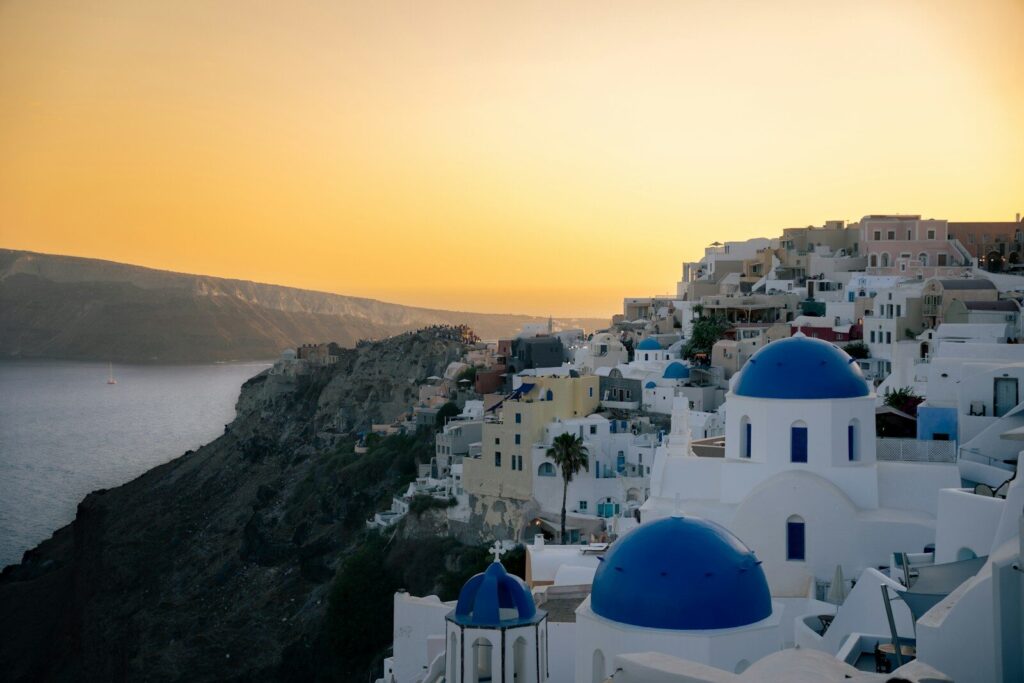
Every summer, about three million people squeeze onto Santorini — an island barely 76 square kilometres — for the same sunset photograph. The caldera is genuinely beautiful. It is also genuinely expensive, genuinely crowded, and by August, genuinely exhausting. A Greek salad on a caldera terrace can cost €25, a caldera-view room €250 to €500 a night, and the famous Oia sunset is watched shoulder-to-shoulder with thousands of strangers.
Here is the secret the Greeks themselves know: you do not need Santorini to get Santorini. A short ferry ride away, Naxos and Paros deliver the same whitewashed villages, the same blue domes, the same turquoise water — with golden sand beaches Santorini does not even have, tavernas priced for locals, and room to breathe. Naxos is the largest island in the Cyclades and the most self-sufficient: it grows its own food, keeps its own rhythm, and has been quietly absorbing the travellers who did their homework. Paros is its chic younger sibling — a fishing harbour in Naoussa that fills with candlelit tables at dusk, beaches that host world windsurfing, and a marble village, Lefkes, that feels frozen in the 19th century.
This guide covers Greece as a whole — Athens, the mainland classics, and the islands — but its heart is the Naxos-and-Paros alternative: what to see, what it costs, how the ferries work, and how to build a trip that feels like Greece instead of a queue for Greece.
Geography & Climate
Greece sits at the southeastern corner of Europe, where the Balkans meet the Mediterranean. The mainland is mountainous — about 80% of the country is hills or mountains — and the sea is never far away: Greece has one of the longest coastlines in the world relative to its size, thanks to more than 6,000 islands and islets scattered across the Aegean and Ionian seas. Only around 200 of those islands are inhabited, and they fall into distinct groups: the Cyclades (Santorini, Mykonos, Naxos, Paros, Milos), the Dodecanese (Rhodes, Kos), the Ionian islands (Corfu, Zakynthos), the Sporades, the Saronic Gulf islands near Athens, and Crete — an island so large and varied it deserves a week of its own.
The climate is classic Mediterranean: hot, dry summers and mild, wet winters. Athens averages 33°C (91°F) in July and August, and the islands are a degree or two cooler thanks to the sea breeze. The meltemi — a strong northerly wind — blows through the Cyclades in July and August. It keeps the heat bearable and the sailing lively, but it can make high-speed catamaran crossings rough and occasionally cancels them; conventional ferries are steadier. The best months to visit are May and June, and September and October: warm seas, open tavernas, lower prices, and a fraction of the crowds. Winter (November to March) is quiet and green — wonderful for Athens and the mainland, but many island hotels and restaurants close, and ferry schedules thin out.
People & Demographics
Greece has a population of about 10.4 million, with roughly a third living in the Athens metropolitan area. The population is ageing — the median age is around 46 — and the islands empty of young people in winter, then fill with returning families and seasonal workers each summer. The country is ethnically overwhelmingly Greek, with the Greek Orthodox Church shaping the calendar: Easter is the biggest holiday of the year, bigger than Christmas, and village festivals (panigiria) run all summer, with food, music, and dancing that visitors are genuinely welcome to join.
Greek is the official language, written in its own alphabet — which looks intimidating until you realise most signs in tourist areas are also in English, and that many words (democracy, theatre, philosophy, music) are Greek in origin. English is widely spoken in Athens and on the islands; in rural villages, a smile and a few words go a long way.
Mini phrasebook: Kalimera (good morning), Kalispera (good evening), Efharisto (thank you), Parakalo (please / you’re welcome), Yassas (hello / goodbye), Poso kani? (how much is it?), Mia birra parakalo (one beer, please), Yamas! (cheers!).
Culture, Etiquette & Daily Habits
Greek life runs on a different clock, and the fastest way to enjoy it is to surrender to it. Lunch is the big meal, often starting at 2pm and stretching for hours. Dinner rarely begins before 9pm — restaurants that fill at 7pm are serving tourists. The afternoon siesta is still real in smaller towns: shops close between roughly 2pm and 5pm, then reopen for the evening. Coffee is a ritual, not a caffeine delivery system: a freddo espresso or freddo cappuccino is nursed for an hour or more at a seaside table, and nobody will hurry you along.
Do: greet shopkeepers with a kalimera; accept the complimentary dessert or raki at the end of a meal — refusing can offend; dress modestly (shoulders and knees covered) when visiting churches and monasteries; say yamas and clink glasses; try the house wine — it is usually local, cheap, and good.
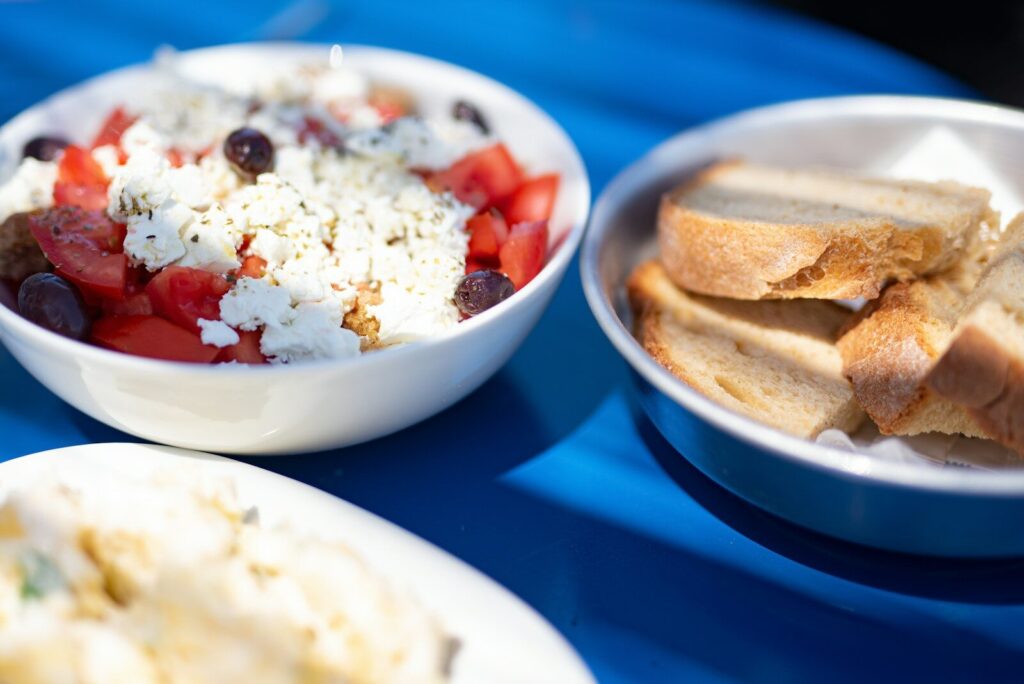
Don’t: rush a Greek meal or ask for the bill the moment you finish — the table is yours; photograph monks or worshippers inside churches; assume a “Greek salad” comes with lettuce (it doesn’t — tomato, cucumber, onion, olives, feta); sit at a taverna table with a sunbed and expect free service without ordering; tip by percentage as a rule — rounding up or 5–10% is plenty, and tipping is appreciated but never obligatory.
Lifestyle
Food is the centre of Greek life. The taverna is a social institution: small plates (mezedes) shared across the table, grilled octopus, slow-cooked lamb, Naxian potatoes fried in local oil, feta that tastes nothing like the supermarket version, and olive oil that Greeks consume at roughly 12 litres per person per year. A meal at a family taverna runs €12–20 per person; a gyros or souvlaki wrap costs €3.50–5 and remains the best-value lunch in Europe.
Work culture is family-first: small businesses dominate, and on the islands the same family may run the hotel, the taverna, and the boat. Nightlife starts late — bars fill after midnight in Athens, Mykonos, and Paros’s Naoussa — while mornings belong to fishermen, swimmers, and the bakery queue. Sport is football first (Olympiacos vs Panathinaikos is a genuine rivalry), basketball second, and sailing is a way of life rather than a hobby. Technology and tradition sit side by side: you can pay by card almost everywhere, yet the village kafeneio still serves Greek coffee in a tiny cup with a glass of water, exactly as it has for a century.
Main Cities
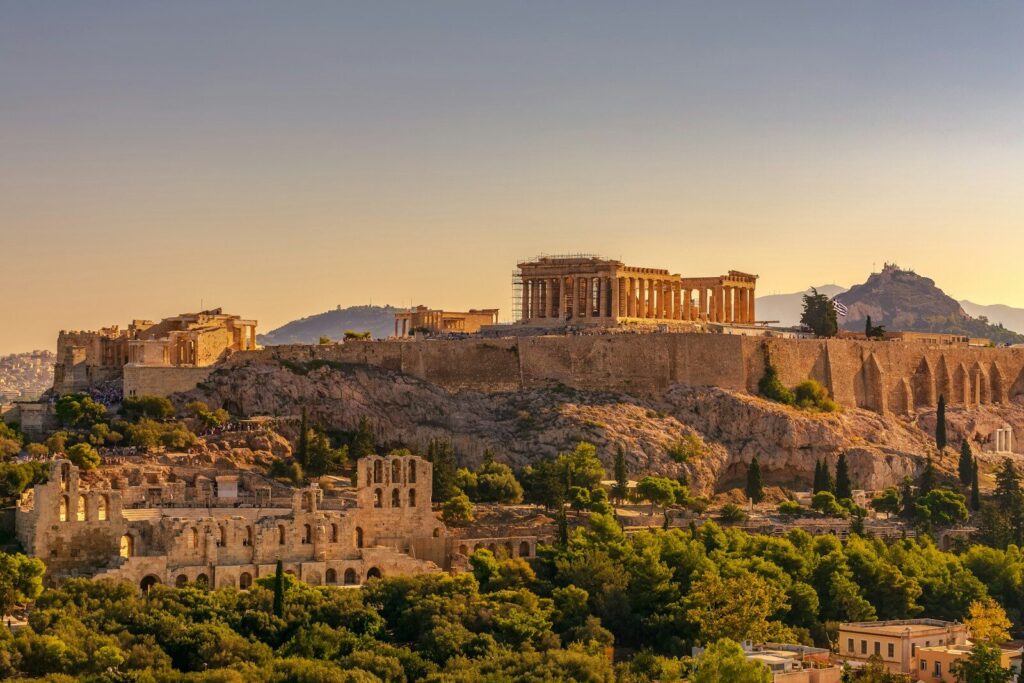
Athens — The capital is 5,000 years old and feels it in the best way: the Acropolis crowns the city, Plaka’s lanes wind beneath it, and Monastiraki’s flea market sells everything from worry beads to vinyl. Give it two full days minimum — one for the Acropolis and the superb Acropolis Museum, one for wandering, eating, and the view from Mount Lycabettus at sunset.
Thessaloniki — Greece’s second city is younger, louder, and more student-driven than Athens, with a gorgeous waterfront, Byzantine churches, and a food scene locals argue is the best in the country. A great base for the Halkidiki beaches.
Chania (Crete) — A Venetian harbour ringed by tavernas, with a lighthouse, an old town of narrow lanes, and the Samaria Gorge a day trip away. Crete’s most romantic town.
Heraklion (Crete) — Busier and more workaday, but it holds Knossos, the 4,000-year-old Minoan palace, and the Archaeological Museum that makes sense of it.
Nafplio — The Peloponnese’s prettiest town: neoclassical mansions, a fortress on a rock (Palamidi), and the ancient theatre of Epidaurus a short drive away. The perfect first stop on a mainland road trip.
Rhodes Town — A medieval Old Town inside massive walls, built by the Knights of St John, with a Street of the Knights that feels like a film set and beaches ten minutes away.
Corfu Town — Venetian, French, and British layers stacked on a green Ionian island: pastel arcades, a cricket pitch, and fortresses guarding the harbour.
Top Places to Visit
- The Acropolis, Athens — The Parthenon, the Erechtheion, and the Theatre of Dionysus. Book a timed ticket ahead: daily visitors are capped at around 20,000, and summer entry is €20 (€10 in winter; the €30 combo covers seven sites).
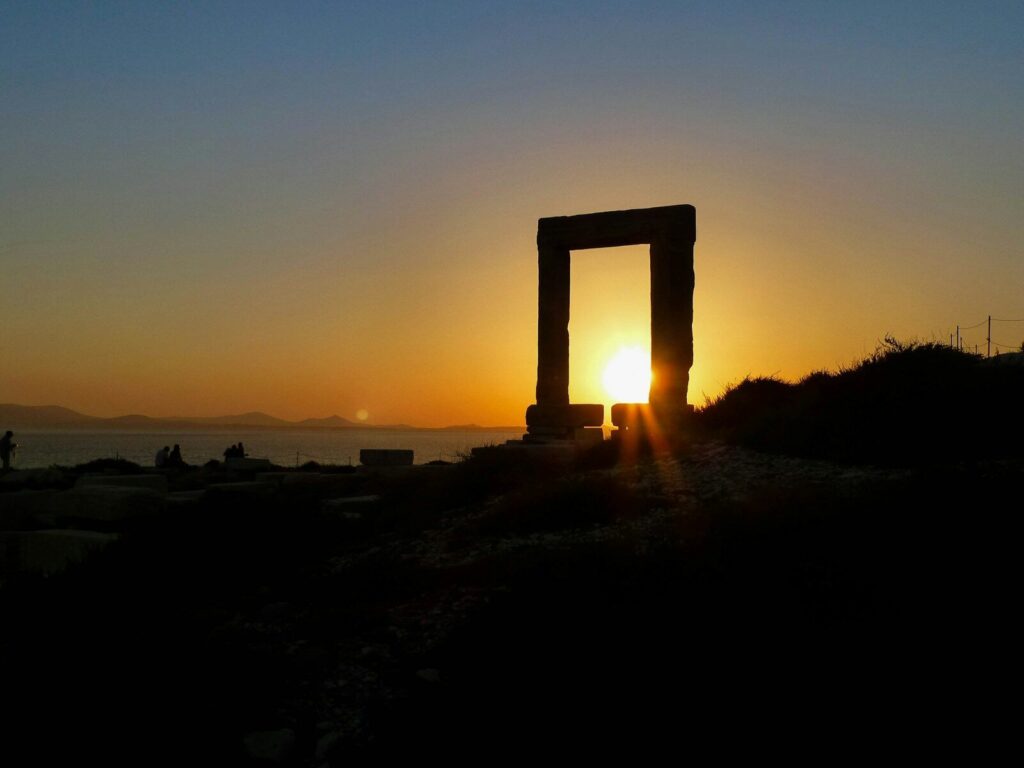
- The Portara, Naxos — A 2,500-year-old marble temple gate standing alone on a peninsula by the harbour. Free, empty before 9am, and the best sunrise spot in the Cyclades.
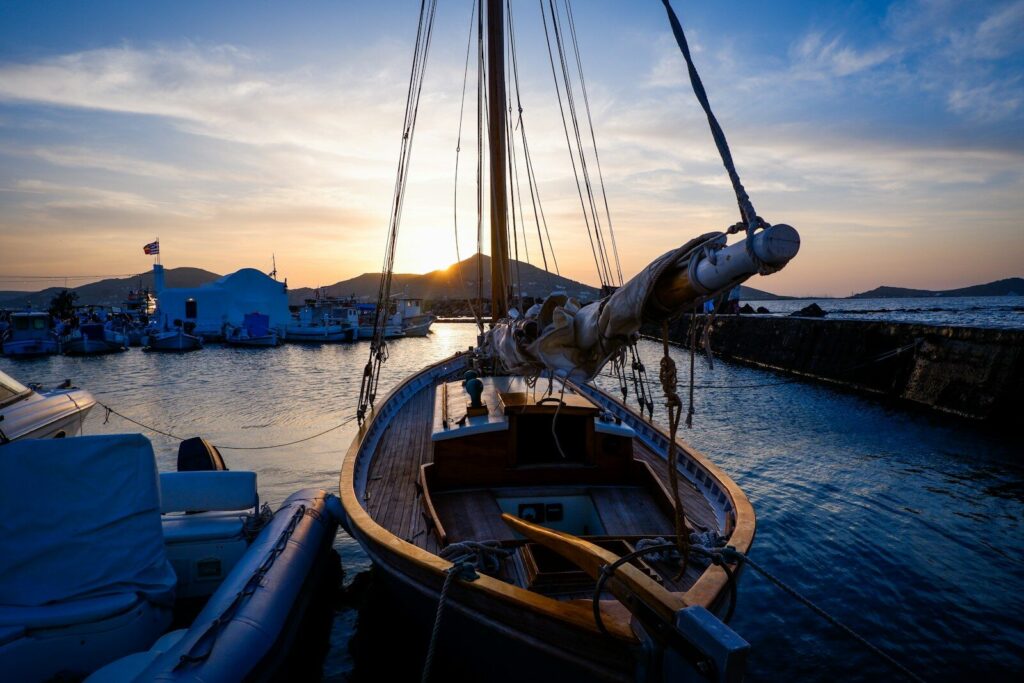
- Naoussa, Paros — A fishing harbour that turns into an open-air restaurant at dusk, with octopus drying on lines and candlelit tables on the water.
- Meteora — Monasteries perched on sandstone pillars that look impossible. Go at sunrise before the tour buses arrive.
- Delphi — The Temple of Apollo on the slopes of Mount Parnassus, once believed to be the centre of the world.
- Akrotiri, Santorini — A Minoan city buried by a volcanic eruption 3,600 years ago, preserved like a Greek Pompeii. The smart way to do Santorini’s history without the caldera crowds.
- Knossos, Crete — Europe’s oldest city, a 4,000-year-old palace of the Minoans, with the myth of the Minotaur woven into its corridors.
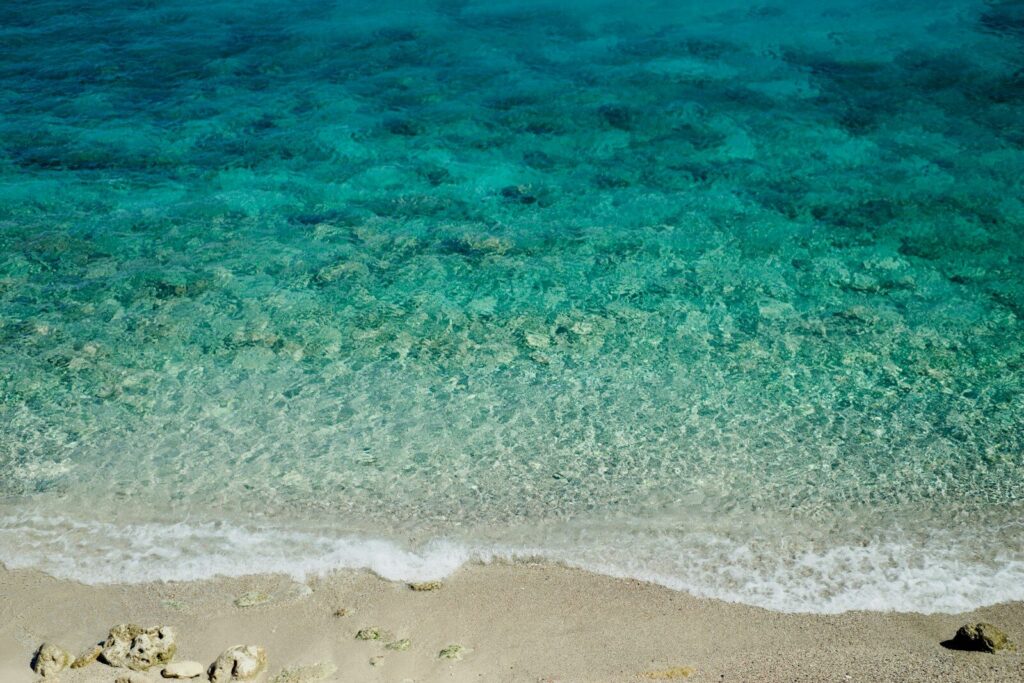
- Agios Prokopios Beach, Naxos — Two miles of fine golden sand and shallow turquoise water — the beach Santorini wishes it had.
- Lefkes, Paros — A marble-paved mountain village of white houses and bougainvillea, with a Byzantine path down to the sea.
- Apiranthos, Naxos — Marble streets, Venetian towers, and tavernas serving the island’s famous potatoes and kitron liqueur. Population about 700, tour buses zero.
- Epidaurus Theatre — A 4th-century-BC amphitheatre with acoustics so perfect a coin dropped on stage can be heard from the top row.
- Olympia — Where the Olympic Games began in 776 BC. Run a lap of the original stadium — it is still just a track of packed earth.
🎟️ Book experiences in Greece
Tours we’d actually book — free cancellation on most. We may earn a commission if you book through these links, at no extra cost to you. Our affiliate disclosure.
- Acropolis skip-the-line entry ticket with optional audio guide — timed entry to the Parthenon, Theatre of Dionysus, and the Old Town audio tour, sent straight to your phone.
- Acropolis & Acropolis Museum premium guided tour — three hours with a licensed guide, from the south slope to one of the world’s top museums.
- Browse all Athens tours & activities
🎟️ More ways to book (Viator)
Two more reader-favorite ways to see Greece. We may earn a commission if you book through these links, at no extra cost to you. Our affiliate disclosure.
- Athens Super Saver: Acropolis walking tour + Cape Sounion & Temple of Poseidon — the morning’s greatest hits plus a sunset temple on the cliffs, two best-sellers in one day.
- Athens city, Athenian Riviera & Cape Sounio full-day private tour — chauffeur-driven, 8–9 hours, with pickup from your hotel, the airport, or Piraeus port.
When to Visit & Getting Around
When to visit: May–June and September–October are the sweet spot — sea warm enough to swim, tavernas open, prices down, crowds thin. July and August bring peak heat, peak prices, and the meltemi winds; if you go then, book ferries two to three weeks ahead and expect Santorini and Mykonos at their most crowded (and most expensive). April is lovely for Athens and the mainland, with wildflowers and Easter celebrations; November to March is quiet, green, and cheap — ideal for city and archaeological trips, less so for island-hopping, when many island hotels close and ferry schedules shrink.
Getting there: Athens International Airport (ATH) is about 35km from the centre, with a metro link and taxis at €35–45. Direct flights connect Athens to most of Europe and North America in summer. From Canada, nonstop Montreal–Athens and Toronto–Athens flights run March to November.
Ferries are the backbone of island travel. Blue Star, Hellenic Seaways, and SeaJets run from Piraeus, Athens’s port. Conventional ferries are slower, cheaper, and steadier in wind; high-speed catamarans are faster and pricier, and they cancel first in bad weather. Indicative fares: Piraeus–Santorini high-speed €40–70 one way; Piraeus–Aegina about €9.50; Piraeus–Naxos around five hours by conventional ferry. Book peak-season crossings ahead and leave a buffer day before any international flight out of Athens — a cancelled ferry the day before your flight home is the classic Greek trip-ruiner.
On the mainland: KTEL buses cover the country affordably; Hellenic Train connects Athens with Thessaloniki and (via a change) Meteora; renting a car is the best way to explore the Peloponnese and Crete. In Athens itself, the metro, buses, and your own feet cover everything — a single metro ride costs €1.20. Rideshare means Beat (the local app, on the FREE NOW network); Uber works through it in Athens.
✈️ Find cheap flights to Greece — compare fares across airlines and booking sites in one search. Affiliate link: we may earn a commission at no extra cost to you.
🚗 Rent a car in Greece — compare rental prices across suppliers in one search. Affiliate link: we may earn a commission at no extra cost to you.
Budget
Greece is mid-priced by Western European standards, and the biggest lever on your budget is not how you travel but which islands you pick. Santorini and Mykonos run 40–60% above equivalent quality on Naxos, Paros, Crete, or the mainland — while food, ferries, and archaeological sites cost roughly the same everywhere.
Budget — €50–80/day: hostel dorm or budget room (€18–40), souvlaki and taverna meals (€10–20/day), conventional ferries and buses, free beaches and one paid site a day. Totally doable on Naxos and the mainland; tight on Santorini.
Mid-range — €100–150/day: a 3-star hotel or a Cyclades sea-view room, restaurant meals (€35–50/day), high-speed ferries, a domestic flight or two, paid museums and a guided day tour. This is the comfortable sweet spot for a Naxos–Paros–Athens trip.
Comfort — €200+/day: a Santorini caldera suite or boutique hotel, fine dining and wine tastings, private drivers and domestic flights, guided tours at every major site. Worth it for a honeymoon splurge — but even then, spend two of those nights on Naxos and bank the difference.
Money-saving truths: shoulder season (May, late September) cuts accommodation by a third or more; a studio on Naxos runs €60–90 a night in summer against €250–500 for a caldera room on Santorini; eating where Greeks eat — a few streets back from the waterfront — halves your food bill; and the house wine is almost always local, cheap, and good. A seven-day mid-range trip for two, including stays, meals, ferries, and activities, runs roughly €2,000–3,500.
Practical Tips
- Book the Acropolis ahead. Timed entry is capped at around 20,000 visitors a day. Book online for a morning slot (8–10am) or a late-afternoon slot, and bring your passport — under-25s from the EU enter free.
- Carry cash for small islands and tavernas. Cards work almost everywhere in Athens and the big islands, but small village tavernas, beach canteens, and inter-island boat tickets are often cash-only. ATMs are widespread; avoid standalone exchange counters.
- Ferry strategy. Travel within one island group (the Cyclades, for example) rather than mixing groups — crossing groups eats whole days. Prefer conventional ferries if you get seasick; the meltemi makes catamarans rough in July and August.
- Ask sunbed prices before sitting down. At top Mykonos beaches, two sunbeds can cost €80–150 a day. On Naxos, sunbeds are often €10–15, or free with a drink — and the sand is free everywhere.
- Get an International Driving Permit before you leave if you plan to rent a car on a non-EU licence — rental desks can refuse without one.
- Pack for the wind. Even in August, evenings on a ferry deck or a hilltop taverna get breezy; a light layer earns its place. Greece uses Type C and F plugs at 230V.
- Emergency numbers: 112 works EU-wide; 166 is the ambulance, 100 the police, 199 the fire brigade. Greece is very safe for tourists — the main risk is petty theft in crowded Athens spots (Monastiraki, Syntagma) and busy islands in peak season, so keep your phone in a front pocket and your bag crossbody.
🛍️ Shop this guide: Greece packing essentials
Gear we’d actually pack for this trip. As an Amazon Associate we earn from qualifying purchases — at no extra cost to you. Our affiliate disclosure.
- Universal travel adapter — Greece uses Type C and F plugs at 230V; one adapter covers the whole trip.
- Reef-safe sunscreen — the Aegean sun is fierce, and the clearest bays are the ones worth protecting.
- Waterproof dry bag (20L) — ferry spray, beach days, and boat trips to hidden coves.
- Portable charger (20,000mAh) — long days of ferry timetables, maps, and sunset photos drain batteries fast.
- Greece travel guidebook — for the ferry rides and the villages where the signal drops out.
🧳 Plan your trip: Greece
Flights, stays, tours, and cruises — booked in one place. We may earn a commission if you book through these links, at no extra cost to you. Our affiliate disclosure.
- ✈️ Find cheap flights to Greece — compare fares across airlines and booking sites in one search.
- 🏨 Browse our Expedia Travel Shop — hand-picked stays and travel deals from our curated storefront.
- 🎟️ Browse Athens tours & activities — free cancellation on most.
- 🛳️ Compare Greek island cruises on CruiseDirect — sailings calling at Athens (Piraeus), Santorini, and Mykonos.
Closing
Greece invented the idea of the West — democracy, theatre, the Olympics, the very word “history” — and then, almost as an afterthought, scattered it across the most beautiful islands in the Mediterranean. Santorini will always be there for the sunset photograph. But the Greece you will actually remember is a long lunch in a Naxos taverna, the marble gate of the Portara at sunrise with nobody else around, and a fishing harbour in Paros where the octopus dries on the line and dinner costs less than the taxi to get there. Go to the islands the Greeks go to. That is the whole secret.
🎬 [Greece in 60 Seconds — video link]
FAQ
How many days do I need in Greece?
Seven days is the minimum for a satisfying first trip: two days in Athens, then four to five days island-hopping Naxos and Paros (or one island properly). Ten to fourteen days lets you add Santorini for a splurge night, Meteora, or Crete.
Is Greece expensive?
Mid-priced for Western Europe. Budget travellers manage on €50–80 a day, mid-range €100–150, comfort €200+. Santorini and Mykonos are the expensive outliers — Naxos, Paros, and the mainland are 40–60% cheaper for the same quality.
When is the best time to visit Greece?
May–June and September–October: warm seas, open tavernas, lower prices, thin crowds. July and August are hot, crowded, and windy (the meltemi). Winter suits Athens and the mainland; many island businesses close.
Do I need a visa for Greece?
US, UK, Canadian, Australian, and most other Western passport holders enter visa-free for up to 90 days in any 180-day period (Schengen rules). The ETIAS travel authorisation is expected from 2027 — check the current requirement before you travel.
How do I get between the Greek islands?
By ferry from Piraeus and between islands — Blue Star, Hellenic Seaways, and SeaJets are the main operators. Conventional ferries are cheaper and steadier; high-speed catamarans are faster but cancel first in wind. Book peak-season crossings two to three weeks ahead.
Is Naxos or Paros better than Santorini?
For beaches, food, value, and breathing room — yes, and it is not close. Naxos has the best beaches in the Cyclades and the lowest prices; Paros has the prettiest harbour towns. Santorini wins on pure drama: the caldera sunset is one of the great sights on Earth. The smart trip does both — two nights of caldera splurge, then recovery on Naxos.
[…] Greece travel guide: Santorini alternatives — Naxos & Paros — island-hopping on the far side of the same sea, with the same ferry-and-flight planning logic. […]
[…] Santorini Alternatives: Naxos & Paros, the Islands Greeks Visit […]
[…] Greece travel guide […]
[…] Greece travel guide — Santorini alternatives: Naxos and Paros, the islands Greeks visit. […]
[…] Greece travel guide — Santorini alternatives: Naxos and Paros, the islands Greeks visit. […]
[…] Greece travel guide — the other side of the Mediterranean, from Naxos and Paros to the Acropolis […]